The Department of Justice is investigating whether five television networks—ABC, CBS, CNN, NBC, and Fox News—violated antitrust laws when they suspended White House pool coverage of President Trump last month. The suspension followed Trump's decision to bar CNN, MSNBC, and Politico from White House access.
From the center: This situation presents a genuine tension between competing principles. News networks coordinating their coverage decisions does raise legitimate questions about how antitrust law applies to media, but the timing and context—investigating them for refusing to cover a president who just barred their competitors—invites suspicion of political motivation rather than neutral law enforcement. A more credible approach would involve clearer standards for when editorial coordination crosses into unlawful boycott, applied consistently regardless of the administration in power.
Defense Secretary Pete Hegseth announced the Pentagon will livestream the execution by firing squad of Nidal Hasan, convicted of the 2009 Fort Hood mass shooting that killed 13 people and wounded over 20. The execution is scheduled for December 3. President Trump said he will "ultimately make a decision" on whether to proceed with the livestream following bipartisan backlash.
From the center: The Pentagon's execution plan has provoked unusual alarm across the political spectrum, which itself suggests something genuinely crosses consensus boundaries about how government should operate. The practical questions matter: Does livestreaming serve any legitimate penological purpose—deterrence, justice, accountability—or is it purely performative? The bipartisan backlash, including from GOP lawmakers and the vice president, suggests this exceeds what most Americans, even those who support capital punishment, consider appropriate. Trump's stated indecision may reflect the genuine tension between his administration's focus on strong executive action and the institutional norms that constrain how that power gets displayed.
Drawn from 9 articles placed here, below.
No ads, no paywall
Prism is free to read and carries no advertising. Reader support pays for the news gathering. Support it if it’s useful to you.
Russia conducted mass-casualty strikes on Ukrainian cities, with death tolls ranging from 15 to 20 according to different outlets. The attacks occurred after U.S. President Trump announced a deal easing diesel sanctions on Moscow following a call with Vladimir Putin. Ukrainian President Zelenskyy criticized Trump over the sanctions relief. Overnight strikes on Zaporizhzhia killed at least three children.
From the center: The sequence of events—sanctions eased, then Russian strikes intensify, then tensions between Washington and Kyiv spike—creates a troubling optics problem regardless of causation. Trump and Zelenskyy appear to be on collision course, which risks fracturing the Ukraine coalition. Both sides have legitimate concerns: the U.S. wants to avoid escalation and explore diplomatic off-ramps, while Ukraine fears abandonment. This requires careful diplomacy, not public recriminations.
A 45-year-old man shot and killed eight people at a home in Erie, Pennsylvania on Friday evening, then died of an apparent self-inflicted gunshot wound. The dead include two children, a pregnant woman, and seven relatives of the shooter plus one family friend. Erie Police Chief Rick Lorah confirmed all nine deaths occurred before officers arrived at the scene. No motive has been identified.
From the center: A mass shooting in Erie, Pennsylvania killed nine people, including children, with the gunman dying by apparent suicide. These events require both acknowledgment of the real suffering involved and clear thinking about causation: mental health crises, family violence, and access to weapons all played roles here, and effective responses need to address multiple factors simultaneously rather than treating any single cause as the entire problem. Better threat assessment and intervention systems deserve attention alongside reasonable firearm regulations.
At least 12 people were killed and over 300 injured in an attack on King Khalid International Airport in Riyadh on Saturday, according to Saudi Arabia's civil aviation authority. The dead included four Saudi citizens, two Bangladeshi nationals, and one each from Palestine, the United States, Egypt, Jordan, Syria, and Sudan.
From the center: A significant attack has killed a dozen people at a major Saudi airport, raising immediate questions about airport security and regional stability. The Houthis' apparent responsibility, if confirmed, reflects broader tensions that military measures alone have not resolved. A balanced approach requires both strengthening security to protect civilians and exploring diplomatic channels to reduce the cycle of attacks and counterattacks. The humanitarian toll demands attention to both prevention and civilian protection.
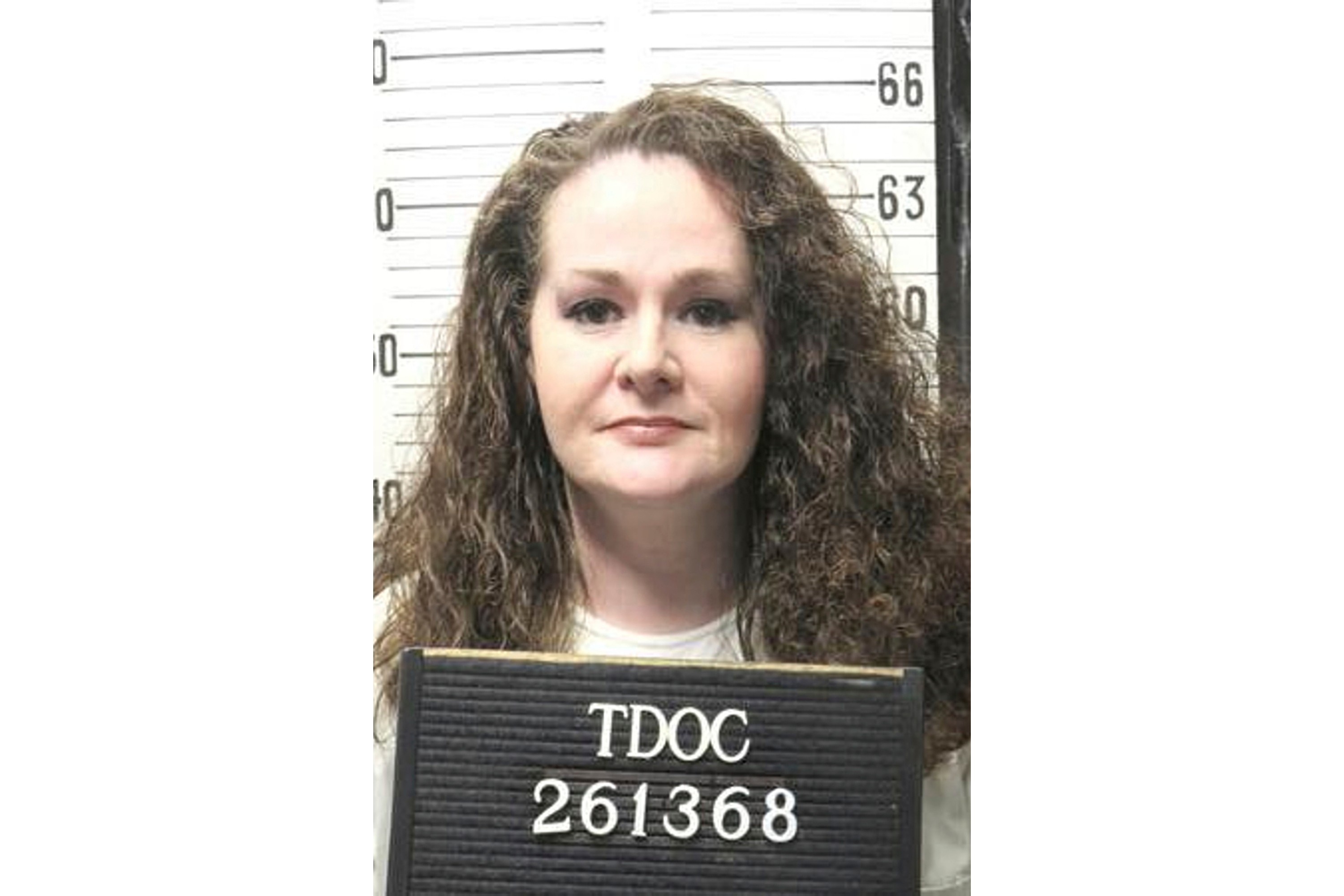
Christa Pike, 50, a Tennessee inmate convicted of a 1995 murder, was discharged from hospital and returned to prison on October 10, more than a week after surviving an execution attempt on September 30. She received two doses of the lethal drug pentobarbital but remained alive. The state called an ambulance. Her attorneys said she is grateful for the care she received.
From the center: Christa Pike's survival of a lethal injection attempt is an unusual and troubling incident that demands scrutiny of the specific procedures used. The case presents a genuine dilemma: Pike committed murder and was lawfully sentenced to death, but the state failed to carry out that sentence as intended, creating an extraordinary situation. Any execution system must work reliably, and this failure suggests Tennessee needs to examine its protocols—though what happens next legally and procedurally remains unclear.
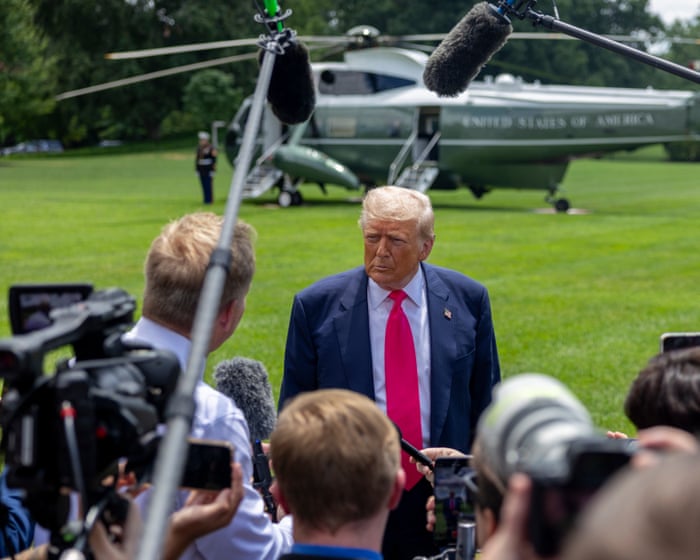
On October 10, President Trump told reporters outside the White House that Ukraine should replace President Volodymyr Zelensky with a leader willing to make a deal with Russia. Trump's statement came after Zelensky criticized a U.S.-Russia diesel deal that would allow Russia to supply hundreds of thousands of tons of diesel to America. Zelensky had said the deal would help Russia fund its war effort.
From the center: Trump and Zelensky are at odds over competing priorities: Trump wants a quick negotiated end to the war and lower fuel prices domestically, while Zelensky opposes deals that finance Russia's military. The diesel agreement is a real policy choice with trade-offs—cheaper energy for Americans versus potential aid to Russia's war effort. Trump's call for regime change is inflammatory and counterproductive, but it reflects genuine tension between U.S. interests in stability and lower costs versus Ukraine's existential security needs. Both sides have legitimate concerns that need negotiation, not ultimatums.
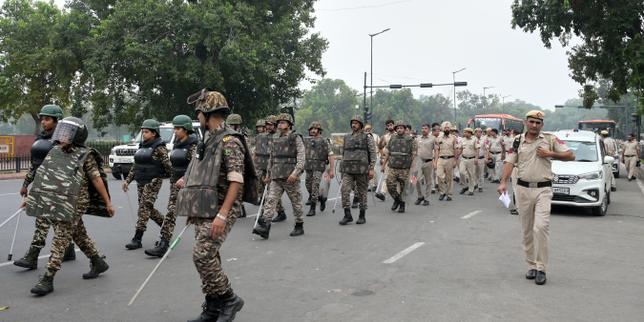
Indian police detained thousands of protesters across Delhi on October 10, 2026, ahead of a planned mass demonstration. Those detained included Cockroach Janta Party (CJP) founder Abhijeet Dipke, West Bengal Chief Minister Mamata Banerjee, Delhi Chief Minister Arvind Kejriwal, Kerala Chief Minister P Vijayan, and other opposition leaders and student activists.
From the center: India faces a genuine tension between maintaining public order and protecting democratic space. Large protests do require security planning, and authorities have a duty to prevent violence. However, the scale of detentions—including major opposition figures and thousands of ordinary citizens—appears to have crossed from managing risk into preventive suppression. The concerns about voter-roll changes are serious enough to warrant real government response: independent investigation, public data release, or commission review. Detaining protesters rather than addressing their grievances is a governance failure that will likely deepen public anger regardless of which complaints are valid.
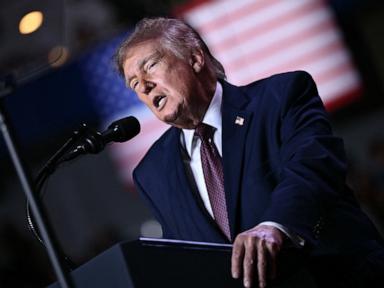
The Nobel Peace Prize was awarded to Navi Pillay, a former judge at a court Trump has criticized. Trump responded at a rally in Syracuse, New York, calling the decision 'disgraceful and embarrassing,' saying it leaves an 'indelible stain' on Norway, and claiming he should have won eight Nobel Peace Prizes for settling wars. Trump said he 'won't forget' the decision and that the prize is now 'forever discredited.'
From the center: Trump's reaction to not receiving the Nobel Peace Prize demonstrates how award processes can become lightning rods for partisan disagreement. The Nobel Committee made its choice based on Pillay's human rights work; Trump believes his foreign policy achievements deserve recognition. Both sides have substantive arguments about what kinds of diplomatic work merit international prizes. However, Trump's public disputes with Norway and threats to remember the snub are unconventional ways to engage with the decision, and his characterization of Pillay's career deserves scrutiny regardless of one's views on his own foreign policy record.
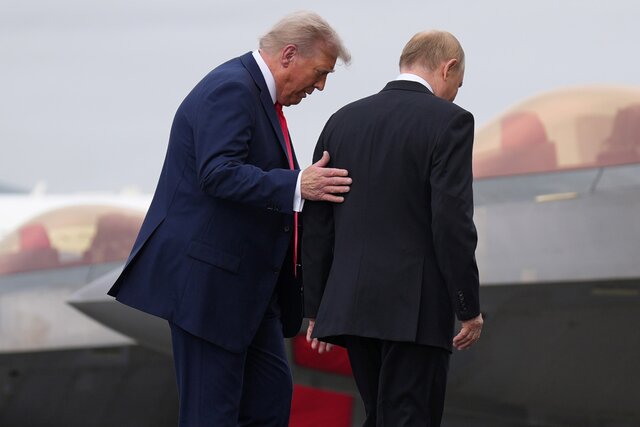
President Donald Trump announced on October 9 that he has agreed with Russian President Vladimir Putin to supply Russian diesel to U.S. and global markets. Trump said Russia will immediately provide over 300,000 tons, with millions more to follow. The Treasury Department eased sanctions on Russian diesel sales to global markets until April 2027.
From the center: The deal reflects a genuine tension between competing priorities: genuinely high fuel prices hurt American households and could affect midterm results, but easing pressure on Russia while it wages war in Ukraine creates serious alliance problems and strategic risks. Trump's framing that lower diesel prices justify sanctions relief oversimplifies the calculation. A middle path might have involved negotiating with allies on targeted relief or exploring other supply sources rather than unilateral action that divides the West. The approach prioritizes immediate economic gain over longer-term institutional relationships and burden-sharing with partners.
The 2026 Nobel Peace Prize was awarded to Navanethem "Navi" Pillay, an 85-year-old South African jurist. Pillay led a United Nations commission of inquiry that concluded Israel committed genocide in Gaza. She has also served as president of the International Criminal Tribunal for Rwanda, a judge on the International Court of Justice, and UN high commissioner for human rights.
From the center: Pillay's prize reflects her substantial credentials in international law and human rights work across multiple institutions and conflicts. The award is likely to intensify rather than reduce tensions around Gaza, given the divergent views on what the UN commission concluded and what it means. The Nobel Committee's choice acknowledges her professional accomplishments while inevitably wading into a live geopolitical dispute where reasonable people disagree on both the facts and the appropriate response.
President Trump announced on Thursday that the US will not attack Iran before the November 3 midterm elections. Trump said Washington and Tehran are having 'productive discussions.' The announcement came after media reports suggested the White House had asked the Pentagon to develop strike options for use before the midterms, which had driven crude oil prices up. Oil prices fell immediately after his statement.
From the center: Trump's pledge to hold off on new strikes before the elections is a pragmatic move that acknowledges both military and domestic political realities. The announcement that talks with Tehran are productive suggests a potential off-ramp from escalation, which markets responded to positively. However, the revelation that strike options were being developed with the midterms in mind—rather than purely on strategic merit—is troubling and suggests future decisions may similarly be influenced by the political calendar.
An ICE agent shot a man in the Bronx's Marble Hill neighborhood in New York City on Thursday afternoon around 4 p.m. According to NewsNation, ICE agents were attempting to arrest someone when another person who was not the arrest target was shot. The Guardian and Mother Jones report a five-year-old child was in the car with the man; the child was physically unharmed.
From the center: An ICE agent shot a man during an arrest operation in the Bronx on Thursday, with conflicting details still emerging about the exact circumstances and whether the man shot was the intended target. A child was in the vehicle but was unharmed. While immigration enforcement is a legitimate government function, incidents like this demand clarity about what happened and whether procedures were followed. Both the need for effective law enforcement and public safety and the need for accountability and oversight are important. Independent investigation and clear reporting are required before drawing conclusions.
Vice President JD Vance announced Thursday that the Trump administration is suspending Microsoft, Adobe, and six other tech and IT outsourcing firms from the Permanent Labor Certification (PERM) program, which allows foreign workers on H-1B visas to apply for green cards and permanent U.S. residency.
From the center: The administration has identified a real tension: companies do sometimes use visa programs in ways that undercut American workers, yet blanket suspensions may be counterproductive. Investigations into specific cases make sense, and ensuring visa holders are paid competitively is reasonable. But permanently barring major firms from legal hiring programs risks disrupting business operations and may push companies abroad. The evidence Microsoft presents about its hiring practices should inform the outcome. A middle path—conditional reinstatement with stricter oversight—balances concerns on both sides.
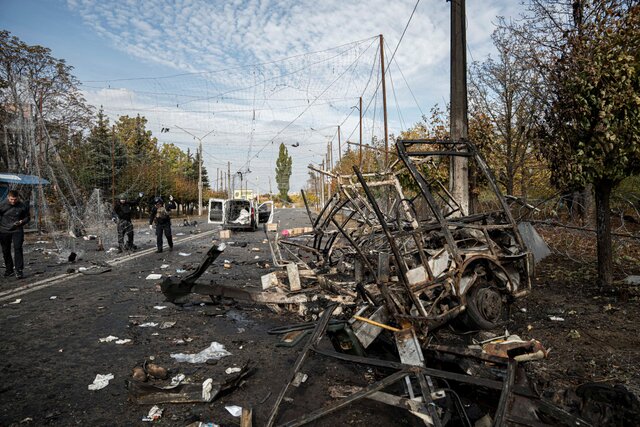
A Russian bomb struck two passenger buses in Kramatorsk, a city in Ukraine's Donetsk region. Death tolls reported by outlets and Ukrainian officials range from 30 to 35; Ukraine's State Emergency Service reported 33 dead. At least 18 people were wounded, according to local authorities. Police said the buses were hit with a glide bomb. The attack occurred Thursday as Russian strikes on Ukraine have intensified.
From the center: Russia struck two buses in Kramatorsk, killing at least 30 people. This represents a serious loss of civilian life in an active conflict zone. While Ukrainian resistance is understandable and warranted, the mounting casualties—on both sides and among civilians—argue for sustained international diplomatic effort alongside military support. No easy resolution exists, but the pattern of escalating strikes suggests that military pressure alone is unlikely to end the war without significant ongoing human cost.
Christa Pike, a Tennessee death row inmate convicted of murder, survived two doses of pentobarbital during a lethal injection execution. She subsequently regained consciousness in a hospital and, according to her lawyer, woke up and began speaking. A judge has ordered Tennessee to preserve evidence from the execution. Experts attributed the failure to improper IV placement.
From the center: Christa Pike's case presents a genuine dilemma with no easy answer. She committed a serious crime and was lawfully sentenced to death, but the failed execution raises both practical and ethical problems. Tennessee cannot simply retry execution without addressing what went wrong, yet attempting again risks further trauma and legal complications. The most prudent path is for courts to thoroughly examine what caused the failure, require documented procedural reforms before any further execution attempt, and perhaps consider whether Pike's survival and recovery warrant judicial consideration of alternative punishments that achieve justice without repeating the same risks.
The Democratic National Committee sued the Trump administration on Wednesday over television ads funded with taxpayer money. The DNC alleges the ads, which have cost between $12 million and $20 million according to different sources, violate federal law banning the use of appropriated funds for 'publicity or propaganda purposes.' The complaint states President Trump personally directed the activity.
From the center: A genuine legal question has arisen about whether ads produced by the Trump administration constitute permissible government communications or illegal campaign propaganda funded by taxpayers. The statute banning appropriations for 'publicity or propaganda' is old and its boundaries in the digital age are genuinely unclear—courts will need to weigh whether promotional content about a president's policies crosses into campaigning. Both the administration's use of funds and the DNC's lawsuit are legitimate moves within the system, and judicial interpretation is the appropriate way to resolve the dispute.
President Trump held a campaign rally in San Antonio, Texas on Wednesday night. Multiple protesters interrupted his speech; Trump responded by calling them paid agitators and making personal comments about their appearance. Security removed the protesters from the venue as supporters booed.
From the center: At a San Antonio rally, Trump's speech was interrupted several times by protesters who were then removed by security. Trump responded by claiming the protesters were paid and making critical comments about their appearance. The incident reflects the current state of American political rallies: high emotions, limited tolerance for dissent, and personal attacks standing in for substantive exchange on both sides.
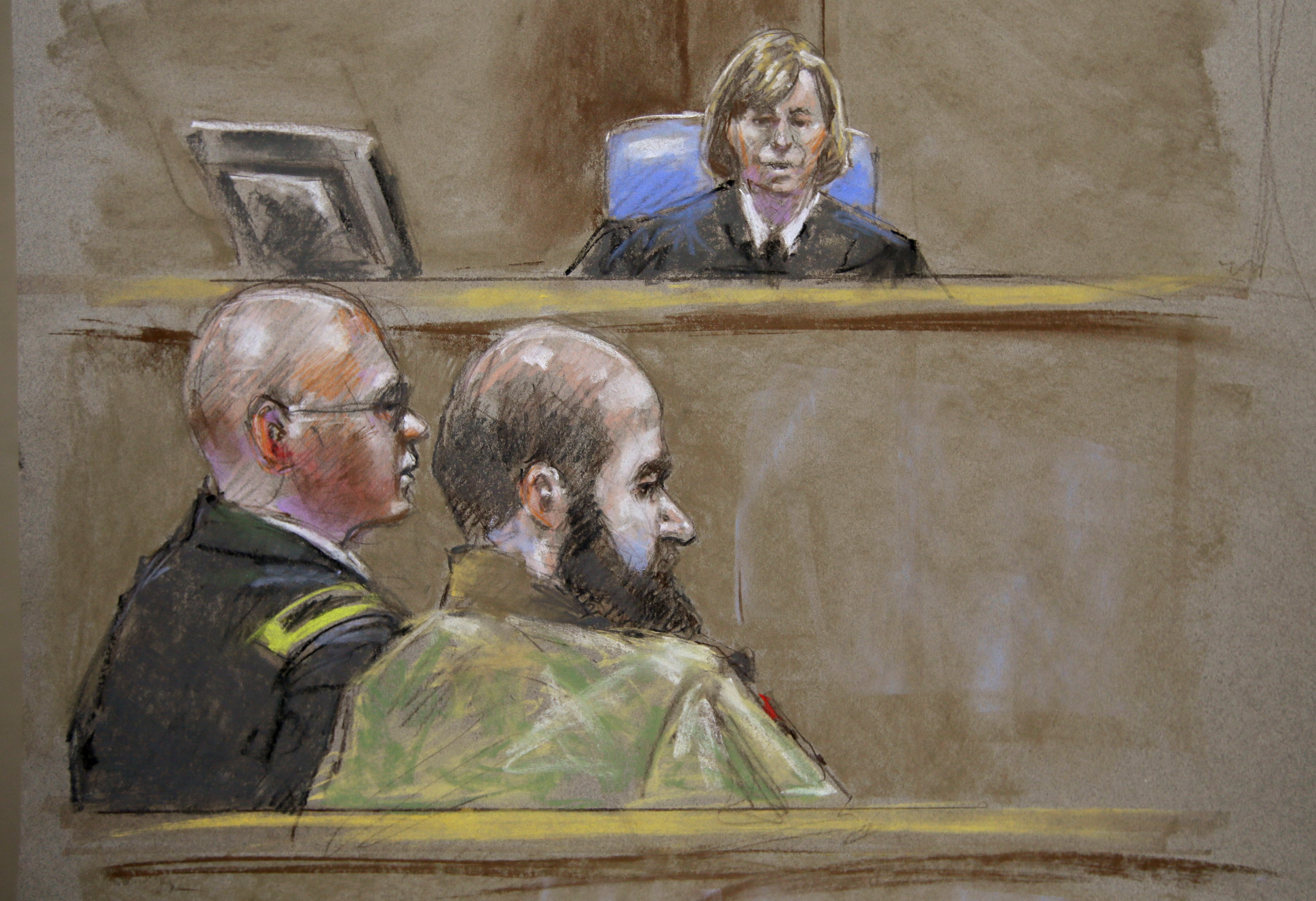
President Trump approved execution by firing squad for Nidal Malik Hasan, the former Army officer who killed 13 people and wounded 32 in a shooting at Fort Hood on November 5, 2009. The execution is scheduled for December 3 at Fort Hood. This marks the first firing squad execution by the U.S. military since World War Two; the Army has primarily used hanging for capital punishment since 1945.
From the center: Hasan committed one of the deadliest attacks on a U.S. military base, and the military justice system has determined execution is the appropriate sentence. The procedural questions—whether firing squad is the right method, whether it was properly approved—deserve scrutiny, but they are separate from the underlying conviction and sentence. A measured approach examines both the legitimacy of the penalty and the concerns of those, including religious leaders, who oppose capital punishment on principle, without letting either position override institutional process.
Cornell University named Sally Yates, former acting U.S. attorney general, to lead an independent review of how the school handled rape allegations involving a student. The case centers on an alleged gang rape at the now-defunct Chi Phi fraternity in October 2024. According to the plaintiff's lawyer, members of the chapter held meetings to discuss covering up the assault.
From the center: Cornell faced a difficult situation: how to investigate grave allegations while maintaining fairness to the accused and protecting the university's ability to respond credibly. Appointing an experienced outside prosecutor suggests the university recognized it needed independent expertise and public confidence. The broader tension—between survivor support, due process, and institutional credibility—has no easy answer. Both the investigative process and the underlying question of consent in situations involving alcohol require careful, evidence-based handling.
Republican Senator Susan Collins and Democrat Troy Jackson faced off in Maine's first Senate debate on Tuesday. Collins highlighted her five terms in Congress and distanced herself from Trump policies, saying she is "not exactly his favorite senator." Jackson argued Collins has failed to effectively push back against Trump. The debate covered Trump, ICE, prices, and the Iran war.
From the center: Collins occupies a genuine but precarious position: a Republican in a blue state who must appeal to independents and moderate Democrats while remaining credible within her party. Jackson pushes her from the left, demanding fuller alignment with Democratic priorities. The debate tests whether Maine voters value Collins's occasional breaks with her party as a stabilizing force, or prefer Jackson's more consistent opposition. Both candidates have legitimate arguments about representation and principle.
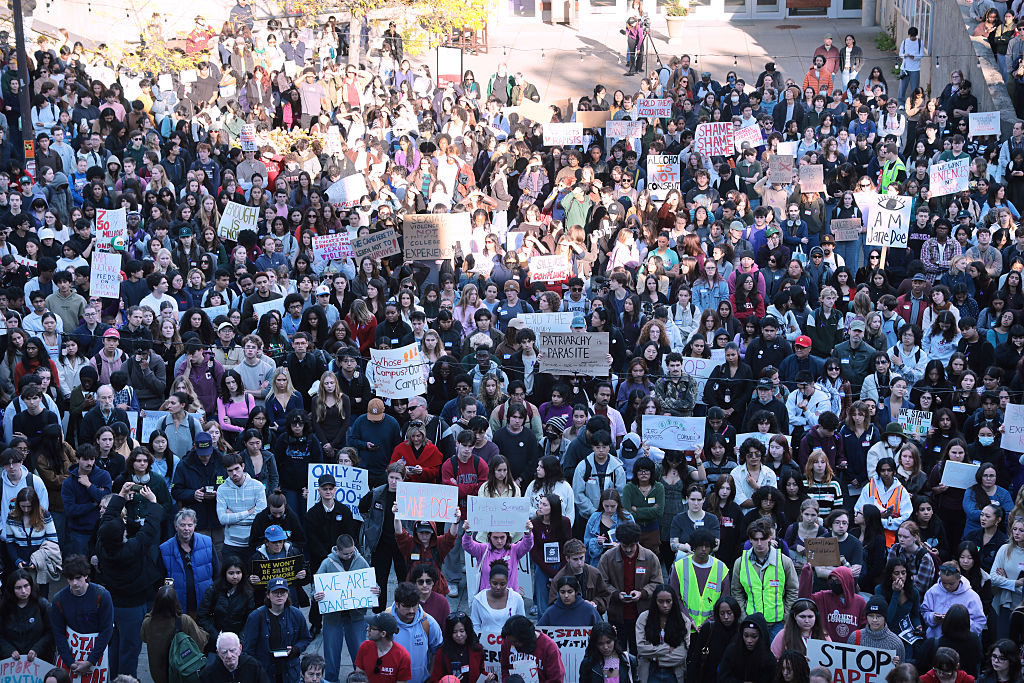
Student-led protests swept France starting in late September over school funding, teacher shortages, and poor conditions including overcrowded classrooms and deteriorating facilities. On Tuesday, the interior ministry reported 256,000 people protested nationwide across more than 170 demonstrations. Nearly 2,000 high schools were blockaded or closed. Police deployed tear gas and water cannons; hundreds were arrested.
From the center: This is a genuine crisis in French education that demands real solutions, but the framing matters enormously. The protests began with legitimate grievances—real infrastructure problems and staffing gaps—but have grown into a broader clash where both police and some protesters have escalated. Trump's comments are inflammatory and off-base; the cause is education policy, not migration. The French government's initial dismissiveness was a mistake; Macron was right to summon ministers. These issues need dialogue and concrete funding commitments, not polarization from either direction.
Christa Pike, 50, survived a failed execution in Tennessee last week and is now conscious and speaking while receiving critical medical care in hospital, according to a statement from her lawyers on Tuesday. She was temporarily on a ventilator following the botched execution, which involved two doses of lethal injection drugs. She remains handcuffed in hospital.
From the center: Pike's situation presents a genuine dilemma: the execution failed, leaving her critically injured and hospitalized, yet she survived. This raises practical questions about what should happen next—whether to retry execution, pursue alternative punishment, or recognize the event as evidence that the method itself is unreliable. Reasonable people disagree on capital punishment, but most would agree that a system producing this outcome—neither death nor a functioning execution—suggests a need for procedural review and clearer protocols, regardless of one's position on the death penalty itself.
The U.S. military removed approximately a dozen B-1 bombers from RAF Fairford in England over the weekend, returning them to home stations in America. President Trump said Monday that a threat from Iran prompted the withdrawal. A U.S. official said the base faced a threat of attack by Iran. Secretary of State Marco Rubio characterized the move as part of regular rotations of U.S. Air Force assets.
From the center: The Pentagon's decision to relocate the bombers appears reasonable as a precautionary measure if credible threat intelligence warranted it. However, the disconnect between Trump's dramatic framing and Rubio's characterization of it as routine rotation creates confusion about the actual severity. A military move can be justified without public rhetoric that escalates tensions; better coordination between messaging and substance would serve both security and diplomatic interests.
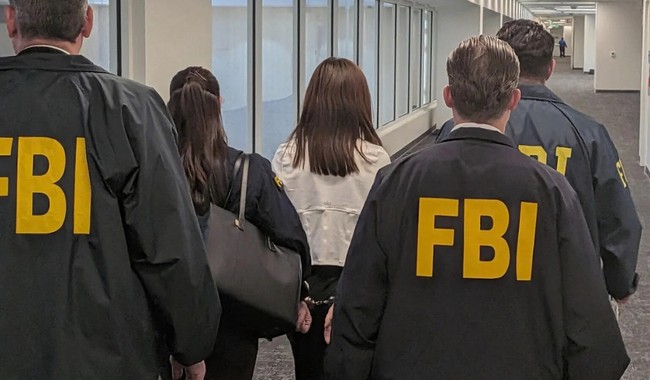
The FBI arrested Wanying Zhang at Los Angeles International Airport on Sunday before she could board a flight to China. According to the agency, Zhang, a California woman, allegedly sent photos and videos of Taiwan President Lai's son and his family to Chinese officials. The US accuses her of acting as a foreign agent for China.
From the center: This is a straightforward counterintelligence case: an alleged foreign agent was caught before leaving the country. It illustrates both the real threat of Chinese espionage in the US and the effectiveness of US law enforcement. The case matters as a data point on Chinese intelligence operations, but it is one arrest among many and should be kept in proportion — dramatic rhetoric about espionage needs to be balanced against the actual scale and impact of such incidents.
Brazil's presidential election on Sunday produced no majority winner, triggering a runoff scheduled for October 25. Senator Flávio Bolsonaro, son of former president Jair Bolsonaro, led the first round with 47-48% of votes, while incumbent President Luiz Inácio Lula da Silva received 44-46%. The result defied pre-election polls that had favored Lula.
From the center: Brazil faces a polarized choice in its runoff after a first round that surprised pollsters and energized the right. Neither candidate commands clear majority support, and both represent competing visions—Lula seeking continuity on the left, Bolsonaro offering a rightward turn. The runoff will likely turn on bread-and-butter issues and turnout rather than ideology alone. Both sides have legitimate appeal to different voter coalitions, and the outcome will reflect genuine democratic disagreement rather than any clear popular mandate.
The US Air Force redeployed all B-1 bombers from RAF Fairford in England to their home bases in the United States on October 4. The withdrawal followed arrests of several men suspected of planning a terrorist attack against the airbase. US officials described the threat as stemming from an Iran-based plot. The bombers had been stationed at Fairford and were used in US strikes on Iran.
From the center: The Pentagon made a practical decision to protect valuable military assets and personnel when faced with a concrete security threat identified by British authorities. The speed of withdrawal—within a week of arrests—suggests officials took the risk seriously, though it also raises questions about whether the threat assessment was complete. Both maintaining the deployment and withdrawing had trade-offs: staying risked assets and lives; leaving reduces forward presence against Iran. The decision prioritizes immediate safety over operational posture, a defensible but consequential choice that allies will have noticed.
Britain's Green Party voted at its annual conference in Brighton on Sunday, October 4, to define Zionism as a form of racism. The motion passed 1,022 to 813 (56% to 44%), making the Greens the first explicitly anti-Zionist mainstream UK political party. The party said it regards Zionism as an ethnonationalist ideology and will treat it as any other form of racism.
President Trump announced the creation of a 'Super Intelligence Force' task force and named Director of National Intelligence Jay Clayton as AI czar to lead it. The announcement followed Trump's hosting of top AI company executives at the White House, where they signed a voluntary accord for self-policing AI development. The task force will coordinate the administration's response to artificial intelligence policy.
From the center: Trump's creation of a dedicated AI task force acknowledges that artificial intelligence requires government attention, but the design raises practical questions. Voluntary industry accords can establish baseline norms, but they work only if enforcement mechanisms exist and companies have real incentives to comply. The real test will be whether this task force can balance innovation—which requires regulatory predictability—with genuine public safeguards. Clayton's appointment brings national security expertise, though the arrangement will need clear authority and resources to be effective.
Christa Pike, a Tennessee death row inmate, survived two doses of lethal injection during an execution attempt. She remains hospitalized on a ventilator with an unclear prognosis as doctors work to remove pentobarbital from her body, according to her attorney Stephen Ferrell. A witness described the outcome as "not normal."
From the center: Pike's case presents a genuine problem for death penalty administration: the execution system failed to function as intended, creating an unexpected medical crisis. This doesn't necessarily resolve the broader debate about capital punishment itself, but it does reveal practical gaps that responsible governance must address. Whether through procedural improvements, method changes, or individual commutations, the state has an obligation to prevent such scenarios while the underlying policy questions remain contested.
A former Cornell University student identified as Jane Doe alleged in a civil lawsuit filed last month that she was drugged and gang raped by seven fraternity members in 2024. No criminal charges have been filed against the accused. The case has drawn national attention and sparked calls from lawmakers for stronger sexual assault protections.
From the center: The Cornell case involves serious allegations that deserve thorough investigation, and the accuser deserves protection from harassment. The university's initial response appears insufficient, and a presidential review is warranted. At the same time, the criminal justice system requires evidence that meets legal standards before charges are brought—prosecutors' caution reflects this standard, even if it frustrates advocates for the accuser. Balancing survivor support with procedural fairness, examining both fraternity culture and legal frameworks on intoxication, and allowing investigation to proceed without prejudging outcomes represents the responsible approach.
German Chancellor Friedrich Merz arrived in Kyiv on an unplanned visit on October 4, 2026, to demonstrate support for Ukraine. Russian forces struck a major bridge spanning the Dnipro River during or shortly after his arrival—the second consecutive day of such attacks. Merz announced 1 billion euros in military aid and 350 million euros for energy sector repairs, and is expected to finalize a drone production deal.
From the center: Merz's visit balances symbolic solidarity with practical measures: substantial aid, energy repairs, and drone cooperation. The timing is awkward—Russian attacks during the visit complicate the message—but such overlaps are inevitable in an active conflict. The announcements address immediate Ukrainian needs without committing Germany to open-ended escalation, a prudent middle ground between abandonment and unlimited involvement.
Cornell University President Michael Kotlikoff released a video message on Saturday saying he was "deeply disturbed" by a 2024 rape allegation involving a student, known as Jane Doe, who alleges she was gang-raped by fraternity members. Kotlikoff said the university "must do better" and pledged to examine the role of fraternities and sororities on campus.
From the center: This case reveals the complexity of institutional accountability in sexual assault cases. Universities have responsibilities to investigate and support students, but they lack law enforcement powers and must defer to prosecutors on criminal charges. Cornell's administration clearly failed to communicate effectively with investigators and with the survivor. The president's response shows institutional awareness of the problem, though critics reasonably question whether statements alone suffice. A balanced path forward involves both university reforms—clearer procedures, better support—and genuine cooperation with prosecutors, without expecting administrators to substitute for criminal justice.
President Trump posted Sen. Tom Cotton's cellphone number on Truth Social on Saturday, urging Arkansas residents to call him and pressure him to support the Sunshine Protection Act, which would make daylight saving time permanent nationwide. Trump said Cotton was "holding up" and "stopping" the bill.
From the center: Trump and Cotton are at odds over the Sunshine Protection Act, a narrower legislative question where reasonable people disagree. Cotton's concern about dark mornings affecting children reflects real practical trade-offs. Trump's decision to publish the senator's phone number and encourage calls is an unconventional pressure tactic that breaks with standard political norms, though it stops short of direct threats. Both sides have legitimate points about daylight saving time's effects, but the method of dispute—public doxxing—distracts from the actual policy merits and raises questions about what counts as acceptable political pressure in the social media age.
No article in this story reads this way. This is how the position tends to frame events like it — written by a model, not quoted from anyone.
Tennessee Department of Correction Commissioner Frank Strada resigned on Saturday, Oct. 3, following the state's failed execution of death row inmate Christa Pike on Wednesday. Pike survived two doses of lethal injection and remains hospitalized in critical condition.
From the center: Frank Strada's resignation provides a necessary personnel change and a signal that the state takes the failed execution seriously. The independent review is the appropriate next step to determine what went wrong operationally — whether it was training, procedure, equipment, or personnel error. Governor Lee's decision to halt executions pending review is a reasonable pause that balances accountability with institutional process. The outcome should depend on what the review finds, and any policy changes should be measured and evidence-based rather than reactive.
No article in this story reads this way. This is how the position tends to frame events like it — written by a model, not quoted from anyone.
A federal judge on Friday temporarily blocked the Trump administration from constructing border barriers, roads, and related infrastructure in Big Bend National Park in Texas. The $1.7 billion project had waived dozens of environmental and other laws. Opposition crossed party lines, uniting environmentalists, landowners, and other Texans, leading to lawsuits from environmental groups.
From the center: The ruling reflects the courts' appropriate role in checking executive action when proper procedures are bypassed. The administration's waiver of environmental laws raised legitimate legal questions worth settling in court. Local communities deserve voice in decisions affecting their land and livelihoods, particularly on federal property. However, border security remains a valid government interest; the outcome here is a temporary injunction requiring further legal process, not a final answer to whether border barriers in this region are permissible overall.
The G7 nations agreed to release 100 million barrels of oil and diesel from strategic reserves over four months in coordination with the International Energy Agency. The White House had threatened to ban U.S. diesel exports if Europe did not participate. Trump subsequently denied he would implement a diesel export ban, calling the G7 decision a 'great thing.'
From the center: The G7 reached a pragmatic deal: releasing emergency reserves to ease prices in the short term while the U.S. secured European commitment rather than acting alone. Whether this balances the competing goals of price relief, reserve adequacy, and alliance cohesion depends on the sustainability of the measure—a temporary fix may work politically but risks leaving stockpiles depleted if prices spike again.
New York Governor Kathy Hochul announced plans to change state rape law and appointed Attorney General Letitia James as special prosecutor to investigate an alleged 2024 gang rape of a woman identified as Jane Doe at Cornell University. The case gained attention after prosecutors declined to file charges, citing a state law provision that allows defendants to argue victims' voluntary intoxication negates consent.
From the center: This case raises legitimate questions about how police and prosecutors handle sexual assault allegations and whether existing law adequately protects victims. Hochul's response—appointing a special prosecutor and proposing legislative change—uses normal institutional channels. The 'voluntary intoxication' loophole does appear problematic enough to warrant fixing. However, changing a legal doctrine requires care: the provision exists because establishing consent with intoxicated parties raises real legal complexities. The special prosecutor appointment itself has become politicized (Trump's criticism of James), which clouds the focus on the actual case. The appropriate course is thorough investigation and measured legal reform.
Christa Pike, 50, survived a lethal injection execution attempt in Tennessee on Wednesday night. According to her attorneys, she was administered two full doses of pentobarbital but remained alive after more than two hours. Pike is now hospitalized unconscious on a ventilator with significant injuries to both arms from the injections. Her lawyers say hospital staff are working to clear the drug from her system.
From the center: This execution failure creates a genuine dilemma that both sides of the death penalty debate should take seriously. The technical failure and Pike's suffering raise legitimate questions about whether Tennessee can execute safely and humanely—questions that deserve answers before proceeding. At the same time, this one incident shouldn't necessarily overturn longstanding legal convictions about capital punishment's legitimacy. The right path forward is a thorough, independent investigation to determine what happened, followed by honest judgment about whether the state can meet its own standards. Governor Lee's pause and review order is the responsible move.
The U.S. economy added 29,000 jobs in September, well below economist forecasts of 84,000, according to the Labor Department's employment report released Friday. August's figure was revised downward to 133,000 from an initially reported higher level. The unemployment rate rose to 4.2% from 4.1% in August.
From the center: The jobs report presents a mixed picture that requires measured interpretation. Yes, 29,000 jobs is far below expectations and represents a meaningful slowdown from recent months, and the uptick in unemployment is worth noting. However, the South China Morning Post notes this may partly reflect calendar anomalies rather than fundamental labour market deterioration. Neither a panicked response nor dismissal of the data serves the public interest—policymakers should wait for additional months of data before concluding the labour market has genuinely shifted direction, while remaining alert to genuine weakening if it continues.