US economy adds 29,000 jobs in September, unemployment rises to 4.2%
Reported by
A dot shows how that piece reads — Prism rates articles, not outlets, and shows the words behind each placement below. No dot means the piece isn’t rated. How the ratings work

What happened
The account the coverage agrees on, with contested figures attributed rather than asserted. This is not one of the five framings below — it is the ground they all stand on.
The U.S. economy added 29,000 jobs in September, well below economist forecasts of 84,000, according to the Labor Department's employment report released Friday. August's figure was revised downward to 133,000 from an initially reported higher level. The unemployment rate rose to 4.2% from 4.1% in August. The South China Morning Post attributed the weakness partly to a calendar quirk rather than a fundamental shift in the labour market.
How the spectrum reads this story
The same event, summarised as five points on the political spectrum would each tend to frame it. These are generated by an AI model and are a starting point, not the last word.
Left
September's jobs report reveals a labour market showing real signs of strain, with hiring collapsing to just 29,000 positions—a dramatic drop that exposes the fragility of wage growth and job security for working Americans. While some analysts blame calendar effects, the broader pattern of slowing hiring suggests the economy is cooling faster than policymakers anticipated, putting pressure on workers already squeezed by inflation. This deterioration demands urgent action to protect employment and strengthen the social safety net rather than waiting for markets to correct themselves.
Center-left
The September jobs report shows concerning weakness, with only 29,000 jobs added against economist expectations of 84,000 and the unemployment rate ticking up to 4.2%. While some of this may reflect temporary calendar factors, the sharp deceleration from August's revised 133,000 jobs signals the labour market is cooling noticeably. The Federal Reserve should carefully assess whether rate hikes remain appropriate given this softer employment picture, and policymakers should monitor whether this trend deepens or stabilizes in coming months.
Center
The jobs report presents a mixed picture that requires measured interpretation. Yes, 29,000 jobs is far below expectations and represents a meaningful slowdown from recent months, and the uptick in unemployment is worth noting. However, the South China Morning Post notes this may partly reflect calendar anomalies rather than fundamental labour market deterioration. Neither a panicked response nor dismissal of the data serves the public interest—policymakers should wait for additional months of data before concluding the labour market has genuinely shifted direction, while remaining alert to genuine weakening if it continues.
Center-right
The September employment report shows hiring has slowed considerably, with just 29,000 jobs added versus expectations of 84,000, and unemployment rising to 4.2%. This provides welcome evidence that the Federal Reserve's rate increases are achieving their intended effect of cooling demand and easing inflationary pressure. While the slowdown warrants monitoring, some of the weakness appears tied to calendar timing rather than structural problems. The priority now should be allowing the Fed's policy to work without additional government intervention that could reignite inflation or create dependency.
Right
September's jobs report, showing only 29,000 positions added against forecasts of 84,000, demonstrates that the Federal Reserve's necessary rate increases are working to bring inflation under control after years of reckless spending and monetary expansion. The unemployment rise to 4.2% reflects a market correction to unsustainable conditions created by excessive government stimulus. While some blame calendar quirks, the underlying message is clear: restraint in both monetary and fiscal policy is essential to restore sound economic footing, even if it means temporary pain as distortions unwind.
Hear two viewpoints debate it
Pick two viewpoints and Prism writes a short, six-turn exchange about this story in each one’s own voice — steel-manned, no winner declared. Each pairing is written once and then saved for every reader. The voices are AI syntheses of a tradition, not real people.
New pairing — Prism will write it now.
How each outlet covered it
Where Prism places each piece — not the outlet in general — with the words from that piece that put it there, and the photograph the outlet chose. Picking a photo is a framing decision too.
 Straight Arrow NewsThis piece reads center-left
“added just 29,000 jobs in September, far fewer than economists expected”
Read the original NBC NewsThis piece reads center-left
“Labor market slowed in September”
FramingLike The Guardian, leads with electoral timing rather than the jobs numbers as the primary news element—frames report significance through political calendar.
Read the original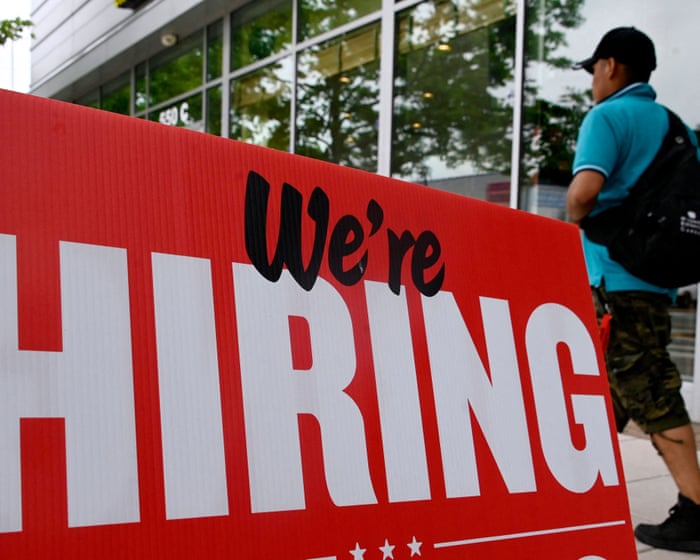 The GuardianThis piece reads center-left
“sharp drop from last month's gains”
FramingOpens with the political timing of the report in the headline and lead, where other outlets lead with the employment figures themselves—emphasizes electoral context over economic data.
Read the original
 Financial Timesnot rated
FramingFrames the jobs report primarily through its market impact on Fed policy expectations rather than labour market conditions themselves—emphasizes financial trading response rather than employment reality.
Read the original
- South China Morning PostThis piece reads center
“weakness likely related to a calendar quirk”
What's left outOffers a specific, technical explanation for the weak figure that other outlets do not mention—this framing suggests the hiring slowdown may be statistical artifact rather than economic deterioration.
Read the original 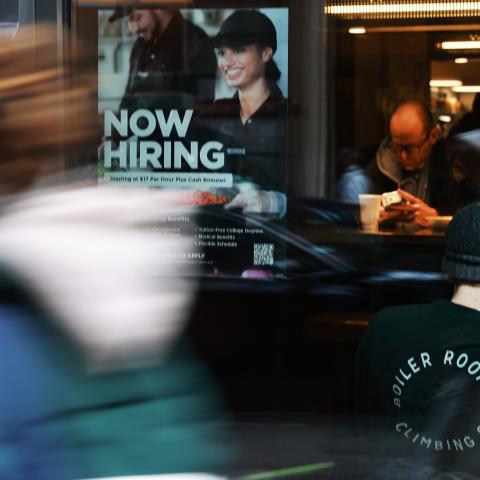


Placements are generated by an AI model from each article’s own headline and summary, and every quotation above is checked to be a real substring of that article before it is published. How this is done
Prism is free and carries no advertising. Support it if it was useful.