Russian strikes on Ukraine kill civilians as Trump eases diesel sanctions on Moscow
Reported by
A dot shows how that piece reads — Prism rates articles, not outlets, and shows the words behind each placement below. No dot means the piece isn’t rated. How the ratings work
What happened
The account the coverage agrees on, with contested figures attributed rather than asserted. This is not one of the five framings below — it is the ground they all stand on.
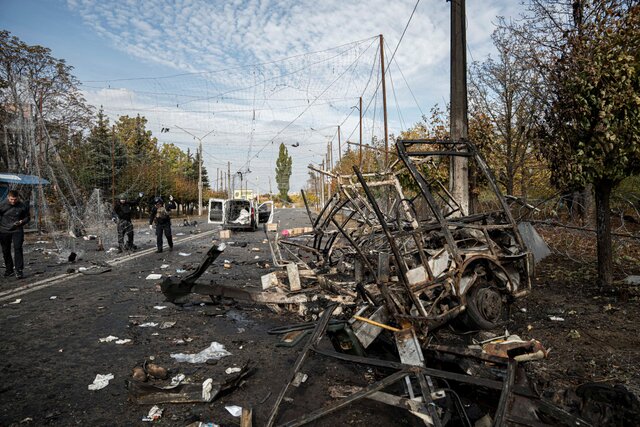
Russia conducted mass-casualty strikes on Ukrainian cities, with death tolls ranging from 15 to 20 according to different outlets. The attacks occurred after U.S. President Trump announced a deal easing diesel sanctions on Moscow following a call with Vladimir Putin. Ukrainian President Zelenskyy criticized Trump over the sanctions relief. Overnight strikes on Zaporizhzhia killed at least three children. Ukrainian drones also struck Russian infrastructure in Kaluga, injuring nine people. Trump subsequently suggested Zelenskyy should be replaced after the Ukrainian leader's criticism of the diesel deal. The U.S. warned Ukraine that strikes on Russia could jeopardize intelligence-sharing.
How the spectrum reads this story
The same event, summarised as five points on the political spectrum would each tend to frame it. These are generated by an AI model and are a starting point, not the last word.
Left
This is what happens when a U.S. president enables an authoritarian aggressor by easing sanctions without conditions. Trump's deal rewards Moscow while Ukraine bleeds, and his hostile response to Zelenskyy's legitimate protest shows the U.S. is abandoning its ally to pursue a corrupt partnership with Putin. The pattern is clear: accommodation of authoritarianism empowers violence and betrays democratic resistance.
No article in this story reads this way. This is how the position tends to frame events like it — written by a model, not quoted from anyone.
Center-left
Trump's unilateral diesel sanction relief, announced after a Putin call, appears to have emboldened Russian military action without securing any reciprocal concessions. Zelenskyy's criticism is understandable given the timing and the civilian casualties, and Trump's suggestion that Ukraine's leader be replaced is inflammatory. The U.S. should coordinate with allies rather than making deals that isolate and demoralize Ukraine.
Drawn from 3 articles placed here, below.
Center
The sequence of events—sanctions eased, then Russian strikes intensify, then tensions between Washington and Kyiv spike—creates a troubling optics problem regardless of causation. Trump and Zelenskyy appear to be on collision course, which risks fracturing the Ukraine coalition. Both sides have legitimate concerns: the U.S. wants to avoid escalation and explore diplomatic off-ramps, while Ukraine fears abandonment. This requires careful diplomacy, not public recriminations.
Drawn from 3 articles placed here, below.
Center-right
Trump is attempting a realistic shift toward negotiations and reducing U.S. entanglement in a grinding proxy war, but his tactics are clumsy. The diesel deal may or may not have been wise, but Zelenskyy's immediate public complaints undermine the diplomatic process and suggest Ukraine is more interested in American support than serious peace talks. Ukraine's strikes on Russian territory complicate Trump's negotiating position and justify his frustration.
Drawn from 1 article placed here, below.
Right
Trump is right to question why the U.S. keeps bankrolling Ukraine when it won't restrain its own military actions. The diesel deal is a reasonable first step toward talking to Russia rather than endlessly prolonging conflict. Zelenskyy's refusal to accept any American conditions and his attacks on Trump's judgment show he has no genuine interest in peace—only in maximizing U.S. support. Ukraine needs to negotiate, not escalate.
No article in this story reads this way. This is how the position tends to frame events like it — written by a model, not quoted from anyone.
Hear two viewpoints debate it
Pick two viewpoints and Prism writes a short, six-turn exchange about this story in each one’s own voice — steel-manned, no winner declared. Each pairing is written once and then saved for every reader. The voices are AI syntheses of a tradition, not real people.
New pairing — Prism will write it now.
How each outlet covered it
Where Prism places each piece — not the outlet in general — with the words from that piece that put it there, and the photograph the outlet chose. Picking a photo is a framing decision too.
- The Moscow TimesThis piece reads center-left
“Trump eases diesel sanctions on Moscow”
FramingDirectly links Trump's sanction relief to the timing of Russian strikes in the headline, which invites a causal reading. Other outlets report the events in sequence but don't use 'after' to suggest one triggered the other.
Read the original - Politico EuropeThis piece reads center-left
“Russia's 'thanks' for US diesel sanctions lift, Zelenskyy says”
Read the original 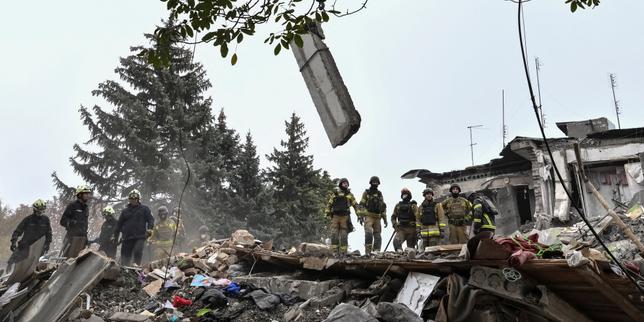 Le MondeThis piece reads center-left
“Trump returned barbs directed at the Ukrainian leader”
Read the original- National PostThis piece reads center
“Zelensky blasts diesel deal after Russian strikes kill 15”
Read the original - MeduzaThis piece reads center
“new peace talks involving Kyiv, the U.S., and Europe”
What's left outEmphasizes ongoing peace negotiations in the headline alongside Ukraine's military strikes, framing the latter as occurring during a diplomatic process rather than in isolation.
Read the original  The i PaperThis piece reads center
“relations between the US and Ukraine may now be tested”
Read the original Financial TimesThis piece reads center-right
“US warns Kyiv that strikes on Russia jeopardise intelligence-sharing”
FramingLeads with the U.S. warning to Ukraine rather than the Russian strikes themselves, centering Trump's complaint about Ukrainian action over Russian aggression.
Read the original
Placements are generated by an AI model from each article’s own headline and summary, and every quotation above is checked to be a real substring of that article before it is published. How this is done
Prism is free and carries no advertising. Support it if it was useful.