Fort Hood shooter Nidal Malik Hasan approved for firing squad execution
Reported by
A dot shows how that piece reads — Prism rates articles, not outlets, and shows the words behind each placement below. No dot means the piece isn’t rated. How the ratings work
What happened
The account the coverage agrees on, with contested figures attributed rather than asserted. This is not one of the five framings below — it is the ground they all stand on.
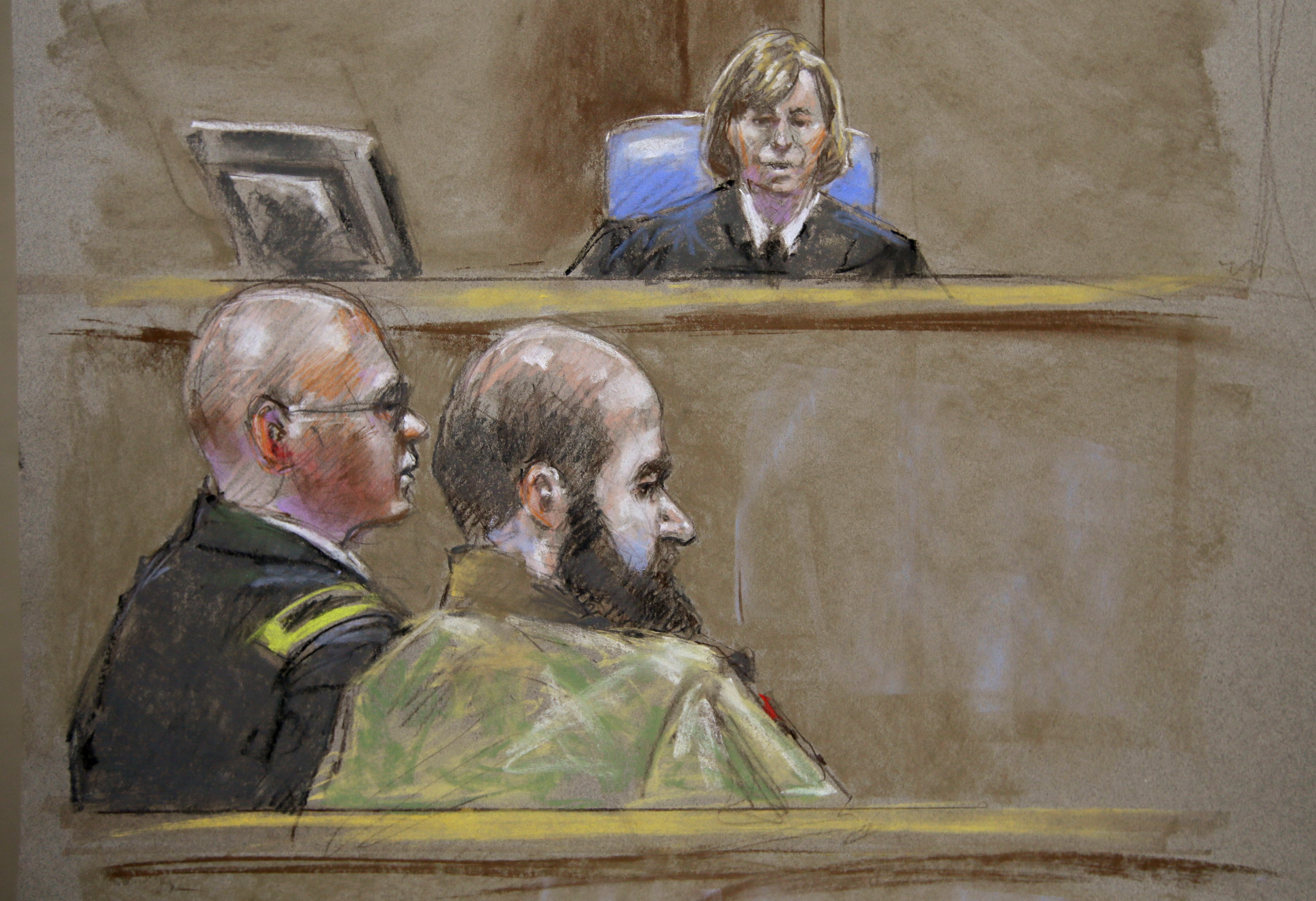
President Trump approved execution by firing squad for Nidal Malik Hasan, the former Army officer who killed 13 people and wounded 32 in a shooting at Fort Hood on November 5, 2009. The execution is scheduled for December 3 at Fort Hood. This marks the first firing squad execution by the U.S. military since World War Two; the Army has primarily used hanging for capital punishment since 1945.
How the spectrum reads this story
The same event, summarised as five points on the political spectrum would each tend to frame it. These are generated by an AI model and are a starting point, not the last word.
Left
The execution represents a retreat into state violence that fails to address the root causes of military violence or prevent future tragedies. Executing Hasan does nothing to reform the systems that allowed his attack to occur or to help survivors heal. The shift to firing squads signals a willingness to embrace brutal methods and abandon the trajectory toward abolishing capital punishment, particularly troubling given that Hasan experienced mental health crises the military failed to address.
Center-left
While Hasan's crimes were horrific and warrant serious consequences, the decision to execute him raises difficult questions about the purpose of the death penalty and whether it serves justice or simply retribution. The military should have exhausted all alternatives and considered whether execution actually deters future violence or merely satisfies a desire for vengeance. The approval also comes without sufficient public debate about reviving firing squads after seven decades.
Center
Hasan committed one of the deadliest attacks on a U.S. military base, and the military justice system has determined execution is the appropriate sentence. The procedural questions—whether firing squad is the right method, whether it was properly approved—deserve scrutiny, but they are separate from the underlying conviction and sentence. A measured approach examines both the legitimacy of the penalty and the concerns of those, including religious leaders, who oppose capital punishment on principle, without letting either position override institutional process.
Center-right
Hasan's attack killed 13 people and wounded 32 more; the sentence of death reflects the severity of the crime and the need for accountability. The use of firing squad, while uncommon in the modern era, is a legitimate military justice procedure and represents a straightforward application of law to an exceptionally grave case. The execution should proceed as scheduled, and it reinforces that the military takes the protection of its personnel seriously.
Right
Hasan murdered 13 soldiers and civilians and wounded 32 others in a premeditated attack on American military personnel. The approval for execution is long overdue—he has spent nearly two decades on death row while victims and their families waited for justice. The execution by firing squad is an appropriate method for a military crime and demonstrates that the military will hold those who betray their oath accountable without hesitation or endless legal delay.
Hear two viewpoints debate it
Pick two viewpoints and Prism writes a short, six-turn exchange about this story in each one’s own voice — steel-manned, no winner declared. Each pairing is written once and then saved for every reader. The voices are AI syntheses of a tradition, not real people.
New pairing — Prism will write it now.
How each outlet covered it
Where Prism places each piece — not the outlet in general — with the words from that piece that put it there, and the photograph the outlet chose. Picking a photo is a framing decision too.
 Catholic News AgencyThis piece reads center-left
“Tennessee bishops call for end to death penalty”
FramingPairs the execution announcement with religious opposition to capital punishment, elevating moral and theological objections as a counterpoint rather than covering the execution as a standalone institutional decision.
Read the original- Military TimesThis piece reads center
“Army sets date, location for execution of Nidal Malik Hasan”
Read the original  BBCThis piece reads center
“deadliest ever non-combat attack on an American military base”
Word choiceUses the superlative 'deadliest ever' to establish the magnitude of the crime, emphasizing the historical severity in a way other outlets describe more factually.
Read the original The National InterestThis piece reads center-right
“Trump Approves Firing Squad for Fort Hood Mass Shooter”
FramingEmphasizes Trump's personal approval by naming him in the headline, whereas other outlets attribute the decision to the Army or present it as a scheduled event without foregrounding presidential action.
Read the original- American GreatnessThis piece reads right
“Trump Approves Firing Squad Execution for Fort Hood Mass Shooter”
FramingIncludes the full name in the headline where others use only the first and last name or descriptive titles, treating him as a named individual rather than distancing through title alone.
Read the original
Placements are generated by an AI model from each article’s own headline and summary, and every quotation above is checked to be a real substring of that article before it is published. How this is done
Prism is free and carries no advertising. Support it if it was useful.