UK Green Party votes to define Zionism as racism
Reported by
A dot shows how that piece reads — Prism rates articles, not outlets, and shows the words behind each placement below. No dot means the piece isn’t rated. How the ratings work
What happened
The account the coverage agrees on, with contested figures attributed rather than asserted. This is not one of the five framings below — it is the ground they all stand on.
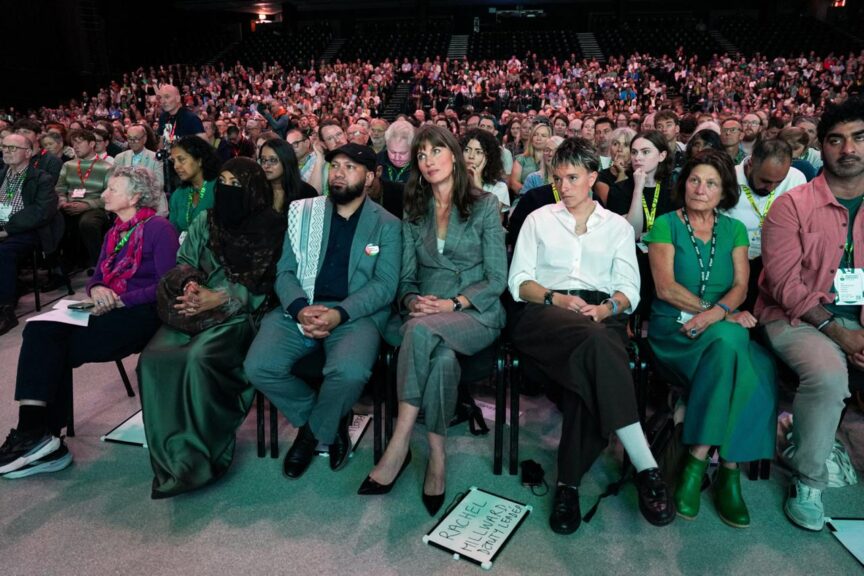
Britain's Green Party voted at its annual conference in Brighton on Sunday, October 4, to define Zionism as a form of racism. The motion passed 1,022 to 813 (56% to 44%), making the Greens the first explicitly anti-Zionist mainstream UK political party. The party said it regards Zionism as an ethnonationalist ideology and will treat it as any other form of racism. The vote drew sharp criticism from three British Jewish groups, the ruling Labour Party, and Israel's government, which said it now views the party as 'a body that gives legitimacy to terrorism.' Israel's president called it an 'antisemitic lie' that endangers Jews and Israelis. The motion was put forward by members of the Greens for Palestine group, and several senior Green party figures opposed it.
How the spectrum reads this story
The same event, summarised as five points on the political spectrum would each tend to frame it. These are generated by an AI model and are a starting point, not the last word.
Left
The Green Party has taken a principled stand by formally recognizing that Zionism, as a political ideology centred on establishing and maintaining a Jewish-majority state, operates as a form ethnonationalism incompatible with principles of equality and self-determination for Palestinians. This decision reflects the party's commitment to anti-racism and decolonial politics, and represents a breakthrough moment where a mainstream party has finally named the structural injustice at the heart of the Israeli state. While some party figures expressed reservations, the democratic mandate of members—voting to treat Zionism like other forms of nationalism based on ethnic or religious supremacy—aligns the Greens with their stated values on anti-racism and Palestinian rights.
Center-left
The Green Party's decision to define Zionism as racism is problematic and will damage the party's credibility and electoral prospects. While legitimate criticism of Israeli government policies and settlements is necessary, equating an entire political movement and the aspiration for Jewish self-determination with racism conflates ideology with identity and abandons the nuance required for serious politics. The move has alienated Jewish constituents and the Labour government, deepened internal party divisions despite the vote, and suggests the Greens prioritize symbolic gestures over building coalitions needed to influence actual policy. A mainstream party aiming for power should distinguish between opposing specific policies and making sweeping moral declarations that alienate potential allies.
Center
The Green Party has passed a motion that satisfies its activist base but creates real problems for a party with genuine parliamentary representation and political ambitions. The vote reflects genuine internal disagreement—the 56-44 split shows the party is divided—and the sharp backlash from Jewish groups, Labour, and Israel suggests the framing has hurt the party's standing. The question now is whether the party can operationalize this policy without further alienating mainstream voters and coalition partners, or whether this will remain a symbolic statement that hampers the Greens' ability to grow beyond their current niche. The party needs to clarify what treating Zionism 'like other forms of racism' actually means in practice.
Center-right
The Green Party has embraced a position that is hostile to Jewish self-determination and Israeli sovereignty. By formally equating Zionism with racism, the party has effectively delegitimized both the historical Jewish aspiration for a homeland and the existing state of Israel. This goes well beyond criticism of specific Israeli policies into territory that Jewish communities reasonably experience as antisemitic. The fact that this motion passed at a mainstream party—one with parliamentary seats—reflects how far left-wing politics have drifted from defending liberal principles like minority rights and religious freedom. The backlash from Jewish groups and the Labour government is entirely warranted, and this decision will rightly damage the Greens' electoral credibility.
Right
The Green Party has openly declared itself anti-Zionist and aligned with ideologies hostile to Jewish nationhood and Israel's existence. This represents the capture of a mainstream British political party by radical activist elements who view Jewish self-determination as inherently illegitimate while offering no equivalent critique of other nationalist movements. The motion to treat Zionism 'as any other form of racism' is a transparent attempt to isolate and delegitimize Israel internationally. That such a position can now pass in a major party—even one currently small—demonstrates how thoroughly progressive institutions have adopted anti-Israel ideology as orthodoxy, while simultaneously claiming concern for human rights elsewhere.
Hear two viewpoints debate it
Pick two viewpoints and Prism writes a short, six-turn exchange about this story in each one’s own voice — steel-manned, no winner declared. Each pairing is written once and then saved for every reader. The voices are AI syntheses of a tradition, not real people.
New pairing — Prism will write it now.
How each outlet covered it
Where Prism places each piece — not the outlet in general — with the words from that piece that put it there, and the photograph the outlet chose. Picking a photo is a framing decision too.
- Novara MediaThis piece reads center-left
“first explicitly anti-Zionist mainstream political party in the UK”
FramingFrames the vote as a historic break, emphasizing the Greens' distinction as the first mainstream party to take this stance, where other outlets focus on the vote itself and the reactions.
Read the original - Al JazeeraThis piece reads center
“Israel lashes out as UK's Green Party formally defines Zionism as 'racism”
Read the original - New StatesmanThis piece reads center
“The party is split after voting to define Zionism as racism”
Read the original - Al-Monitornot ratedRead the original
 Daily MirrorThis piece reads center
“Members at the Green Party conference backed the motion”
FramingProvides a parenthetical definition of Zionism as 'the movement to develop and protect a Jewish state'—an explanatory framing that other outlets omit, establishing what is being classified before the classification.
Read the original- The Express TribuneThis piece reads center
“Motion calling for Zionism to be treated as racism passes”
Read the original - The Straits TimesThis piece reads center
“Britain's Green Party voted on Sunday to class Zionism as a form of racism”
Read the original - National PostThis piece reads center-right
“Leftist U.K. Green party adopts policy that equates Zionism with racism”
Word choiceOpens with 'Leftist' as a descriptor, foregrounding the party's ideological position in a way that loads the framing before the policy is even named.
Read the original - The EconomistThis piece reads center-right
“voted, shamefully, to say Zionism is racism”
Word choiceUses the editorial voice directly to declare the vote shameful—a direct moral judgment embedded in the headline itself, whereas other outlets report the vote and the reactions to it separately.
Read the original 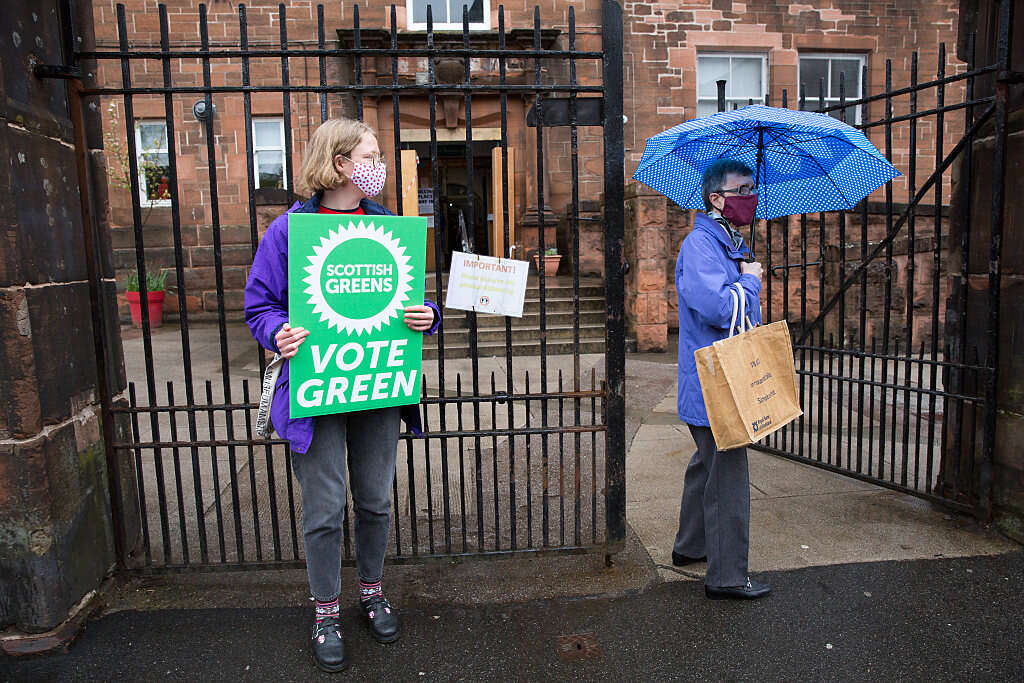 Israel HayomThis piece reads right
“Zionism is racism': UK Green Party sets dangerous precedent”
Word choiceCharacterizes the vote as setting a 'dangerous precedent,' a forward-looking judgment about consequences, whereas most outlets report the immediate reactions and context.
Read the original
Placements are generated by an AI model from each article’s own headline and summary, and every quotation above is checked to be a real substring of that article before it is published. How this is done
Prism is free and carries no advertising. Support it if it was useful.