Tennessee corrections commissioner resigns after botched Christa Pike execution
Reported by
A dot shows how that piece reads — Prism rates articles, not outlets, and shows the words behind each placement below. No dot means the piece isn’t rated. How the ratings work
MSNBC
What happened
The account the coverage agrees on, with contested figures attributed rather than asserted. This is not one of the five framings below — it is the ground they all stand on.
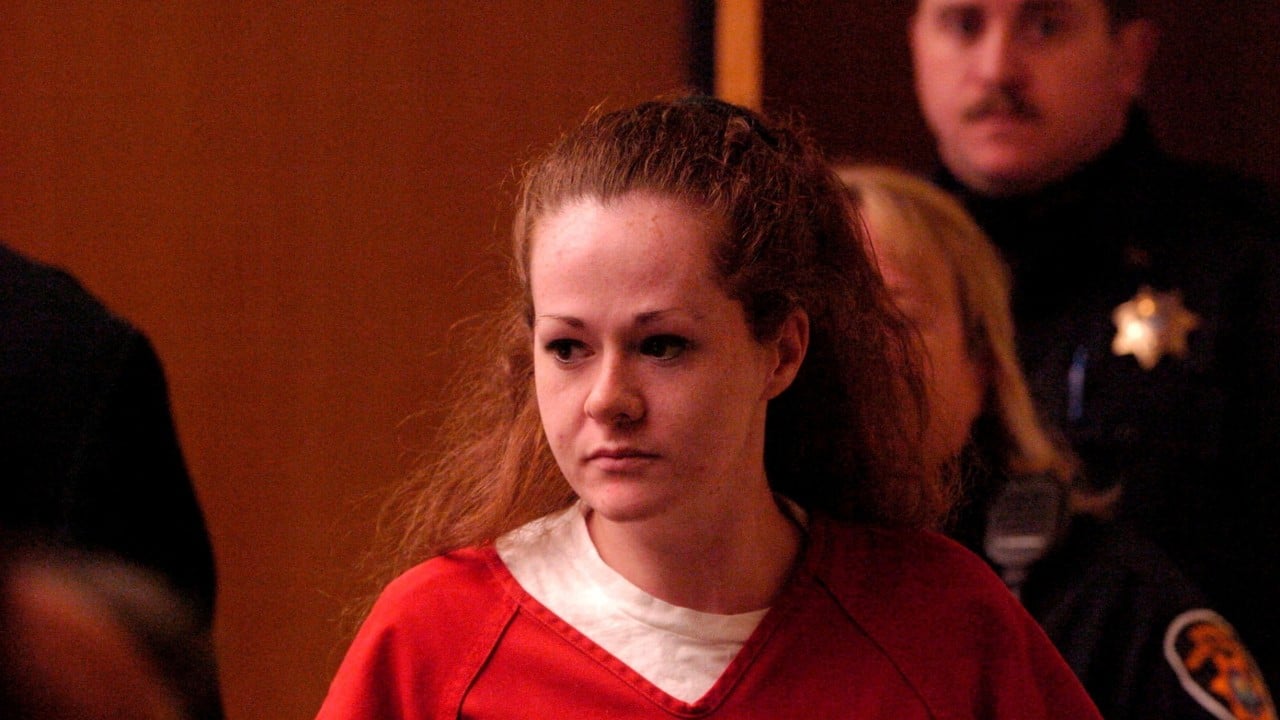
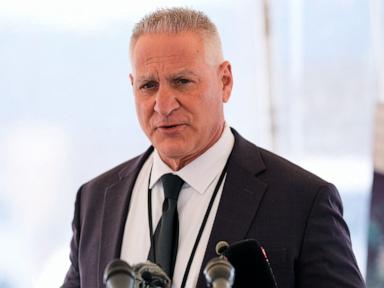
Tennessee Department of Correction Commissioner Frank Strada resigned on Saturday, Oct. 3, following the state's failed execution of death row inmate Christa Pike on Wednesday. Pike survived two doses of lethal injection and remains hospitalized in critical condition. Governor Bill Lee announced Strada's resignation and said he has halted further executions through the end of the year while an independent review examines what went wrong.
Developing story · 2 chapters
- Tennessee halts executions after Christa Pike survives two botched lethal injections
- Tennessee corrections commissioner resigns after botched Christa Pike executionyou are here
How each side framed the previous chapter
Compare these with the five framings below to see what moved as the story developed — and what each side kept saying regardless.
Left
The botched execution of Christa Pike exposes the fundamental cruelty of capital punishment and the state's inability to carry it out without inflicting torture. This is not a technical failure to be fixed with better procedures—it is evidence that execution by lethal injection is inherently brutal and violates basic human dignity. The state should not be in the business of killing people, and this horrific spectacle proves why the death penalty must be abolished entirely.
Center-left
The failure to execute Christa Pike joins a troubling pattern of botched lethal injections in Tennessee and nationwide, raising serious questions about whether states can carry out capital punishment humanely and constitutionally. Even if one supports the death penalty in principle, this repeated failure suggests the current method is unreliable and causes unnecessary suffering. States should either develop genuinely reliable execution protocols or reconsider whether lethal injection is workable.
Center
Tennessee faces a genuine procedural crisis: two failed executions in one year signals a systemic problem that demands investigation. Governor Lee's decision to halt executions and commission a third-party review is the right response—not reflexive, not emotional, but practical. The state has both a duty to carry out lawful sentences and an obligation to do so humanely and competently. Whether that means fixing the process or reconsidering the method itself should depend on what the independent review actually finds.
Center-right
Governor Lee took appropriate action by pausing executions and ordering a thorough investigation to determine what went wrong. Pike was lawfully convicted and sentenced; Tennessee has the right and responsibility to carry out that sentence. However, the repeated failures damage public confidence in the state's ability to execute its laws effectively and constitutionally. A rigorous review should identify whether the problem is training, equipment, or protocol—and whether it can be fixed quickly and reliably.
Right
While the execution failed on a technical level, the state has a constitutional duty to carry out lawfully imposed sentences. Governor Lee's pause and investigation are reasonable steps to restore competence and public confidence. The focus should be on fixing the operational failures—better training, equipment, or protocols—so that Tennessee can fulfill its legal obligation. Executing sentences the law imposes is not cruelty; it is the rule of law in action.
How the spectrum reads this story
The same event, summarised as five points on the political spectrum would each tend to frame it. These are generated by an AI model and are a starting point, not the last word.
Left
The resignation of Frank Strada exposes systemic failures in how the state executes capital punishment — failures so deep that removing one administrator cannot fix them. This botched execution of Christa Pike reveals that capital punishment itself is inherently broken and cruel. The state's inability to carry out executions 'humanely' is not a management problem but evidence that execution is incompatible with civilized society. Rather than tinkering with personnel, the focus should be on abolishing capital punishment altogether.
Center-left
Frank Strada's resignation acknowledges accountability for the failed execution, but it is insufficient on its own. The independent review must uncover systemic problems in training, procedure, and oversight that allowed this to happen. Pike's survival of two lethal injections raises serious questions about whether Tennessee's execution protocol is humane and reliable. This incident strengthens the argument for reconsidering capital punishment or at least requiring rigorous safeguards before executions resume.
Center
Frank Strada's resignation provides a necessary personnel change and a signal that the state takes the failed execution seriously. The independent review is the appropriate next step to determine what went wrong operationally — whether it was training, procedure, equipment, or personnel error. Governor Lee's decision to halt executions pending review is a reasonable pause that balances accountability with institutional process. The outcome should depend on what the review finds, and any policy changes should be measured and evidence-based rather than reactive.
Center-right
Frank Strada's resignation is a responsible step by Governor Lee to restore public confidence in state institutions after a serious operational failure. An independent review will identify what went wrong in execution procedures so the state can correct it and resume executions safely and reliably. Capital punishment serves legitimate state interests as a punishment for the most serious crimes, and this incident, while serious, does not call into question the practice itself — only its administration. Proper management and oversight can address procedural failures.
Right
Frank Strada's resignation shows that Governor Lee is taking responsibility and acting decisively to correct an administrative failure. The state has the right and duty to carry out lawful sentences, including capital punishment. This execution failure was a procedural problem, not a reason to halt executions or question the penalty. The focus should be on fixing the technical and operational errors — training, equipment, protocols — so executions can be carried out as the courts have ordered. Broad questioning of capital punishment itself overreaches beyond this particular incident.
Hear two viewpoints debate it
Pick two viewpoints and Prism writes a short, six-turn exchange about this story in each one’s own voice — steel-manned, no winner declared. Each pairing is written once and then saved for every reader. The voices are AI syntheses of a tradition, not real people.
New pairing — Prism will write it now.
How each outlet covered it
Every outlet that reported this event, with the photograph it chose. Picking a photo is a framing decision too.
 MSNBCnot rated
Word choiceUses 'botched' in the headline where other outlets use neutral terms like 'failed' — the word carries stronger judgment of incompetence.
Read the original The Guardiannot ratedRead the original
 Le Mondenot ratedRead the original
 The Hillnot ratedRead the original
 France 24not rated
Word choiceDescribes the event as 'stunning,' an emotional characterization absent from most other outlets, which frame it more factually.
Read the original- The Straits Timesnot ratedRead the original
 South China Morning Postnot rated
FramingEmphasizes Pike's current medical condition in the opening paragraph, whereas most outlets mention her critical condition less prominently.
Read the original UPInot ratedRead the original
 BBCnot rated
What's left outIncludes a statement from Pike's lawyers that the failure is systemic rather than just an individual's mistake — an interpretive framing most other outlets omit.
Read the original- Al Jazeeranot ratedRead the original
 NewsNationnot ratedRead the original
 ABC Newsnot ratedRead the original
 Washington Examinernot ratedRead the original
Prism is free and carries no advertising. Support it if it was useful.