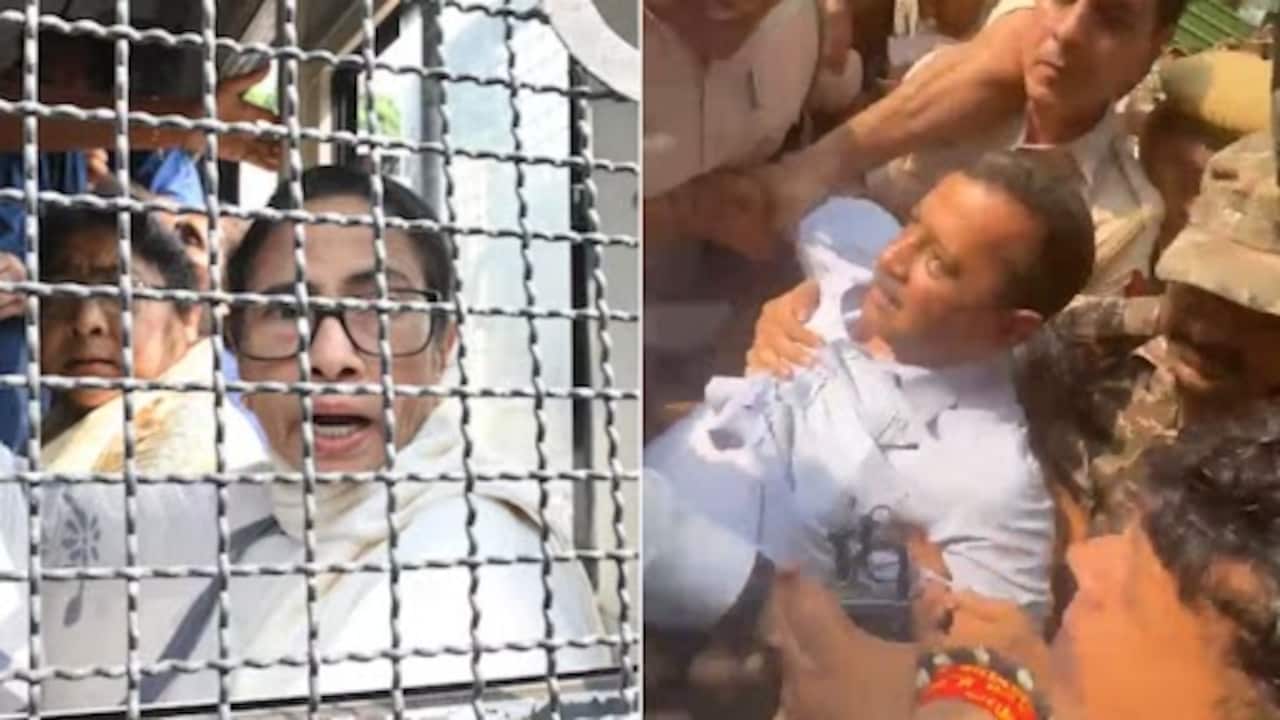
Indian police detain leaders and protesters of 'Cockroach' movement against election commission
Reported by
A dot shows how that piece reads — Prism rates articles, not outlets, and shows the words behind each placement below. No dot means the piece isn’t rated. How the ratings work
What happened
The account the coverage agrees on, with contested figures attributed rather than asserted. This is not one of the five framings below — it is the ground they all stand on.
Indian police detained thousands of protesters across Delhi on October 10, 2026, ahead of a planned mass demonstration. Those detained included Cockroach Janta Party (CJP) founder Abhijeet Dipke, West Bengal Chief Minister Mamata Banerjee, Delhi Chief Minister Arvind Kejriwal, Kerala Chief Minister P Vijayan, and other opposition leaders and student activists. The protest targeted India's chief election commissioner over alleged misconduct during a nationwide voter-roll revision. Police closed 45 Delhi Metro stations and implemented traffic restrictions. Detainee numbers reported ranged from around 1,000 to over 5,000 across the city.
How the spectrum reads this story
The same event, summarised as five points on the political spectrum would each tend to frame it. These are generated by an AI model and are a starting point, not the last word.
Left
The Modi government's detention of thousands—including major opposition leaders and youth activists—reveals how state power crushes dissent when it threatens those in power. The CJP's satirical movement exposed real corruption in the electoral process, and the regime responded not with accountability but with mass arrests and infrastructure shutdowns. This is what authoritarian consolidation looks like: when ordinary people and their elected representatives try to demand electoral integrity, the state silences them. The scale of detentions shows this was political suppression, not public order management.
No article in this story reads this way. This is how the position tends to frame events like it — written by a model, not quoted from anyone.
Center-left
The government's decision to detain thousands of protesters, including sitting opposition chief ministers, raises serious concerns about democratic norms and proportionality. While governments have legitimate interests in managing large protests, preemptively detaining political opponents and leaders undermines the opposition's ability to function. The concerns about electoral misconduct deserve investigation and transparent response, not police action against those raising them. Mass detention of this scale—closing metro stations, blocking access to a designated protest site—suggests the response was disproportionate to any genuine security threat.
Drawn from 4 articles placed here, below.
Center
India faces a genuine tension between maintaining public order and protecting democratic space. Large protests do require security planning, and authorities have a duty to prevent violence. However, the scale of detentions—including major opposition figures and thousands of ordinary citizens—appears to have crossed from managing risk into preventive suppression. The concerns about voter-roll changes are serious enough to warrant real government response: independent investigation, public data release, or commission review. Detaining protesters rather than addressing their grievances is a governance failure that will likely deepen public anger regardless of which complaints are valid.
Drawn from 3 articles placed here, below.
Center-right
India's government faced a genuine challenge: a planned mass protest by an opposition-aligned youth movement in the capital. Police have responsibility for preventing violence and maintaining order, particularly when large gatherings are announced. The detentions of opposition figures and protesters appear designed to prevent a major disruption rather than a response to imminent violence. The underlying dispute—how voter rolls were revised—is a legitimate policy question where the government should provide transparency. Cracking down on protesters is inefficient governance; the government's better path is to publicly defend or investigate its election commission's actions.
No article in this story reads this way. This is how the position tends to frame events like it — written by a model, not quoted from anyone.
Right
India's government acted to prevent what could have been a destabilizing mass protest in the capital. The 'Cockroach' movement's satirical framing masked serious political intent: to mobilize opposition against the government and election officials. Mass gatherings organized by anti-government coalitions require police management to protect public order and national stability. The detentions prevented potential violence, traffic chaos, and the disruption such events cause. Opposition leaders' participation shows this was coordinated political action, not spontaneous protest. Democratic governance requires maintaining order, and India's police took reasonable steps to do so—though transparency about the specific legal grounds for detention would strengthen public confidence.
No article in this story reads this way. This is how the position tends to frame events like it — written by a model, not quoted from anyone.
Hear two viewpoints debate it
Pick two viewpoints and Prism writes a short, six-turn exchange about this story in each one’s own voice — steel-manned, no winner declared. Each pairing is written once and then saved for every reader. The voices are AI syntheses of a tradition, not real people.
New pairing — Prism will write it now.
How each outlet covered it
Where Prism places each piece — not the outlet in general — with the words from that piece that put it there, and the photograph the outlet chose. Picking a photo is a framing decision too.
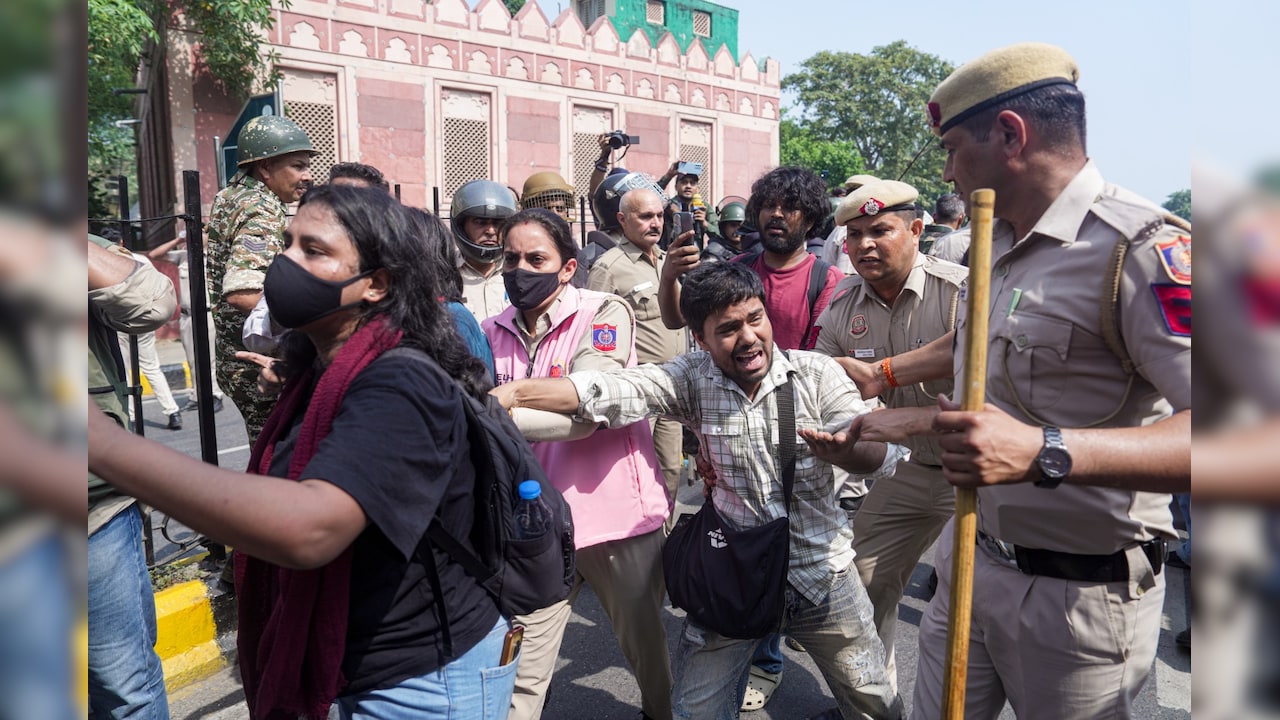 NDTVnot ratedRead the original
- The Hindunot ratedRead the original
- CNBCThis piece reads center-left
“detains youth protest leader to defuse rally against election chief”
Read the original - StuffThis piece reads center-left
“cracks down on youth protests as anger grows against Modi”
Word choiceUses the word 'cracks down,' which conveys a forceful, aggressive response, whereas other outlets use neutral terms like 'detained' or 'police action.' The phrase 'anger grows' presents the public mood as an escalating force.
Read the original 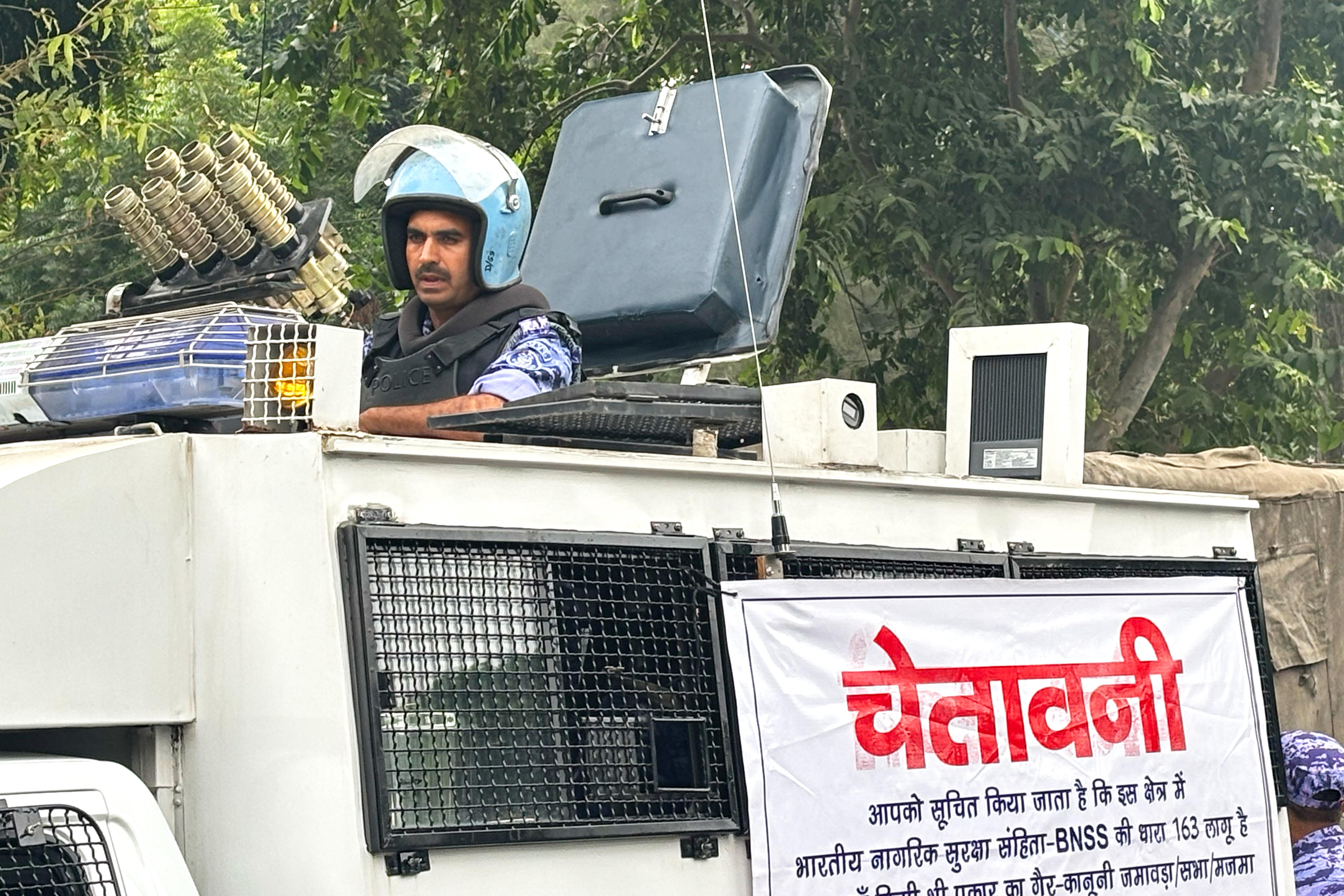 NPRThis piece reads center-left
“cracks down on youth protests as anger grows against Modi”
FramingConnects the detention action directly to anger at Modi specifically, whereas other outlets frame the protest as focused on the election commissioner. This locates the political conflict at the prime minister level rather than with a single official.
Read the original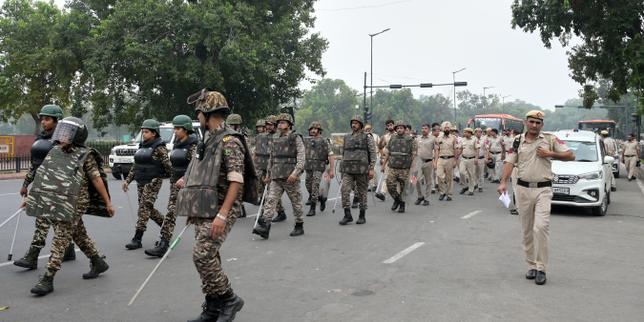 Le MondeThis piece reads center
“Indian police detain 'cockroach' leaders ahead of protest”
Read the original France 24not rated
What's left outIncludes direct quote from expert commentary calling the event unprecedented, which amplifies the scale and significance beyond what outlets reporting facts alone convey.
Read the original- DWThis piece reads center
“Indian police detain 'Cockroach' movement founder and dozens of protesters”
Read the original

Placements are generated by an AI model from each article’s own headline and summary, and every quotation above is checked to be a real substring of that article before it is published. How this is done
Prism is free and carries no advertising. Support it if it was useful.