Cornell University president addresses gang-rape allegations and fraternity conduct
Reported by
A dot shows how that piece reads — Prism rates articles, not outlets, and shows the words behind each placement below. No dot means the piece isn’t rated. How the ratings work

What happened
The account the coverage agrees on, with contested figures attributed rather than asserted. This is not one of the five framings below — it is the ground they all stand on.
Cornell University President Michael Kotlikoff released a video message on Saturday saying he was "deeply disturbed" by a 2024 rape allegation involving a student, known as Jane Doe, who alleges she was gang-raped by fraternity members. Kotlikoff said the university "must do better" and pledged to examine the role of fraternities and sororities on campus. The case has drawn national outrage, with New York Governor Kathy Hochul appointing state Attorney General Letitia James as a special prosecutor earlier in the week. The Tompkins County District Attorney's office previously declined to conduct additional review of material gathered by Cornell police, according to documents reviewed by ABC News.
How the spectrum reads this story
The same event, summarised as five points on the political spectrum would each tend to frame it. These are generated by an AI model and are a starting point, not the last word.
Left
This case exposes systemic failures in how universities protect students from sexual violence. Fraternities operate with near-total impunity on campuses, and administrators prioritize institutional reputation over survivor safety. The president's statement, while necessary, comes too late and rings hollow without concrete structural reform—shutting down dangerous organizations, not merely "examining" them. Universities claim limited power over fraternities, but they grant these groups housing, recognition, and recruitment access; they could revoke all of it. Real change requires dismantling the systems that enable predators and protect institutions.
Center-left
Cornell's handling of this case fell short of its obligations to students. The university should have moved faster to report allegations to prosecutors and support the survivor; instead, there were delays and gaps in investigation. The president's acknowledgment of failure is a necessary first step, but the university needs concrete reforms: clearer reporting procedures, mandatory training, and serious consequences for fraternities that harbor abusers. Prosecutors also bear responsibility—the DA's decision not to review additional evidence needs scrutiny. Universities must balance due process with genuine commitment to student safety.
Center
This case reveals the complexity of institutional accountability in sexual assault cases. Universities have responsibilities to investigate and support students, but they lack law enforcement powers and must defer to prosecutors on criminal charges. Cornell's administration clearly failed to communicate effectively with investigators and with the survivor. The president's response shows institutional awareness of the problem, though critics reasonably question whether statements alone suffice. A balanced path forward involves both university reforms—clearer procedures, better support—and genuine cooperation with prosecutors, without expecting administrators to substitute for criminal justice.
Center-right
Universities have legitimate limits on what they can investigate and enforce in criminal matters; that responsibility belongs to prosecutors and courts. Cornell's statement acknowledges this by cooperating with authorities. The broader risk is that institutional pressure to appear responsive leads to administrative overreach, unfair procedures, or predetermined outcomes that undermine actual justice. Fraternities, while imperfect, are student organizations with constitutional protections. Reform should focus on ensuring universities report credible allegations promptly to police and prosecutors—letting the criminal system work—rather than expanding campus investigations that lack the safeguards of real courts.
Right
Institutional overcorrection on campus sexual assault claims has created perverse incentives: survivors are encouraged to pursue administrative remedies instead of criminal prosecution, which weakens evidence gathering; accused students face proceedings with weaker due process than courts; and universities rush to appease activist pressure rather than seek truth. While Cornell's case may involve genuine wrongdoing, the cascade of political figures announcing special prosecutors and media frenzy before facts are established reflects a concerning pattern of due process erosion. Universities should report crimes to police and stay in their lane; prosecutors and courts must handle the rest without political theater.
Hear two viewpoints debate it
Pick two viewpoints and Prism writes a short, six-turn exchange about this story in each one’s own voice — steel-manned, no winner declared. Each pairing is written once and then saved for every reader. The voices are AI syntheses of a tradition, not real people.
New pairing — Prism will write it now.
How each outlet covered it
Where Prism places each piece — not the outlet in general — with the words from that piece that put it there, and the photograph the outlet chose. Picking a photo is a framing decision too.
 Voxnot rated
FramingFrames the event as an institutional failure requiring investigation and explanation, rather than simply reporting the president's response.
Read the original NPRThis piece reads center-left
“Can the Cornell lawsuit force changes that make students safer?”
FramingFrames the case as a potential legal mechanism for systemic change, moving beyond the immediate institutional response.
Read the original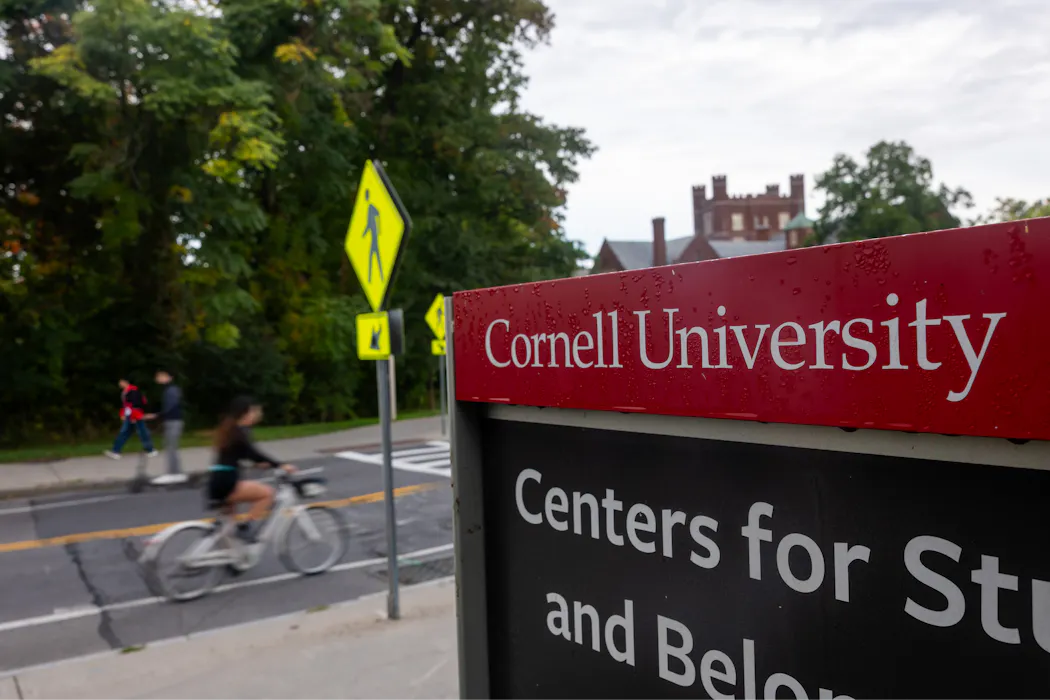 The ConversationThis piece reads center-left
“the limits of universities' power to stop it”
FramingEmphasizes structural constraints on what universities can accomplish regarding fraternity misconduct, rather than focusing on Cornell's specific response.
Read the original Daily MailThis piece reads center-left
“saying his 'heart aches' over 'troubling issues”
Word choiceEmphasizes the president's emotional language in quotes, drawing attention to his stated feelings more prominently than other outlets do.
Read the original- South China Morning PostThis piece reads center
“said he was "deeply disturbed" by a student's 2024 rape allegation”
Read the original - The Straits Timesnot ratedRead the original
 ABC NewsThis piece reads center
“The Tompkins County DA's office declined to additional review material”
Read the original- CBS NewsThis piece reads center
“Cornell's president said his school's administration "must do better”
Read the original - Al JazeeraThis piece reads center
“Michael Kotlikoff expresses deep sorrow over the case”
Read the original - BloombergThis piece reads center
“said he was "deeply disturbed" by a student's 2024 rape allegation”
Read the original - Al-Monitornot ratedRead the original
- Christian Science MonitorThis piece reads center
“Prosecutors, college administrators, and the media are working in parallel”
Read the original
Placements are generated by an AI model from each article’s own headline and summary, and every quotation above is checked to be a real substring of that article before it is published. How this is done
Prism is free and carries no advertising. Support it if it was useful.