South African jurist Navi Pillay awarded Nobel Peace Prize for prosecuting war crimes and genocide
Reported by
A dot shows how that piece reads — Prism rates articles, not outlets, and shows the words behind each placement below. No dot means the piece isn’t rated. How the ratings work

What happened
The account the coverage agrees on, with contested figures attributed rather than asserted. This is not one of the five framings below — it is the ground they all stand on.
The 2026 Nobel Peace Prize was awarded to Navanethem "Navi" Pillay, an 85-year-old South African jurist. Pillay led a United Nations commission of inquiry that concluded Israel committed genocide in Gaza. She has also served as president of the International Criminal Tribunal for Rwanda, a judge on the International Court of Justice, and UN high commissioner for human rights. At the award ceremony in Nuremberg, Germany, Pillay joked: "If you clap a little bit more, I may share this prize with Trump." Israel responded with anger to the award.
How the spectrum reads this story
The same event, summarised as five points on the political spectrum would each tend to frame it. These are generated by an AI model and are a starting point, not the last word.
Left
Pillay's prize vindicates the UN's findings that Israel committed genocide in Gaza—a conclusion the International Criminal Court and leading human rights organizations have supported. Her career defending anti-apartheid activists and prosecuting genocide demonstrates that accountability for state violence is essential to peace. The award signals that the international community recognizes both the gravity of what happened in Gaza and the importance of those willing to document it, regardless of pressure from powerful states.
No article in this story reads this way. This is how the position tends to frame events like it — written by a model, not quoted from anyone.
Center-left
Pillay's award recognizes her decades of work advancing international human rights law and holding powerful actors accountable through legitimate institutions. Her leadership of the Gaza inquiry reflects the proper role of the UN in investigating serious allegations. While Israel disputes the genocide conclusion, Pillay's career shows that independent legal scrutiny—through courts and commissions—serves the cause of long-term peace by establishing facts and preventing future atrocities.
Drawn from 2 articles placed here, below.
Center
Pillay's prize reflects her substantial credentials in international law and human rights work across multiple institutions and conflicts. The award is likely to intensify rather than reduce tensions around Gaza, given the divergent views on what the UN commission concluded and what it means. The Nobel Committee's choice acknowledges her professional accomplishments while inevitably wading into a live geopolitical dispute where reasonable people disagree on both the facts and the appropriate response.
Drawn from 7 articles placed here, below.
Center-right
Pillay's distinguished career in international law deserves recognition, though the prize's timing and framing risk politicizing what should be an apolitical award. The UN commission's genocide conclusion remains contested among legal experts and has drawn criticism for selective evidence and predetermined conclusions. Awarding the prize partly on the basis of work on Gaza—where facts and legal characterizations remain sharply disputed—risks turning the Nobel into a statement on current conflicts rather than a recognition of lifetime achievement in advancing peace.
Drawn from 2 articles placed here, below.
Right
The prize to Pillay represents the capture of international institutions by activists hostile to Israel and dismissive of its security concerns. The UN commission she led reached its genocide conclusion through a biased process that ignored Israeli evidence and context. By honoring her work on Gaza, the Nobel Committee has abandoned any pretense of neutrality and joined a coordinated campaign to delegitimize a democratic state, weaponizing human rights language to achieve political ends rather than genuine accountability.
No article in this story reads this way. This is how the position tends to frame events like it — written by a model, not quoted from anyone.
Hear two viewpoints debate it
Pick two viewpoints and Prism writes a short, six-turn exchange about this story in each one’s own voice — steel-manned, no winner declared. Each pairing is written once and then saved for every reader. The voices are AI syntheses of a tradition, not real people.
New pairing — Prism will write it now.
How each outlet covered it
Where Prism places each piece — not the outlet in general — with the words from that piece that put it there, and the photograph the outlet chose. Picking a photo is a framing decision too.
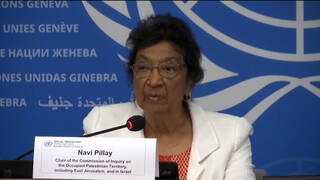 Democracy NowThis piece reads center-left
“Stinging Rebuke to Donald Trump”
FramingFrames the award partly as a statement against Trump by including his name in the headline and noting his non-selection, whereas other outlets focus on Pillay's qualifications and work.
Read the original- StuffThis piece reads center
“Nobel Peace Prize winner mocks Trump after winning award”
FramingLeads with Pillay's joke about Trump rather than her work or the prize itself, emphasizing the Trump comment as the newsworthy element.
Read the original 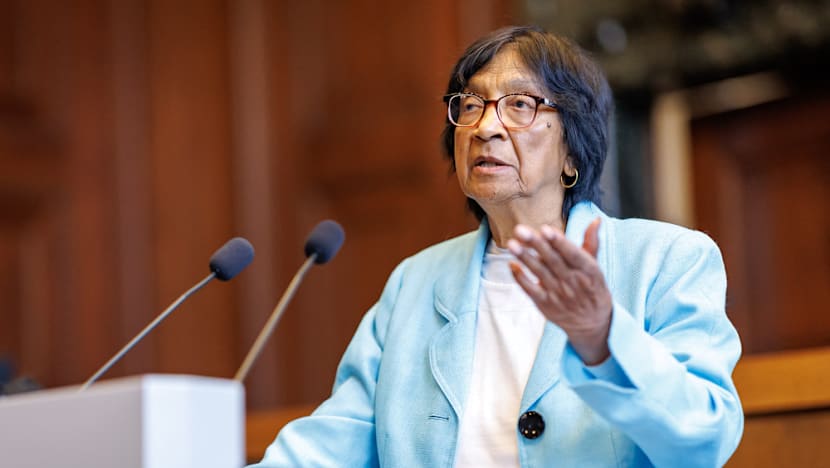
- Bangkok PostThis piece reads center
“accused Israel of genocide in Gaza”
Word choiceUses the word "accused" rather than "concluded," which other outlets employ—a subtle difference that frames the genocide finding as an allegation rather than a determination.
Read the original - Taipei TimesThis piece reads center
“Jurist Navi Pillay receives this year's Nobel Peace Prize”
Read the original 
 Dawnnot ratedRead the original
 The Japan TimesThis piece reads center
“efforts to promote peace and international law”
Read the original- CBS NewsThis piece reads center-right
“drawing a quick, angry rebuke from Israel”
FramingEmphasizes Israel's hostile reaction in the headline context, leading with the controversial response rather than Pillay's qualifications or the committee's rationale.
Read the original  The Citizennot ratedRead the original
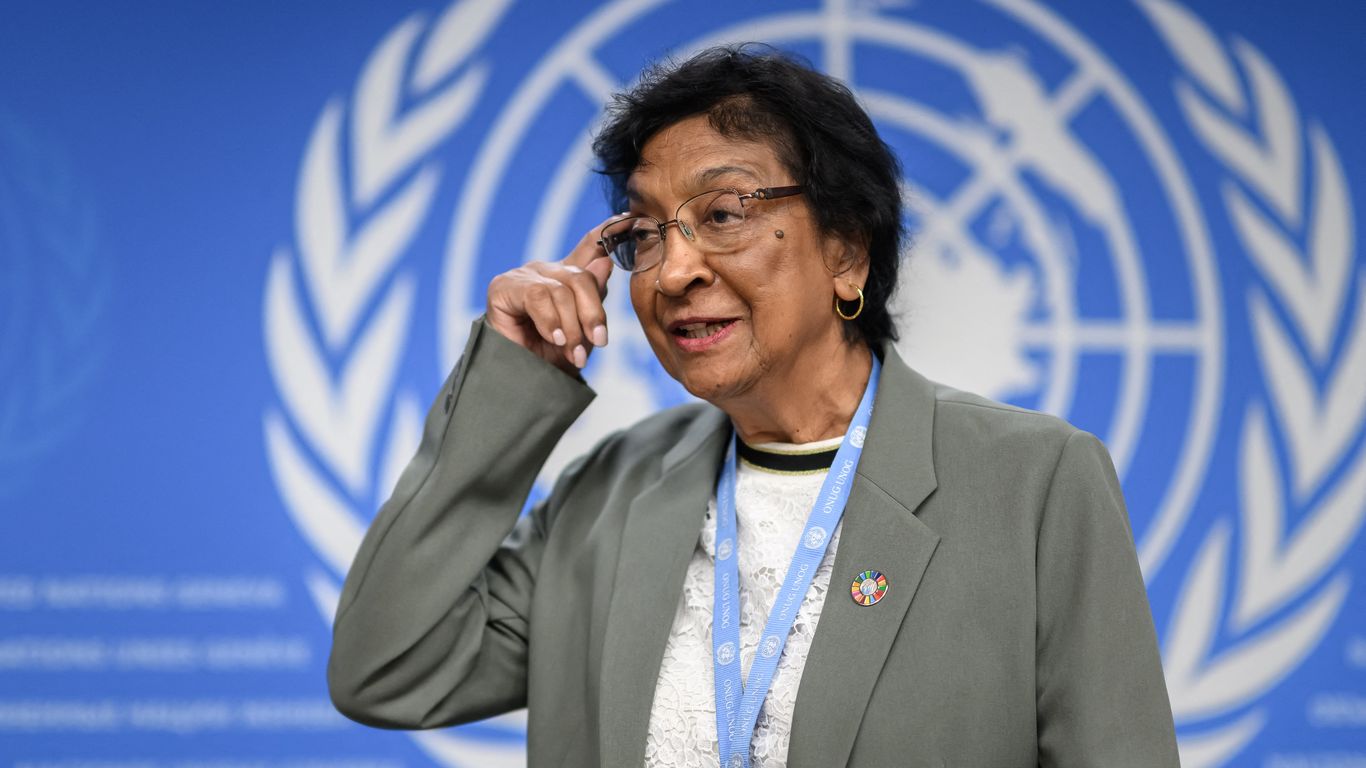 AxiosThis piece reads center-right
“President Trump once again did not win the prize”
FramingExplicitly mentions Trump's non-selection and his stated desire to win the prize, framing the award partly in relation to Trump rather than primarily on Pillay's merits.
Read the original

Placements are generated by an AI model from each article’s own headline and summary, and every quotation above is checked to be a real substring of that article before it is published. How this is done
Prism is free and carries no advertising. Support it if it was useful.