US withdraws B-1 bombers from RAF Fairford air base after suspected Iranian terror threat
Reported by
A dot shows how that piece reads — Prism rates articles, not outlets, and shows the words behind each placement below. No dot means the piece isn’t rated. How the ratings work
What happened
The account the coverage agrees on, with contested figures attributed rather than asserted. This is not one of the five framings below — it is the ground they all stand on.
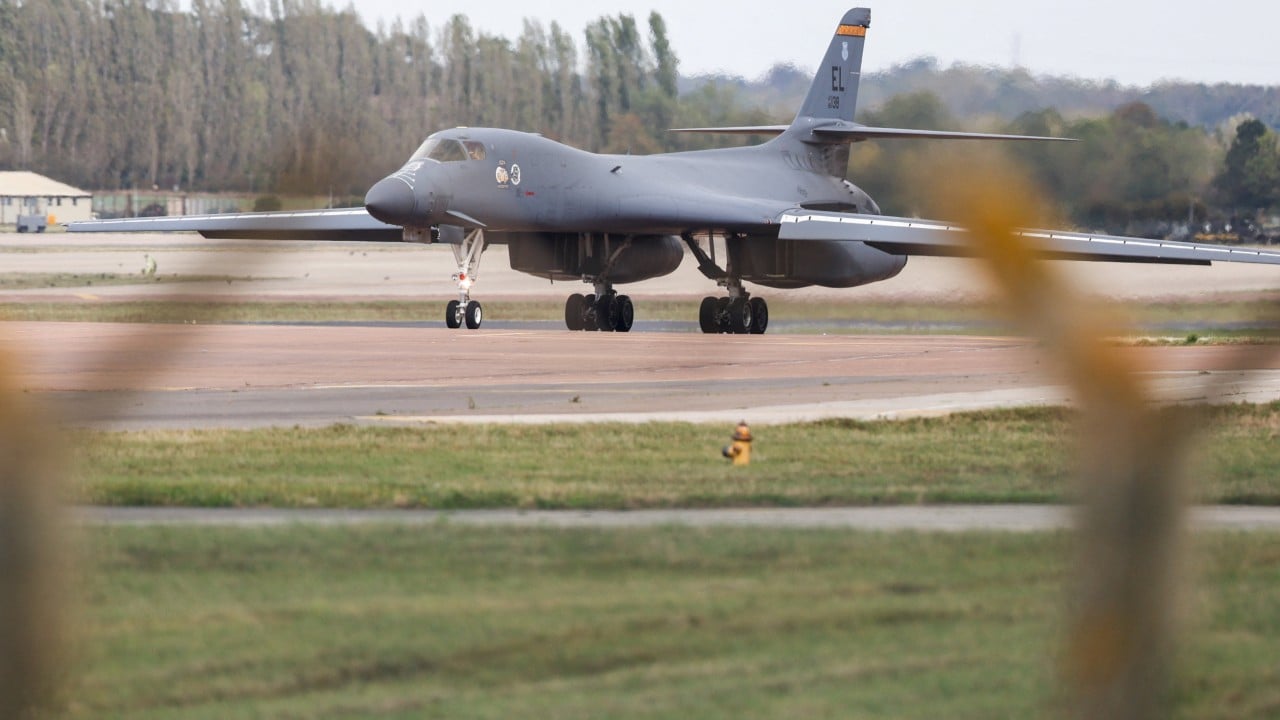
The US Air Force redeployed all B-1 bombers from RAF Fairford in England to their home bases in the United States on October 4. The withdrawal followed arrests of several men suspected of planning a terrorist attack against the airbase. US officials described the threat as stemming from an Iran-based plot. The bombers had been stationed at Fairford and were used in US strikes on Iran.
How the spectrum reads this story
The same event, summarised as five points on the political spectrum would each tend to frame it. These are generated by an AI model and are a starting point, not the last word.
Left
The US military's rapid withdrawal of bombers from the UK reveals how global military deployments create security vulnerabilities and entangle allied nations in conflicts not of their making. Rather than examine why an Iran-based group would target American installations abroad, Washington simply retreats, leaving unresolved the underlying tensions that fuel anti-US plots. This cycle—military presence abroad, blowback, hasty repositioning—reflects a broader imperial pattern where the costs of maintaining global military reach are shifted to allies and obscured from the public.
Center-left
A swift and appropriate response to a credible security threat. The US acted responsibly by removing high-value assets once British authorities uncovered a plot against the base, though the speed of the withdrawal underscores how serious officials judged the danger to be. The incident highlights the complex security challenges faced by shared military facilities and the need for robust intelligence-sharing between allies. Questions remain about the specific nature of the Iranian threat and whether additional security measures might have been sufficient.
Center
The Pentagon made a practical decision to protect valuable military assets and personnel when faced with a concrete security threat identified by British authorities. The speed of withdrawal—within a week of arrests—suggests officials took the risk seriously, though it also raises questions about whether the threat assessment was complete. Both maintaining the deployment and withdrawing had trade-offs: staying risked assets and lives; leaving reduces forward presence against Iran. The decision prioritizes immediate safety over operational posture, a defensible but consequential choice that allies will have noticed.
Center-right
The removal of critical assets from RAF Fairford was a necessary precaution in response to a specific, credible terrorist threat uncovered by British law enforcement. The speed and decisiveness of the Pentagon's action protected American personnel and equipment, which is the primary responsibility. This incident demonstrates the real security challenges posed by stationing military assets abroad and the importance of strong intelligence partnerships with allies like the UK. The withdrawal does reduce forward capability against potential Iranian threats, a cost that must be weighed against the immediate danger.
Right
The US military acted correctly by removing its bombers when faced with a documented plot. American servicemembers' safety comes first, and no political or strategic consideration should override that. This incident underscores why the US must maintain robust military presence and readiness—threats against overseas bases are real and evolving. The swift action also sends a message that the US will not be deterred or displaced by terrorist plots, though it does highlight the persistent challenge of defending forward-deployed assets against determined adversaries seeking to disrupt American security commitments.
Hear two viewpoints debate it
Pick two viewpoints and Prism writes a short, six-turn exchange about this story in each one’s own voice — steel-manned, no winner declared. Each pairing is written once and then saved for every reader. The voices are AI syntheses of a tradition, not real people.
New pairing — Prism will write it now.
How each outlet covered it
Where Prism places each piece — not the outlet in general — with the words from that piece that put it there, and the photograph the outlet chose. Picking a photo is a framing decision too.
 NYTThis piece reads center-left
“U.S. Rushes to Withdraw Bombers”
Word choiceUses 'rushes' in the headline, emphasizing speed and urgency in a way other outlets—which describe the action neutrally as 'removes' or 'withdraws'—do not.
Read the original- South China Morning PostThis piece reads center
“investigation into a planned terror attack”
Read the original 
- The Straits Timesnot ratedRead the original
- The Jerusalem PostThis piece reads center
“12 B-1B Lancer bombers had been stationed”
What's left outIncludes the specific number and type of aircraft withdrawn, detail other outlets omit, making the scale of the redeployment concrete.
Read the original 

Placements are generated by an AI model from each article’s own headline and summary, and every quotation above is checked to be a real substring of that article before it is published. How this is done
Prism is free and carries no advertising. Support it if it was useful.