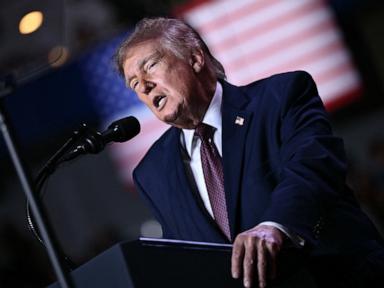
Trump announces 'Super Intelligence Force' with Jay Clayton as AI czar
Reported by
A dot shows how that piece reads — Prism rates articles, not outlets, and shows the words behind each placement below. No dot means the piece isn’t rated. How the ratings work
What happened
The account the coverage agrees on, with contested figures attributed rather than asserted. This is not one of the five framings below — it is the ground they all stand on.
President Trump announced the creation of a 'Super Intelligence Force' task force and named Director of National Intelligence Jay Clayton as AI czar to lead it. The announcement followed Trump's hosting of top AI company executives at the White House, where they signed a voluntary accord for self-policing AI development. The task force will coordinate the administration's response to artificial intelligence policy.
How the spectrum reads this story
The same event, summarised as five points on the political spectrum would each tend to frame it. These are generated by an AI model and are a starting point, not the last word.
Left
Trump's AI task force represents a missed opportunity for genuine oversight. By relying on a voluntary accord with tech executives and placing a National Intelligence director—whose primary allegiance is to security agencies—in charge, the administration is essentially letting industry police itself. Real AI governance requires robust independent regulation, labor protections, and safeguards against concentrating power in the hands of a few mega-corporations. This 'Super Intelligence Force' branding is more marketing than substance.
Center-left
While some form of AI coordination is necessary, Trump's approach relies too heavily on industry self-regulation through voluntary agreements. Jay Clayton's appointment signals a preference for light-touch enforcement rather than comprehensive guardrails. The administration should have established clearer standards, stronger enforcement mechanisms, and broader stakeholder input—including from civil rights groups, workers, and independent researchers—rather than simply coordinating with the companies that stand to profit most from minimal regulation.
Center
Trump's creation of a dedicated AI task force acknowledges that artificial intelligence requires government attention, but the design raises practical questions. Voluntary industry accords can establish baseline norms, but they work only if enforcement mechanisms exist and companies have real incentives to comply. The real test will be whether this task force can balance innovation—which requires regulatory predictability—with genuine public safeguards. Clayton's appointment brings national security expertise, though the arrangement will need clear authority and resources to be effective.
Center-right
Establishing a formal AI task force shows appropriate executive leadership on a technology that will shape America's economic and security future. Using voluntary industry standards leverages private-sector expertise and avoids the regulatory overreach that could slow innovation and cede advantage to China and other competitors. Clayton's background in national security is relevant given AI's strategic importance. The question is whether the task force has sufficient coordination authority across agencies to streamline policy without creating redundant bureaucracy.
Right
Trump's 'Super Intelligence Force' is a smart move to maintain American dominance in AI while avoiding the heavy-handed regulation that would stifle innovation. By partnering with industry through voluntary accords rather than imposing mandates, the administration respects free enterprise and private ingenuity. This approach recognizes that tech companies themselves have incentives to develop AI responsibly—bad actors get bad outcomes in the market. The task force should focus on removing obstacles to American companies competing globally, not on layers of government control that other countries don't impose.
Hear two viewpoints debate it
Pick two viewpoints and Prism writes a short, six-turn exchange about this story in each one’s own voice — steel-manned, no winner declared. Each pairing is written once and then saved for every reader. The voices are AI syntheses of a tradition, not real people.
New pairing — Prism will write it now.
How each outlet covered it
Where Prism places each piece — not the outlet in general — with the words from that piece that put it there, and the photograph the outlet chose. Picking a photo is a framing decision too.
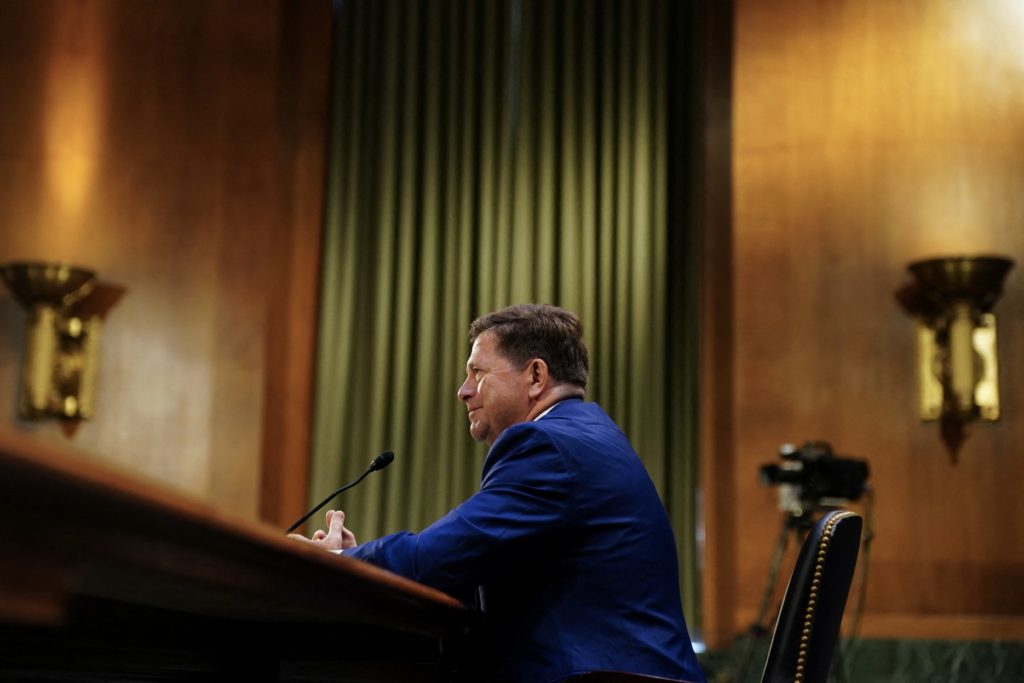 PBS NewsHournot rated
What's left outIncludes the specific detail about the voluntary accord and self-policing mechanism in the snippet, making the industry agreement's role in the announcement explicit.
Read the original- DWnot ratedRead the original
- ABC NewsThis piece reads center
“announced the formation of what he called a "Super Intelligence Force”
Word choiceUses Trump's branded terminology in quotation marks in the headline, signaling it as his specific formulation rather than a neutral descriptor of the task force's function.
Read the original  UPInot ratedRead the original
- CNBCnot ratedRead the original
 NewsNationThis piece reads center
“Trump announces 'Super Intelligence Force' for AI oversight”
Read the original RedStateThis piece reads center-right
“Trump Unveils New Super Intelligence Force After White House Accord”
Read the original Straight Arrow NewsThis piece reads center-right
“Trump announces a new 'Super Intelligence Force' after signing order renaming AI”
Word choiceQuotes Trump's language about leadership and 'Super Intelligence' directly, preserving his framing of the task force's purpose in a way that emphasizes national competition.
Read the original- Breitbartnot ratedRead the original
Placements are generated by an AI model from each article’s own headline and summary, and every quotation above is checked to be a real substring of that article before it is published. How this is done
Prism is free and carries no advertising. Support it if it was useful.