FBI arrests woman accused of spying for China on Taiwan president's son
Reported by
A dot shows how that piece reads — Prism rates articles, not outlets, and shows the words behind each placement below. No dot means the piece isn’t rated. How the ratings work
What happened
The account the coverage agrees on, with contested figures attributed rather than asserted. This is not one of the five framings below — it is the ground they all stand on.
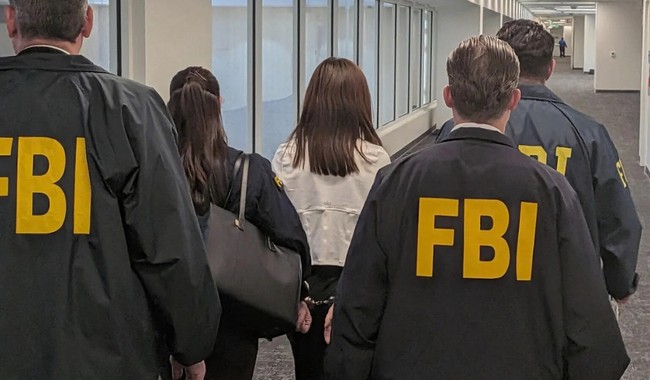
The FBI arrested Wanying Zhang at Los Angeles International Airport on Sunday before she could board a flight to China. According to the agency, Zhang, a California woman, allegedly sent photos and videos of Taiwan President Lai's son and his family to Chinese officials. The US accuses her of acting as a foreign agent for China.
How the spectrum reads this story
The same event, summarised as five points on the political spectrum would each tend to frame it. These are generated by an AI model and are a starting point, not the last word.
Left
This arrest reflects how great-power competition between the US and China is spreading into everyday life, with intelligence agencies recruiting ordinary people as informants. While espionage happens on all sides, the US uses these cases to reinforce its China containment strategy and frame Beijing as an existential threat. The case also highlights how surveillance networks operate across borders, raising questions about privacy and the reach of state power on both sides.
Center-left
The arrest demonstrates China's aggressive intelligence-gathering operations targeting US allies like Taiwan, and shows the FBI's success in disrupting potential security threats. This underscores the need for stronger counterintelligence measures and closer coordination with Taiwan on security matters. The incident is concerning but also shows the system working — the suspect was caught before any damage could occur.
Center
This is a straightforward counterintelligence case: an alleged foreign agent was caught before leaving the country. It illustrates both the real threat of Chinese espionage in the US and the effectiveness of US law enforcement. The case matters as a data point on Chinese intelligence operations, but it is one arrest among many and should be kept in proportion — dramatic rhetoric about espionage needs to be balanced against the actual scale and impact of such incidents.
Center-right
The arrest exposes how China conducts aggressive intelligence operations against the US and its democratic allies, including targeting the families of Taiwan's leadership. This is part of a broader pattern of Chinese espionage and should prompt stronger measures to protect Americans and defend Taiwan. The case shows the FBI doing its job, but also suggests that Chinese agents are actively operating in the US and that counterintelligence resources must remain vigilant.
Right
This arrest reveals China's brazen espionage against the United States and its allies, targeting even the families of foreign leaders. It demonstrates the failure of previous administrations to take the China threat seriously and shows why stronger border and internal security measures are essential. The US must take aggressive steps to root out foreign agents and protect Americans from hostile intelligence operations by authoritarian regimes.
Hear two viewpoints debate it
Pick two viewpoints and Prism writes a short, six-turn exchange about this story in each one’s own voice — steel-manned, no winner declared. Each pairing is written once and then saved for every reader. The voices are AI syntheses of a tradition, not real people.
New pairing — Prism will write it now.
How each outlet covered it
Where Prism places each piece — not the outlet in general — with the words from that piece that put it there, and the photograph the outlet chose. Picking a photo is a framing decision too.
- Al JazeeraThis piece reads center
“FBI arrests 'Chinese foreign agent' for spying on Taiwan president's son”
Read the original - BloombergThis piece reads center-right
“as tensions linger between the rival superpowers”
What's left outAdds political context about US-China tensions that other outlets omit, framing the arrest within broader geopolitical rivalry rather than presenting it as a discrete law-enforcement event.
Read the original - RedStatenot ratedRead the original
- The Jerusalem Postnot ratedRead the original

Placements are generated by an AI model from each article’s own headline and summary, and every quotation above is checked to be a real substring of that article before it is published. How this is done
Prism is free and carries no advertising. Support it if it was useful.