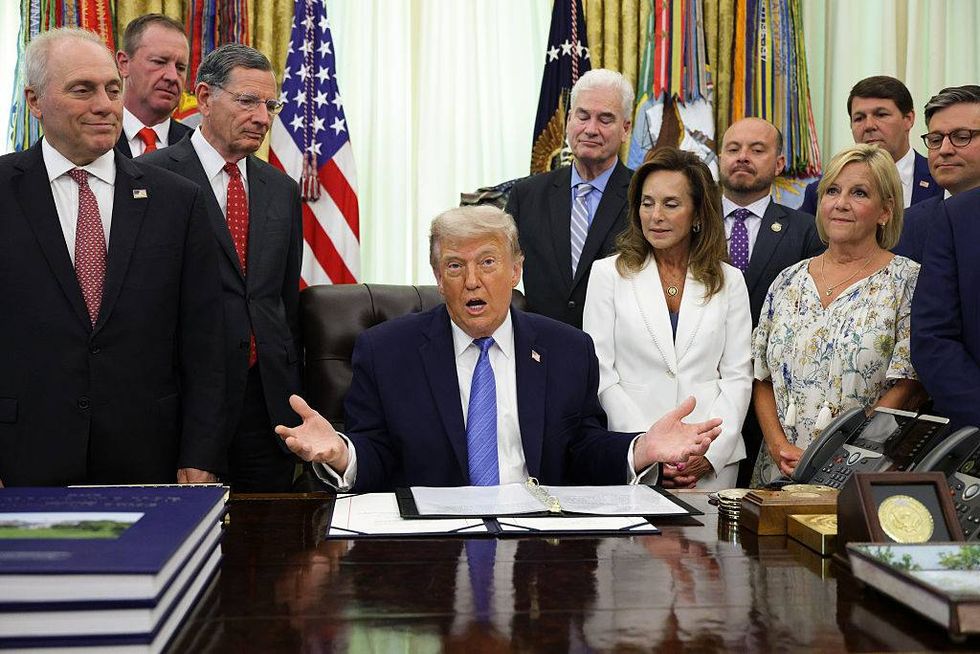
Rep. Thomas Massie, R-Ky., filed articles of impeachment against Defense Secretary Pete Hegseth on Tuesday. House Speaker Mike Johnson moved to adjourn the chamber a day early on Wednesday, before a scheduled seven-week recess, preventing a vote on Massie's impeachment articles. Massie said the early adjournment blocked his impeachment effort.
From the center: A Republican filed impeachment articles against a Republican Defense Secretary, triggering a procedural standoff. The Speaker chose to adjourn early rather than hold a vote, citing the upcoming election recess. Both outcomes—holding the vote or avoiding it—carry downsides: a vote could embarrass party members, but sidelining it looks like the leadership is blocking accountability. The real question is whether Massie's impeachment had substantive merit or was a political gesture.
Two House Republicans from battleground Iowa districts voted for a war powers resolution on Tuesday to halt President Donald Trump's military action against Iran without congressional approval. The resolution was the sixth such measure considered by the House, and it drew support from Democrats and a small number of GOP dissenters.
From the center: Battleground-district Republicans are reassessing their political position as midterms approach, and some have concluded voting to constrain the Iran war aligns with constituent concerns about military overreach. War powers resolutions reflect a legitimate congressional role, though whether they accomplish their aim depends on veto-proof majorities and enforcement. The vote shows normal political calculation rather than ideological rupture, with members weighing electoral risk against party loyalty.
Speaker Mike Johnson announced Wednesday that the House will adjourn early, ending votes Wednesday night instead of Thursday as previously scheduled. This cancellation delays a planned impeachment vote on Defense Secretary Pete Hegseth, introduced by Rep. Thomas Massie (R-KY) on Tuesday over Hegseth's handling of the war in Iran. The House will not reconvene until after the November midterm elections.
From the center: Both major parties use procedural tactics to avoid politically difficult votes when convenient. Johnson's decision to adjourn early is a legitimate scheduling choice that saves taxpayer money and lets members campaign before a major election—a common occurrence in both parties in election years. That said, Massie introduced a serious impeachment resolution, and reasonable people disagree on whether the full House should have voted on it regardless of the political inconvenience. The real question is whether this sets a precedent that leadership can simply cancel votes it dislikes.
Speaker Mike Johnson sent the House home for its midterm recess early despite calls from Democratic lawmakers and a bipartisan coalition to address artificial intelligence regulation. Rep. Don Beyer (D-Va.) led a bipartisan group urging congressional leaders to "urgently advance legislation" on AI risks to critical infrastructure. Sen. Elizabeth Warren (D-Mass.) backed a pause on advanced AI development.
From the center: Congress faces genuine pressure to address AI risks, with lawmakers from both parties expressing concern and calling for some form of guardrails. The challenge is that 'regulation' means different things to different people, and no legislative consensus has emerged. Sending lawmakers home early was poor optics given the stated urgency, but it's also unrealistic to expect major policy shifts during an election year when neither party has a worked-out position. The most realistic path is for post-election legislators to study the issue carefully and build a bipartisan framework based on evidence, not panic.
The Trump administration is preparing a $2.8 billion arms sale to Israel consisting of approximately 20,000 to 40,000 2,000-pound bombs, described as the largest single transfer of these munitions in recent years. The Biden administration had paused delivery of similar weapons two years ago citing concerns about mass casualties in Gaza; Trump lifted that pause upon taking office.
From the center: The Trump administration is exercising its executive authority to proceed with a major arms sale to a strategic regional ally, reversing a Biden-era pause. This represents a genuine policy disagreement between administrations about how to balance security partnership with accountability concerns. Reasonable people differ on whether resuming the sales prioritizes alliance strength and deterrence, or whether conditions should attach to weapons that have caused civilian casualties. Congressional review is the appropriate place for this debate.
European Commission President Ursula von der Leyen proposed in her State of the Union address on Wednesday that Canada become the European Union's first "associate member." The proposal would move the EU-Canada relationship beyond the existing CETA trade agreement to a new framework called an Alliance for the Future, intended to deepen integration of supply chains.
From the center: The EU's offer reflects rational adjustment to shifting geopolitics: with U.S. trade policy becoming unpredictable, both sides see mutual benefit in closer integration. The associate member framework is an innovative middle ground—deeper than traditional trade agreements but stopping short of full membership—allowing practical cooperation without the complications of EU accession.
Saudi Arabia's military coalition said on Wednesday that its air defences destroyed a Houthi drone south of Mecca before it could enter airspace over the holy city. The coalition accused the Iran-backed Houthis of targeting Islam's holiest site. France 24 reported the Houthis denied launching the attack. The Saudi-led coalition warned of a "red line" and said the incident deepens regional conflict.
From the center: Saudi Arabia says it intercepted a Houthi drone targeting Mecca, though the Houthis dispute this claim. Both sides have incentives to frame events in their favour: Saudi Arabia to justify its military position and warn rivals; the Houthis to deny responsibility and maintain support. The incident illustrates how the Yemen conflict has become increasingly unpredictable and prone to escalation. Any resolution requires international pressure on all parties—Saudi Arabia, the Houthis, and their respective backers—to accept negotiated settlements rather than military victories.
The Congressional Budget Office reported that the U.S. war against Iran has cost $38.1 billion through August 1, 2026—roughly $246 million per day over five months. The CBO projects additional costs of $2 billion to $3 billion monthly if the conflict continues.
From the center: The CBO's analysis provides essential facts for evaluating the war's continuation. At $38 billion spent and $2-3 billion monthly projected costs, policymakers must weigh military objectives against fiscal reality and inflation concerns. While the conflict may serve strategic purposes regarding the Strait of Hormuz, the scale of expenditure and resource depletion warrants serious debate about whether the benefits justify the costs and public doubts about the mission's wisdom.
A news helicopter crashed and caught fire in Chatsworth, a Los Angeles neighborhood, on Tuesday night, killing at least three people and injuring at least one other who was hospitalized. The aircraft was covering a separate bus collision between an SUV and a city bus that had killed two people hours earlier. The NTSB and FAA will investigate.
From the center: A terrible accident during routine news operations. The crash killed three people and injured another while the helicopter was covering a separate incident. Both the helicopter crash and the bus collision it was covering represent distinct safety challenges—one in aviation, one in ground transportation. Investigations by the NTSB and FAA should determine what went wrong and whether existing safety rules need adjustment, rather than rushing to blame the industry or regulators.
Rep. Thomas Massie (R-Ky.) introduced articles of impeachment against Defense Secretary Pete Hegseth on Tuesday, citing military operations in Iran conducted without congressional approval, as well as strikes on boats and actions related to Venezuela and Yemen. Massie, a Trump primary election loser, did not inform GOP leadership beforehand.
From the center: Massie has introduced a privileged impeachment resolution that technically forces a House vote, but the effort faces overwhelming odds in a Republican-controlled chamber. While Massie's concerns about executive military overreach and congressional war powers deserve serious consideration—these are genuine constitutional questions—impeachment is a blunt instrument and the political reality makes passage impossible. The episode highlights ongoing tension between executive flexibility in national security and legislative oversight, but resolution likely requires legislative negotiation rather than impeachment.
A federal judge on Tuesday blocked the Kennedy Center board from adding President Trump's name to the building, reiterating an earlier order. Hours later, the board voted to close the center's main building immediately, citing safety concerns and financial turmoil.
From the center: The Kennedy Center faces a genuine operational dilemma: renovation needs are real, but the board's closure decision has become entangled with the naming dispute. A judge has twice blocked the renaming, establishing legal boundaries. The board may have legitimate safety and financial reasons for closure, but tying reopening to overturning a court order blurs the line between maintenance and political leverage. Both sides need to separate the practical questions from the symbolic one.
Suspected sabotage disrupted train services across parts of the Netherlands on Tuesday, causing cancellations and delays in central and northern regions. ProRail, the rail infrastructure operator, reported finding pipes attached to railway tracks at over 20 locations, mainly in rural areas in the middle and east of the country. The disruptions occurred hours before the ceremonial state opening of parliament.
From the center: This is a serious criminal matter requiring swift investigation and prosecution—sabotaging infrastructure endangers lives and disrupts essential services, and cannot be justified regardless of grievance. At the same time, the fact that people feel driven to such extreme measures suggests communication failures between government and affected communities. The response should combine strong security and law enforcement with a pragmatic effort to understand what has made rural and farming communities feel unheard, without implying that sabotage was reasonable.
Air Force Secretary Troy Meink publicly confirmed on Monday that the US military has deployed weapons in space. This marks the first official acknowledgment of such capabilities. China warned against turning outer space into a "battlefield", and Russia stated space must remain "free from any weapon."
From the center: The US faces real military challenges in space from Russia and China, and deploying defensive capabilities makes practical sense. However, public announcement of these weapons was a strategic choice with trade-offs: it establishes deterrence but also signals intent that competitors will match. The administration should pair military readiness with diplomatic channels to prevent uncontrolled escalation, while accepting that some competition in space is inevitable.
President Trump dismissed AI safety concerns as a 'hoax' during remarks on social media and in a call with Nvidia CEO Jensen Huang at a Los Angeles tech summit. Trump argued that only strong presidential leadership, not regulation, is needed to manage AI advancement, and criticized Anthropic CEO Dario Amodei by name.
From the center: The AI debate reveals real tensions between innovation speed and responsible development that neither pole handles well. Trump oversimplifies by treating safety concerns as purely political theater, yet those calling for immediate sweeping regulation may also misread technical realities and global competition dynamics. The sensible path involves some guardrails—industry standards, transparency, maybe sector-specific rules—without paralyzing development or ceding AI leadership to other countries. The fact that tech leaders themselves want *some* framework suggests the answer lies between Trump's dismissal and calls for heavy-handed control.
The Supreme Court rejected the Trump administration's emergency appeal to implement new U.S. Postal Service rules restricting mail-in ballots ahead of November's midterm elections. The administration had proposed a system using unique bar codes to track mailed ballots. The decision, issued Monday evening, was 7-2 and kept in place a temporary block issued by U.S. District Judge Indira Talwani.
From the center: The Supreme Court made a straightforward call: you cannot overhaul voting procedures weeks before an election without creating real logistical chaos. The question wasn't really about mail-voting's merits but about timing and implementation. A 7-2 decision suggests this wasn't close — even justices skeptical of mail voting apparently agreed that last-minute, untested changes would be worse than the status quo.
Sen. Mitch McConnell returned to the Senate on Monday and cast his first vote in nearly three months after being hospitalized in June following a fall that left him briefly unconscious. Roll Call reports he said: "My recovery has been a long and often frustrating process, and the lingering effects of childhood polio haven't made it any easier." He arrived in a wheelchair, according to Axios.
From the center: McConnell's return after a serious fall and long recovery is a straightforward factual development with practical consequences. The Senate needed his vote because Republicans hold a slim majority, and his three-month absence created real legislative gridlock. His recovery and return are his personal achievement and his medical team's work. The Senate can now function more normally, though his ongoing health challenges are a legitimate consideration for voters in Kentucky about future representation—a decision that belongs with them, not Washington commentators.
President Trump rejected calls from tech leaders for AI guardrails and regulation, dismissing concerns about AI risks as a hoax or conspiracy. During a Monday panel discussion, Nvidia CEO Jensen Huang put Trump on a live call, where Trump stated the only safeguards AI needs is a "STRONG AND SMART (High IQ!) PRESIDENT"—referring to himself.
From the center: This debate reflects real tensions without easy answers. Tech leaders raising concerns deserve a hearing, but some warnings may be overblown or driven by competitive positioning. Trump is right that AI development matters for American competitiveness, but wrong to dismiss regulation entirely. Workable policy requires both sides to engage: some guardrails make sense—transparency requirements, testing for bias, oversight of high-stakes applications—without throttling innovation. The challenge is finding rules that are proportionate, evidence-based, and coordinated internationally. Neither blanket rejection nor maximal caution serves the national interest.
President Trump dismissed warnings from AI company leaders about rapid development outpacing safety controls. CEOs from Anthropic and OpenAI have called for slower development and new guardrails. Trump said on Sunday that critics conjuring "negative forces" are describing "things that won't happen," and argued the technology will be "more good than bad."
From the center: There's genuine disagreement about AI's trajectory between credible actors on both sides. Some leading technologists warn of risks; others emphasize opportunity. Trump's confidence in the technology's benefits reflects a real position, not mere obstruction, and the idea that emergency measures are premature isn't unreasonable. At the same time, dismissing all regulatory discussion is shortsighted. The right approach is measured engagement: study the actual risks, consult experts, then craft proportionate rules if warranted—not panic legislation or blanket rejection.
Canadian Prime Minister Mark Carney is hosting a Canada Investment Summit to court global investors and reduce economic dependence on the United States as trade tensions escalate. Trump has signed executive orders to ban Canadian imports including alcohol, motorcycles, and dairy products.
From the center: Carney's response balances pragmatism with ambition: you can't ignore the US market, but you also can't be hostage to it. Hosting investors and exploring EU ties are sensible moves that acknowledge economic reality without overcommitting. The challenge is execution—whether these initiatives actually reduce vulnerability or just buy time. EU membership would be overreach; a practical alliance makes sense. The real test is whether this translates into concrete deals and measurable diversification, not just rhetoric.
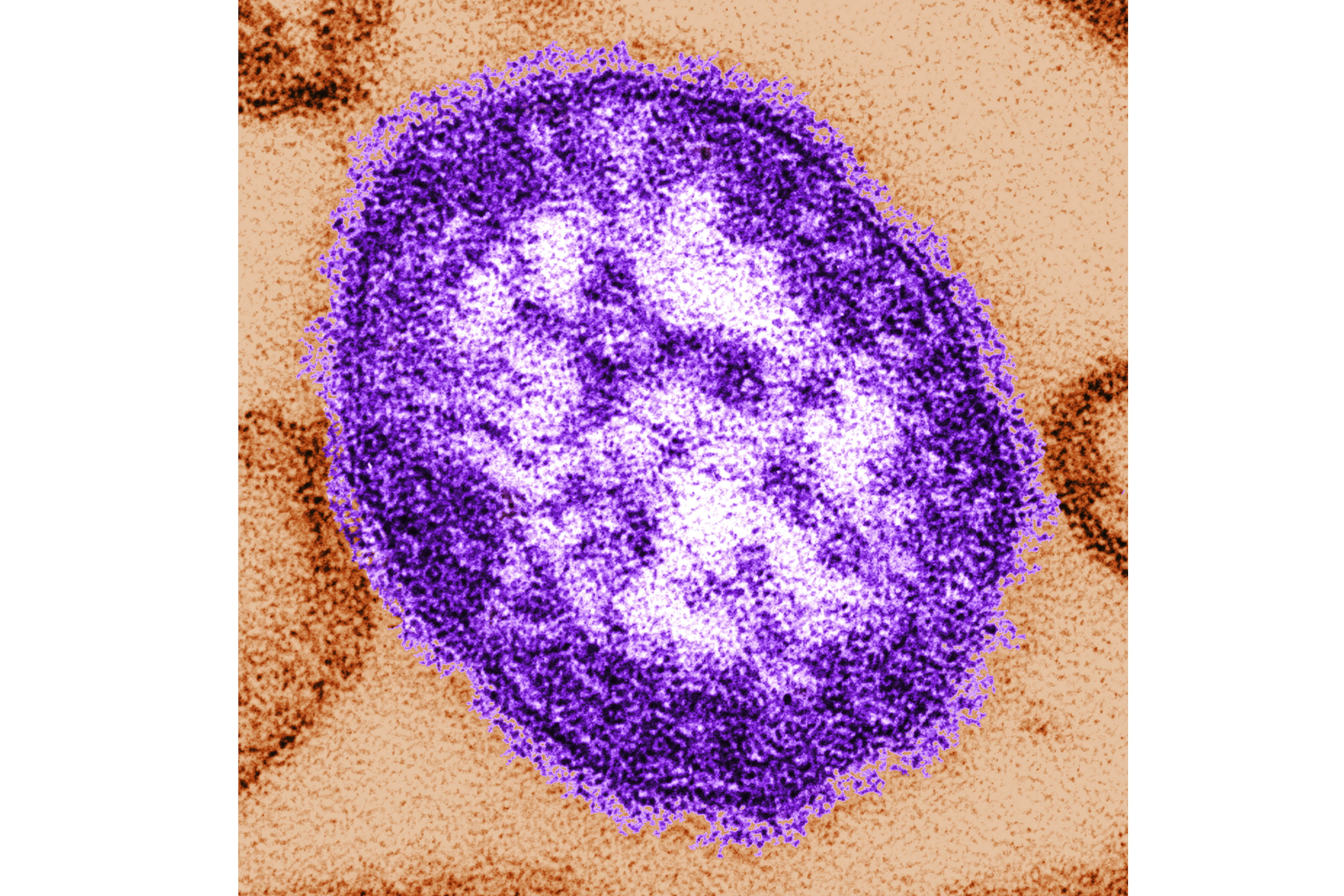
A 40-year-old unvaccinated woman in Jefferson County, Pennsylvania died from measles-related complications on Saturday, according to the county coroner. The coroner said she exhibited typical measles symptoms including fever, cough, white spots inside the mouth, and rash. This is Pennsylvania's third measles-related death in less than three weeks.
From the center: This death is tragic and raises real questions about vaccine hesitancy, but also points to complexity: we don't know why this specific person was unvaccinated, what her health vulnerabilities were, or how the outbreak started. The measles resurgence is a genuine public health concern requiring a balanced response—improving vaccine access and trusted communication about vaccine safety, while respecting that vaccine decisions involve both individual autonomy and public health. The focus should be on practical interventions that build confidence rather than mandate.
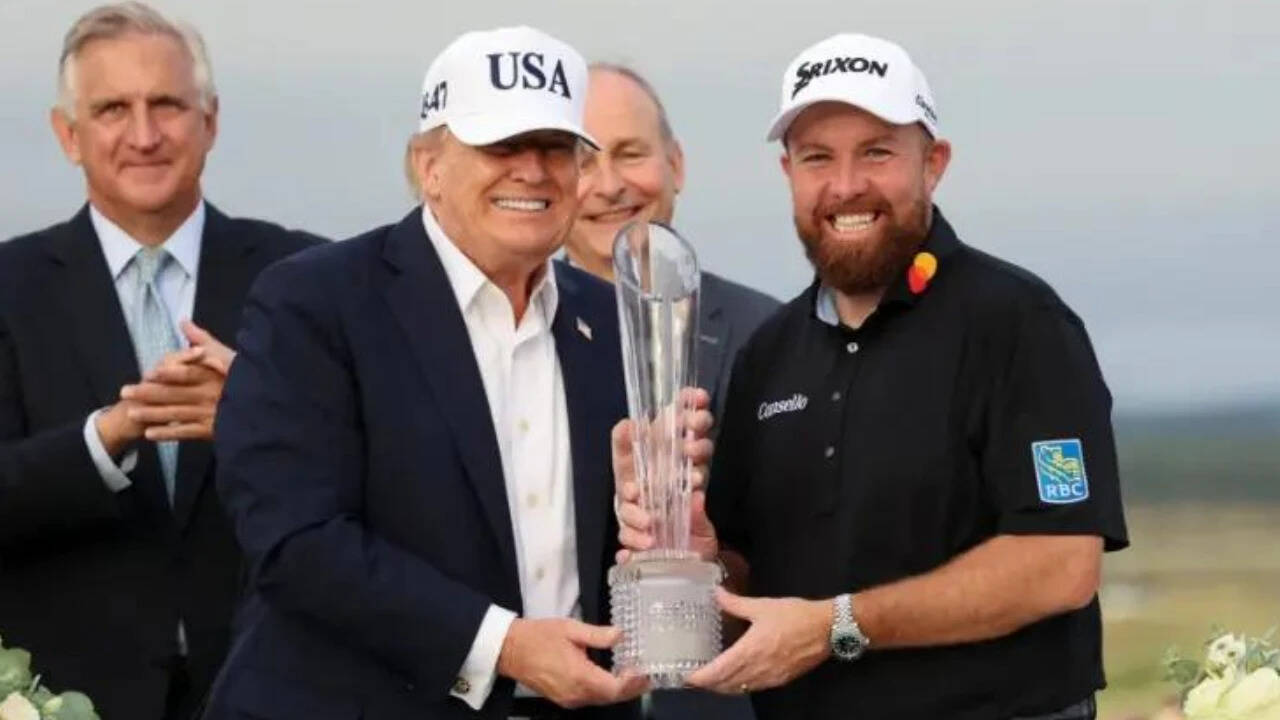
President Donald Trump announced on Sunday at the Irish Open golf tournament in Doonbeg, Ireland, that he would remove a 10% tariff on Irish whiskey. Trump said he made the decision after the Irish prime minister and members of the golfing community asked him to. The tariff currently applies to all EU wine and spirit exports to the United States.
From the center: Trump's quick decision to remove the Irish whiskey tariff shows flexibility in trade negotiations but also reflects the unpredictability of policy-making by personal appeal rather than systematic review. While the move benefits Irish exporters and may smooth diplomatic relations, it raises practical questions: whether other trading partners will now expect similar individual carve-outs, and how this fits into broader tariff strategy. The ease of the decision suggests tariffs may not be as central to long-term trade goals as claimed.
Fighting intensified in Yemen on Sunday as government forces attacked Iran-backed Houthi rebels along the Red Sea, while Houthis fired into Saudi Arabia. The Houthis expanded control of the Bab el-Mandeb Strait, a major shipping route. The UN migration agency reported 85,818 Yemeni civilians displaced in recent days, with over 2,000 fleeing to Djibouti.
From the center: Yemen's renewed fighting poses genuine risks: immediate humanitarian suffering requiring urgent aid, regional instability that threatens global shipping and energy markets, and a military stalemate without clear resolution. Both the Houthis' expansion and Saudi airstrikes reflect a conflict structure that incentivizes continued fighting over compromise. Practical steps—protecting civilian corridors, stabilizing key shipping routes, and creating conditions for negotiation—must balance competing interests without expecting either side to abandon core positions.
AI researchers, including Anthropic researchers Dario Amodei and others, issued stark warnings this week about rapid AI development and existential risks. In response, the four largest AI labs endorsed a slower development pace prioritizing safety over growth.
From the center: This week reveals genuine disagreement about how to balance real risks against real benefits. Researchers raise legitimate concerns that warrant congressional engagement, and the industry's willingness to slow development shows the issue has crossed into mainstream awareness. But Johnson's caution against panic also has merit—rushed regulation could backfire. The answer lies in establishing expert-driven safety standards through normal institutional channels, not crisis-mode decision-making driven by competing narratives about existential threat.
President Donald Trump said Sunday he had spoken to Ukrainian President Volodymyr Zelenskyy and urged him to stop striking Russian diesel refineries. Trump told journalists that Zelenskyy "has to stop knocking out diesel fuel in Russia." Trump attributed rising U.S. diesel prices to Ukrainian attacks on Russian fuel production rather than to his policies toward Iran.
From the center: Trump faces a genuine tension between supporting Ukraine and managing U.S. energy costs, but his framing of the problem appears selective. Ukrainian strikes on Russian refineries may contribute to global diesel prices, but so do Trump's own Iran policies; assigning blame primarily to Kyiv without acknowledging both factors reads as politically convenient rather than analytically sound. The practical question—whether Ukraine should modify targeting to ease American fuel prices—involves real trade-offs that deserve honest rather than one-sided argument.
Rep. Tom Tiffany (R-Wis.), the Republican nominee for Wisconsin governor, sustained minor injuries on Saturday night when his plane lost power and made an emergency landing on Lake Wausau near Wausau Downtown Airport in central Wisconsin. Tiffany and the pilot swam to safety.
From the center: A Wisconsin congressman experienced an aircraft emergency on Saturday night when his plane lost power during approach to a regional airport, forcing an emergency water landing. Both occupants escaped with minor injuries. Such incidents are uncommon and the circumstances—weather, maintenance, pilot experience—remain to be fully clarified, so judgment on broader implications should await more complete information.
A Russian drone struck a passenger train running between Kyiv and Warsaw near the Polish border, hitting the locomotive. Ukrainian officials called it part of a "systemic attack" on railways. A truck was also struck around 800 metres from a Polish border crossing. The train had been used minutes earlier by ex-Swedish Prime Minister Carl Bildt and other officials returning from a summit.
From the center: The drone strike on a civilian train near Polish territory is a concerning incident that illustrates the unpredictability and risks of the ongoing conflict as it edges closer to NATO borders. While neither side benefits from further escalation, Russia's apparent disregard for proximity to NATO infrastructure is destabilizing. The international community should seek de-escalation through dialogue while maintaining support for Ukraine's defence, and NATO should review border security protocols without unnecessarily provoking Russia into further recklessness.
President Trump stated Saturday in Ireland that the Iran war will end "very soon" — specifically "right after election time," referring to US midterm elections in November. He also said Iran-backed Houthis have asked the US not to target them and that he does not intend to enter into conflict with the group. Trump accused Iran of "trying to hold out as long as they can to complicate the election."
From the center: Trump's midterm-tied prediction is politically convenient but uncertain. The conflict involves multiple actors—Iran, Houthis, Saudi Arabia—with conflicting objectives that don't automatically resolve after November. His stated reluctance to fight Houthis reflects a calculus that engagement may cost more than it gains, which is reasonable, but the framing around elections invites skepticism. Oil markets respond cautiously, suggesting investors doubt quick resolution. Any de-escalation will likely depend on quiet negotiations rather than public timelines.
The Virgo Transport 8, a passenger ship carrying over 240 people, lost contact while traveling in the Java Sea between Surabaya in East Java and Banjarmasin in South Kalimantan on Borneo island. The vessel's last known position was approximately 148 kilometres from Banjarmasin. Indonesian rescuers launched a search operation. No immediate reports of casualties were provided.
From the center: A passenger ship carrying more than 240 people has lost contact in the Java Sea between two Indonesian cities, prompting an immediate search-and-rescue operation by authorities. The circumstances remain unclear—there is no confirmed information yet about what caused the loss of contact, the vessel's condition, or whether anyone is in danger. Rescuers are working with available information, including the ship's last known position. Until more facts emerge, it is premature to draw conclusions; the focus must remain on locating the vessel and accounting for all passengers and crew.
Canadian Prime Minister Mark Carney will meet UK Prime Minister Andy Burnham for the first time during a European trip. The meeting will take place in Liverpool, England. Carney is also scheduled to address the European Parliament in Strasbourg and attend the State of the European Union address.
From the center: Carney's European visit serves practical diplomatic purposes—building rapport with a new UK counterpart and maintaining Canada's profile in European institutions—without suggesting any dramatic shift in Canada's core relationships or strategic orientation. It is routine statecraft adapted to new leadership in London.
Reform UK received two donations of £36 million each from cryptocurrency billionaires Ben Delo and Christopher Harborne within 24 hours, totalling £72 million ($97 million).
From the center: Reform UK has attracted unprecedented donations from two crypto billionaires, raising legitimate questions about donation transparency and foreign involvement in British politics. Lowe's account of rejecting Musk's offer suggests the party does apply legal and reputational constraints to fundraising, yet the sheer scale of these donations from a single industry raises practical concerns about perception and governance. Regulators should clarify donation rules to ensure public confidence, but the existing legal framework appears to be functioning—Lowe rejected the illegal offer and disclosed it.
Drone attacks on Saudi Arabia's East-West pipeline were launched from Iraqi territory, according to Iraq's confirmation. The strikes caused the pipeline to close. Iraq fired a military commander in response. Turkish Foreign Minister Hakan Fidan discussed the attacks with his Saudi counterpart by phone.
From the center: A major pipeline was attacked and closed; Iraq determined the drones came from its territory and fired a commander—a concrete accountability measure. The incident reveals real security gaps in Iraq's military oversight, but also the complexity of the region: attacks can originate from within a country without its government's endorsement. International diplomacy is proceeding (Turkey-Saudi talks). The practical question now is whether Iraq can strengthen command discipline and whether Saudi Arabia and Iraq can cooperate on border security and intelligence to prevent recurrence.
About 150,000 demonstrators protested across roughly 20 German cities on Saturday against the far-right Alternative for Germany (AfD) party. The protests followed the AfD's victory in the Saxony-Anhalt state election, where it topped the vote and is now seeking to form the first extreme-right state government in Germany since World War II.
From the center: Germany faces a genuine political challenge: the AfD has tapped real voter dissatisfaction, yet its platform and associations are genuinely concerning. Mass protests show the system is working—citizens mobilising peacefully to express opposition. The test now is whether mainstream parties can both address voters' material concerns and prevent an anti-democratic force from gaining further ground through pragmatic coalition-building and policy responses.
U.S. District Judge Susan Illston ruled that the Trump administration violated law by attempting to reduce FEMA's workforce by half without proper authority. The Department of Homeland Security acted unlawfully by usurping FEMA's authority over its own personnel, the judge wrote.
From the center: Courts have applied existing law to constrain executive overreach in two areas: agency personnel authority and hiring standards. Both rulings raise genuine questions—how much workforce reduction should an administration be able to pursue, and what hiring criteria are appropriate?—but the judges found the specific methods violated established procedure. This illustrates why institutional rules matter even when leaders want rapid change.
Sen. Ted Cruz appeared on ESPN's College GameDay in Austin, Texas on Saturday to promote the Protect College Sports Act. The crowd, largely University of Texas fans, responded with sustained booing and chants of "Ted, you suck" throughout his interview with Rece Davis. A closure vote on the bill had been delayed due to the congressional August recess.
From the center: Cruz made a political pitch on a major sports platform and received an unexpectedly hostile reception from the audience. Both the senator's decision to use the venue and the crowd's vocal response reflect genuine disagreement over college sports policy, particularly around athlete compensation. Neither side's conduct here is remarkable—politicians promote legislation in various settings, and crowds express opinions—but the scale of the booing suggests the issue resonates with voters in ways Cruz may not have anticipated.
Russian strikes across Ukraine killed between three and six civilians and wounded dozens, according to differing reports on September 12, 2026. Moscow claimed it struck ships and plants; local Ukrainian authorities reported the deaths and injuries. Putin warned against European troop deployment to Ukraine. Zelenskyy had proposed a meeting with Putin in Miami, which the Kremlin rejected.
From the center: The Ukraine conflict has become increasingly brutal and global in scope. Casualty figures vary across reporting, and both sides make claims about military targets that merit verification. Russia's threats to Europe if it intervenes and its use of foreign recruits complicate the picture — these are pressure tactics, but they also reflect real risks of wider escalation. Any resolution will require Ukraine to negotiate from a position of strength while the international community manages the risk of the conflict spreading beyond Ukraine's borders.
President Trump headlined a two-day Republican midterm convention in Dallas at the American Airlines Center. Trump made several concrete policy promises during the event. Republicans attended in large numbers, with attendees pledging to Trump. By the convention's end, Trump appeared fatigued from campaigning.
From the center: The convention served its immediate purpose as a party rally and campaign event, but its actual impact on midterm prospects remains unclear. Trump's policy promises are genuinely difficult to implement even with GOP control of Congress due to procedural and political realities. The event mixed ceremonial aspects with campaign messaging; whether this balance helped or hurt Republicans' chances depends on factors like candidate quality and local dynamics that the convention itself cannot determine. Both the optimistic and pessimistic readings of its success are premature.
The 11-member BRICS group adopted a joint declaration at their summit in New Delhi on Saturday, calling for 'maximum restraint' in the Middle East conflict and expressing 'deep concern' over the war. Chinese President Xi Jinping urged BRICS to play a peacemaking role in the region, saying the war 'does not serve the common interests of the international community.' The bloc includes Iran and the UAE.
From the center: BRICS issued a measured joint statement on the Middle East that reflects the bloc's genuine internal diversity. The declaration's emphasis on 'maximum restraint' and 'multilateral approach' is diplomatic language that lets members with different stakes in the conflict find common ground without binding commitments. Xi's positioning of BRICS as a peace actor is political theater—useful for the bloc's legitimacy but unlikely to shift facts on the ground. Modi and Xi's bilateral talks suggest real bilateral relationship work, separate from the summit's messaging.
During a visit to Dublin on Saturday, President Donald Trump told Irish Taoiseach Micheál Martin that he would "love" to see Ireland unified, calling it "fantastic" and "inevitable." Trump broke with decades of official U.S. neutrality on the constitutional status of Northern Ireland, a sensitive issue tied to the 1998 Good Friday Agreement that ended decades of conflict.
From the center: Trump's statement departs from established diplomatic practice without clear benefit. The U.S. neutrality on Irish reunification has been a useful stance—it avoids antagonizing either the U.K. or Ireland while respecting that the Good Friday Agreement established a peaceful, democratic path forward on the issue. Trump's off-the-cuff support for unification neither resolves anything nor advances American interests. That said, his comments, while ill-advised, are unlikely to destabilize the carefully maintained status quo, as neither the U.K. nor Ireland has suggested it threatens the peace framework.
BRICS leaders gathered in New Delhi on September 11-13, 2026, for the annual summit. Russian President Vladimir Putin arrived Friday for bilateral talks with Indian PM Narendra Modi covering trade, defence, energy and critical minerals. Chinese President Xi Jinping attended—his first visit to India since 2019. Iran's Masoud Pezeshkian also participated.
From the center: BRICS represents a genuine shift in global power distribution, bringing major developing economies into strategic dialogue. India's hosting role is diplomatically delicate—it must maintain partnerships with Russia and China while managing their rivalry and addressing Ukraine and Middle East conflicts. The summit's focus on trade, energy and supply chains reflects practical concerns shared across the bloc. Success requires balancing competing interests and avoiding the appearance of anti-Western bloc-building, which could trigger backlash and undermine BRICS' stated goal of inclusive multilateralism.
The U.S. Supreme Court on Thursday blocked Missouri from using a newly drawn congressional map in the November midterm elections. Justice Brett Kavanaugh referred an emergency application to the full court, which granted it in a brief, unsigned ruling. The map had been drawn by Republican state officials and would have given Republicans an advantage.
From the center: Missouri's legal chaos over congressional maps reflects a genuine institutional problem that neither side has clean hands on—both parties gerrymander when they can, and both appeal to courts when they lose the redistricting fight. The Supreme Court's intervention stopped the Republicans' map this time, but the underlying issue persists: there's no stable, agreed-upon process for drawing fair districts. States need clearer rules and less judicial involvement, not more. The real solution is legislative reform that both parties can accept.