BRICS summit in New Delhi adopts joint declaration calling for 'maximum restraint' in Middle East war
Reported by
A dot shows how that piece reads — Prism rates articles, not outlets, and shows the words behind each placement below. No dot means the piece isn’t rated. How the ratings work
What happened
The account the coverage agrees on, with contested figures attributed rather than asserted. This is not one of the five framings below — it is the ground they all stand on.
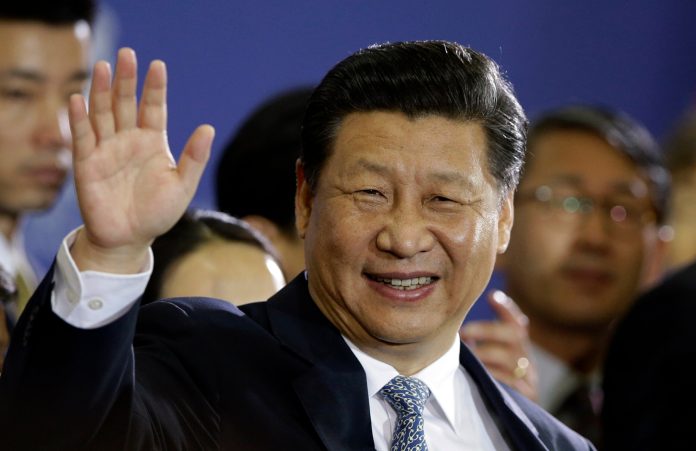
The 11-member BRICS group adopted a joint declaration at their summit in New Delhi on Saturday, calling for 'maximum restraint' in the Middle East conflict and expressing 'deep concern' over the war. Chinese President Xi Jinping urged BRICS to play a peacemaking role in the region, saying the war 'does not serve the common interests of the international community.' The bloc includes Iran and the UAE. On the sidelines, India's Modi and China's Xi met to improve relations after years of border tensions.
How the spectrum reads this story
The same event, summarised as five points on the political spectrum would each tend to frame it. These are generated by an AI model and are a starting point, not the last word.
Left
BRICS is asserting the Global South's voice in international conflicts, with China and other major developing economies refusing to be sidelined by Western-dominated diplomacy. This joint call for restraint represents a genuine alternative power center working to constrain escalation in the Middle East—a region where U.S. allies have traditionally held disproportionate influence. The bloc's ability to include both Iran and the UAE while reaching consensus shows that multipolarity works when institutions are built on genuine consultation rather than hegemonic imposition.
Center-left
The BRICS summit shows emerging economies coordinating on shared interests in regional stability. Xi's framing of China and BRICS as diplomatic counterweights is significant; these nations represent real economic and political weight. The joint declaration calling for restraint is constructive, though its practical effect depends on whether member states—particularly Russia and Iran—translate words into actions. Modi and Xi's bilateral meeting suggests serious diplomatic work beneath the headlines, which could matter for regional de-escalation.
Center
BRICS issued a measured joint statement on the Middle East that reflects the bloc's genuine internal diversity. The declaration's emphasis on 'maximum restraint' and 'multilateral approach' is diplomatic language that lets members with different stakes in the conflict find common ground without binding commitments. Xi's positioning of BRICS as a peace actor is political theater—useful for the bloc's legitimacy but unlikely to shift facts on the ground. Modi and Xi's bilateral talks suggest real bilateral relationship work, separate from the summit's messaging.
Center-right
BRICS coordination on Middle East statements illustrates how China and Russia use multilateral forums to project soft power and position themselves as responsible stakeholders, even as they maintain strategic partnerships with Iran. The joint declaration's call for restraint carries limited weight given member states' conflicting interests. China's framing of BRICS as a counterweight to the U.S. reflects Beijing's long-term strategy to build alternatives to Western-led institutions. The Modi-Xi meeting is pragmatic diplomacy, but border tensions between India and China remain a structural reality.
Right
BRICS is attempting to create a rival diplomatic bloc that undermines Western leadership and legitimizes regimes hostile to American interests. Hosting Iran and the UAE together while calling for 'restraint' masks deeper disagreements and allows authoritarian states to gain respectability through consensus theater. Xi's invocation of BRICS as a 'counterweight' to the U.S. and its allies is explicit; Beijing is organizing the developing world against Western influence. Modi's engagement with Xi, while useful for India, risks lending credibility to an anti-Western coalition that doesn't serve traditional American allies or liberal democracy.
Hear two viewpoints debate it
Pick two viewpoints and Prism writes a short, six-turn exchange about this story in each one’s own voice — steel-manned, no winner declared. Each pairing is written once and then saved for every reader. The voices are AI syntheses of a tradition, not real people.
New pairing — Prism will write it now.
How each outlet covered it
Where Prism places each piece — not the outlet in general — with the words from that piece that put it there, and the photograph the outlet chose. Picking a photo is a framing decision too.
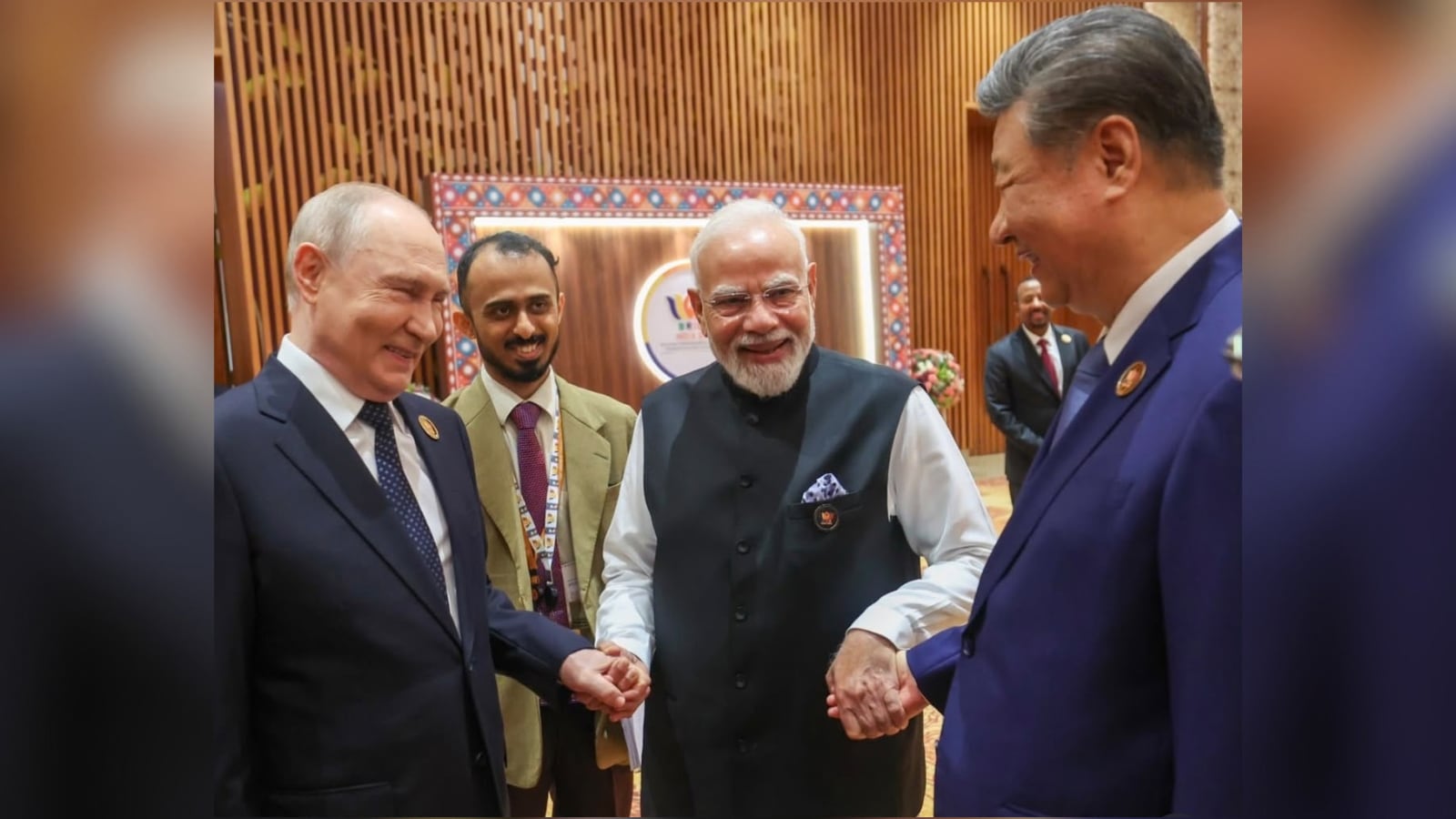 NDTVThis piece reads center-left
“PM Modi Holds Hands With Xi, Putin In Powerful Message”
Word choiceUses emotionally charged and visual language ('Holds Hands', 'Powerful Message') to frame the summit as a symbolic show of unity, whereas other outlets lead with substantive declarations or policy positions.
Read the original DawnThis piece reads center
“overcoming earlier divisions to issue a joint statement”
Read the original- Courthouse NewsThis piece reads center
“Modi and Xi met during the BRICS summit”
What's left outFocuses the headline on the bilateral India-China relationship rather than the bloc's joint statement, treating BRICS as a secondary backdrop rather than the main event.
Read the original 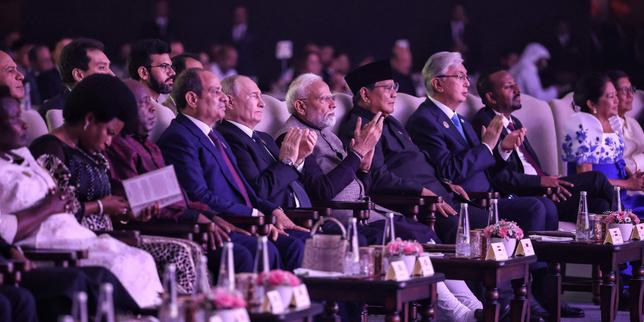 Le MondeThis piece reads center
“told the summit that the Middle East war 'does not serve the common interests”
Read the original- Al-Monitornot ratedRead the original
- BloombergThis piece reads center
“BRICS nations including Iran and the United Arab Emirates have expressed”
Read the original - Washington Examinernot rated
Word choiceEmphasizes the rhetorical or aspirational aspect of Xi's positioning—the word 'casting' signals framing rather than description of actions, inviting reader skepticism about the claim itself.
Read the original
Placements are generated by an AI model from each article’s own headline and summary, and every quotation above is checked to be a real substring of that article before it is published. How this is done
Prism is free and carries no advertising. Support it if it was useful.