EU Commission invites Canada to become first 'associate member'
Reported by
A dot shows how that piece reads — Prism rates articles, not outlets, and shows the words behind each placement below. No dot means the piece isn’t rated. How the ratings work

What happened
The account the coverage agrees on, with contested figures attributed rather than asserted. This is not one of the five framings below — it is the ground they all stand on.
European Commission President Ursula von der Leyen proposed in her State of the Union address on Wednesday that Canada become the European Union's first "associate member." The proposal would move the EU-Canada relationship beyond the existing CETA trade agreement to a new framework called an Alliance for the Future, intended to deepen integration of supply chains.
How the spectrum reads this story
The same event, summarised as five points on the political spectrum would each tend to frame it. These are generated by an AI model and are a starting point, not the last word.
Left
The EU is strategically positioning itself to counter U.S. hegemony under Trump by deepening ties with Canada, creating an alternative economic bloc. This reflects how U.S. protectionism and tariff threats force other nations to organize themselves independently, exposing the contradictions of unilateral American trade policy and the need for a multipolar economic order.
Center-left
The EU is responding pragmatically to U.S. trade tensions by strengthening partnership with Canada through this new associate membership status. This deepens transatlantic cooperation while preserving EU-Canada autonomy, modernizing their relationship beyond CETA and creating economic resilience in an uncertain trade environment.
Center
The EU's offer reflects rational adjustment to shifting geopolitics: with U.S. trade policy becoming unpredictable, both sides see mutual benefit in closer integration. The associate member framework is an innovative middle ground—deeper than traditional trade agreements but stopping short of full membership—allowing practical cooperation without the complications of EU accession.
Center-right
The EU is making a strategic move to secure a reliable trade partner as U.S.-led negotiations become harder. Canada should carefully evaluate whether associate membership serves its interests better than existing arrangements, ensuring it maintains flexibility and doesn't become overly dependent on European markets as a reaction to American policy.
Right
The EU is attempting to create an anti-American economic bloc in response to U.S. tariffs, signaling that Europe intends to work around rather than with the United States. This represents a concerning fracturing of the Western alliance, driven by Brussels bureaucrats' reflexive opposition to American sovereignty and economic interests.
Hear two viewpoints debate it
Pick two viewpoints and Prism writes a short, six-turn exchange about this story in each one’s own voice — steel-manned, no winner declared. Each pairing is written once and then saved for every reader. The voices are AI syntheses of a tradition, not real people.
New pairing — Prism will write it now.
How each outlet covered it
Where Prism places each piece — not the outlet in general — with the words from that piece that put it there, and the photograph the outlet chose. Picking a photo is a framing decision too.
 CBC NewsThis piece reads center-left
“as U.S. President Donald Trump's tariffs drive Ottawa closer to Europe”
FramingNames Trump and tariffs as the direct cause moving Canada toward Europe, providing more specific attribution of causation than other outlets.
Read the original- Bloombergnot ratedRead the original
- CNBCThis piece reads center-left
“Trump trade war intensifies”
Word choiceUses the phrase "trade war" in the headline itself, escalating the characterization beyond "tensions" or "tariffs" that other outlets employ.
Read the original 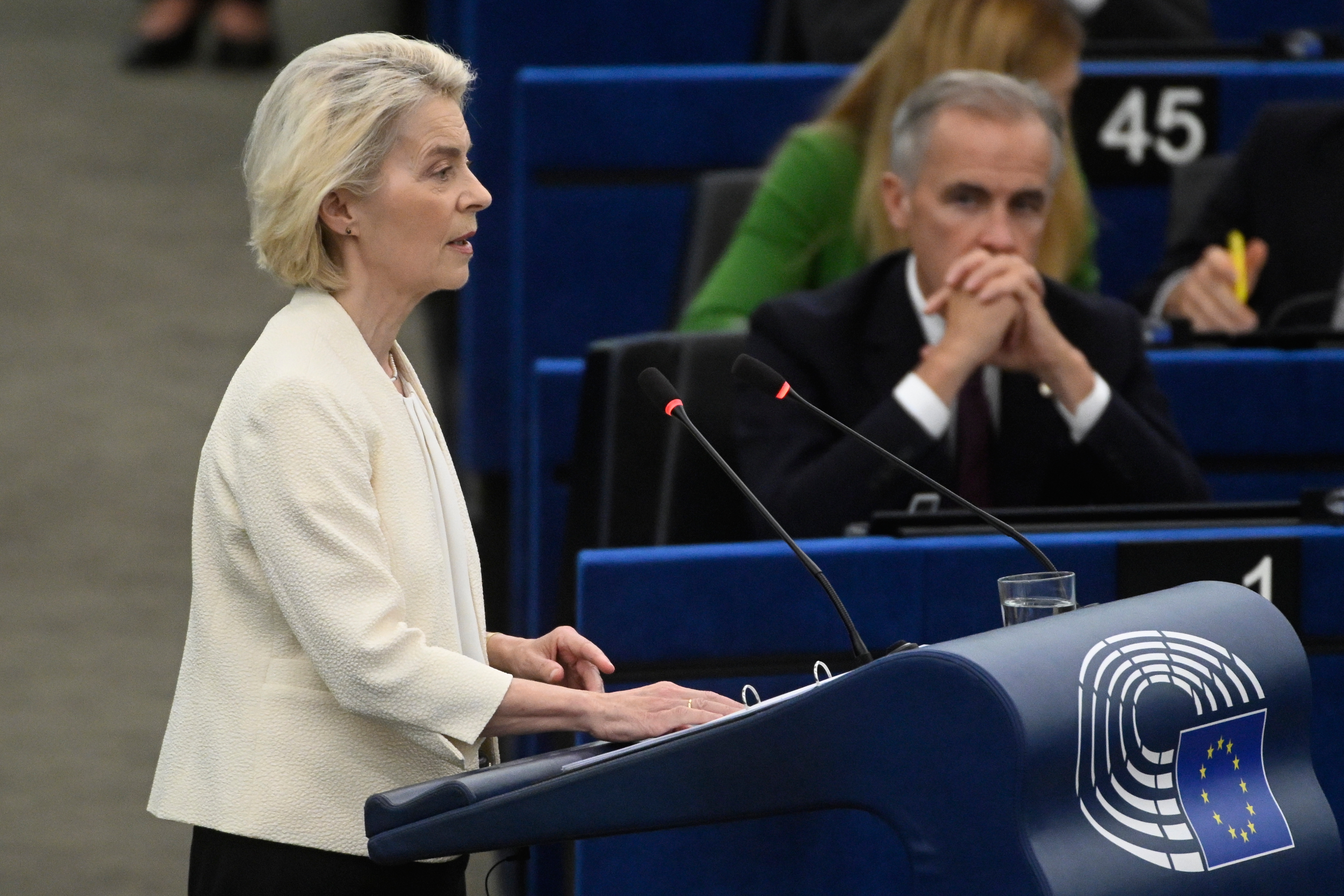 NPRThis piece reads center-left
“as U.S. President Donald Trump's tariffs drive Ottawa closer to Europe”
Read the original- UPInot ratedRead the original

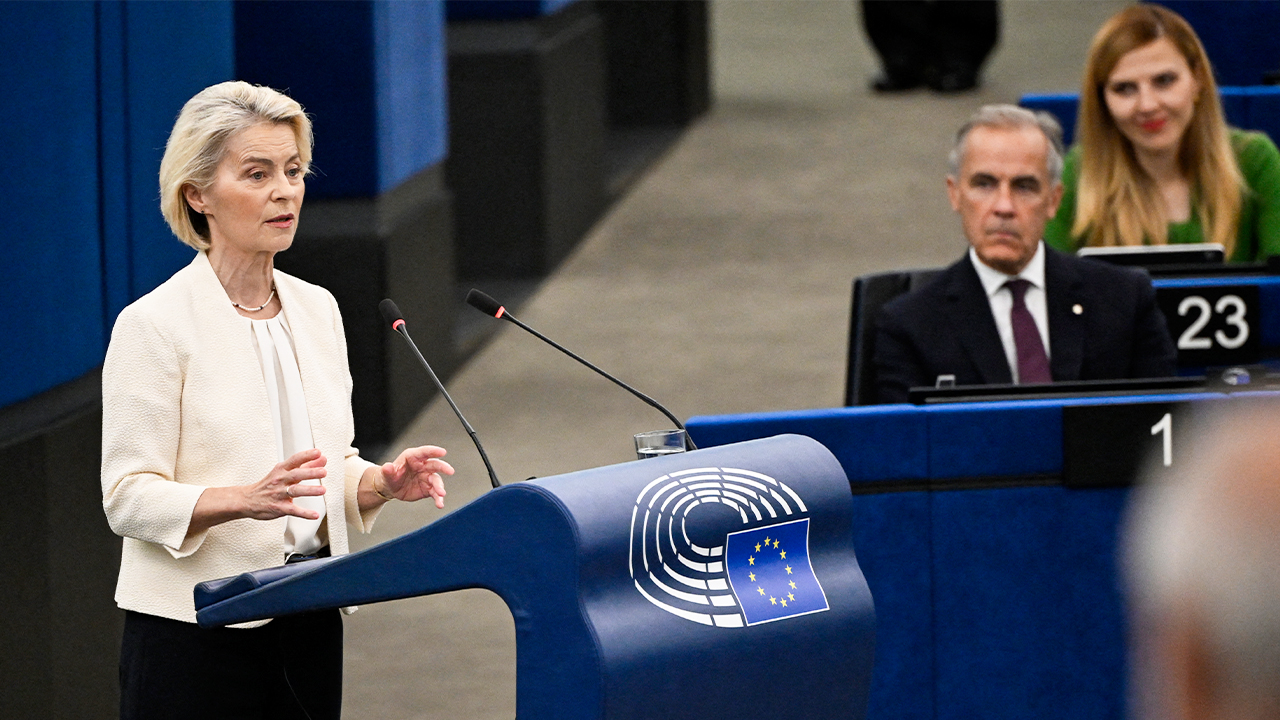 Fox BusinessThis piece reads center-right
“amid US trade spat”
FramingFrames the proposal explicitly as a response to U.S. trade conflict, where other outlets treat U.S. tensions as context but lead with the EU's initiative itself.
Read the original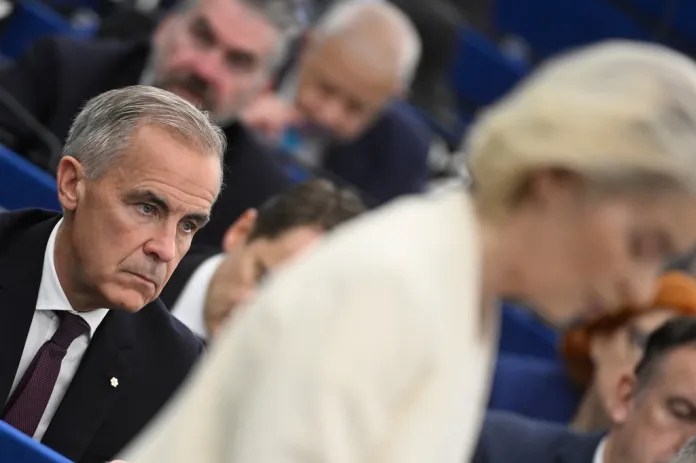 Washington ExaminerThis piece reads center-right
“relations with the United States sour”
Read the original
Placements are generated by an AI model from each article’s own headline and summary, and every quotation above is checked to be a real substring of that article before it is published. How this is done
Prism is free and carries no advertising. Support it if it was useful.