Houthis intensify fighting in Yemen and launch attacks on Saudi Arabia and shipping
Reported by
A dot shows how that piece reads — Prism rates articles, not outlets, and shows the words behind each placement below. No dot means the piece isn’t rated. How the ratings work
What happened
The account the coverage agrees on, with contested figures attributed rather than asserted. This is not one of the five framings below — it is the ground they all stand on.
Fighting intensified in Yemen on Sunday as government forces attacked Iran-backed Houthi rebels along the Red Sea, while Houthis fired into Saudi Arabia. The Houthis expanded control of the Bab el-Mandeb Strait, a major shipping route. The UN migration agency reported 85,818 Yemeni civilians displaced in recent days, with over 2,000 fleeing to Djibouti. Saudi Arabia launched more than 50 strikes against Houthi positions in 24 hours, according to Houthi claims. A Yemeni government official conceded a "painful" defeat and said more forces would be sent to the Red Sea coast.
How the spectrum reads this story
The same event, summarised as five points on the political spectrum would each tend to frame it. These are generated by an AI model and are a starting point, not the last word.
Left
The Houthis' military advances represent a nationalist response to years of Saudi-led war and foreign intervention in Yemen. The displacement of 85,000+ civilians and ongoing strikes reveal the devastating human cost of regional proxy conflicts driven by great-power rivalry. This situation demands an end to U.S. support for Saudi Arabia and a political settlement that respects Yemen's sovereignty rather than perpetuating a conflict that enriches weapons manufacturers while Yemeni civilians suffer.
Center-left
Yemen's escalating conflict has created a humanitarian catastrophe, with massive civilian displacement and no political solution in sight. While the Houthis are Iranian-backed, their military gains reflect broader failures of the Saudi-led coalition strategy. International focus should shift toward negotiated settlement, protection of global shipping lanes, and addressing the root causes of instability—rather than simply strengthening military responses that have clearly not achieved their objectives.
Center
Yemen's renewed fighting poses genuine risks: immediate humanitarian suffering requiring urgent aid, regional instability that threatens global shipping and energy markets, and a military stalemate without clear resolution. Both the Houthis' expansion and Saudi airstrikes reflect a conflict structure that incentivizes continued fighting over compromise. Practical steps—protecting civilian corridors, stabilizing key shipping routes, and creating conditions for negotiation—must balance competing interests without expecting either side to abandon core positions.
Center-right
Iran-backed Houthi advances in a critical shipping chokepoint threaten global energy security and regional stability. The Yemeni government and Saudi-led coalition need stronger support to counter Tehran's expanding influence and protect vital international waters. The displacement of civilians is tragic, but allowing hostile forces to control key strategic straits poses long-term risks to global commerce and allied interests. Sustained military pressure, combined with diplomatic efforts, remains necessary to restore government control.
Right
The Houthis' seizure of the Bab el-Mandeb Strait represents Tehran's strategic expansion and a direct threat to American energy interests and global trade. Saudi Arabia and Gulf states require robust military backing to counter Iranian proxy operations. The Biden-Harris administration's weakness on Iran emboldened these advances; stronger deterrence and support for regional partners are essential. Protecting strategic shipping lanes is a core national interest requiring decisive action, not endless negotiation with hostile actors.
Hear two viewpoints debate it
Pick two viewpoints and Prism writes a short, six-turn exchange about this story in each one’s own voice — steel-manned, no winner declared. Each pairing is written once and then saved for every reader. The voices are AI syntheses of a tradition, not real people.
New pairing — Prism will write it now.
How each outlet covered it
Where Prism places each piece — not the outlet in general — with the words from that piece that put it there, and the photograph the outlet chose. Picking a photo is a framing decision too.
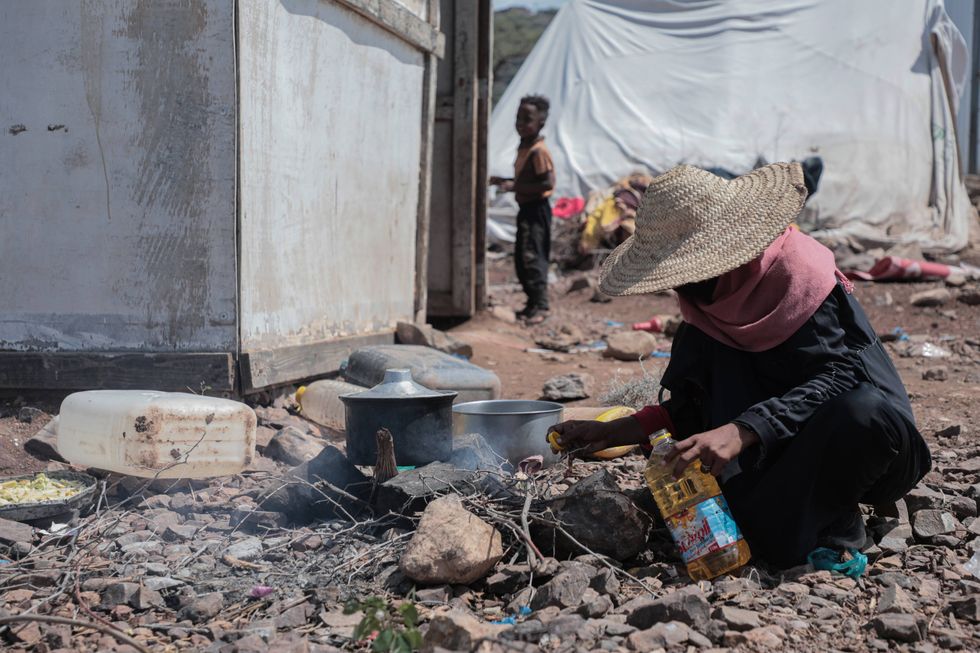 Common DreamsThis piece reads left
“Trump's Iran War”
Word choiceAttributes the conflict to Trump administration policy rather than the underlying Yemen war; no other outlet frames this as 'Trump's' war.
Read the original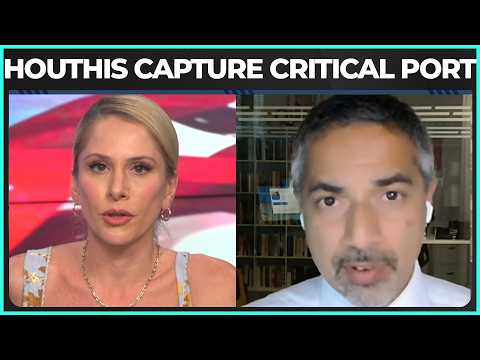 The Young TurksThis piece reads left
Headline changedwas “Trita Parsi Discusses The Sudden Success Of The Houthis In The Red Sea”
“Donald Trump's war with Iran and the Houthis”
FramingFrames the conflict as Trump's personal war with Iran rather than a regional Yemen conflict; other outlets describe the Houthis' military actions without this attribution to Trump.
Read the original NewsNationnot ratedRead the original
- The EconomistThis piece reads center
“Their gains are also an embarrassment for Saudi Arabia”
Read the original 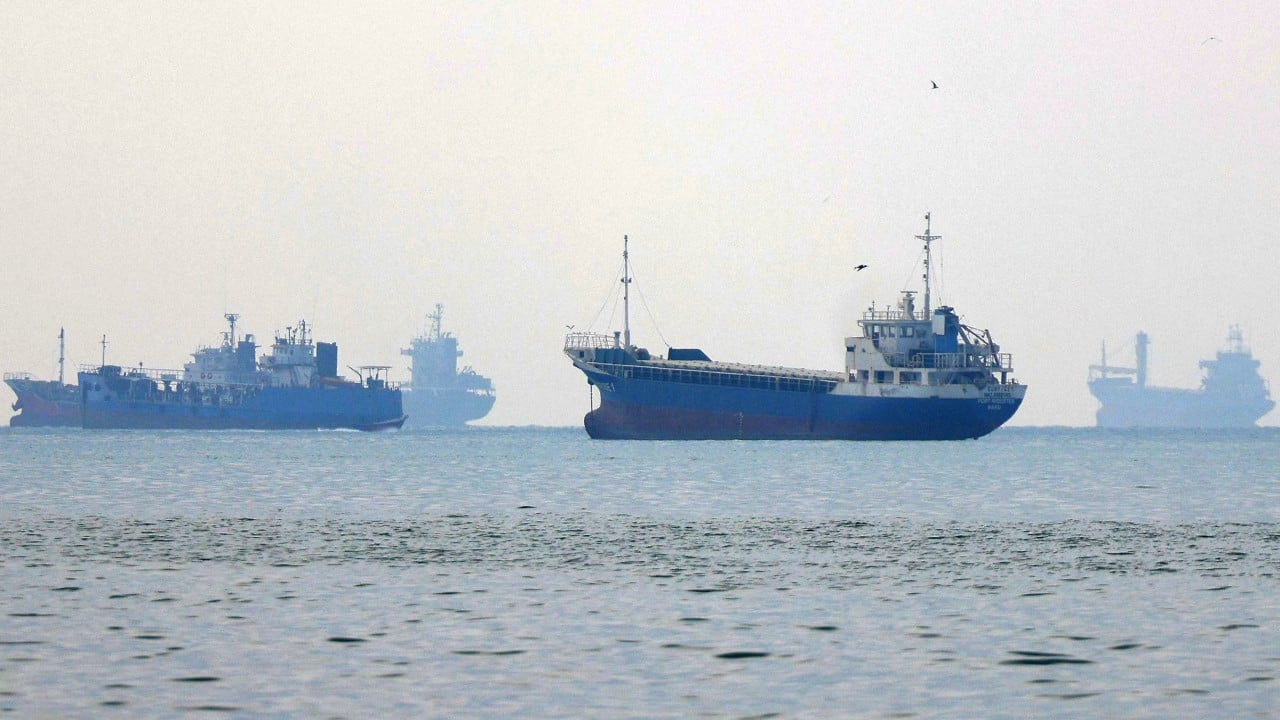 South China Morning PostThis piece reads center
Headline changedwas “New attacks in Hormuz and Saudi Arabia test nerves as war's spread worsens oil disruption”
“advance by Yemen's Houthis threatened to worsen the wartime disruption”
Read the original- The Straits TimesThis piece reads center
“Yemen's Houthis say Saudi Arabia launched over 50 strikes”
Read the original  France 24This piece reads center-right
“Sucker Punch: How the Houthis shocked the Gulf”
Word choiceUses informal, dramatic language ('Sucker Punch,' 'shocked') that conveys surprise and impact; most other outlets use more measured terminology like 'advance' or 'expansion.'
Read the original The National InterestThis piece reads center-right
“Why the Houthi Victory Should Change Donald Trump's Iran Strategy”
Word choiceFrames the military gains as an outright 'victory' rather than territorial control or expansion, language stronger than other outlets use.
Read the original
Placements are generated by an AI model from each article’s own headline and summary, and every quotation above is checked to be a real substring of that article before it is published. How this is done
Prism is free and carries no advertising. Support it if it was useful.