House adjourns early or avoids votes to prevent Hegseth impeachment vote
Reported by
A dot shows how that piece reads — Prism rates articles, not outlets, and shows the words behind each placement below. No dot means the piece isn’t rated. How the ratings work
The Young Turks
What happened
The account the coverage agrees on, with contested figures attributed rather than asserted. This is not one of the five framings below — it is the ground they all stand on.
Rep. Thomas Massie, R-Ky., filed articles of impeachment against Defense Secretary Pete Hegseth on Tuesday. House Speaker Mike Johnson moved to adjourn the chamber a day early on Wednesday, before a scheduled seven-week recess, preventing a vote on Massie's impeachment articles. Massie said the early adjournment blocked his impeachment effort.
Developing story · 2 chapters
- Rep. Thomas Massie files impeachment articles against Defense Secretary Pete Hegseth over Iran war
- House adjourns early or avoids votes to prevent Hegseth impeachment voteyou are here
How each side framed the previous chapter
Compare these with the five framings below to see what moved as the story developed — and what each side kept saying regardless.
Left
Massie's impeachment effort, though procedurally unusual from a Republican, reflects growing recognition that Hegseth has violated constitutional war powers by waging undeclared wars—particularly in Iran—without congressional authorization. The military actions constitute potential war crimes that international law experts and human rights groups have documented. While the GOP-controlled House will likely block this, Massie's move exposes the Trump administration's contempt for constitutional limits on executive power and congressional responsibility for warfare.
Center-left
Massie's impeachment articles raise serious questions about whether Hegseth has overstepped legal authority in conducting military operations, especially the Iran campaign, without explicit congressional approval. The war powers issue is legitimate constitutional ground, even if impeachment is procedurally difficult and unlikely to succeed in a Republican House. The resolution at least forces a public accounting and puts lawmakers on record regarding their stance on executive military authority.
Center
Massie has introduced a privileged impeachment resolution that technically forces a House vote, but the effort faces overwhelming odds in a Republican-controlled chamber. While Massie's concerns about executive military overreach and congressional war powers deserve serious consideration—these are genuine constitutional questions—impeachment is a blunt instrument and the political reality makes passage impossible. The episode highlights ongoing tension between executive flexibility in national security and legislative oversight, but resolution likely requires legislative negotiation rather than impeachment.
Center-right
Massie's impeachment move, while based on legitimate war powers concerns, is procedurally disruptive and undermines party unity at a sensitive moment. War powers disputes are better resolved through legislative channels and oversight rather than impeachment, which is a serious measure reserved for clear violations of law. Hegseth's military decisions, while contestable, reflect executive judgment in responding to genuine security threats, and impeachment sets a problematic precedent for second-guessing military operations.
Right
Massie's impeachment effort, despite his libertarian anti-war stance, represents internal GOP division that weakens conservative governance. The Trump administration's military actions against Iran and other adversaries reflect necessary assertiveness in defending American interests and deterring hostile regimes. Impeachment over policy disagreements on military strategy is inappropriate and plays into Democratic efforts to undermine the administration. Massie's decision to act unilaterally without informing leadership demonstrates disregard for party cohesion.
How the spectrum reads this story
The same event, summarised as five points on the political spectrum would each tend to frame it. These are generated by an AI model and are a starting point, not the last word.
Left
A Republican congressman attempted to hold Trump's Defense Secretary accountable for his record, but the Speaker used procedural manipulation to kill the vote. This exposes how party loyalty overrides institutional oversight—when Republicans control the House, impeachment becomes meaningless unless both parties support it. Johnson's move shows the system fails when one party prioritizes protecting its own over performing its constitutional duty.
Center-left
Rep. Massie filed legitimate impeachment articles against Defense Secretary Hegseth based on concerns about his fitness for office. Rather than allow a floor vote, Speaker Johnson adjourned the House early to avoid the political awkwardness of members going on record. This undermines the impeachment power as a meaningful check on executive branch officials and raises questions about whether procedural tactics are being used to sidestep accountability.
Center
A Republican filed impeachment articles against a Republican Defense Secretary, triggering a procedural standoff. The Speaker chose to adjourn early rather than hold a vote, citing the upcoming election recess. Both outcomes—holding the vote or avoiding it—carry downsides: a vote could embarrass party members, but sidelining it looks like the leadership is blocking accountability. The real question is whether Massie's impeachment had substantive merit or was a political gesture.
Center-right
Rep. Massie used impeachment as a political tool against a colleague in his own party and cabinet. Rather than dignify a frivolous impeachment attempt, Speaker Johnson managed the House schedule to move past it. Congress has legitimate business to conduct, and the Speaker made a reasonable call to let members return to their districts during an election season. Massie's move was grandstanding that didn't warrant a full floor vote.
Right
A conservative lawmaker attempted to challenge Defense Secretary Hegseth on policy grounds through impeachment, but the Speaker blocked the effort by adjourning early. This shows how leadership suppresses internal party dissent and prevents members from voting their conscience. Whether one agrees with Massie's articles or not, the procedural dodge prevents transparency and suggests the establishment fears scrutiny of its own officials.
Hear two viewpoints debate it
Pick two viewpoints and Prism writes a short, six-turn exchange about this story in each one’s own voice — steel-manned, no winner declared. Each pairing is written once and then saved for every reader. The voices are AI syntheses of a tradition, not real people.
New pairing — Prism will write it now.
How each outlet covered it
Every outlet that reported this event, with the photograph it chose. Picking a photo is a framing decision too.
- Daily Kosnot ratedRead the original
 Common Dreamsnot rated
What's left outAdds political context and claims about public opinion on an Iran conflict that is not mentioned in other outlets' coverage of this impeachment event—material not directly part of what Massie did or Johnson's adjournment decision.
Read the original The Young Turksnot rated
Word choiceUses 'WAR' in all caps and frames it as a dramatic personal conflict, where other outlets describe it more plainly as filing articles of impeachment.
Read the original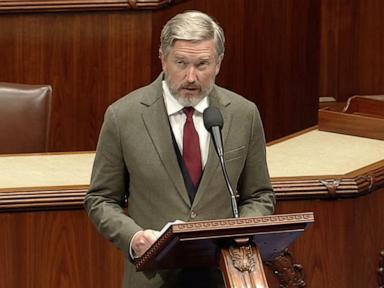 ABC Newsnot ratedRead the original
- CNBCnot ratedRead the original
 Just the Newsnot ratedRead the original
 The Daily Signalnot rated
Word choiceUses the title 'Secretary of War' instead of 'Defense Secretary' or 'Secretary of Defense,' which is Hegseth's actual title—the loaded language echoes Massie and TYT's framing rather than the official position.
Read the original Fox Newsnot rated
FramingThe headline frames Massie's claim as something he 'says' rather than a fact—a subtle distance from outlets like CNBC that describe it more directly, though both are technically accurate to what occurred.
Read the original
Prism is free and carries no advertising. Support it if it was useful.