Trump dismisses warnings from tech leaders and refuses to support AI regulation
Reported by
A dot shows how that piece reads — Prism rates articles, not outlets, and shows the words behind each placement below. No dot means the piece isn’t rated. How the ratings work
MSNBC
What happened
The account the coverage agrees on, with contested figures attributed rather than asserted. This is not one of the five framings below — it is the ground they all stand on.
President Trump rejected calls from tech leaders for AI guardrails and regulation, dismissing concerns about AI risks as a hoax or conspiracy. During a Monday panel discussion, Nvidia CEO Jensen Huang put Trump on a live call, where Trump stated the only safeguards AI needs is a "STRONG AND SMART (High IQ!) PRESIDENT"—referring to himself. Trump also criticized Anthropic's leadership and emphasized that the U.S. cannot afford to slow AI development due to competition with China. Meanwhile, some tech leaders including Anthropic co-founder Jack Clark continued publicly calling for government involvement in AI regulation, and political figures across the spectrum—from Bernie Sanders to Steve Bannon—sounded alarms about AI dangers.
How the spectrum reads this story
The same event, summarised as five points on the political spectrum would each tend to frame it. These are generated by an AI model and are a starting point, not the last word.
Left
Trump's dismissal of AI regulation reveals how concentrated power enables dangerous outcomes. When corporate leaders seek basic safeguards and Trump weaponizes his position to block them—prioritizing geopolitical dominance over human welfare—it shows the system requires structural change. An individual's judgment, especially one dismissive of expert warnings, cannot substitute for democratic oversight of transformative technology. This moment exposes how capitalism's competitive logic (beating China) overrides the public interest, and why we need independent, well-resourced regulatory bodies beyond executive whim.
Center-left
Trump's rejection of AI guardrails is reckless and irresponsible. Tech leaders and policy experts across the field warn that rapid, uncontrolled AI development poses real risks—from job displacement to autonomous weapons to systemic bias. Trump's claim that his personal judgment suffices is both arrogant and dangerous. We need serious, science-based regulation developed with input from industry, academia, and civil society. This isn't about slowing innovation; it's about managing it responsibly. The idea that national competition with China requires abandoning safety is a false choice that hurts American workers and citizens.
Center
This debate reflects real tensions without easy answers. Tech leaders raising concerns deserve a hearing, but some warnings may be overblown or driven by competitive positioning. Trump is right that AI development matters for American competitiveness, but wrong to dismiss regulation entirely. Workable policy requires both sides to engage: some guardrails make sense—transparency requirements, testing for bias, oversight of high-stakes applications—without throttling innovation. The challenge is finding rules that are proportionate, evidence-based, and coordinated internationally. Neither blanket rejection nor maximal caution serves the national interest.
Center-right
Trump's instinct to prioritize American technological leadership is sound; ceding AI dominance to China would be strategically catastrophic. However, his dismissal of all regulation and his personalizing of oversight is problematic. Effective policy requires institutional structures, not presidential decree. The private sector has strong incentives to innovate safely—reputational damage and liability focus minds. We should let companies compete and self-regulate where possible, establish clear liability rules so negligence has consequences, and intervene narrowly where genuine harms emerge. Preemptive heavy regulation based on speculative worst-case scenarios risks choking off benefits while likely being ineffective anyway.
Right
Trump is right to push back against AI alarmism masquerading as concern. The warnings about existential risk from AI are speculative and often driven by activists seeking to centralize control over powerful technology. Real innovation happens when entrepreneurs are free to build without bureaucratic obstacles. Yes, we need competition with China—that's legitimate—but we also shouldn't subordinate technological progress to an ever-growing regulatory apparatus. The market and tort law provide real incentives for safety. Trump's skepticism of expert panels that want to slow development reflects healthy distrust of unelected technocrats claiming special wisdom to constrain private enterprise.
Hear two viewpoints debate it
Pick two viewpoints and Prism writes a short, six-turn exchange about this story in each one’s own voice — steel-manned, no winner declared. Each pairing is written once and then saved for every reader. The voices are AI syntheses of a tradition, not real people.
New pairing — Prism will write it now.
How each outlet covered it
Where Prism places each piece — not the outlet in general — with the words from that piece that put it there, and the photograph the outlet chose. Picking a photo is a framing decision too.
 MSNBCnot ratedRead the original
- CBS Newsnot ratedRead the original
- Bloombergnot ratedRead the original
- Daily KosThis piece reads center-left
“the only one smart enough to regulate AI”
Word choiceFrames Trump's position in the headline as a claim of exclusive personal competence ('the only one smart enough'), whereas other outlets report his statement more literally as 'only needs a strong and smart president.'
Read the original 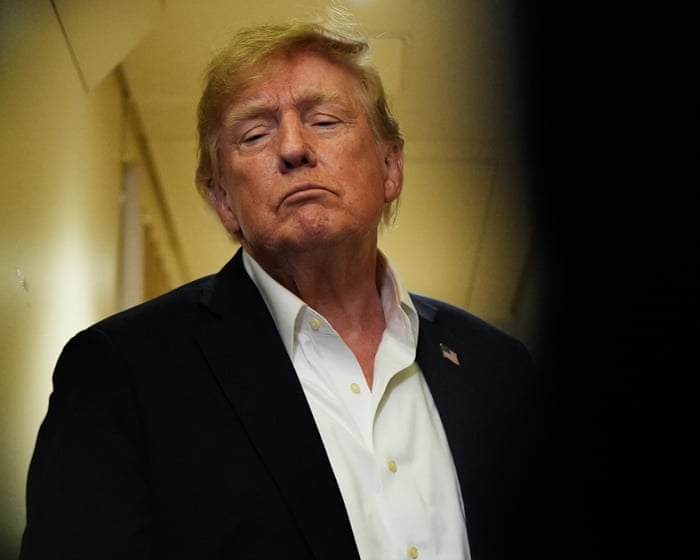 The GuardianThis piece reads center-left
“rail against AI controls despite growing calls for more checks”
FramingQuotes Trump's claim of a 'SICK conspiracy' prominently, whereas other outlets do not emphasize this particular characterization, making it seem more central to his position.
Read the original NYTnot rated
Headline changedwas “From Bernie Sanders to Steve Bannon, Political Figures Sound Alarms on A.I.”
Read the original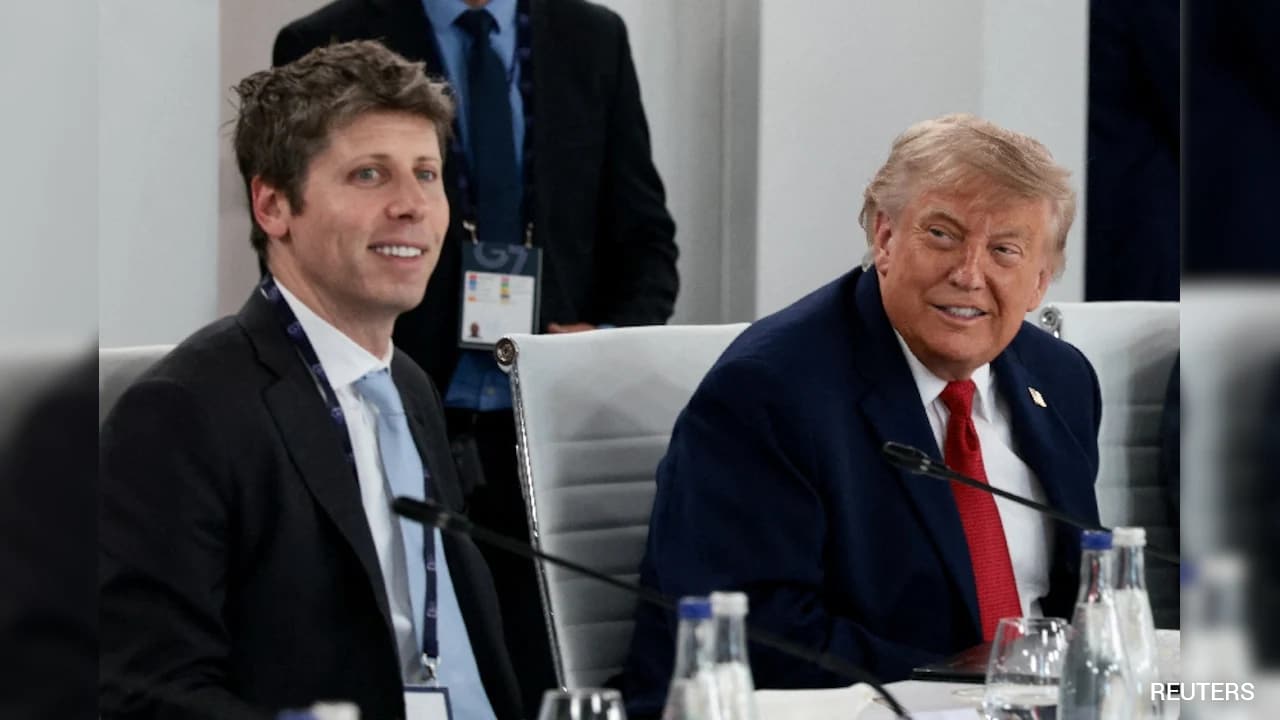 NDTVnot ratedRead the original
- HuffPostThis piece reads center-left
“sounded like a schoolboy trying to riff on an oral exam”
Word choiceUses a mocking comparison to characterize Trump's demeanor when discussing AI, injecting editorial judgment into what other outlets describe as policy statements.
Read the original - CNBCThis piece reads center
“goes scorched earth on AI warnings, raging about”
Word choiceUses military/destruction language ('scorched earth') to describe Trump's statements, suggesting aggressive hostility, whereas most outlets use more neutral terms like 'dismisses' or 'rejects.'
Read the original - Business InsiderThis piece reads center
“AI doomer predictions aren't grounded in science”
Read the original
Placements are generated by an AI model from each article’s own headline and summary, and every quotation above is checked to be a real substring of that article before it is published. How this is done
Prism is free and carries no advertising. Support it if it was useful.