Trump says Irish reunification would be 'fantastic' during Ireland visit
Reported by
A dot shows how that piece reads — Prism rates articles, not outlets, and shows the words behind each placement below. No dot means the piece isn’t rated. How the ratings work
CNN
What happened
The account the coverage agrees on, with contested figures attributed rather than asserted. This is not one of the five framings below — it is the ground they all stand on.
During a visit to Dublin on Saturday, President Donald Trump told Irish Taoiseach Micheál Martin that he would "love" to see Ireland unified, calling it "fantastic" and "inevitable." Trump broke with decades of official U.S. neutrality on the constitutional status of Northern Ireland, a sensitive issue tied to the 1998 Good Friday Agreement that ended decades of conflict. The remarks drew support from Irish nationalist parties and criticism from pro-UK parties; Downing Street said it would "stick to the Good Friday Agreement."
How the spectrum reads this story
The same event, summarised as five points on the political spectrum would each tend to frame it. These are generated by an AI model and are a starting point, not the last word.
Left
Trump's intervention exposes how U.S. foreign policy on Ireland has always reflected power interests rather than genuine neutrality. Decades of studied silence served to protect a strategic NATO ally and U.S. military interests. His casual embrace of reunification, however unserious, signals that even Republican administrations see the partition as an anachronism—proof that structural colonial arrangements eventually crumble when great powers stop defending them. The real question is why American presidents have pretended neutrality when the answer was always obvious.
Center-left
Trump's comments are reckless and irresponsible. The U.S. has carefully maintained neutrality on Irish reunification because the issue remains genuinely divisive and emotionally charged in Northern Ireland. By wading in without preparation or diplomatic groundwork, Trump has undermined trust with the U.K., a crucial ally, and risked inflaming tensions in a region that achieved hard-won peace. The remarks seem designed to appeal to Irish-American voters and his own golf interests rather than advance any coherent strategy.
Center
Trump's statement departs from established diplomatic practice without clear benefit. The U.S. neutrality on Irish reunification has been a useful stance—it avoids antagonizing either the U.K. or Ireland while respecting that the Good Friday Agreement established a peaceful, democratic path forward on the issue. Trump's off-the-cuff support for unification neither resolves anything nor advances American interests. That said, his comments, while ill-advised, are unlikely to destabilize the carefully maintained status quo, as neither the U.K. nor Ireland has suggested it threatens the peace framework.
Center-right
Trump should have exercised diplomatic restraint on a delicate issue that doesn't require American input. The U.S. has wisely stayed neutral because the internal political settlement in Northern Ireland is working and respects the principle of self-determination without U.S. pressure. By endorsing reunification, Trump has gratuitously offended the U.K., undermined British sovereignty over its own territory, and suggested that America will pick sides in others' constitutional questions. The comments appear driven by personal interests—his golf course in Ireland—rather than any strategic consideration.
Right
Trump was simply stating an obvious truth: partition is artificial, and unified Ireland is the natural and inevitable end state. His willingness to say plainly what other politicians dance around reflects his refreshing directness. However, the real problem is that American presidents have spent decades deferring to British interests and pretending neutrality on an issue where Britain's claim to Northern Ireland is itself a relic of empire. Trump's gaffe, if it is one, lies only in breaking omertà—not in what he said.
Hear two viewpoints debate it
Pick two viewpoints and Prism writes a short, six-turn exchange about this story in each one’s own voice — steel-manned, no winner declared. Each pairing is written once and then saved for every reader. The voices are AI syntheses of a tradition, not real people.
New pairing — Prism will write it now.
How each outlet covered it
Where Prism places each piece — not the outlet in general — with the words from that piece that put it there, and the photograph the outlet chose. Picking a photo is a framing decision too.
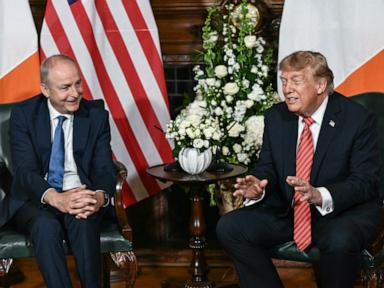

- Washington PostThis piece reads center-left
“breaking with decades of U.S. policy”
FramingExplicitly names Trump's action as a break with longstanding policy in the snippet itself, rather than waiting to explain it—frames the event primarily as a reversal rather than as Trump expressing a view.
Read the original - Bloombergnot ratedRead the original
 Financial TimesThis piece reads center-left
“anger pro-UK parties”
Word choiceCharacterizes the comments as spontaneous and informal, suggesting they were unscripted—other outlets don't label them this way, leaving open whether they were deliberate.
Read the original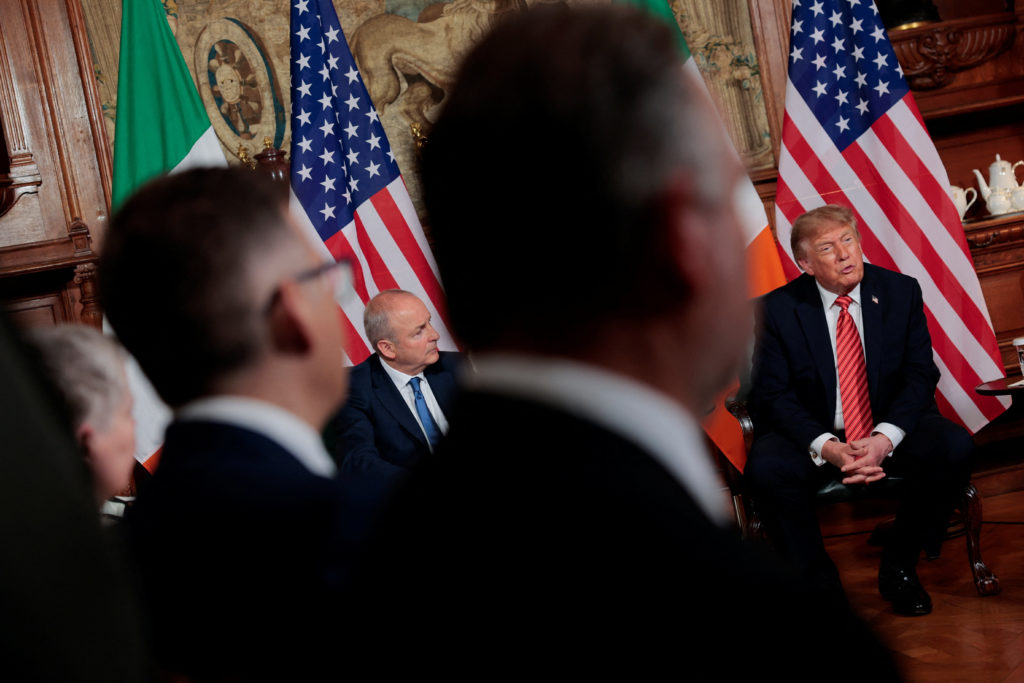 PBS NewsHourThis piece reads center-left
“touches a nerve while in Ireland”
Word choiceFrames the remarks as provocative or sensitive in the headline itself; most outlets report the content and policy break factually, but PBS signals emotional or political impact upfront.
Read the original- CBS NewsThis piece reads center
“mixes official talks with Irish leaders and attendance at the Irish Open”
Read the original 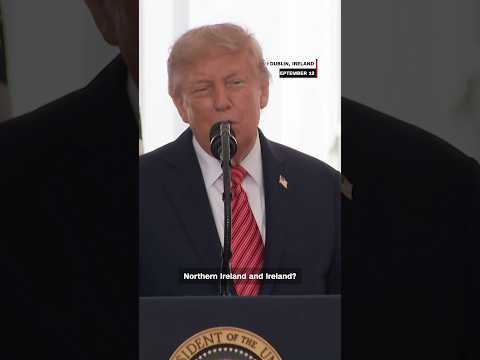 CNNThis piece reads center
“wading into a sensitive topic during a bilateral meeting”
Read the original UPIThis piece reads center
“said he'd love to see Ireland and Northern Ireland unified”
Read the original- Politico EuropeThis piece reads center
“It's going to happen eventually”
What's left outIncludes Trump's statement that unification is inevitable, which appears in few other snippets and gives his comment a deterministic or fatalistic tone—suggests historical inevitability rather than mere personal preference.
Read the original 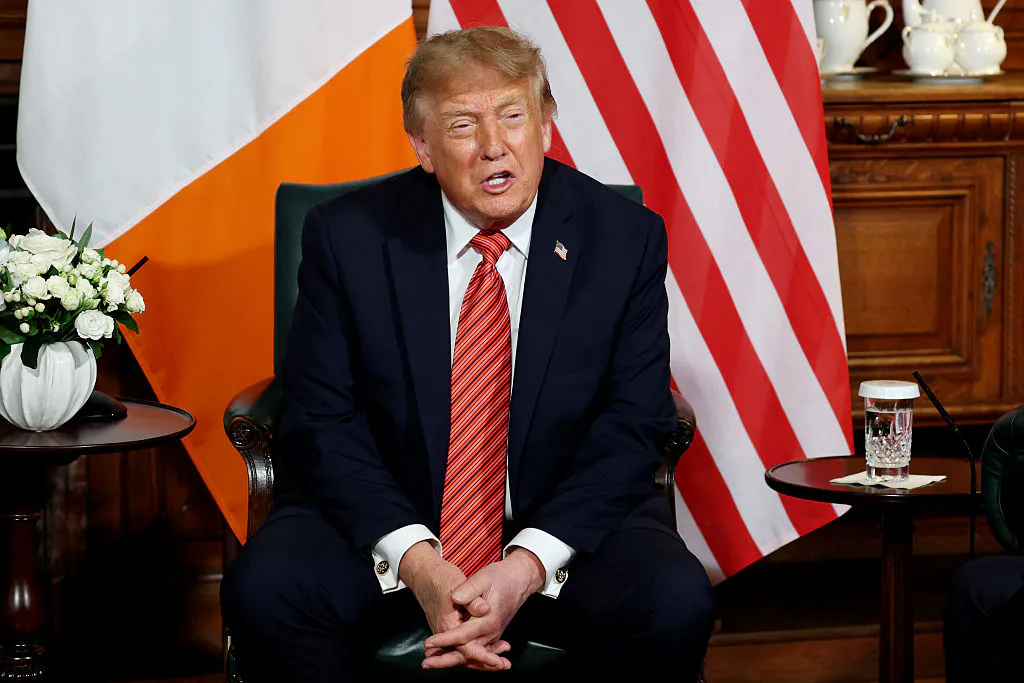 The Daily WireThis piece reads center
“Breaking Decades Of US Neutrality”
FramingLeads the headline with the policy break, emphasizing the departure as the primary news, similar to NYT and Washington Post but phrased as a capital-letter formulation of the rule Trump broke.
Read the original BBCnot ratedRead the original
 NewsNationThis piece reads center
“says the family is loved in Ireland, despite the protests”
Read the original
Placements are generated by an AI model from each article’s own headline and summary, and every quotation above is checked to be a real substring of that article before it is published. How this is done
Prism is free and carries no advertising. Support it if it was useful.