Republican lawmakers vote to halt Iran war as midterms approach
Reported by
A dot shows how that piece reads — Prism rates articles, not outlets, and shows the words behind each placement below. No dot means the piece isn’t rated. How the ratings work
What happened
The account the coverage agrees on, with contested figures attributed rather than asserted. This is not one of the five framings below — it is the ground they all stand on.
Two House Republicans from battleground Iowa districts voted for a war powers resolution on Tuesday to halt President Donald Trump's military action against Iran without congressional approval. The resolution was the sixth such measure considered by the House, and it drew support from Democrats and a small number of GOP dissenters. Three additional Republicans also voted for the measure, expanding GOP opposition to the conflict as midterm elections approach.
How the spectrum reads this story
The same event, summarised as five points on the political spectrum would each tend to frame it. These are generated by an AI model and are a starting point, not the last word.
Left
This vote reflects growing recognition that endless wars drain resources from people's needs and embolden authoritarian foreign policy. While too few Republicans have broken ranks, the fact that even some GOP members now see the Iran war as politically toxic shows the public's war fatigue is real. Congress must reassert its constitutional war powers and reject the executive overreach that allows presidents to wage military campaigns indefinitely without direct legislative votes.
Center-left
Republicans sensing midterm vulnerability are correctly recognizing that the Iran war has become a political liability. This bipartisan war powers vote shows Congress attempting to fulfill its constitutional duty to check executive military power. The shift is encouraging, though more Republican support would be needed to actually constrain presidential war authority. This demonstrates how electoral incentives can align with institutional checks on power.
Center
Battleground-district Republicans are reassessing their political position as midterms approach, and some have concluded voting to constrain the Iran war aligns with constituent concerns about military overreach. War powers resolutions reflect a legitimate congressional role, though whether they accomplish their aim depends on veto-proof majorities and enforcement. The vote shows normal political calculation rather than ideological rupture, with members weighing electoral risk against party loyalty.
Center-right
Some Republicans in competitive districts are voting for war powers measures, likely calculating that opposing the Iran war plays better with voters than defending the administration's military strategy. However, these resolutions often reflect political theater rather than substantive policy change. Republicans should debate military strategy on its merits and constitutional grounds, not primarily through the lens of election-year politics. Undermining executive flexibility in military matters has real consequences.
Right
A handful of Republicans are exploiting midterm jitters to vote for measures that weaken America's military position and constrain the President's ability to defend national security interests. War powers resolutions that strip the executive of necessary operational flexibility prioritize political advantage over strategic strength. These dissenters should remember that projecting strength deters adversaries; voters respect decisive leadership, not members who cave to partisan pressure.
Hear two viewpoints debate it
Pick two viewpoints and Prism writes a short, six-turn exchange about this story in each one’s own voice — steel-manned, no winner declared. Each pairing is written once and then saved for every reader. The voices are AI syntheses of a tradition, not real people.
New pairing — Prism will write it now.
How each outlet covered it
Where Prism places each piece — not the outlet in general — with the words from that piece that put it there, and the photograph the outlet chose. Picking a photo is a framing decision too.
- The Guardiannot ratedRead the original
- NewsweekThis piece reads center-left
“Republican Rebellion Over Iran War Shows GOP Alarm Bells Ringing”
Word choiceUses 'rebellion' and 'alarm bells'—framing that emphasizes discord and worry. Other outlets describe the same votes more neutrally as simply changed positions or joining the resolution.
Read the original 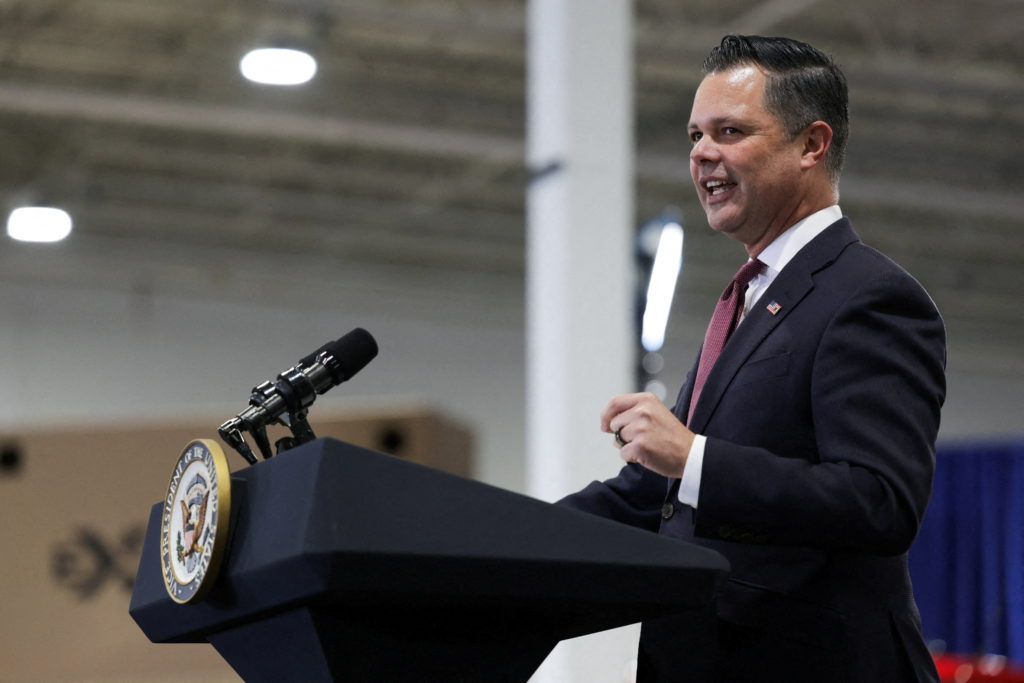 PBS NewsHournot ratedRead the original
- Toronto Sunnot rated
What's left outThis story concerns an Indian criminal organization's threats to Canadian police and appears unrelated to the Iran war votes covered by other outlets.
Read the original  Washington Timesnot rated
What's left outAdds a specific detail about one Republican's recent association with the Defense Secretary—context that other outlets omit, potentially suggesting inconsistency between the member's prior alignment and current vote.
Read the original
Placements are generated by an AI model from each article’s own headline and summary, and every quotation above is checked to be a real substring of that article before it is published. How this is done
Prism is free and carries no advertising. Support it if it was useful.