Supreme Court blocks Missouri GOP-backed congressional redistricting map for midterms
Reported by
A dot shows how that piece reads — Prism rates articles, not outlets, and shows the words behind each placement below. No dot means the piece isn’t rated. How the ratings work

What happened
The account the coverage agrees on, with contested figures attributed rather than asserted. This is not one of the five framings below — it is the ground they all stand on.
The U.S. Supreme Court on Thursday blocked Missouri from using a newly drawn congressional map in the November midterm elections. Justice Brett Kavanaugh referred an emergency application to the full court, which granted it in a brief, unsigned ruling. The map had been drawn by Republican state officials and would have given Republicans an advantage. The decision appears to require Missouri to use its previous congressional map for the midterms, resolving confusion after conflicting lower court rulings earlier in the week.
How the spectrum reads this story
The same event, summarised as five points on the political spectrum would each tend to frame it. These are generated by an AI model and are a starting point, not the last word.
Left
The Supreme Court's decision halts a brazen Republican gerrymander, but only barely and only temporarily. Missouri GOP officials tried to ram through a map explicitly designed to rig elections in their favor, and while the Court blocked it this time, the fact that it took emergency appeals and days of legal chaos to stop partisan mapmaking shows how broken redistricting has become. Real democracy requires independent commissions to draw fair districts—not relying on judges to rescue elections from politicians' self-dealing.
Center-left
The Supreme Court did the right thing by blocking Missouri's gerrymandered map, which was clearly designed to entrench Republican power through manipulated district lines. While the decision protects the November elections from this particular abuse, it highlights a broader problem: states keep trying to push through partisan maps, and the courts keep having to step in. This needs a systematic fix through stronger redistricting standards and potentially independent commissions, not endless litigation.
Center
Missouri's legal chaos over congressional maps reflects a genuine institutional problem that neither side has clean hands on—both parties gerrymander when they can, and both appeal to courts when they lose the redistricting fight. The Supreme Court's intervention stopped the Republicans' map this time, but the underlying issue persists: there's no stable, agreed-upon process for drawing fair districts. States need clearer rules and less judicial involvement, not more. The real solution is legislative reform that both parties can accept.
Center-right
The Supreme Court's decision to block Missouri's map reflects judicial overreach in election administration. While the map had Republican backing, states have constitutional authority over their own districts, and federal judges shouldn't be micromanaging how states conduct elections weeks before voting begins. The repeated court interventions and conflicting rulings created chaos; what Missouri needed was clarity and deference to its elected officials, not more judicial second-guessing of legitimate state decisions.
Right
The Supreme Court has once again sided with left-wing activists to block a map that would have given Republicans fair representation. Missouri's state officials drew a legitimate map through proper legal channels, but unelected judges nullified it under pressure from Democratic-aligned groups pushing a referendum to overturn it. This is judicial overreach—courts imposing their preferences on state elections while Democratic operatives pull the strings. States should control their own districts without interference from activist judges.
Hear two viewpoints debate it
Pick two viewpoints and Prism writes a short, six-turn exchange about this story in each one’s own voice — steel-manned, no winner declared. Each pairing is written once and then saved for every reader. The voices are AI syntheses of a tradition, not real people.
New pairing — Prism will write it now.
How each outlet covered it
Where Prism places each piece — not the outlet in general — with the words from that piece that put it there, and the photograph the outlet chose. Picking a photo is a framing decision too.
 Raw StoryThis piece reads center-left
“Terse Supreme Court ruling shuts down GOP's Missouri gerrymander hopes”
Word choiceUses 'gerrymander' as a descriptor in the headline itself and emphasizes the ruling's brevity and lack of reasoning, whereas other outlets treat it more neutrally as a 'map' or 'congressional map.'
Read the original The GuardianThis piece reads center-left
Headline changedwas “US supreme court again rejects Missouri congressional maps redrawn to benefit Republicans in midterms”
“redrawn to benefit Republicans in midterms”
Read the original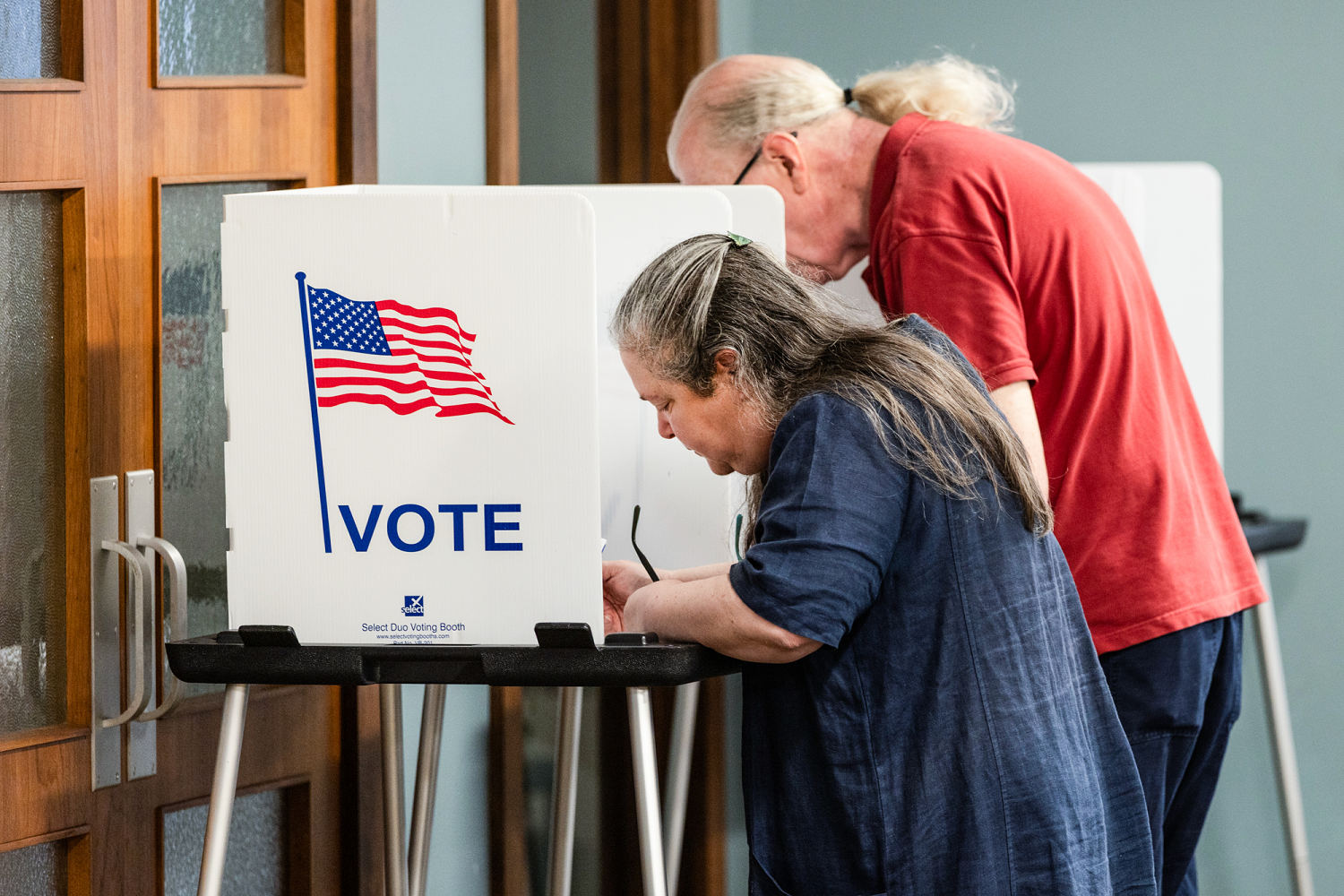 NBC Newsnot ratedRead the original
 VoxThis piece reads center-left
“Republicans suffered a stunning Supreme Court loss”
Word choiceFrames the ruling explicitly as a Republican loss and describes it as 'stunning,' whereas straight news outlets avoid characterizing winners and losers or evaluating the surprise factor.
Read the original- Straight Arrow NewsThis piece reads center
“cleared up confusion for Missouri over which maps it could use”
Read the original - CNBCThis piece reads center
“rejected a push to use Missouri congressional maps backed by President Trump”
Word choiceAttributes the maps directly to Trump by name, whereas most outlets say 'Republican-backed' or 'GOP-drawn'—this personalizes the dispute and links it to the former president specifically.
Read the original  NYTThis piece reads center
“had been drawn to give Republicans an advantage in the midterm elections”
Read the original NewsNationThis piece reads center
“Missouri's battle over its congressional districts has spanned more than a year”
Read the original- Courthouse NewsThis piece reads center
“Supreme Court nixes Missouri GOP-friendly maps for midterms”
Read the original  The Hillnot ratedRead the original
 The Center SquareThis piece reads center-right
“would give Republicans an advantage ahead of the midterm elections”
Read the original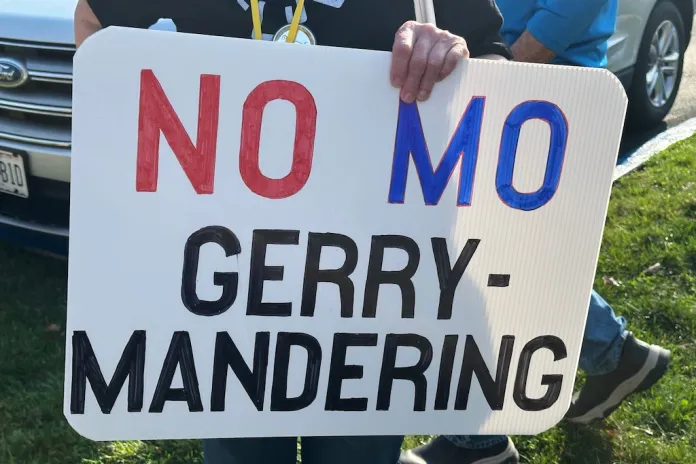 Washington ExaminerThis piece reads center-right
“likely costing Republicans a seat in the House of Representatives”
What's left outQuantifies the partisan consequence—specifying that Republicans lose a seat—where other outlets describe the outcome without tallying the electoral impact.
Read the original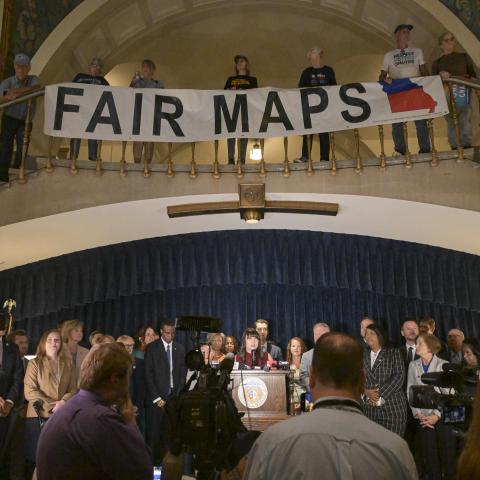 Just the Newsnot ratedRead the original
Placements are generated by an AI model from each article’s own headline and summary, and every quotation above is checked to be a real substring of that article before it is published. How this is done
Prism is free and carries no advertising. Support it if it was useful.