Egypt shuts down independent news site Mada Masr and detains editor-in-chief Lina Attalah
Reported by
A dot shows how that piece reads — Prism rates articles, not outlets, and shows the words behind each placement below. No dot means the piece isn’t rated. How the ratings work
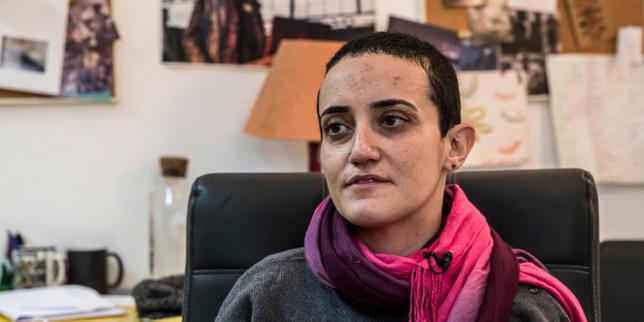
What happened
The account the coverage agrees on, with contested figures attributed rather than asserted. This is not one of the five framings below — it is the ground they all stand on.
An Egyptian court on October 27, 2026, fined Lina Attalah, editor-in-chief of the independent news website Mada Masr, 3 million Egyptian pounds (approximately $53,400) for operating without a license and ordered the site's closure. Attalah was detained following the ruling but released the same day. Her defense plans to challenge the constitutionality of the media law articles used against her, citing repeated failed license applications since 2018.
How the spectrum reads this story
The same event, summarised as five points on the political spectrum would each tend to frame it. These are generated by an AI model and are a starting point, not the last word.
Left
Egypt's closure of Mada Masr and detention of Attalah represents systematic state suppression of independent journalism—part of a broader pattern where authoritarian regimes weaponize licensing requirements to silence critical voices. The ruling exposes how formal legal mechanisms become tools of repression when the regime controls both the courts and regulatory bodies, making it impossible for outlets to operate legitimately. This escalation requires international pressure and support for persecuted journalists.
Drawn from 1 article placed here, below.
Center-left
The Egyptian government's actions against Mada Masr threaten press freedom in a country where independent media already face significant obstacles. While licensing requirements exist in many democracies, their application here appears selective and punitive—the outlet filed for licenses repeatedly since 2018 without success, suggesting the regulatory process itself may be rigged. The court's maximum penalty and site closure raise serious concerns about whether Egypt's legal system is functioning as an independent check on executive power.
Drawn from 3 articles placed here, below.
Center
Egypt's court ordered the closure of Mada Masr and fined its editor on licensing grounds—a formally legal action that nonetheless sits uneasily between legitimate regulation and press suppression. The outlet's inability to obtain a license despite multiple applications since 2018 suggests either bureaucratic dysfunction or intentional obstruction. International observers and press freedom groups object, while Egypt's government operates within its stated legal framework. The case highlights the tension between state authority to regulate media and the practical reality that such authority can be misused.
Drawn from 1 article placed here, below.
Center-right
Egypt's government enforced existing media licensing laws against an outlet operating without proper authorization—a standard regulatory function in many countries. The repeated failed applications raise questions about whether Mada Masr genuinely pursued formal compliance or preferred operating outside the system. While international press freedom advocates criticize the ruling, Egypt must balance media pluralism with state capacity to regulate the information environment and prevent outlets from circumventing legal requirements designed to ensure transparency and accountability.
No article in this story reads this way. This is how the position tends to frame events like it — written by a model, not quoted from anyone.
Right
No summary for this view yet.
No article in this story reads this way. This is how the position tends to frame events like it — written by a model, not quoted from anyone.
Hear two viewpoints debate it
Pick two viewpoints and Prism writes a short, six-turn exchange about this story in each one’s own voice — steel-manned, no winner declared. Each pairing is written once and then saved for every reader. The voices are AI syntheses of a tradition, not real people.
New pairing — Prism will write it now.
How each outlet covered it
Where Prism places each piece — not the outlet in general — with the words from that piece that put it there, and the photograph the outlet chose. Picking a photo is a framing decision too.
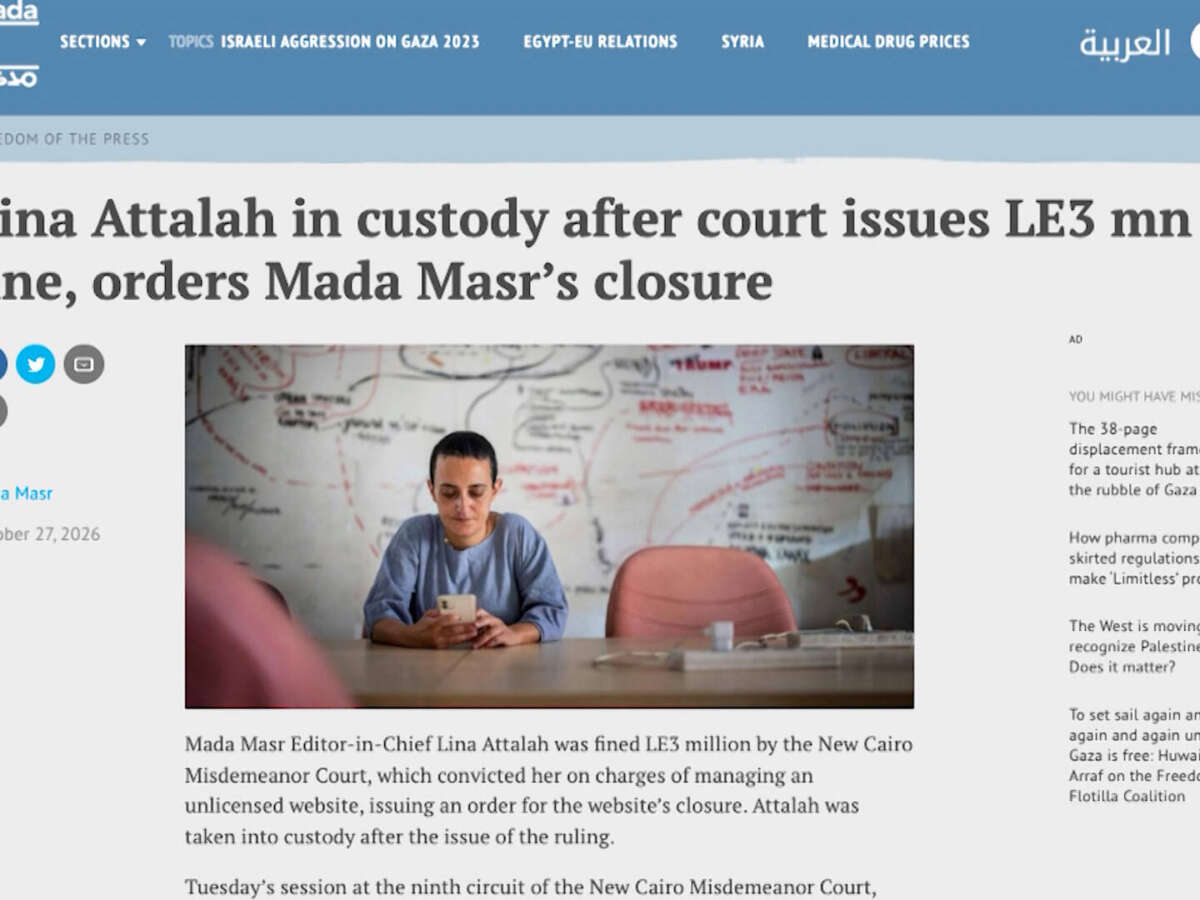 TruthoutThis piece reads left
“unprecedented escalation”
Word choiceDescribes the action as both a 'severe blow' and 'unprecedented escalation,' language that emphasizes magnitude and rates it as extraordinary—other outlets report the facts and cite concerns without characterizing the event's historical significance.
Read the original Mada MasrThis piece reads center-left
“challenge the constitutionality of articles in the law”
Read the original- DWThis piece reads center-left
“Rights groups condemned the ruling as a major blow to press freedom”
FramingPlaces the specific ruling within a broader pattern ('growing pressure'), which contextualizes it as part of systematic trend—Le Monde and Mada Masr report the immediate event with less emphasis on context.
Read the original - Le MondeThis piece reads center
“released from custody on Tuesday, hours after she was detained”
Read the original
Placements are generated by an AI model from each article’s own headline and summary, and every quotation above is checked to be a real substring of that article before it is published. How this is done
Prism is free and carries no advertising. Support it if it was useful.