Federal judge blocks Trump's ban on CNN, MS NOW, and Politico from White House
Reported by
A dot shows how that piece reads — Prism rates articles, not outlets, and shows the words behind each placement below. No dot means the piece isn’t rated. How the ratings work
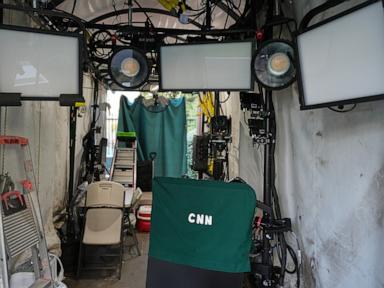
What happened
The account the coverage agrees on, with contested figures attributed rather than asserted. This is not one of the five framings below — it is the ground they all stand on.
Federal judge Timothy Kelly issued a temporary restraining order on September 24, 2026, blocking the Trump administration's ban on CNN, MS NOW, and Politico from White House access. Judge Kelly, appointed by Trump, ruled the ban unconstitutional and violated the Fifth Amendment rights of the outlets, rejecting the White House's national security justification. The order requires immediate restoration of the three outlets' press credentials for 14 days while litigation continues.
Developing story · 5 chapters
- Trump bans CNN, MS NOW, and Politico from White House
- Major TV networks suspend White House press pool coverage after Trump bans CNN
- CNN, MS NOW, and Politico sue Trump White House over press ban
- Judge hears arguments on Trump's ban of CNN, MS NOW, and Politico from White House
- Federal judge blocks Trump's ban on CNN, MS NOW, and Politico from White Houseyou are here
How each side framed the previous chapter
Compare these with the five framings below to see what moved as the story developed — and what each side kept saying regardless.
Left
The Trump administration's arbitrary blacklisting of news outlets that report critically on it represents an authoritarian assault on press freedom and democratic accountability. A judge appointed by Trump himself found the ban violated due process, exposing how this administration weaponizes national security claims to silence dissent. The fact that a friendly jurist expressed skepticism suggests the legal case against this censorship is overwhelming. This is what happens when power goes unchecked: elected officials suppress the free press that is supposed to hold them accountable.
Center-left
The Trump White House's ban of three major news outlets raises serious First Amendment concerns and appears to lack the legal foundation required by the Constitution. Judge Kelly's evident skepticism—despite his appointment by Trump—indicates the administration's national security justification is not persuasive. The outlets denied access have a strong case that arbitrary removal of press credentials violates due process rights. Courts should enforce constitutional protections for the press as a check on executive overreach.
Center
A federal judge is weighing a novel and contentious question: whether a president can ban news organizations from White House grounds on national security grounds. Judge Kelly's skepticism about due process suggests the administration may not have followed proper procedures, though the underlying constitutional question—balancing press access against executive security concerns—is genuinely complicated. Both sides present legitimate concerns: the press needs access to function, but presidents do have security responsibilities. The judge's eventual ruling will likely turn on whether proper procedures were followed rather than resolving the broader tension.
Center-right
While press access to the White House is important, the Trump administration has legitimate security concerns about hostile media coverage. The DOJ's invocation of national security is a serious matter that courts should respect, especially in an era of heightened threats. Judge Kelly should be cautious about second-guessing executive security decisions. That said, if the administration failed to follow proper procedures in implementing the ban, that is a correctable problem—the real issue is whether the process was adequate, not whether presidents can ever make security-based decisions about facility access.
Right
The Trump administration is exercising its right to control access to its own facilities when outlets have demonstrated hostility and refuse fair coverage. National security is a legitimate concern, and the president should not be forced to grant White House access to media organizations that he reasonably believes could compromise security or spread false narratives. The judge's skepticism appears motivated by institutional deference to press claims rather than serious security analysis. Presidents have long managed White House access; this administration is simply being more honest about the reality that hostile media do not deserve unqualified access.
How the spectrum reads this story
The same event, summarised as five points on the political spectrum would each tend to frame it. These are generated by an AI model and are a starting point, not the last word.
Left
The Trump administration's attempt to silence critical media through a White House ban represents an authoritarian assault on press freedom and democratic accountability. A judge correctly recognized this unconstitutional overreach and ordered the ban lifted. This incident exposes how the administration weaponizes power against dissenting voices—a fundamental threat to democracy that demands ongoing scrutiny and legal vigilance to protect the free press from executive retaliation.
Center-left
The judge's decision appropriately upheld constitutional protections for the press. While presidents have legitimate authority over White House access, banning outlets based on disagreement over coverage crosses a constitutional line and undermines the press's watchdog role. The temporary order is the right outcome, though the broader question of how to balance press access with presidential prerogatives may require clearer guidelines going forward.
Center
The court's temporary order represents a reasonable check on executive power while acknowledging that legal proceedings should resolve the underlying dispute. Both press freedom and presidential authority deserve protection—the judge's 14-day window allows for further litigation to clarify where the line should be drawn. The fact that the injunction was granted suggests the outlets have a credible legal claim, but the temporary nature reflects appropriate judicial caution about intervening in executive decisions.
Center-right
While the administration has legitimate concerns about hostile coverage, the judge's ruling on constitutional grounds deserves respect. Courts exist to apply the law as written, and if the Fifth Amendment protects press access in this context, that's the law's requirement regardless of political disagreement. The temporary order gives time for appeals and further legal argument without permanently settling the question of what access the president must grant.
Right
The decision reveals judicial overreach into legitimate executive prerogatives. Presidents must manage their own communications and have every right to limit access by outlets engaged in what they view as hostile coverage or misinformation. Forcing the White House to restore credentials to outlets it views as spreading falsehoods undermines presidential authority and sets a dangerous precedent where courts second-guess editorial judgments about which journalists gain access to government officials.
Hear two viewpoints debate it
Pick two viewpoints and Prism writes a short, six-turn exchange about this story in each one’s own voice — steel-manned, no winner declared. Each pairing is written once and then saved for every reader. The voices are AI syntheses of a tradition, not real people.
New pairing — Prism will write it now.
How each outlet covered it
Where Prism places each piece — not the outlet in general — with the words from that piece that put it there, and the photograph the outlet chose. Picking a photo is a framing decision too.
- CBS Newsnot ratedRead the original
- LA Timesnot rated
Headline changedwas “Judge lifts White House press ban of CNN, MS NOW and Politico”
Read the original  Timenot rated
Headline changedwas “Judge Orders White House to Restore Access for CNN, MS NOW, and Politico. What Happens Next?”
Read the original- NBC Newsnot ratedRead the original
- ABC NewsThis piece reads center
Headline changedwas “Judge orders White House to restore press passes for CNN, Politico and MS NOW”
“Judge orders White House to restore press passes for CNN, Politico and MS NOW”
Read the original  AxiosThis piece reads center
“A district court judge ruled the White House violated the Fifth Amendment rights”
FramingAdds a 'why it matters' section emphasizing the consequences if the ruling had gone the other way, framing the decision's significance in terms of press unity rather than constitutional principle.
Read the original France 24not ratedRead the original
 NewsNationnot rated
FramingIncludes a concrete detail about other outlets' solidarity action that illustrates the press community's response, a detail not present in most other coverage.
Read the original- Toronto SunThis piece reads center
“U.S. judge blocks White House ban on CNN, MS NOW, Politico”
What's left outOpens with Trump's history of attacking media rather than the day's court ruling, situating this incident within a broader pattern of presidential antagonism toward press criticism.
Read the original  UPInot ratedRead the original
 The Daily WireThis piece reads center-right
“Federal Judge Rules Against Trump On Liberal Press Ban”
Word choiceDescribes the outlets as 'liberal' in the headline, characterizing them by political orientation rather than naming them neutrally—other outlets simply name the three outlets without political descriptors.
Read the original- American GreatnessThis piece reads center-right
“Media Outlets shouldn't be able to constantly write or report FICTION and LIES”
FramingQuotes Trump's justification for the ban prominently in the snippet, framing the story around his critique of the outlets rather than the judge's ruling or constitutional question.
Read the original 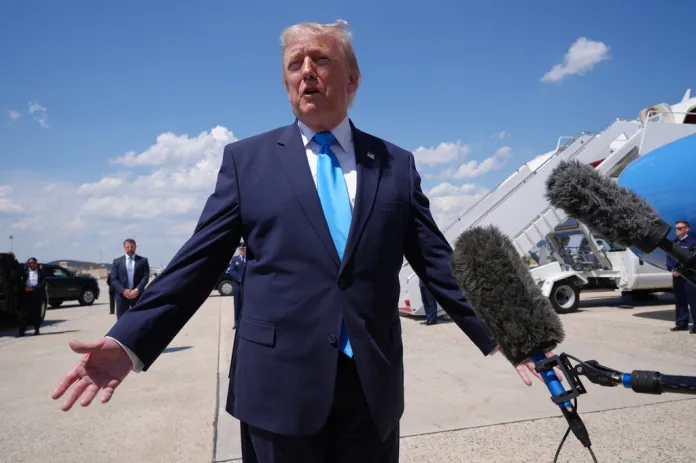 Washington Examinernot ratedRead the original

Placements are generated by an AI model from each article’s own headline and summary, and every quotation above is checked to be a real substring of that article before it is published. How this is done
Prism is free and carries no advertising. Support it if it was useful.