Judge hears arguments on Trump's ban of CNN, MS NOW, and Politico from White House
Reported by
A dot shows how that piece reads — Prism rates articles, not outlets, and shows the words behind each placement below. No dot means the piece isn’t rated. How the ratings work
ABC News
What happened
The account the coverage agrees on, with contested figures attributed rather than asserted. This is not one of the five framings below — it is the ground they all stand on.
U.S. District Judge Timothy J. Kelly heard arguments Wednesday on a lawsuit brought by CNN, MS NOW, and Politico challenging President Trump's ban of these outlets from White House grounds. Kelly, appointed by Trump in 2017, signaled skepticism of the ban, stating that due process "wasn't followed here." The Department of Justice cited national security concerns to justify the ban. Kelly concluded the hearing without issuing an immediate ruling.
Developing story · 5 chapters
- Trump bans CNN, MS NOW, and Politico from White House
- Major TV networks suspend White House press pool coverage after Trump bans CNN
- CNN, MS NOW, and Politico sue Trump White House over press ban
- Judge hears arguments on Trump's ban of CNN, MS NOW, and Politico from White Houseyou are here
- Federal judge blocks Trump's ban on CNN, MS NOW, and Politico from White House
How each side framed the previous chapter
Compare these with the five framings below to see what moved as the story developed — and what each side kept saying regardless.
Left
Trump's ban exposes the authoritarian trajectory of his presidency. Banning outlets for unfavorable coverage is a direct attack on democracy itself—the hallmark of regimes like North Korea. The coordinated network boycott shows genuine solidarity for press freedom, while Trump's creation of a state-controlled media channel reveals his contempt for independent journalism. This is how democracies die: through the suppression of dissent and the replacement of free press with propaganda.
Center-left
Trump's ban on three news outlets for their coverage represents an unprecedented assault on press freedom and the First Amendment. While presidents have sparred with media outlets before, none has outright removed them from White House grounds. The networks' decision to boycott the press pool is a justified response that protects the principle of independent journalism. Trump TV is a troubling substitute for actual press access—talking points are not a replacement for accountability.
Center
This standoff reflects both genuine principle and performative politics on both sides. Trump's ban is extraordinary and legally questionable—courts will likely scrutinize it—yet the networks' boycott, while dramatic, also denies the public information about presidential activities. Trump TV offers direct communication but lacks journalistic independence. The real issue is that both sides benefit from conflict: Trump gains an enemy to rally his base against, while networks gain compelling coverage of a crisis. A functioning press system requires both access and skepticism, not wholesale rejection or state-run alternatives.
Center-right
Trump has legitimate grievances with one-sided coverage from certain outlets, and presidents have always had strained relationships with hostile media. However, banning them from White House grounds sets a precedent that undermines the principle of a free press, even when that press is unfair. The networks' boycott is an overreaction that punishes the public more than Trump. That said, Trump's creation of direct communication channels like Trump TV is a reasonable response to media bias and shows how technology allows presidents to bypass filters—though it shouldn't entirely replace traditional press access.
Right
After years of relentless, dishonest attacks from CNN, MS NOW, and Politico, Trump was right to revoke their credentials. These outlets peddle fake news and have abandoned any pretense of fairness. Trump's decision to communicate directly with Americans through Trump TV is actually more democratic than trusting corrupt media gatekeepers. The networks' performative boycott is a tantrum—they claim to defend press freedom while suppressing the president's right to choose who covers him. Trump is exposing how the mainstream media weaponizes access to push a left-wing agenda.
How the spectrum reads this story
The same event, summarised as five points on the political spectrum would each tend to frame it. These are generated by an AI model and are a starting point, not the last word.
Left
The Trump administration's arbitrary blacklisting of news outlets that report critically on it represents an authoritarian assault on press freedom and democratic accountability. A judge appointed by Trump himself found the ban violated due process, exposing how this administration weaponizes national security claims to silence dissent. The fact that a friendly jurist expressed skepticism suggests the legal case against this censorship is overwhelming. This is what happens when power goes unchecked: elected officials suppress the free press that is supposed to hold them accountable.
Center-left
The Trump White House's ban of three major news outlets raises serious First Amendment concerns and appears to lack the legal foundation required by the Constitution. Judge Kelly's evident skepticism—despite his appointment by Trump—indicates the administration's national security justification is not persuasive. The outlets denied access have a strong case that arbitrary removal of press credentials violates due process rights. Courts should enforce constitutional protections for the press as a check on executive overreach.
Center
A federal judge is weighing a novel and contentious question: whether a president can ban news organizations from White House grounds on national security grounds. Judge Kelly's skepticism about due process suggests the administration may not have followed proper procedures, though the underlying constitutional question—balancing press access against executive security concerns—is genuinely complicated. Both sides present legitimate concerns: the press needs access to function, but presidents do have security responsibilities. The judge's eventual ruling will likely turn on whether proper procedures were followed rather than resolving the broader tension.
Center-right
While press access to the White House is important, the Trump administration has legitimate security concerns about hostile media coverage. The DOJ's invocation of national security is a serious matter that courts should respect, especially in an era of heightened threats. Judge Kelly should be cautious about second-guessing executive security decisions. That said, if the administration failed to follow proper procedures in implementing the ban, that is a correctable problem—the real issue is whether the process was adequate, not whether presidents can ever make security-based decisions about facility access.
Right
The Trump administration is exercising its right to control access to its own facilities when outlets have demonstrated hostility and refuse fair coverage. National security is a legitimate concern, and the president should not be forced to grant White House access to media organizations that he reasonably believes could compromise security or spread false narratives. The judge's skepticism appears motivated by institutional deference to press claims rather than serious security analysis. Presidents have long managed White House access; this administration is simply being more honest about the reality that hostile media do not deserve unqualified access.
Hear two viewpoints debate it
Pick two viewpoints and Prism writes a short, six-turn exchange about this story in each one’s own voice — steel-manned, no winner declared. Each pairing is written once and then saved for every reader. The voices are AI syntheses of a tradition, not real people.
New pairing — Prism will write it now.
How each outlet covered it
Where Prism places each piece — not the outlet in general — with the words from that piece that put it there, and the photograph the outlet chose. Picking a photo is a framing decision too.
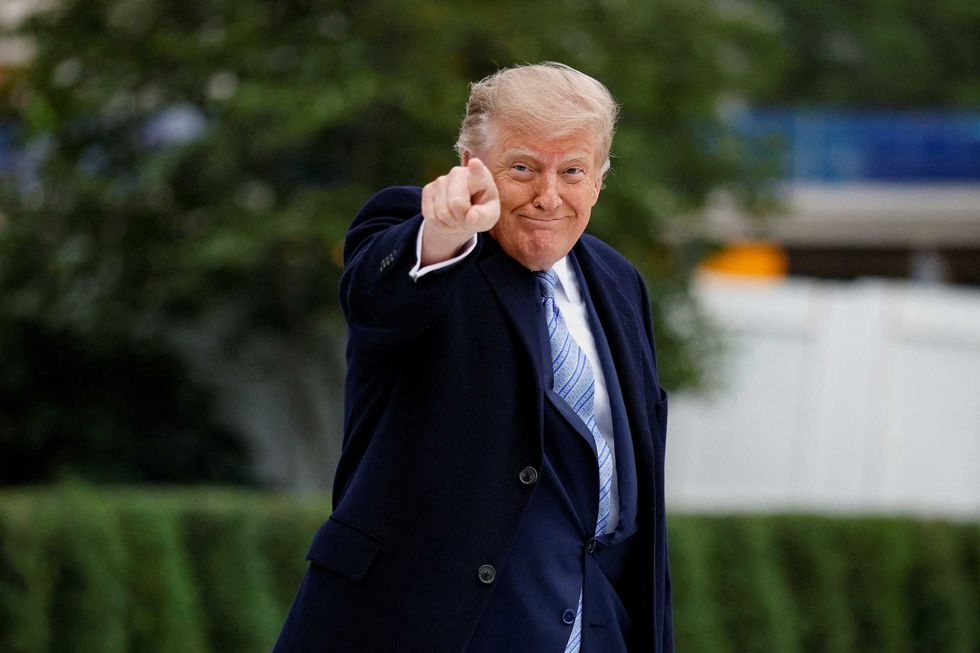 Raw StoryThis piece reads center-left
“Judge blisters Trump just minutes into hearing”
Read the original- CBS Newsnot ratedRead the original
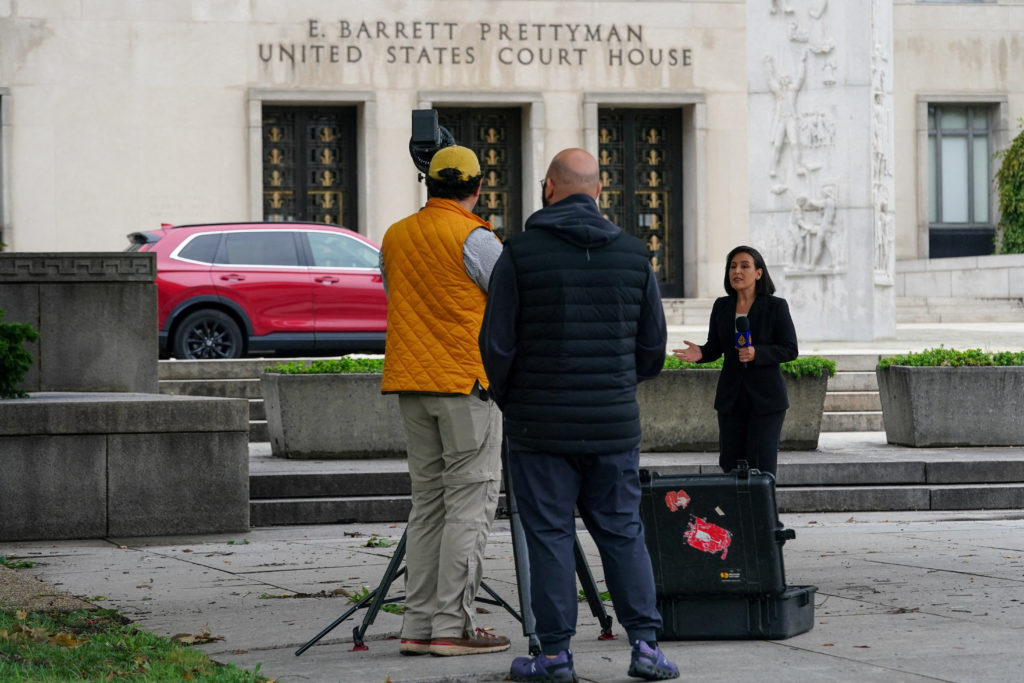 PBS NewsHourThis piece reads center-left
Headline changedwas “Trump administration's ban of three prominent news outlets from White House is in court”
“media outlets whose coverage he dislikes”
FramingFrames the ban as retaliation for disfavored coverage rather than stated national security concerns—other outlets present the security justification the DOJ offered, while this phrasing emphasizes the president's personal dislike.
Read the original- Washington PostThis piece reads center-left
“journalism, protected by the First Amendment, is a threat to national security”
FramingQuotes the Trump administration's position in language that makes the claim sound implausible on its face—the juxtaposition of "journalism, protected by the First Amendment" with "threat to national security" invites skepticism of the government's argument.
Read the original 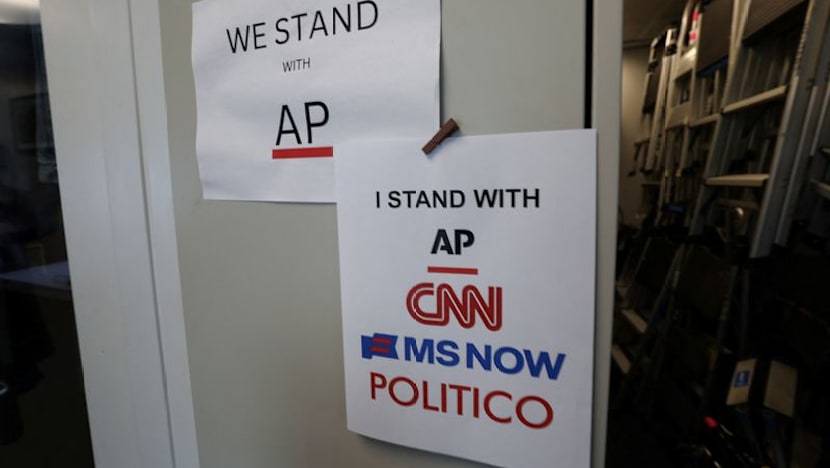 CNAThis piece reads center
“US judge weighing Trump's White House ban on media outlets”
Read the original- CNBCThis piece reads center
“Judge hears arguments on Trump White House media ban, hopes to rule 'soon”
Read the original  ABC NewsThis piece reads center
“Judge concludes Trump's White House media ban hearing with no ruling”
Read the original The HillThis piece reads center
“Judge skeptical of White House press ban on Politico, MS NOW, CNN”
Read the original
Placements are generated by an AI model from each article’s own headline and summary, and every quotation above is checked to be a real substring of that article before it is published. How this is done
Prism is free and carries no advertising. Support it if it was useful.