Trump offered to sell arms to China during Xi summit, US ambassador says
Reported by
A dot shows how that piece reads — Prism rates articles, not outlets, and shows the words behind each placement below. No dot means the piece isn’t rated. How the ratings work

What happened
The account the coverage agrees on, with contested figures attributed rather than asserted. This is not one of the five framings below — it is the ground they all stand on.
U.S. Ambassador to China David Perdue said on Fox News Sunday that President Trump proposed selling weapons to China during recent meetings with Xi Jinping. Perdue quoted Trump as saying the U.S. sells arms to other countries worldwide. According to CNA, the offer came in response to Chinese concerns over U.S. weapons sales to Taiwan. The White House later stated the U.S. had no plans for such a sale.
How the spectrum reads this story
The same event, summarised as five points on the political spectrum would each tend to frame it. These are generated by an AI model and are a starting point, not the last word.
Left
Trump's willingness to sell weapons to an authoritarian regime reveals his fundamental indifference to human rights and democratic values. By attempting to appease China—potentially as leverage in trade negotiations—he undermines Taiwan's security and strengthens a geopolitical rival. This transactional approach to foreign policy, treating arms sales as mere commodities, abandons America's commitment to supporting democracies and constraining authoritarian expansion.
Center-left
Trump's proposal to sell weapons to China is a concerning departure from decades of bipartisan policy protecting Taiwan. While diplomatic engagement with Beijing has merit, offering arms sales crosses a line that weakens a democratic ally and strengthens a strategic competitor. The move suggests Trump prioritizes short-term deal-making over long-term alliances and regional stability in one of the world's most sensitive areas.
Center
Trump's proposal reflects the genuine tension between engagement and deterrence in China policy. While unconventional, the idea of using arms sales as a negotiating tool or diplomatic gesture isn't without precedent in realpolitik. However, the proposal raises legitimate questions about Taiwan's security and whether such moves ultimately strengthen or weaken the U.S. position. The White House's quick denial suggests internal disagreement about the proposal's merit.
Center-right
Trump's willingness to explore all negotiating options, including unconventional ones, reflects pragmatic dealmaking. The U.S. already sells arms globally; discussing sales to China is a reasonable diplomatic tool to manage relations with a major power. That said, Taiwan's security must remain protected, and any such arrangement would need careful guardrails. The proposal shows Trump thinking creatively about reducing tensions, even if implementation would require clear strategic safeguards.
Right
Trump's proposal demonstrates his commitment to pragmatic diplomacy and reducing unnecessary confrontation with major powers. Rather than reflexively antagonizing China, he explores mutually beneficial arrangements—a mature approach to great-power relations. The arms sales idea, presented in context of reciprocal arrangements worldwide, reflects strategic thinking about leverage and negotiation. Constant hostility toward Beijing serves no American interest and risks costly conflict.
Hear two viewpoints debate it
Pick two viewpoints and Prism writes a short, six-turn exchange about this story in each one’s own voice — steel-manned, no winner declared. Each pairing is written once and then saved for every reader. The voices are AI syntheses of a tradition, not real people.
New pairing — Prism will write it now.
How each outlet covered it
Where Prism places each piece — not the outlet in general — with the words from that piece that put it there, and the photograph the outlet chose. Picking a photo is a framing decision too.
- The HillThis piece reads center
“Trump floated US weapons sales to Xi, ambassador says”
Read the original  NYTThis piece reads center
“The White House later said the U.S. had no plans for such a sale”
FramingOpens with the offer but immediately follows with a White House denial, emphasizing that no sale is actually planned—a different emphasis than The Hill's focus on Trump's reasoning or CNA's context.
Read the original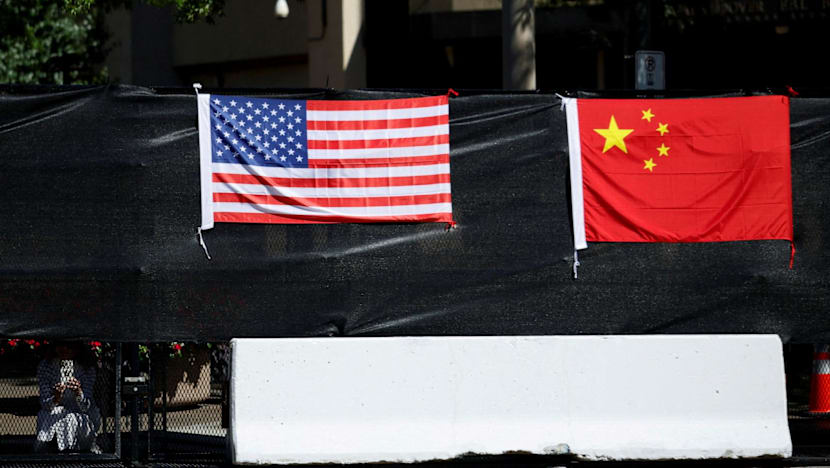 CNAThis piece reads center
“Trump offered to sell arms to China, US ambassador tells Fox News”
What's left outProvides context absent from other outlets: the offer was specifically framed as a response to Chinese concerns about Taiwan arms sales, which reframes Trump's proposal as a negotiating counter-offer rather than an isolated initiative.
Read the original
Placements are generated by an AI model from each article’s own headline and summary, and every quotation above is checked to be a real substring of that article before it is published. How this is done
Prism is free and carries no advertising. Support it if it was useful.