Trump and Xi summit amid tensions over trade, AI, and Taiwan
Reported by
A dot shows how that piece reads — Prism rates articles, not outlets, and shows the words behind each placement below. No dot means the piece isn’t rated. How the ratings work

What happened
The account the coverage agrees on, with contested figures attributed rather than asserted. This is not one of the five framings below — it is the ground they all stand on.
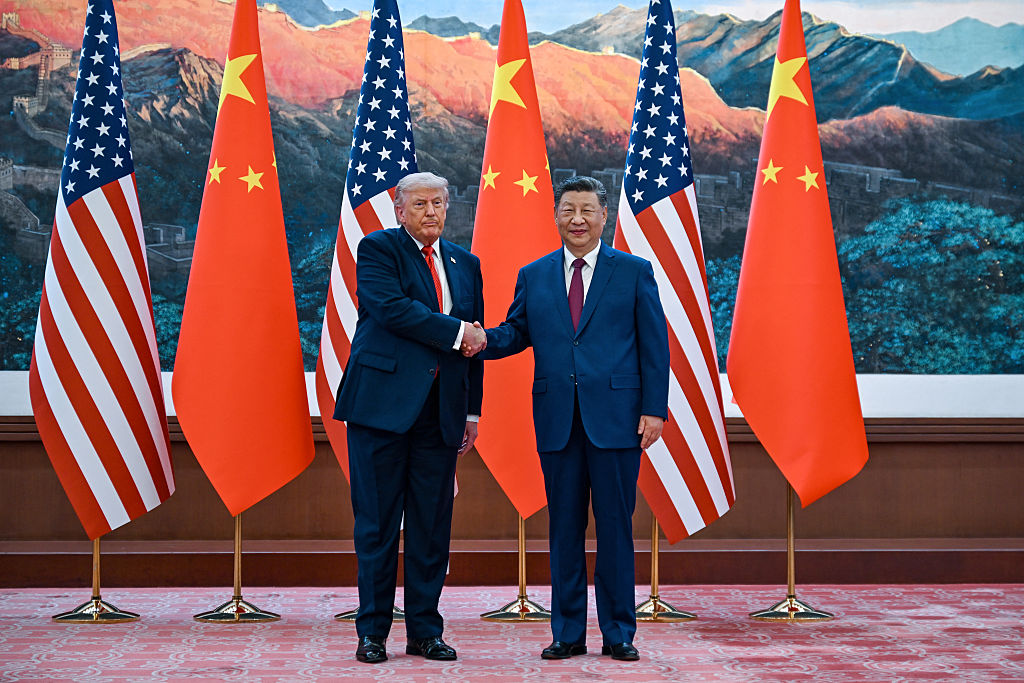
President Trump hosted Chinese leader Xi Jinping at the White House on Thursday for a state visit. Trump greeted Xi on the tarmac at Joint Base Andrews on Wednesday evening—the first time in over six decades a US president has welcomed a foreign political leader there. Xi is expected to press Washington on Taiwan, while Trump seeks Chinese help on manufacturing and restraint on Iran. Xi is skipping the UN General Assembly, which is occurring simultaneously on the US East Coast.
Developing story · 3 chapters
- Trump and Xi prepare for summit with tensions over AI, trade, and Iran
- Trump hosts Chinese President Xi Jinping for state visit and summit at White House
- Trump and Xi summit amid tensions over trade, AI, and Taiwanyou are here
How each side framed the previous chapter
Compare these with the five framings below to see what moved as the story developed — and what each side kept saying regardless.
Left
This summit represents a critical moment for US-China relations, though it occurs within a framework that already privileges corporate interests over working people. The focus on AI, trade, and geopolitics reflects how both powers compete for technological dominance and economic advantage rather than addressing shared challenges like climate or inequality. Trump's lavish welcome obscures deeper structural conflicts: the US rivalry with China is rooted in competing imperial interests, and no amount of diplomatic ceremony resolves the fundamental tension between capitalist powers.
Center-left
Trump and Xi's meeting offers a diplomatic opportunity to reduce tensions on trade, AI, and regional security after months of escalating rhetoric. The agenda—tariff truces, AI governance, Taiwan stability, and Iran—shows both sides recognizing the costs of confrontation. However, the summit's success depends on whether substantive agreements emerge or whether it remains ceremonial. Including US and Chinese business leaders signals an attempt to create constituencies for peace, though structural competition over technology and influence remains.
Center
This summit is a necessary diplomatic engagement between the world's two largest economies, with real stakes on trade and technology. Both leaders appear motivated to manage rather than escalate tensions, which is sensible given mutual costs. The ceremonial aspects—the red carpet, military display—serve a diplomatic function of respecting both nations' standing. Whether Thursday's discussions yield concrete results on tariffs, AI standards, or Taiwan stability will determine if this is a turning point or theater. Pragmatic negotiation matters more than symbolism.
Center-right
The Trump administration is right to engage Xi directly and from a position of strength, as shown by the ceremonial welcome emphasizing US military capability. Discussions on trade, AI, and Taiwan reflect American interests in protecting technological advantage and maintaining regional stability. A tariff truce extension, if achieved, serves US economic interests. However, any agreements must protect American workers and businesses—Trump should not concede on technology transfers or intellectual property. Strong diplomacy backed by demonstrated strength is the right approach.
Right
Trump is correctly prioritizing direct engagement with China's leader as the superior alternative to bureaucratic intermediaries or ideological antagonism. The ceremonial display of military strength at Xi's arrival—the B-1 bombers, the formal protocol—properly conveys that the US negotiates from a position of power, not weakness. On trade, AI, and regional issues, America's interests must come first: securing fair trade terms, protecting domestic technology development, and preserving Taiwan's status quo. Trump's personal relationship with Xi offers the best path to deals that serve American sovereignty and prosperity.
How the spectrum reads this story
The same event, summarised as five points on the political spectrum would each tend to frame it. These are generated by an AI model and are a starting point, not the last word.
Left
Trump's ceremonial welcome to Xi masks deepening structural tensions between declining American hegemony and China's emergence as an alternative pole of global power. The pageantry obscures the fact that the US, despite formal speeches about free markets and democracy, is now negotiating with an authoritarian rival on terms of mutual interest rather than principled opposition. This reflects the erosion of post-Cold War US dominance and the failure of liberal internationalism to contain rising powers—a reckoning the American left warned about.
Center-left
The summit represents a pragmatic diplomatic engagement, but one that raises concerns about whether Trump's courtship of Xi adequately addresses human rights, democratic values, or American interests. While managing great-power competition through dialogue is sensible, the lavish ceremonial treatment should not come at the cost of clear commitments on Taiwan's security, fair trade practices, or restraint in global conflicts. The US must balance constructive engagement with firm defense of its values and alliances.
Center
Trump and Xi are meeting to explore mutual interests where cooperation is possible—trade, manufacturing, Iran—while both maintain their respective strategic positions. The ceremonial tone signals willingness to work together without requiring perfect alignment. However, the visit also exposes how differently the two leaders envision global order: Xi is building alternatives to US-led systems while Trump pursues narrower national advantage. Success depends on realistic negotiation over specific issues rather than either side expecting ideological conversion or unilateral concessions.
Center-right
This summit is an appropriate assertion of American strength through engagement rather than confrontation. Trump correctly recognizes that China, as a rising power with its own interests, must be courted and managed diplomatically—not simply opposed. The state visit demonstrates American confidence and sets conditions to negotiate manufacturing agreements, secure Chinese cooperation on Iran, and stabilize bilateral relations. Clear-eyed diplomacy from a position of strength serves US interests better than ideological rigidity or economic warfare.
Right
Trump's direct engagement with Xi reflects a realistic foreign policy focused on American interests rather than nation-building fantasies or ideological crusades abroad. By treating China as a great power worthy of ceremonial respect, Trump avoids unnecessary hostility and creates space for bilateral deals that benefit American workers and manufacturers. Excessive focus on democracy promotion or values-based competition distracted previous administrations; Trump's transactional approach prioritizes national sovereignty and tangible gains over abstract principles.
Hear two viewpoints debate it
Pick two viewpoints and Prism writes a short, six-turn exchange about this story in each one’s own voice — steel-manned, no winner declared. Each pairing is written once and then saved for every reader. The voices are AI syntheses of a tradition, not real people.
New pairing — Prism will write it now.
How each outlet covered it
Where Prism places each piece — not the outlet in general — with the words from that piece that put it there, and the photograph the outlet chose. Picking a photo is a framing decision too.
- Rolling Stonenot ratedRead the original
 Mada Masrnot ratedRead the original
 TimeThis piece reads center-left
“China is carving out space for alternatives beyond the American-led system”
FramingEmphasizes the summit as evidence of structural global realignment and China's challenge to US-led order, whereas other outlets treat it as bilateral diplomacy or a specific negotiation between two leaders.
Read the original Hong Kong Free Pressnot ratedRead the original
- France 24not rated
Word choiceFrames the ceremonial welcome as controversial or problematic ('ruffled feathers'), whereas other outlets present the pageantry as a factual diplomatic choice without editorial judgment about its appropriateness.
Read the original - Washington PostThis piece reads center
“Chinese President Xi Jinping is expected to press Washington on Taiwan”
Read the original  The Diplomatnot rated
FramingTreats Xi's absence from the UN General Assembly as the primary news angle and frames it as something 'striking,' whereas other outlets focus on the Trump-Xi summit itself as the central event.
Read the original The New YorkerThis piece reads center
“the two men mirror each other”
FramingFrames Trump and Xi as parallel figures with similar worldviews or ambitions, a characterization not present in other outlets, which focus on their specific competing or complementary interests.
Read the original
Placements are generated by an AI model from each article’s own headline and summary, and every quotation above is checked to be a real substring of that article before it is published. How this is done
Prism is free and carries no advertising. Support it if it was useful.