Witkoff meets Putin in St. Petersburg, Russia releases American Stephen Hubbard from prison
Reported by
A dot shows how that piece reads — Prism rates articles, not outlets, and shows the words behind each placement below. No dot means the piece isn’t rated. How the ratings work
What happened
The account the coverage agrees on, with contested figures attributed rather than asserted. This is not one of the five framings below — it is the ground they all stand on.
U.S. envoy Steve Witkoff visited St. Petersburg on October 21-22 for talks with Russian President Putin focused on ending the war in Ukraine. During the visit, Russia released Stephen Hubbard, a 74-year-old American who had been imprisoned for over four years on charges of fighting as a mercenary in Ukraine. The White House said Trump had requested Hubbard's release in a phone call with Putin the previous week, and that no prisoner exchange was required. Putin agreed in principle to resume trilateral peace talks with Ukraine and the U.S. after November 10, according to Kremlin officials. The talks lasted approximately three hours. Russia also announced the first shipment of diesel fuel to the United States under a Trump administration deal would depart on October 22. During the meeting, Witkoff characterized Putin as a "humanitarian."
Developing story · 3 chapters
- Trump signs executive order waiving Russia sanctions ordered by Lindsey Graham Act
- Trump waives Russia sanctions and reveals diesel import deal to keep peace talks with Russia alive
- Witkoff meets Putin in St. Petersburg, Russia releases American Stephen Hubbard from prisonyou are here
How each side framed the previous chapter
Compare these with the five framings below to see what moved as the story developed — and what each side kept saying regardless.
Left
Trump has handed Putin an economic lifeline by waiving congressionally mandated sanctions and opening the door to Russian diesel exports—moves that directly finance Russia's war machine while undermining Ukraine. The claim that this encourages peace negotiations is a transparent rationalization for capitulation to authoritarianism. By relieving pressure on Moscow and scapegoating Zelensky, Trump is abandoning Ukraine to appeasement, betraying both democratic principle and America's stated commitments to defend against aggression.
Center-left
Trump's waiver of Russia sanctions and the diesel deal represent a dangerous shift toward accommodation with an aggressor state. While pursuing negotiations is legitimate, removing congressionally imposed pressure weakens America's leverage at the bargaining table and signals to Russia that sanctions can be negotiated away. The move contradicts bipartisan support for Ukraine and raises real questions about whether Trump is genuinely seeking a just settlement or simply looking for any deal that lets him claim victory.
Center
Trump is gambling that removing sanctions pressure will actually bring Russia to a sustainable negotiated settlement, but the gamble carries real risks. Congress imposed these sanctions for a reason, and waiving them without concrete signs of Russian willingness to negotiate seriously looks premature. The diesel deal may offer modest domestic fuel relief but appears modest in impact. A more prudent approach would condition any sanctions relief on demonstrated Russian movement toward genuine peace terms rather than removing leverage upfront.
Center-right
Trump's strategy of using sanctions relief as an incentive for peace negotiations reflects a legitimate desire to end the Ukraine conflict. Maintaining maximum pressure indefinitely can entrench positions rather than move parties toward settlement. The diesel deal offers some relief to American farmers and fuel consumers while signaling to Russia that cooperation will be rewarded. However, Trump needs to ensure Russia is genuinely moving toward serious negotiations before further concessions, and he should have better managed the messaging around these moves.
Right
Trump is right to prioritize ending a costly foreign conflict through negotiation rather than endless military aid. Sanctions are a blunt instrument that often entrench conflicts; offering relief creates actual incentive for Russia to come to the table. The diesel deal helps American farmers and consumers facing fuel costs while respecting market realities—Russia will sell its products regardless. Critics who oppose any negotiation with Russia or any relief of pressure want indefinite involvement abroad; Trump's approach puts America's interests first by seeking a settlement.
How the spectrum reads this story
The same event, summarised as five points on the political spectrum would each tend to frame it. These are generated by an AI model and are a starting point, not the last word.
Left
The Trump administration is conducting negotiations with Russia that appear to reward Putin's aggression. Releasing a prisoner and agreeing to talk are being treated as major concessions, yet the U.S. is simultaneously lifting sanctions on Russian diesel—a gift to Moscow's economy. Witkoff's praise of Putin as a 'humanitarian' is deeply troubling given Russia's documented atrocities in Ukraine. These talks exclude meaningful Ukrainian input and suggest the U.S. is prepared to pressure Kyiv into accepting unfavorable terms. Trump's transactional approach prioritizes a quick deal over supporting Ukraine's sovereignty and security.
No article in this story reads this way. This is how the position tends to frame events like it — written by a model, not quoted from anyone.
Center-left
The Witkoff visit shows the Trump administration pursuing peace talks with Russia, which is a legitimate goal, but the execution raises concerns. Russia's prisoner release and agreement to talk are positive steps, yet they come alongside U.S. sanctions relief on diesel—benefits Moscow receives without demonstrated commitment to serious negotiations. Witkoff's characterization of Putin as humanitarian is diplomatically unwise and undermines U.S. credibility. While ending the war matters, these talks risk pressuring Ukraine to concede territory or security guarantees it cannot afford to lose. A sustainable peace requires genuine Ukrainian participation and binding commitments from Russia.
Drawn from 5 articles placed here, below.
Center
The Witkoff mission represents a serious attempt to revive stalled peace negotiations, combining diplomatic engagement with concrete incentives. Russia's release of Hubbard and agreement to resume talks are tangible outcomes, though their significance remains unclear—prisoner releases and preliminary agreements to negotiate are standard diplomatic moves, not indicators of willingness to compromise on core issues. The U.S. diesel deal reflects a calculated trade-off: economic concessions in exchange for talking. The real test is whether November talks produce substantive progress or simply reset positions. Success requires balancing pressure on both sides while respecting Ukraine's role in any settlement. Witkoff's language about Putin was impolitic but may reflect a negotiating strategy of building rapport.
Drawn from 14 articles placed here, below.
Center-right
The Trump administration is taking concrete diplomatic steps to end a costly war, using both engagement and economic incentives. Witkoff's direct talks with Putin show willingness to deal with Russia without preconditions—a contrast to the previous administration's approach. The prisoner release and agreement to resume negotiations are meaningful achievements. Sanctions relief on Russian diesel is a reasonable bargaining chip if it produces results. However, the talks must not result in Ukraine surrendering territory or security. A durable peace requires Russia to commit to specific terms, not vague agreements. The administration is right to pursue negotiations, but must ensure any deal protects legitimate Ukrainian interests and prevents future Russian aggression.
No article in this story reads this way. This is how the position tends to frame events like it — written by a model, not quoted from anyone.
Right
Trump's envoy is pursuing direct negotiations with Russia to end a war that has cost American resources and attention without clear American interests at stake. Witkoff's diplomatic engagement, combined with sanctions relief on Russian diesel, shows pragmatic statecraft—using economic leverage to encourage negotiation rather than endless confrontation. Russia's release of an American prisoner and agreement to talk demonstrate that direct engagement produces results. The previous administration's policy of unlimited support for Ukraine while avoiding negotiations with Russia prolonged the conflict. These talks, if successful, could reduce American involvement abroad and redirect resources to domestic priorities. Building rapport with Putin through respectful engagement is more effective than the hostile rhetoric of the past.
No article in this story reads this way. This is how the position tends to frame events like it — written by a model, not quoted from anyone.
Hear two viewpoints debate it
Pick two viewpoints and Prism writes a short, six-turn exchange about this story in each one’s own voice — steel-manned, no winner declared. Each pairing is written once and then saved for every reader. The voices are AI syntheses of a tradition, not real people.
New pairing — Prism will write it now.
How each outlet covered it
Where Prism places each piece — not the outlet in general — with the words from that piece that put it there, and the photograph the outlet chose. Picking a photo is a framing decision too.
- CNBCThis piece reads center-left
“without Ukraine”
Word choiceEmphasizes Ukraine's absence from the talks in its headline—other outlets focus on the talks themselves or the prisoner release, making the exclusion of Kyiv a primary framing choice.
Read the original 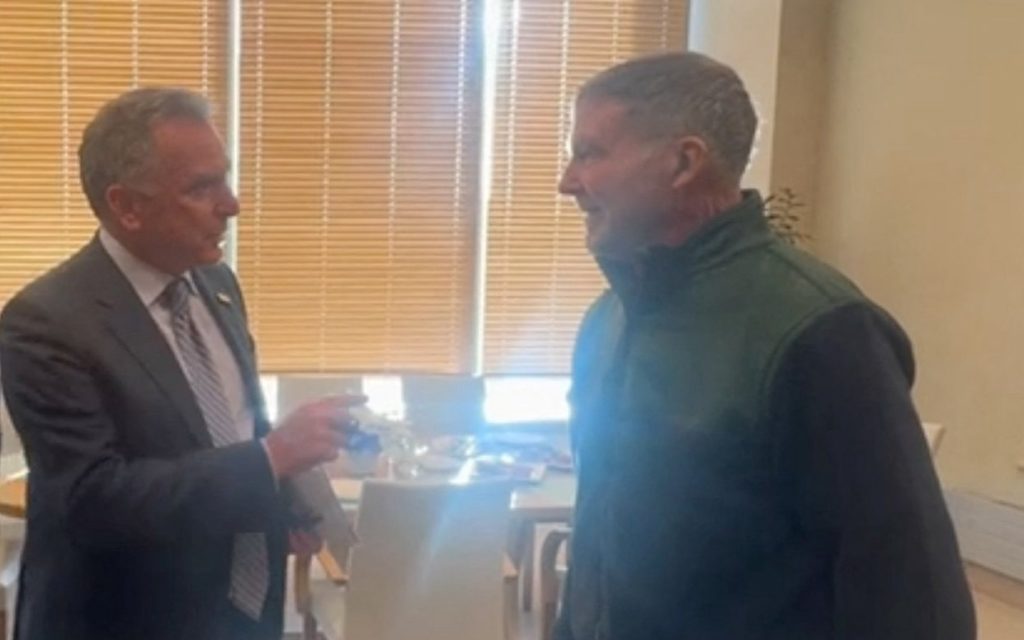 PBS NewsHourThis piece reads center-left
“at a time when President Donald Trump has taken a series of actions meant to”
Read the original The New RepublicThis piece reads center-left
“thinks Russian President Vladimir Putin is a "humanitarian”
FramingPlaces the prisoner release in the headline's lead position before mentioning Witkoff's 'humanitarian' comment, whereas other outlets reverse this order—shaping how readers understand whether the release or the language is the main event.
Read the original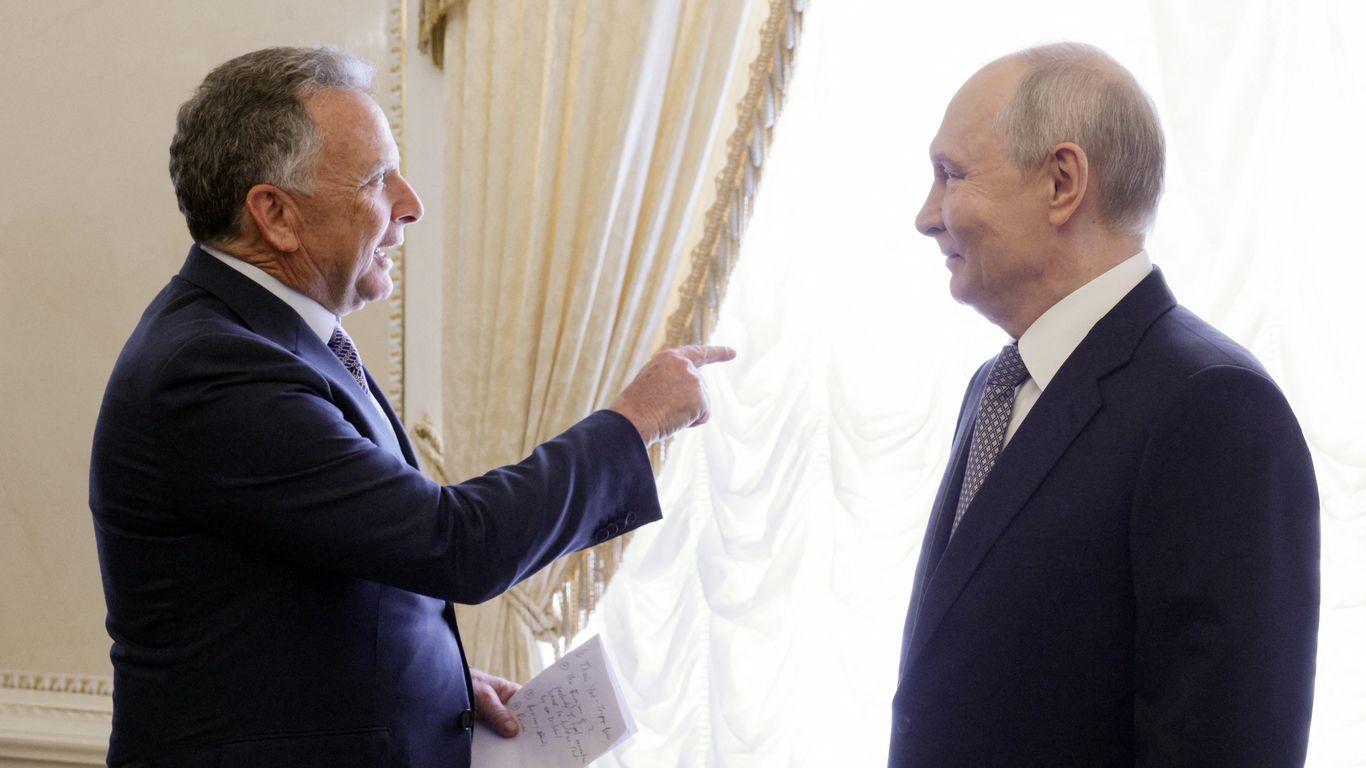 AxiosThis piece reads center-left
“Trump agreed to lift sanctions on Russian diesel sales”
FramingIntroduces context about Trump's lifting of sanctions on Russian diesel within an analysis section, directly linking the diplomatic move to economic concessions in a way that frames the visit as transactional.
Read the original- MeduzaThis piece reads center
“first diesel fuel shipment to the United States is scheduled”
Read the original - EuronewsThis piece reads center
“frees detained American Stephen Hubbard during US envoy's visit”
Read the original - The Moscow TimesThis piece reads center
“After U.S. Envoy Arrives for Ukraine Talks”
Read the original 
 TimeThis piece reads center
“retired school teacher, had spent more than four years”
Read the original

 Straight Arrow NewsThis piece reads center
“After Trump appeal, Russia frees American”
Read the original New York PostThis piece reads center
“Putin agrees to trilateral talks with Ukraine, US”
Read the original

Placements are generated by an AI model from each article’s own headline and summary, and every quotation above is checked to be a real substring of that article before it is published. How this is done
Prism is free and carries no advertising. Support it if it was useful.