US and China agree to establish AI safety dialogue channel during Xi state visit
Reported by
A dot shows how that piece reads — Prism rates articles, not outlets, and shows the words behind each placement below. No dot means the piece isn’t rated. How the ratings work

What happened
The account the coverage agrees on, with contested figures attributed rather than asserted. This is not one of the five framings below — it is the ground they all stand on.
US President Donald Trump and Chinese leader Xi Jinping met at the White House for less than 48 hours. The two sides agreed to pursue a military crisis-communication pact, establish an AI safety dialogue channel, and cut tariffs on $30 billion in goods in each direction. Both countries also committed to continue trade and military talks through new working groups.
How the spectrum reads this story
The same event, summarised as five points on the political spectrum would each tend to frame it. These are generated by an AI model and are a starting point, not the last word.
Left
This summit's modest agreements mask deeper structural competition between declining US hegemony and China's rise. Tariff cuts benefiting corporations and an AI dialogue that leaves labour concerns unaddressed represent management of rivalry rather than genuine cooperation. The military crisis line is welcome but insufficient without addressing the root causes of US-China tension: US military encirclement of China and trade practices that benefit corporations over workers.
Center-left
The summit achieved useful incremental progress on critical issues. A military crisis-communication channel addresses real dangers in an increasingly tense Indo-Pacific. Tariff cuts and AI dialogue represent pragmatic steps toward stabilizing economic and technological competition. These working groups create mechanisms for preventing disputes from escalating, though deeper questions about trade fairness, labour standards, and technology transfer remain unresolved.
Center
Both sides needed this reset and appear to have found achievable middle ground. The agreements are modest but real: tariff relief ($30 billion each way), military safeguards, and structured dialogue on AI risks. What matters is whether these mechanisms actually function when crises arise. Analysts' caution that no major breakthroughs occurred is sound—expectations should stay realistic. Success depends on whether both countries use these new channels as intended or let them atrophy.
Center-right
Trump's approach of direct engagement with Xi produced tangible results that diplomacy alone had failed to achieve. Tariff reductions and military communication protocols address genuine mutual interests. The AI dialogue recognises competition in critical technology without letting it spiral into conflict. These working groups provide practical tools for managing disagreements. The framework respects both nations' sovereignty and interests rather than imposing ideological conditions.
Right
Trump's deal-making approach has achieved concrete gains that restore American leverage in a relationship that had deteriorated. Tariff cuts protect US interests while creating dialogue mechanisms. A military crisis channel serves US security by reducing miscalculation risks. The AI talks preserve American technological interests without surrendering to pressure. This pragmatic engagement avoids the endless confrontation that previous administrations pursued while maintaining American strength and independence.
Hear two viewpoints debate it
Pick two viewpoints and Prism writes a short, six-turn exchange about this story in each one’s own voice — steel-manned, no winner declared. Each pairing is written once and then saved for every reader. The voices are AI syntheses of a tradition, not real people.
New pairing — Prism will write it now.
How each outlet covered it
Where Prism places each piece — not the outlet in general — with the words from that piece that put it there, and the photograph the outlet chose. Picking a photo is a framing decision too.
- Taipei Timesnot ratedRead the original
- South China Morning PostThis piece reads center
“Beijing says US, China to pursue”
FramingAttributes the military pact claim to Beijing's account rather than presenting it as jointly confirmed, signalling reliance on one government's characterisation.
Read the original 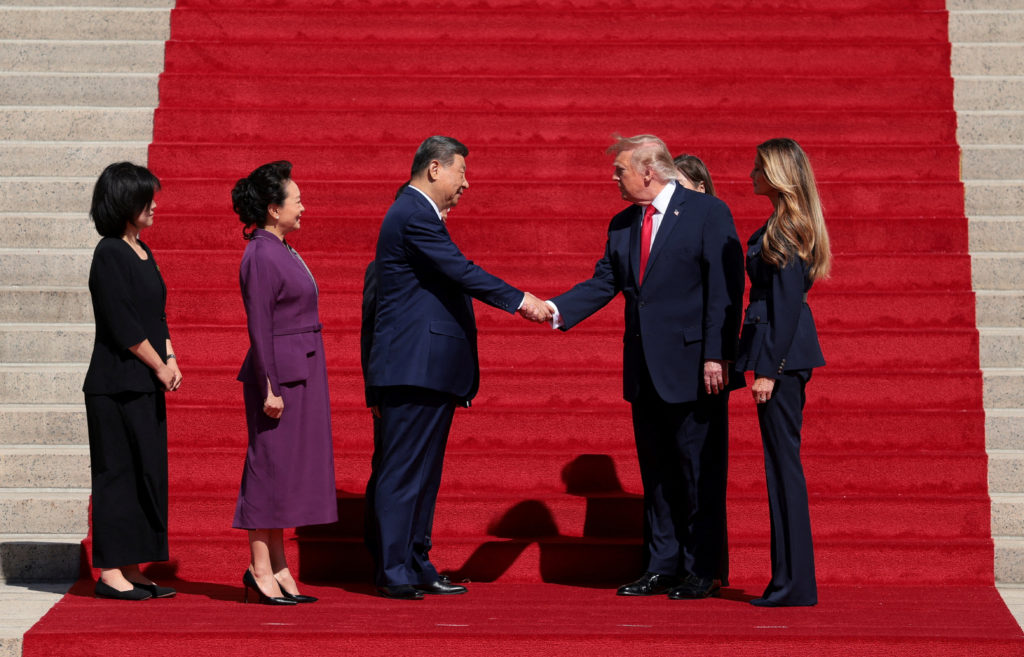 PBS NewsHourThis piece reads center
“produced no major breakthroughs”
FramingOpens with what the summit did not achieve, whereas other outlets lead with the concrete agreements reached.
Read the original The Japan Timesnot ratedRead the original
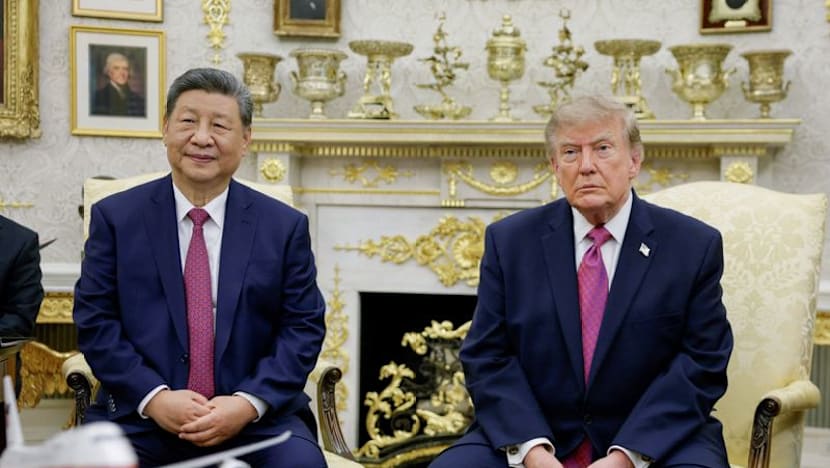 CNAThis piece reads center-right
“clearest US-China breakthrough”
Word choiceCalls the tariff cuts a 'breakthrough', emphasizing significance; PBS and others describe the same outcomes more cautiously as steps 'toward cooperation' without major breakthroughs.
Read the original
Placements are generated by an AI model from each article’s own headline and summary, and every quotation above is checked to be a real substring of that article before it is published. How this is done
Prism is free and carries no advertising. Support it if it was useful.