Trump-Xi state visit summit concludes with focus on trade and spectacle
Reported by
A dot shows how that piece reads — Prism rates articles, not outlets, and shows the words behind each placement below. No dot means the piece isn’t rated. How the ratings work
ABC News
What happened
The account the coverage agrees on, with contested figures attributed rather than asserted. This is not one of the five framings below — it is the ground they all stand on.
Chinese President Xi Jinping concluded a three-day state visit to Washington, meeting with President Donald Trump. The visit produced no significant agreements or breakthroughs on US-China disagreements, according to reporting from multiple outlets. Trump subsequently spoke by phone with Japanese Prime Minister Sanae Takaichi about the summit.
How the spectrum reads this story
The same event, summarised as five points on the political spectrum would each tend to frame it. These are generated by an AI model and are a starting point, not the last word.
Left
The Trump-Xi summit exemplifies how US-China relations remain trapped by competing imperial interests and military posturing. Both leaders prioritized spectacle and photo ops over addressing the structural contradictions driving conflict—Taiwan, trade, supply chains, climate. Without fundamental shifts in how either power projects force and dominance, summits like this will keep failing to resolve the underlying tensions that destabilize the world.
Center-left
While a summit between the world's two largest powers offers an opportunity to de-escalate tensions, this visit squandered that chance. Trump and Xi engaged in ceremonial theatrics rather than serious negotiation on critical issues like Taiwan, trade disputes, and regional security. Meaningful progress requires substantive diplomatic work, not grand gestures—and this visit showed little willingness from either side to make real concessions.
Center
Both presidents showed up for a high-profile summit that managed expectations well enough—nobody expected breakthroughs given the depth of disagreement on Taiwan, trade, and military posture. The visit served its basic function as a diplomatic touchstone between rivals who need periodic contact. That nothing concrete emerged is neither surprising nor disastrous; maintaining communication channels and avoiding escalation matters as much as formal deals. The real test is whether this foundation prevents miscalculation down the line.
Center-right
Trump's approach to the Xi visit prioritized direct presidential engagement and personal rapport, reflecting his negotiating style. While the summit produced no major agreements, face-to-face dialogue between leaders of rival powers serves national interests by reducing misunderstanding. The focus on ceremony and relationship-building, rather than premature commitments, allows each side to understand the other's bottom lines. Subsequent coordination with allies like Japan demonstrates Trump's broader strategy for managing great-power competition.
Right
Trump met Xi on roughly equal terms, showing strength and American confidence rather than the apologetic posture of previous administrations. Both leaders understood the limits of what could be achieved, so the summit wisely avoided binding commitments that might constrain US sovereignty. By keeping discussions focused on areas of possible alignment while being clear about non-negotiables like America's interests, Trump preserved freedom of action. The follow-up call with Japan's prime minister signals proper commitment to regional security partnerships.
Hear two viewpoints debate it
Pick two viewpoints and Prism writes a short, six-turn exchange about this story in each one’s own voice — steel-manned, no winner declared. Each pairing is written once and then saved for every reader. The voices are AI syntheses of a tradition, not real people.
New pairing — Prism will write it now.
How each outlet covered it
Where Prism places each piece — not the outlet in general — with the words from that piece that put it there, and the photograph the outlet chose. Picking a photo is a framing decision too.
- The EconomistThis piece reads center-left
“squandered a chance to tackle the world's gravest threats”
Word choiceUses 'pageantry' to characterize the summit as theater—a word that carries judgment about the leaders' priorities and sincerity, whereas other outlets report the same facts more neutrally as 'spectacle' or simply state what was and wasn't achieved.
Read the original - Bloombergnot ratedRead the original
- Rolling StoneThis piece reads center-left
“Trump's Bro Sesh With Xi Jinping Was Thoroughly Weird”
FramingFrames the summit through a personal anecdote about Trump showing off the helipad and granite observations, using casual language ('bro sesh,' 'weird') that emphasizes the odd interpersonal dynamic rather than the diplomatic content or lack thereof.
Read the original  NZ Heraldnot ratedRead the original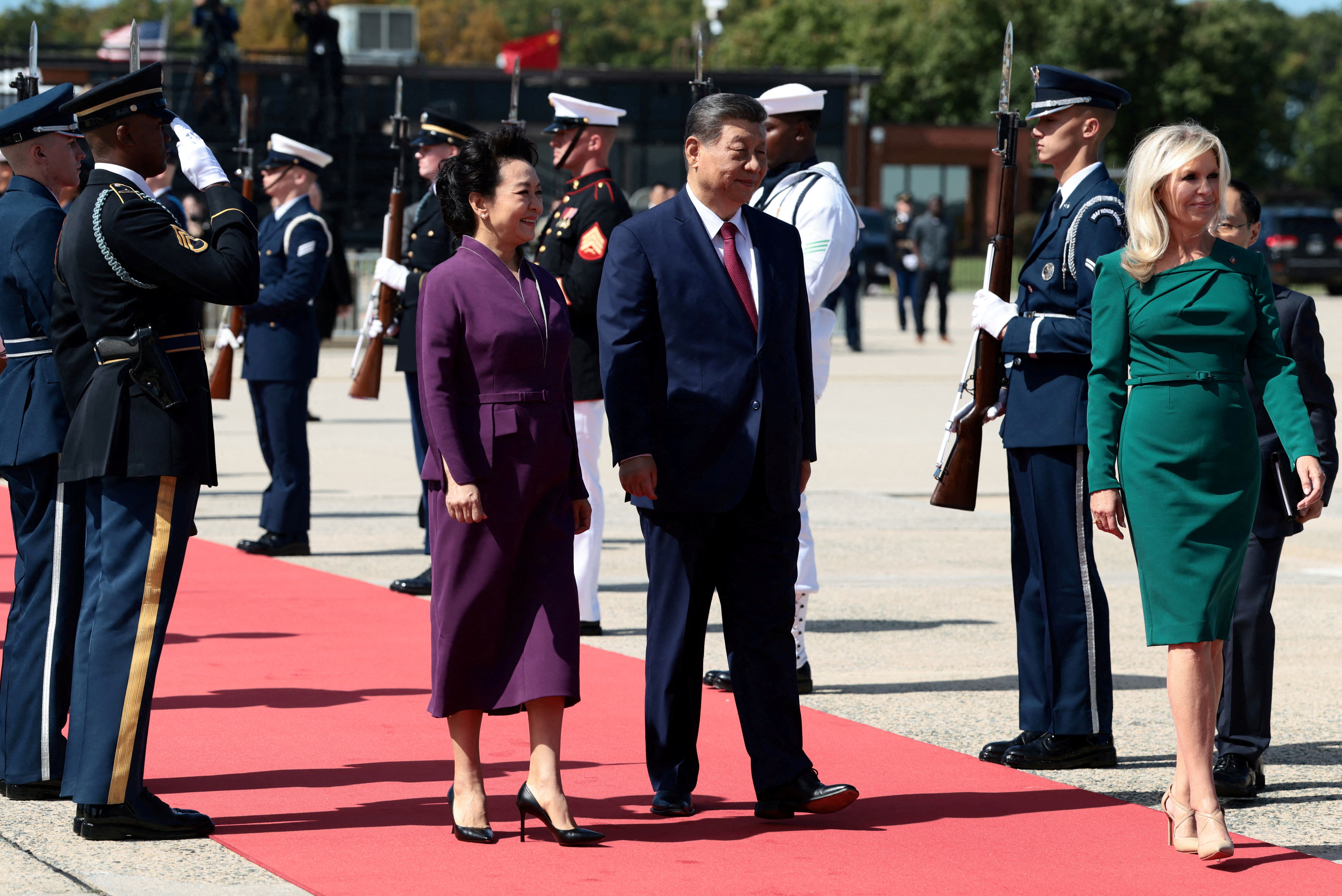
 ABC NewsThis piece reads center
“Trump-Xi Summit Wraps as U.S.-China Tensions Take Center Stage”
What's left outThe snippet bundles the summit with unrelated stories (UN speech, mortgage rates, Pepsi prices) in a news roundup format, which dilutes the focus on what happened during the Xi visit itself compared to outlets covering it as a discrete event.
Read the original- CNBCThis piece reads center
“heavy on the ceremony and light on deliverables”
Word choiceUses the concise phrase 'light on deliverables' to summarize the absence of outcomes, while other outlets frame it as 'little changed' or 'no significant breakthroughs'—this version emphasizes the gap between pageantry and tangible results.
Read the original
Placements are generated by an AI model from each article’s own headline and summary, and every quotation above is checked to be a real substring of that article before it is published. How this is done
Prism is free and carries no advertising. Support it if it was useful.