Trump hosts Chinese President Xi Jinping for state visit and summit at White House
Reported by
A dot shows how that piece reads — Prism rates articles, not outlets, and shows the words behind each placement below. No dot means the piece isn’t rated. How the ratings work
What happened
The account the coverage agrees on, with contested figures attributed rather than asserted. This is not one of the five framings below — it is the ground they all stand on.
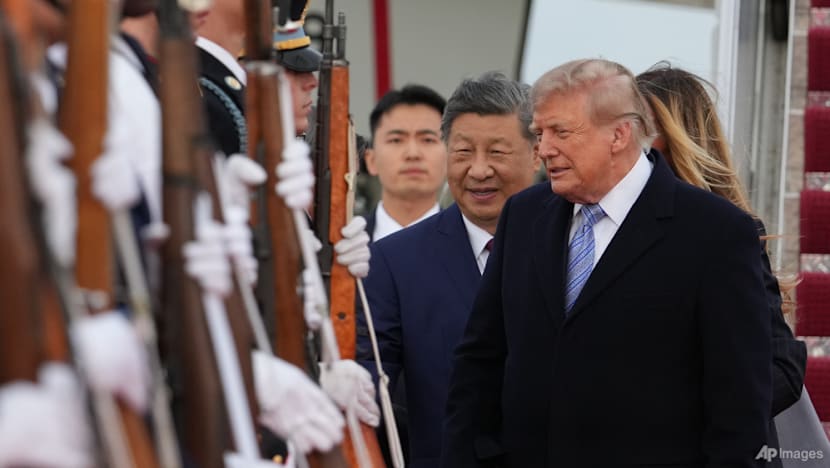
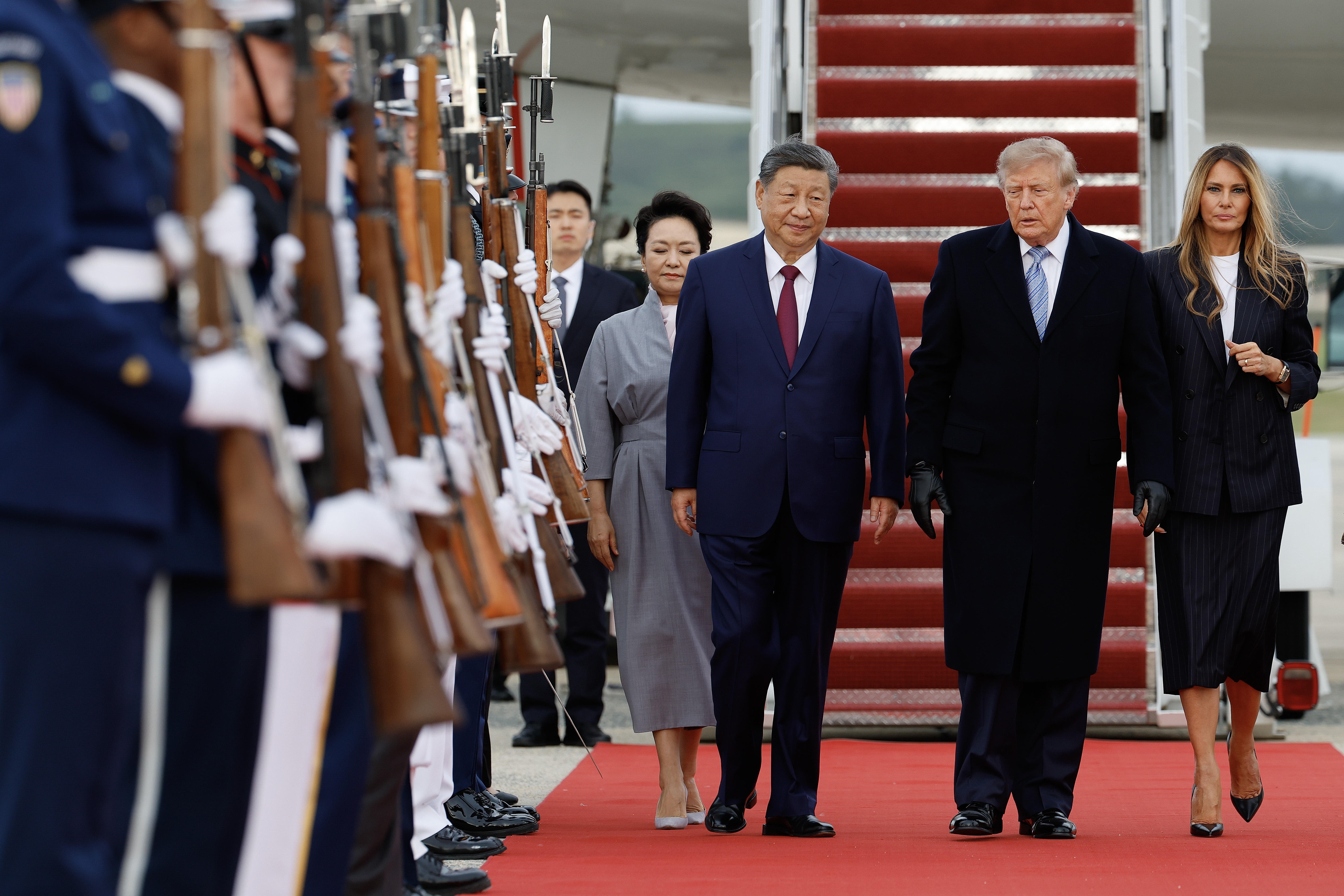
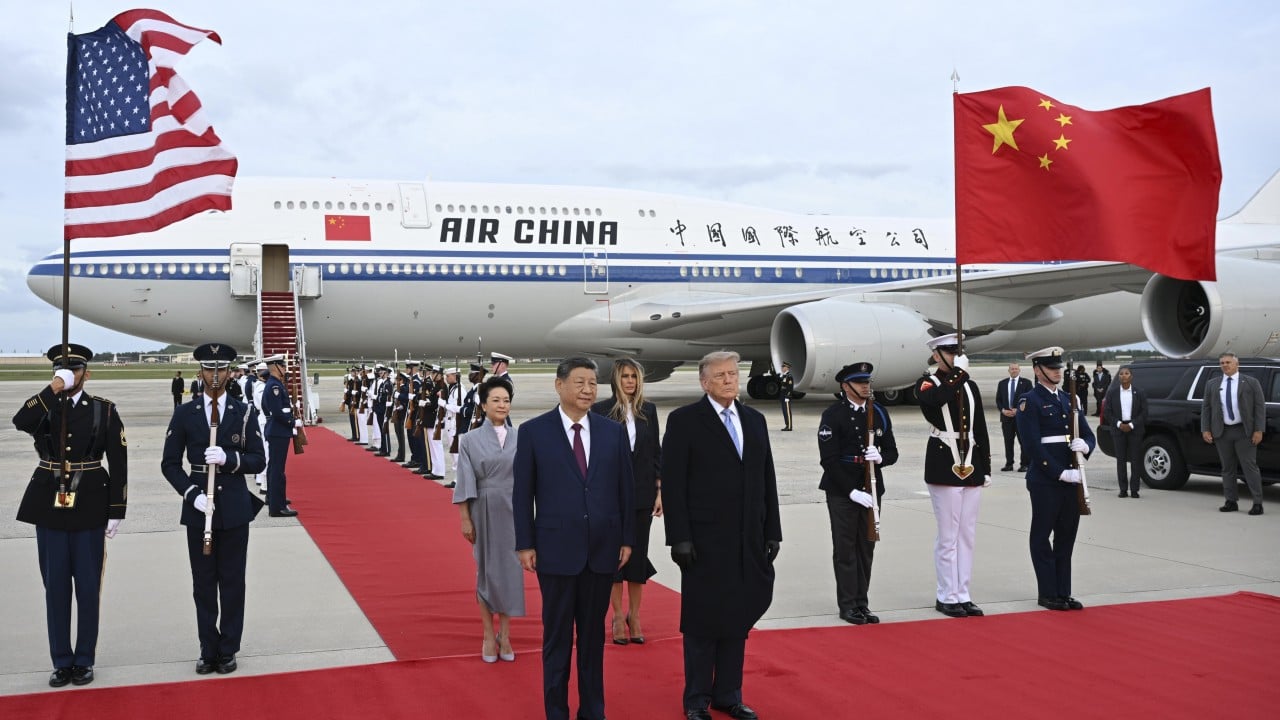
President Trump welcomed Chinese President Xi Jinping at Joint Base Andrews outside Washington on Wednesday night for a summit, their second meeting in four months. Xi's arrival ceremony included a 100-foot red carpet, a flyover by two B-1 bombers, and a presentation of both nations' flags and anthems. On Thursday, the two leaders held meetings expected to cover artificial intelligence, rare earths, trade, Taiwan, Iran, and a potential extension of a tariff truce. A state dinner with American business leaders and Chinese CEOs followed.
Developing story · 3 chapters
- Trump and Xi prepare for summit with tensions over AI, trade, and Iran
- Trump hosts Chinese President Xi Jinping for state visit and summit at White Houseyou are here
- Trump and Xi summit amid tensions over trade, AI, and Taiwan
How each side framed the previous chapter
Compare these with the five framings below to see what moved as the story developed — and what each side kept saying regardless.
Left
This summit reveals the structural competition inherent in a U.S.-dominated global order struggling to contain China's rise. Rather than genuine cooperation, we're seeing managed rivalry between superpowers competing for AI dominance and geopolitical influence. Trump's economic desperation ahead of midterms may force superficial trade deals that benefit corporations while working people face continued instability. The focus on Iran and Taiwan masks deeper imperial interests—the U.S. seeks to maintain hegemony while China pursues multipolarity. Real stability requires dismantling zero-sum competition and acknowledging legitimate interests on both sides.
Center-left
This summit is an important moment for managing great-power competition responsibly. While tensions over AI, trade, and Taiwan are real and significant, dialogue at the highest level is essential to prevent escalation. The low expectations are concerning—both sides should seek genuine agreements on areas like AI safety and de-escalation mechanisms rather than just tactical maneuvers. Trump's focus on trade wins for electoral purposes risks treating serious geopolitical issues as mere talking points. The international community needs these two powers to find sustainable frameworks for coexistence rather than relentless rivalry.
Center
Both sides have legitimate concerns and leverage in this relationship, and the summit reflects that realistic stalemate. China wants to lock in a trade deal and maintain space on Taiwan; the U.S. wants to protect its technology edge and contain Beijing's influence. Low expectations may actually be realistic rather than pessimistic—major breakthroughs on such fundamental disagreements rarely happen quickly. Trump's electoral incentives for a trade win could actually create an opening if both sides want a win they can announce. The real value here may be simply preventing dangerous miscalculation and establishing communication channels, not transforming the relationship.
Center-right
This summit is necessary to manage a competitor that poses genuine challenges to American interests in technology, trade, and regional security. The U.S. must negotiate from strength—maintaining technological advantages in AI while protecting Taiwan's status and securing fairer trade terms. Low expectations reflect appropriate realism: China will defend its interests assertively, and any agreement must genuinely benefit American workers and businesses, not just corporate elites. Trump's focus on securing trade wins is appropriate given real economic concerns. The key is avoiding both naive concessions and unnecessary escalation—strategic competition can coexist with diplomatic channels.
Right
China remains a strategic competitor that cannot be trusted to uphold agreements in good faith. This summit should focus on securing concrete American advantages: protecting domestic industries, ensuring Taiwan's independence, and preventing China from gaining AI dominance that threatens national security. Trump's approach of using economic leverage is sound, but any agreement must be enforceable and verifiable. The U.S. should not concede on core interests simply to show diplomatic progress before elections. China will use negotiations to buy time while advancing its geopolitical position. America must maintain clear-eyed skepticism about grand visions of cooperation and instead pursue deals that tangibly benefit American citizens and security.
How the spectrum reads this story
The same event, summarised as five points on the political spectrum would each tend to frame it. These are generated by an AI model and are a starting point, not the last word.
Left
This summit represents a critical moment for US-China relations, though it occurs within a framework that already privileges corporate interests over working people. The focus on AI, trade, and geopolitics reflects how both powers compete for technological dominance and economic advantage rather than addressing shared challenges like climate or inequality. Trump's lavish welcome obscures deeper structural conflicts: the US rivalry with China is rooted in competing imperial interests, and no amount of diplomatic ceremony resolves the fundamental tension between capitalist powers.
Center-left
Trump and Xi's meeting offers a diplomatic opportunity to reduce tensions on trade, AI, and regional security after months of escalating rhetoric. The agenda—tariff truces, AI governance, Taiwan stability, and Iran—shows both sides recognizing the costs of confrontation. However, the summit's success depends on whether substantive agreements emerge or whether it remains ceremonial. Including US and Chinese business leaders signals an attempt to create constituencies for peace, though structural competition over technology and influence remains.
Center
This summit is a necessary diplomatic engagement between the world's two largest economies, with real stakes on trade and technology. Both leaders appear motivated to manage rather than escalate tensions, which is sensible given mutual costs. The ceremonial aspects—the red carpet, military display—serve a diplomatic function of respecting both nations' standing. Whether Thursday's discussions yield concrete results on tariffs, AI standards, or Taiwan stability will determine if this is a turning point or theater. Pragmatic negotiation matters more than symbolism.
Center-right
The Trump administration is right to engage Xi directly and from a position of strength, as shown by the ceremonial welcome emphasizing US military capability. Discussions on trade, AI, and Taiwan reflect American interests in protecting technological advantage and maintaining regional stability. A tariff truce extension, if achieved, serves US economic interests. However, any agreements must protect American workers and businesses—Trump should not concede on technology transfers or intellectual property. Strong diplomacy backed by demonstrated strength is the right approach.
Right
Trump is correctly prioritizing direct engagement with China's leader as the superior alternative to bureaucratic intermediaries or ideological antagonism. The ceremonial display of military strength at Xi's arrival—the B-1 bombers, the formal protocol—properly conveys that the US negotiates from a position of power, not weakness. On trade, AI, and regional issues, America's interests must come first: securing fair trade terms, protecting domestic technology development, and preserving Taiwan's status quo. Trump's personal relationship with Xi offers the best path to deals that serve American sovereignty and prosperity.
Hear two viewpoints debate it
Pick two viewpoints and Prism writes a short, six-turn exchange about this story in each one’s own voice — steel-manned, no winner declared. Each pairing is written once and then saved for every reader. The voices are AI syntheses of a tradition, not real people.
New pairing — Prism will write it now.
How each outlet covered it
Where Prism places each piece — not the outlet in general — with the words from that piece that put it there, and the photograph the outlet chose. Picking a photo is a framing decision too.
 NPRnot ratedRead the original
- CNBCThis piece reads center
Headline changedwas “Trump, Xi expected to talk Taiwan, AI, trade and Iran as DC summit kicks off”
“Trump, Xi expected to talk Taiwan, AI, trade and Iran”
Read the original  Financial TimesThis piece reads center
“Trump says he wants to leave AI 'exactly where it is”
FramingOpens with Trump's stated position on AI restraint rather than the summit itself, foregrounding his personal stance over the bilateral talks.
Read the original Straight Arrow NewsThis piece reads center
“Xi Jinping makes rare Washington visit”
FramingCombines the Xi summit with an unrelated Trump media ban court ruling in the same headline, treating them as equivalent stories rather than separating them.
Read the original- The Express Tribunenot rated
Headline changedwas “Xi receives rare US airport welcome from Trump, First Lady”
Read the original 
 South China Morning PostThis piece reads center
“Chinese CEOs fly to US on own, await invites to Trump's state dinner”
Read the original BBCThis piece reads center
“A red carpet and military flyover - How Trump welcomed Xi”
Read the original
- CBS NewsThis piece reads center
“Trump to host China's Xi at White House with AI and tariffs on the agenda”
Read the original  The Hillnot ratedRead the original
- BloombergThis piece reads center
“Trump Elevates Tech Titans to Place of Honor at US-China Summit”
Read the original 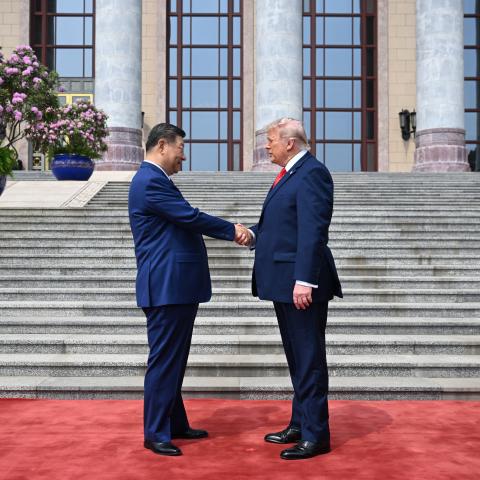 Just the NewsThis piece reads center-right
“Trump to discuss AI 'super intelligence' with Xi Jinping”
What's left outHighlights Trump's proposed renaming of AI to 'super intelligence' in the headline, giving prominence to a terminology preference that other outlets do not emphasize or mention.
Read the original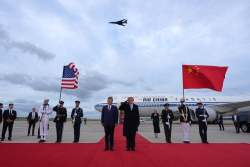 RealClearPoliticsThis piece reads center-right
“U.S.-China Trade Truce Extended”
FramingStates the trade truce extension as an accomplished fact in the headline, while other outlets frame it as an expected topic of discussion.
Read the original
Placements are generated by an AI model from each article’s own headline and summary, and every quotation above is checked to be a real substring of that article before it is published. How this is done
Prism is free and carries no advertising. Support it if it was useful.