DOJ investigates TV networks over suspension of White House press pool coverage
Reported by
A dot shows how that piece reads — Prism rates articles, not outlets, and shows the words behind each placement below. No dot means the piece isn’t rated. How the ratings work
What happened
The account the coverage agrees on, with contested figures attributed rather than asserted. This is not one of the five framings below — it is the ground they all stand on.
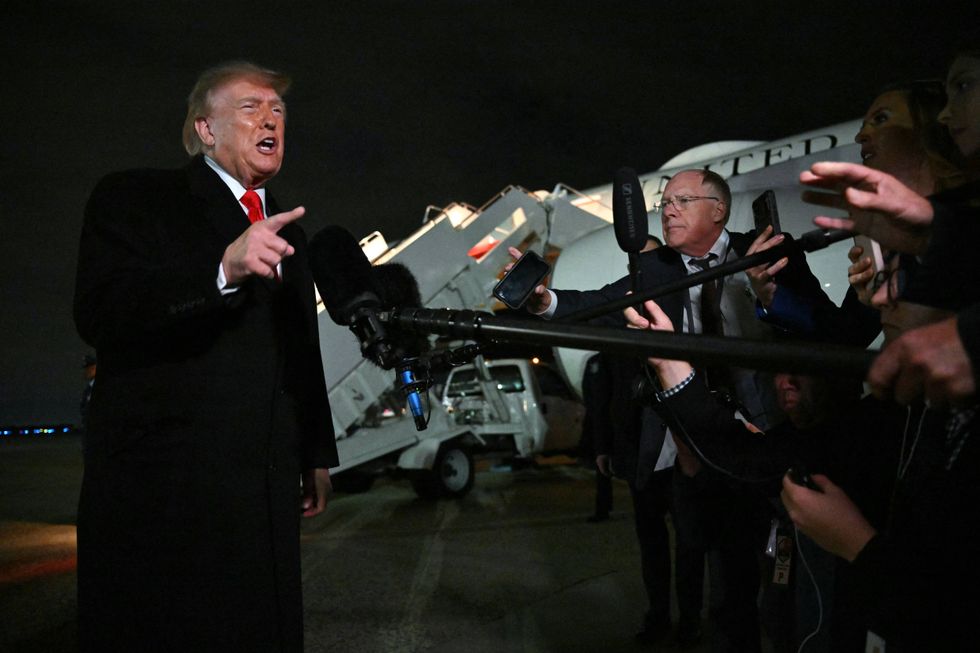
The US Justice Department launched an antitrust investigation into five major television networks—ABC News, CBS News, CNN, Fox News and NBC News—after they halted pool coverage of President Trump following the White House's ban of CNN, MS Now and Politico from the building. DOJ officials contacted the networks on Friday requesting communications and documents related to the coordinated suspension of coverage.
Developing story · 2 chapters
- Justice Department investigates TV networks over suspension of White House press pool coverage
- DOJ investigates TV networks over suspension of White House press pool coverageyou are here
How each side framed the previous chapter
Compare these with the five framings below to see what moved as the story developed — and what each side kept saying regardless.
Left
This investigation reveals how the Trump administration weaponizes antitrust law to punish independent journalism. When networks stood together against censorship—refusing to participate in a rigged system after legitimate outlets were barred—the DOJ responded with intimidation. This is not antitrust enforcement; it is retaliation against press freedom and a chilling warning that collective action in defense of democratic principles will be treated as a criminal conspiracy.
Center-left
The DOJ's investigation raises serious concerns about government pressure on the press. While the networks' coordinated response to Trump's ban on certain outlets showed editorial solidarity, using antitrust law to investigate them appears to conflate legitimate news judgment with anticompetitive conduct. The administration should not use federal enforcement powers to punish media organizations for editorial decisions, even controversial ones.
Center
This situation presents a genuine tension between competing principles. News networks coordinating their coverage decisions does raise legitimate questions about how antitrust law applies to media, but the timing and context—investigating them for refusing to cover a president who just barred their competitors—invites suspicion of political motivation rather than neutral law enforcement. A more credible approach would involve clearer standards for when editorial coordination crosses into unlawful boycott, applied consistently regardless of the administration in power.
Center-right
The networks' decision to jointly halt coverage was a form of economic pressure coordinated among competitors, which is precisely what antitrust law scrutinizes. Five major broadcasters acting together to punish the White House for editorial decisions goes beyond editorial independence into collective commercial action. A proper investigation is appropriate, though the DOJ should focus on the legal merits and avoid any appearance of targeting based on political disagreement.
Right
The major networks organized a coordinated blackout—a group boycott—to pressure the president over his media access decisions. This is textbook antitrust violation: competitors combining their market power to punish someone who displeased them. That the targets are news organizations does not exempt them from the law. The DOJ investigation is a legitimate enforcement action against anti-competitive conduct, not persecution of the press.
How the spectrum reads this story
The same event, summarised as five points on the political spectrum would each tend to frame it. These are generated by an AI model and are a starting point, not the last word.
Left
The Trump administration is weaponizing antitrust law to punish news networks for defending press freedom. When the White House barred specific outlets, the networks coordinated a principled response—temporarily stopping coverage to protest censorship. The DOJ's investigation is a brazen attempt to intimidate journalism and chill independent reporting on government actions. This represents a dangerous erosion of press freedom and democratic accountability.
Drawn from 1 article placed here, below.
Center-left
The administration's exclusion of certain news outlets from White House access raised legitimate concerns about press freedom. Networks' decision to halt pool coverage was a reasonable objection to that exclusion. However, the DOJ's antitrust investigation into their coordinated response is troubling—it appears designed to discourage future solidarity among news organizations and could have a chilling effect on press autonomy and accountability journalism.
No article in this story reads this way. This is how the position tends to frame events like it — written by a model, not quoted from anyone.
Center
This situation involves competing legitimate interests. The White House has some authority over who accesses its facilities, but excluding specific news outlets raises press freedom questions. Networks coordinating to protest that exclusion is understandable, though coordinated action among competitors does raise antitrust considerations that merit examination. The DOJ investigation may be warranted on the legal merits, but the timing and context warrant scrutiny to ensure it's not being used as political leverage.
No article in this story reads this way. This is how the position tends to frame events like it — written by a model, not quoted from anyone.
Center-right
The DOJ's investigation is appropriate. While the White House may exclude outlets from its premises, networks coordinating to cease coverage potentially violates antitrust law by involving horizontal coordination among competitors who normally operate independently. Antitrust law exists to prevent such collusion. The investigation should determine whether their actions constituted illegal coordination rather than individual editorial choices, regardless of their stated justification.
Drawn from 2 articles placed here, below.
Right
The networks' coordinated blackout was a political act disguised as principle—major media outlets colluding to punish the administration for making editorial decisions about White House access. Antitrust law prohibits exactly this kind of coordination among competitors. The DOJ is correctly investigating whether they illegally conspired to suppress coverage. Networks have no right to dictate who the White House admits; enforcement of that boundary should not trigger illegal retaliation through coordinated boycotts.
No article in this story reads this way. This is how the position tends to frame events like it — written by a model, not quoted from anyone.
Hear two viewpoints debate it
Pick two viewpoints and Prism writes a short, six-turn exchange about this story in each one’s own voice — steel-manned, no winner declared. Each pairing is written once and then saved for every reader. The voices are AI syntheses of a tradition, not real people.
New pairing — Prism will write it now.
How each outlet covered it
Where Prism places each piece — not the outlet in general — with the words from that piece that put it there, and the photograph the outlet chose. Picking a photo is a framing decision too.
- Common DreamsThis piece reads left
“Brazen Attempt to Try to Intimidate Journalists”
FramingLeads with a characterization from critics rather than the factual event. Other outlets describe what happened; this one opens by labeling the DOJ action as intimidation.
Read the original - CNBCnot ratedRead the original
 BBCnot ratedRead the original
- American GreatnessThis piece reads center-right
“coordinated suspension of coverage”
Read the original  Financial TimesThis piece reads center-right
“refused to cover the president's activities”
Word choiceEmphasizes the networks' choice to stop coverage, whereas other accounts frame it as a coordinated response to the White House's exclusion.
Read the original
Placements are generated by an AI model from each article’s own headline and summary, and every quotation above is checked to be a real substring of that article before it is published. How this is done
Prism is free and carries no advertising. Support it if it was useful.