UK PM Andy Burnham delivers Labour conference speech outlining major policy changes including scrapping state pension triple lock
Reported by
A dot shows how that piece reads — Prism rates articles, not outlets, and shows the words behind each placement below. No dot means the piece isn’t rated. How the ratings work

What happened
The account the coverage agrees on, with contested figures attributed rather than asserted. This is not one of the five framings below — it is the ground they all stand on.
Prime Minister Andy Burnham delivered a conference speech on 29 September 2026 in which he announced plans to modify the state pension triple lock, reform the electoral system, repeal a public water ownership ban, and seek closer ties with the European Union. Burnham framed these as part of a broader plan to give Britain "a new social contract for the 21st century". He acknowledged the changes carry political risk and that economic constraints limit what can be delivered. Some Labour insiders expressed concern about backlash to the triple lock changes, while the speech was criticised by opponents as prioritising party interests over national ones.
How the spectrum reads this story
The same event, summarised as five points on the political spectrum would each tend to frame it. These are generated by an AI model and are a starting point, not the last word.
Left
Burnham's speech shows real ambition on electoral reform, water renationalisation, and EU relations—steps toward a genuinely different Britain. But watering down the pension triple lock rather than properly funding social care through progressive taxation betrays Labour's core commitment to protecting the vulnerable. He's trying to manage decline within the existing system instead of challenging the structures that created the crisis in the first place. Without more radical redistribution, these reforms will disappoint those hoping for genuine transformation.
Center-left
This is a bold opening from Burnham that finally tackles difficult but necessary issues—particularly the unsustainable pension triple lock and electoral reform that's been overdue for decades. The speech signals a genuinely reformist government willing to spend political capital on structural change. The concern about internal Labour backlash is real, but these moves show he's serious about governing for the long term rather than chasing short-term popularity. The EU repositioning and social care focus reflect sensible priorities, though the execution details will matter enormously.
Center
Burnham is attempting something genuinely difficult: a sweeping reform agenda while acknowledging real economic constraints. The triple lock change and electoral reform are serious ideas that any serious government eventually faces. But there's a tension here between his claim that 'small things won't get us through' and the practical reality that he's having to dial back the triple lock rather than abolish it entirely, suggesting resources are tighter than the rhetoric allows. The EU repositioning is sensible recalibration, but reopening that wound carries unpredictable risks. Success depends less on boldness than on whether the specifics—the devils in the details—actually work.
Center-right
Burnham's conference speech reveals the perennial Labour problem: an appetite for sweeping state intervention without clear answers to how it's all paid for. Electoral reform and water renationalisation represent more state control when Britain needs flexibility and efficiency. The triple lock adjustment is the only pragmatic element here—pensions are genuinely unsustainable—but it should be part of genuine welfare reform, not a funding source for more government schemes. The EU positioning risks reopening divisions when the country has moved on. These aren't bold choices; they're costly expansions of Labour's usual instincts wrapped in reform language.
Right
Burnham's speech is a wish-list of state expansion dressed up as necessary reform. Electoral reform exists solely to entrench left-wing parties in power through proportional representation. Water renationalisation returns assets to bureaucratic bungling. The triple lock cut is the only sensible element, but it's being used to fund more welfare spending rather than genuine restraint. The EU repositioning shows where his instincts really lie—undoing Brexit through the back door under the guise of consensus-building. This is not reform; it's a blueprint for more government, more spending, and less British sovereignty dressed up in unity rhetoric.
Hear two viewpoints debate it
Pick two viewpoints and Prism writes a short, six-turn exchange about this story in each one’s own voice — steel-manned, no winner declared. Each pairing is written once and then saved for every reader. The voices are AI syntheses of a tradition, not real people.
New pairing — Prism will write it now.
How each outlet covered it
Where Prism places each piece — not the outlet in general — with the words from that piece that put it there, and the photograph the outlet chose. Picking a photo is a framing decision too.
 Daily Mirrornot rated
Word choiceEmphasizes emotional tone and historical significance in the headline, where other outlets focus on policy content or risk.
Read the original- New Statesmannot rated
Headline changedwas “Andy Burnham's conference speech: A new Britain begins”
Read the original  The i Papernot ratedRead the original
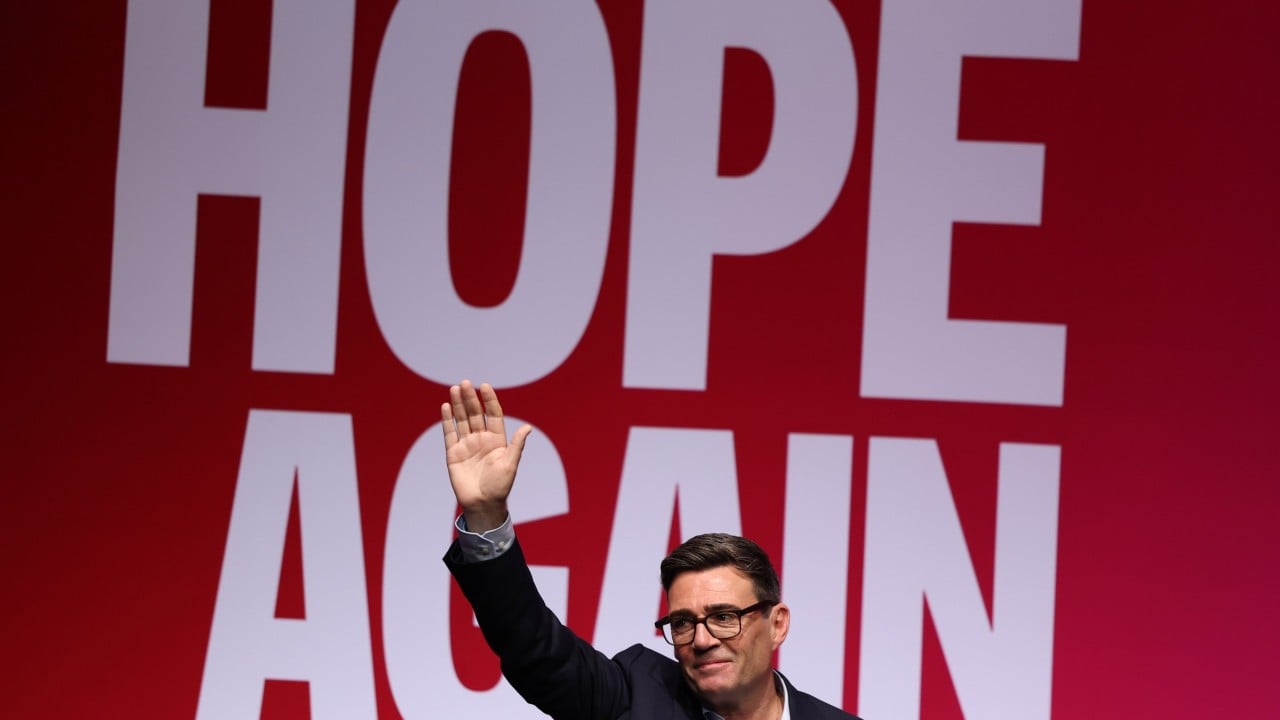 South China Morning Postnot rated
Word choiceLeads with risk characterization in the headline itself, where Mirror outlets emphasize content and emotional tone instead.
Read the original Sky Newsnot rated
Word choiceUses 'scraps with' (suggesting conflict or struggle) where other outlets describe policy change more neutrally, and adds 'risking it all' to emphasize stakes.
Read the original- The Economistnot rated
Word choiceThe word 'at last' carries an implication that Burnham has previously lacked boldness, a judgment not present in other outlets' framing.
Read the original 
- Politico EuropeThis piece reads center
“tried to plot the next 7 years of UK politics in one speech”
Read the original /file/attachments/2998/14326690_653299.jpg) Daily MaverickThis piece reads center
Daily MaverickThis piece reads center“risked reopening the bitter division over Britain's departure”
Read the original The SunThis piece reads right
“will always put what Labour wants above what Britain needs”
FramingFrames Burnham's motives as party-serving rather than national, using stark opposition ('Labour Party' versus 'Britain') where other outlets describe policy content.
Read the original
Placements are generated by an AI model from each article’s own headline and summary, and every quotation above is checked to be a real substring of that article before it is published. How this is done
Prism is free and carries no advertising. Support it if it was useful.