Trump administration DOJ sues to block certification of Alaska Senate election if Republican Dan Sullivan loses
Reported by
A dot shows how that piece reads — Prism rates articles, not outlets, and shows the words behind each placement below. No dot means the piece isn’t rated. How the ratings work

What happened
The account the coverage agrees on, with contested figures attributed rather than asserted. This is not one of the five framings below — it is the ground they all stand on.
The Trump administration's Justice Department filed a lawsuit in Alaska federal court Thursday seeking to block certification of the Senate race if Republican incumbent Dan Sullivan loses. The suit argues that the presence of another candidate named Daniel J. Sullivan on the ballot could confuse voters and taint results. The race involves incumbent Republican Sen. Dan Sullivan, Democrat Mary Peltola, and the other Dan Sullivan. Trump stated he ordered the DOJ action.
How the spectrum reads this story
The same event, summarised as five points on the political spectrum would each tend to frame it. These are generated by an AI model and are a starting point, not the last word.
Left
This represents an extraordinary abuse of executive power: the Trump administration is using the Justice Department as a tool to overturn elections it dislikes. The pretext about voter confusion from similar names is transparently false—this is about nullifying a Democratic victory if it happens. That a sitting president can order the DOJ to sue to invalidate election results reveals how thoroughly the executive has captured institutions meant to be independent. This is an assault on democracy itself and demands immediate congressional action and court rejection.
No article in this story reads this way. This is how the position tends to frame events like it — written by a model, not quoted from anyone.
Center-left
The Trump administration has crossed a serious line by using the Justice Department to threaten election certification based on partisan grounds. While voter confusion from similar names is a legitimate administrative concern that should be addressed through normal election procedures, filing suit to preemptively block certification if Republicans lose looks like weaponizing the courts to overturn results. This sets a dangerous precedent and undercuts confidence in fair elections. The remedy should be election administration reforms, not litigation threatening to invalidate outcomes.
Drawn from 1 article placed here, below.
Center
This lawsuit raises genuine questions about voter confusion and election integrity that deserve serious attention, but the administration's approach is backward. If two candidates with the same name genuinely pose a ballot confusion problem, that should be addressed before the election through ballot design, clear naming conventions, or candidate withdrawal—not after the fact through litigation that conveniently protects only one party. Courts reviewing this will have to weigh whether preventing voter confusion justifies blocking certification, a difficult question that shouldn't become routine. Both sides should want elections administered fairly from the start, not litigated afterward.
Drawn from 4 articles placed here, below.
Center-right
While voter confusion from nearly identical names is a real problem that election officials should take seriously, the Justice Department's approach here is questionable. Using federal litigation to block state election certification is a heavy-handed remedy that invites controversy regardless of party. If Alaska's election laws allow multiple candidates with the same name, the issue should be solved through state legislative action or administrative rules, not DOJ lawsuits after voting. The better path is preventing ballot confusion through state-level ballot design standards and candidate name clarification before election day.
Drawn from 1 article placed here, below.
Right
The DOJ lawsuit highlights a genuine election integrity problem: Alaska allowed two candidates with the same name to appear on the ballot, which naturally creates voter confusion. Rather than dismissing this legitimate concern, the focus should be on whether courts have the authority to block certification based on ballot design flaws. That said, this should have been prevented before the election through proper state election procedures. States must maintain clean voter rolls and ballot formats that prevent confusion. The lawsuit may be necessary to protect election integrity, but the real failure lies with Alaska's election officials who allowed this situation to develop.
Drawn from 1 article placed here, below.
Hear two viewpoints debate it
Pick two viewpoints and Prism writes a short, six-turn exchange about this story in each one’s own voice — steel-manned, no winner declared. Each pairing is written once and then saved for every reader. The voices are AI syntheses of a tradition, not real people.
New pairing — Prism will write it now.
How each outlet covered it
Where Prism places each piece — not the outlet in general — with the words from that piece that put it there, and the photograph the outlet chose. Picking a photo is a framing decision too.
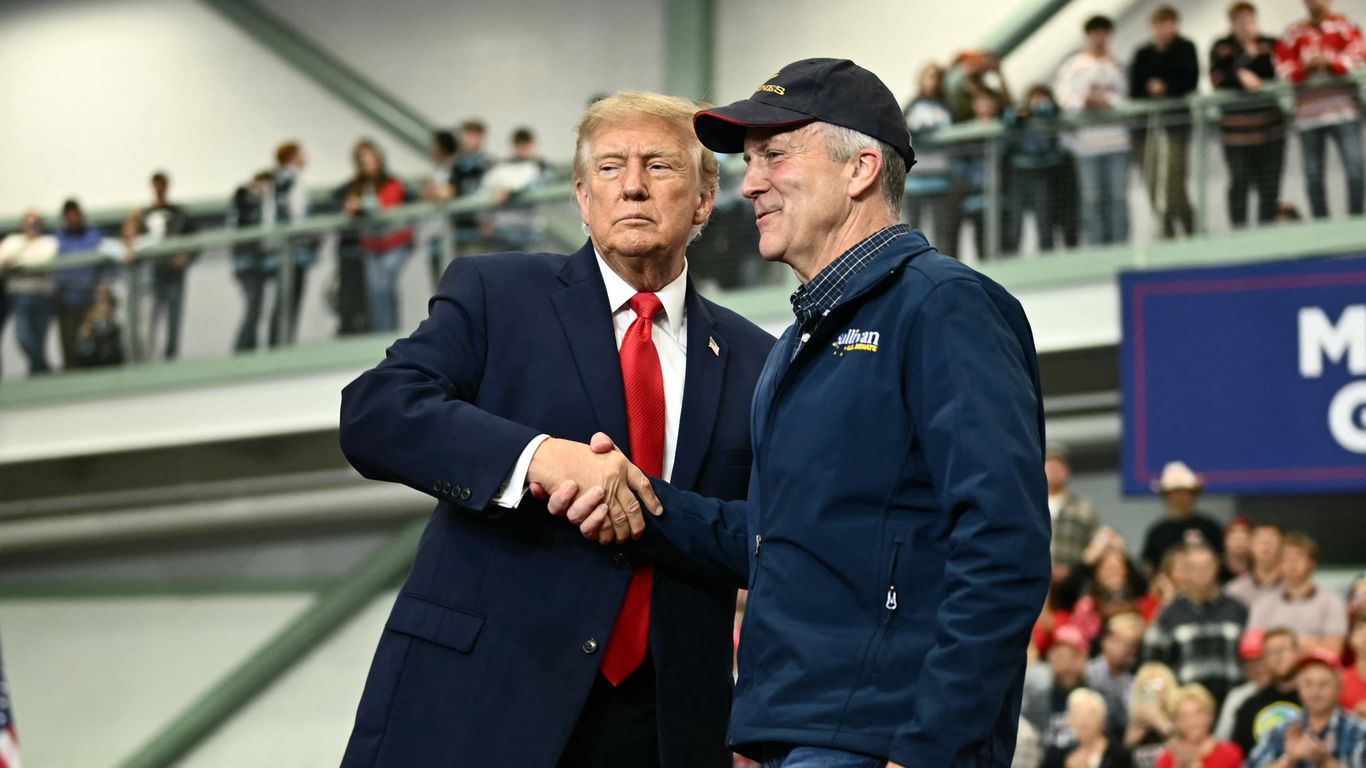 Axiosnot ratedRead the original
 UPIThis piece reads center-left
“if the Democratic candidate wins”
FramingPhrases the condition as 'if the Democratic candidate wins,' emphasizing the partisan protection, whereas most outlets describe it as blocking certification if 'the Republican loses'—the same fact, different angle.
Read the original- Financial TimesThis piece reads center
“Candidates' similar names could 'taint' the result”
Read the original  BBCThis piece reads center
“inclusion of two candidates named Dan Sullivan could confuse voters”
Read the original Roll CallThis piece reads center-right
“preemptively block a narrow loss by Republican Sen. Dan S. Sullivan”
Read the original- BreitbartThis piece reads right
“liberal activist Daniel J. Sullivan, who is being propped up by left-wing”
Word choiceAdds characterizations not in the lawsuit itself—describing the candidate as a 'liberal activist' being 'propped up' by Democrats. Other outlets report the name-similarity fact without these editorializing details.
Read the original
Placements are generated by an AI model from each article’s own headline and summary, and every quotation above is checked to be a real substring of that article before it is published. How this is done
Prism is free and carries no advertising. Support it if it was useful.