Iran's President Pezeshkian responds to Trump's 'annihilation' threat at UN General Assembly
Reported by
A dot shows how that piece reads — Prism rates articles, not outlets, and shows the words behind each placement below. No dot means the piece isn’t rated. How the ratings work
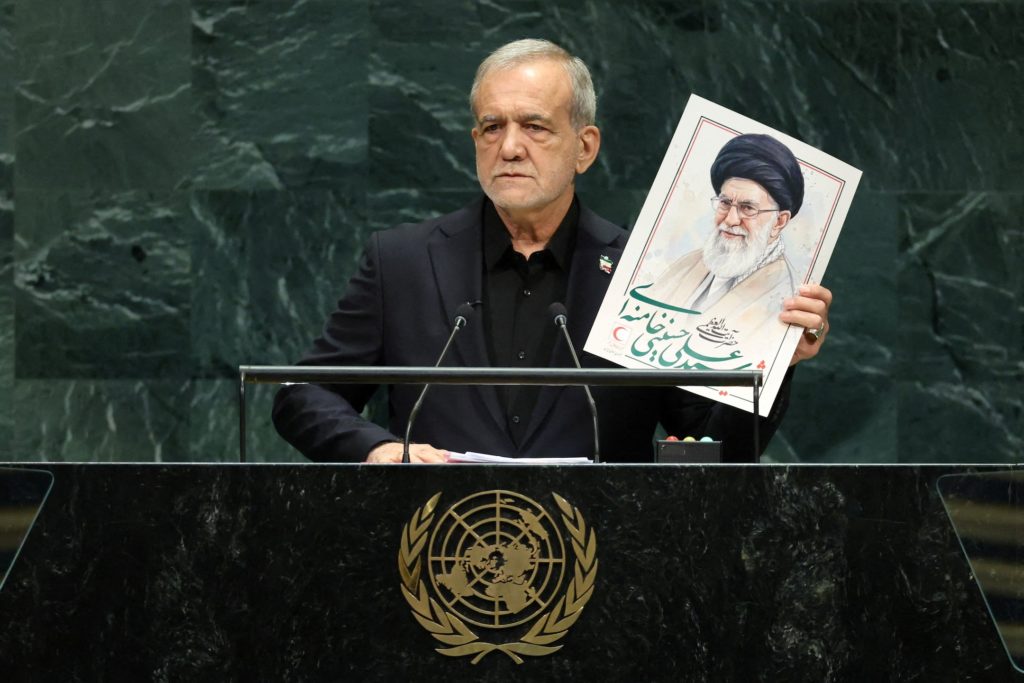
What happened
The account the coverage agrees on, with contested figures attributed rather than asserted. This is not one of the five framings below — it is the ground they all stand on.
At the UN General Assembly, Iranian President Masoud Pezeshkian responded Wednesday to President Trump's threats made the previous day. Pezeshkian said Iran would not bend to U.S. intimidation and defended his country's nuclear program. He characterized the U.S. and Israel as aggressors. Trump had threatened to escalate the war from the same stage. On the sidelines, U.S. and Iranian officials signaled no breakthroughs in mediated talks. Italian Foreign Minister Tajani called Iran's speech "very hard" and urged the country to "change tone" and "abandon its pursuit of nuclear weapons."
How the spectrum reads this story
The same event, summarised as five points on the political spectrum would each tend to frame it. These are generated by an AI model and are a starting point, not the last word.
Left
Trump's bellicose threats at the UN escalate dangerous militarism and undermine diplomacy. Iran's defensive response—asserting its sovereignty and right to nuclear capability—reflects legitimate resistance to U.S. hegemonic pressure and bullying. The U.S. and Israel's aggression in the region drives regional instability; real security requires recognizing Iran's legitimate security concerns and ending the cycle of threats and military posturing that empowers hardliners on both sides.
Center-left
Trump's inflammatory language at the UN undermines diplomatic efforts and raises tensions when dialogue is essential. Iran's response, while firm, signals it remains open to talks—a positive sign. The international community should encourage both sides to step back from threats and pursue serious negotiations. Iran's nuclear program remains a legitimate concern that requires diplomatic resolution, not ultimatums.
Center
Both sides used the UN platform to air grievances rather than seek common ground. Trump's threat and Iran's defiant response reflect the deep mistrust between Washington and Tehran, with neither side signaling flexibility. Tajani's call for Iran to change tone suggests international frustration that public posturing is drowning out quiet diplomacy. Real progress requires both leaders to lower the temperature and allow negotiators room to work.
Center-right
Iran's aggressive rhetoric and continued pursuit of nuclear weapons remain a serious regional threat. While Trump's warnings may be blunt, they reflect justified concern about Iran's destabilizing activities and nuclear ambitions. Iran claims openness to talks but defends its nuclear program unconditionally—making genuine negotiation difficult. International pressure, including firm messaging from the U.S., is necessary to push Iran toward meaningful concessions on its weapons program.
Right
Trump correctly identified the threat Iran poses and refused to be intimidated. Iran's defiant UN speech shows it will not yield to reasonable demands about its nuclear program, confirming that strong American leadership is the only language Tehran understands. Pezeshkian's blaming of the U.S. and Israel is propaganda masking Iran's regional aggression. Only sustained American resolve and clear red lines will deter Iranian expansion.
Hear two viewpoints debate it
Pick two viewpoints and Prism writes a short, six-turn exchange about this story in each one’s own voice — steel-manned, no winner declared. Each pairing is written once and then saved for every reader. The voices are AI syntheses of a tradition, not real people.
New pairing — Prism will write it now.
How each outlet covered it
Every outlet that reported this event, with the photograph it chose. Picking a photo is a framing decision too.
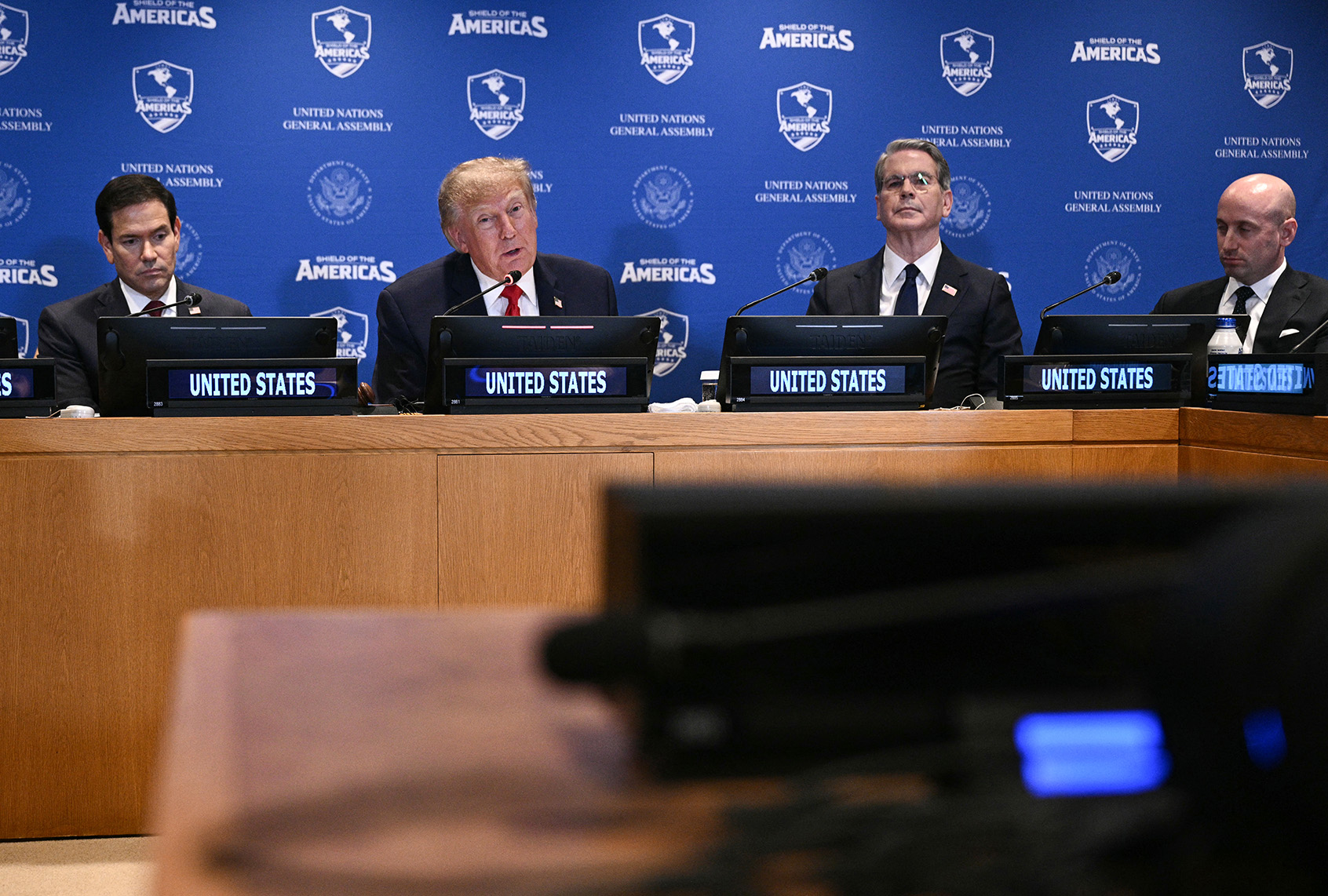 Salonnot ratedRead the original
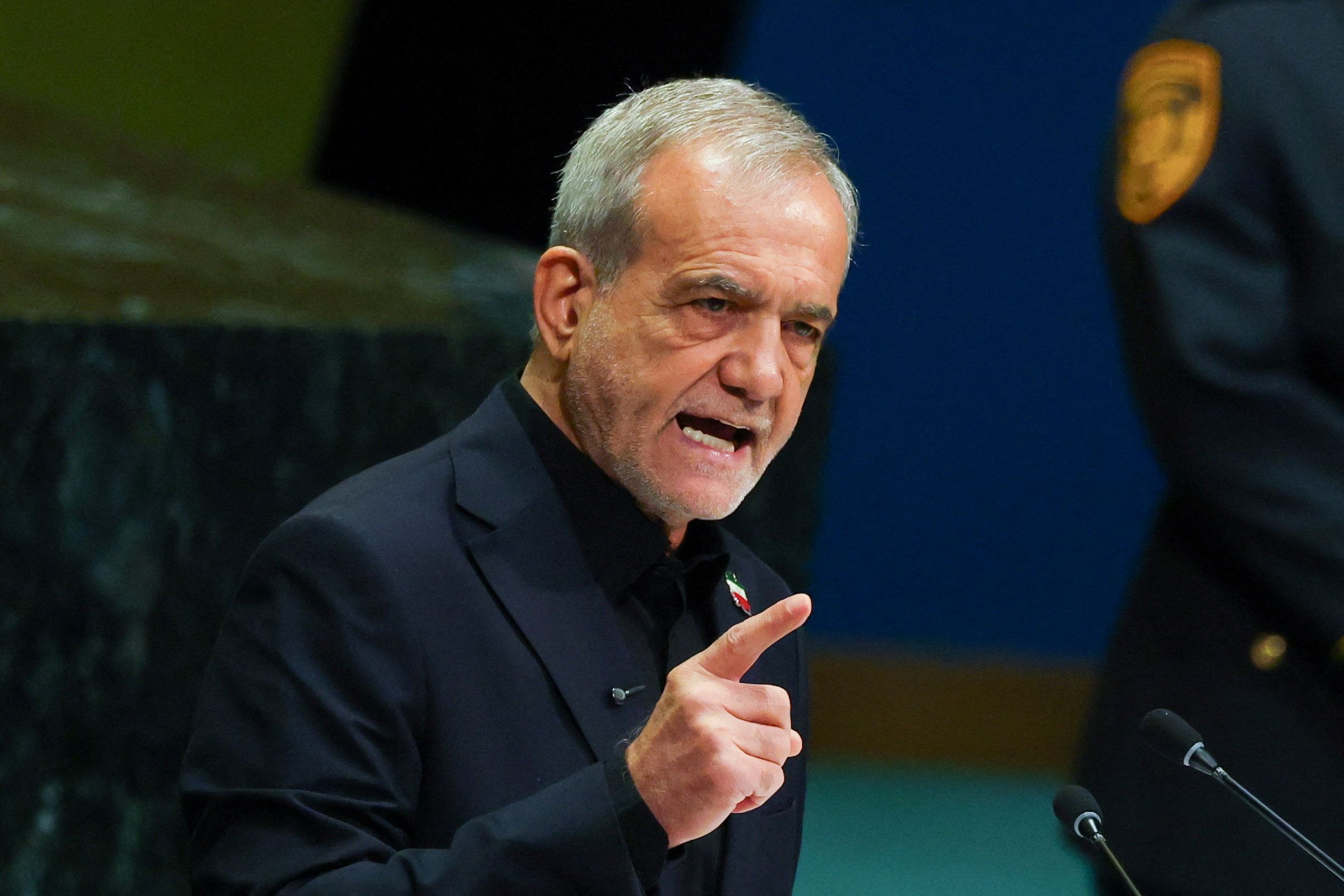 Semafornot rated
What's left outEmphasizes Iran's stated willingness to negotiate, a detail other outlets mention less prominently or omit.
Read the original- PBS NewsHournot rated
Word choiceUses "escalate the war" to describe Trump's threat, emphasizing continuity with existing conflict rather than a new threat.
Read the original - ANSAnot ratedRead the original
- Christian Science Monitornot rated
FramingOpens with "lashing back," framing Iran's response as reactive rather than a separate statement, and uses "aggressors" as Iran's characterization in the headline itself.
Read the original
Prism is free and carries no advertising. Support it if it was useful.