Iran's President Pezeshkian gives defiant UN speech condemning US and Israel
Reported by
A dot shows how that piece reads — Prism rates articles, not outlets, and shows the words behind each placement below. No dot means the piece isn’t rated. How the ratings work
CNN
What happened
The account the coverage agrees on, with contested figures attributed rather than asserted. This is not one of the five framings below — it is the ground they all stand on.
Iranian President Masoud Pezeshkian addressed the UN General Assembly on September 23, 2026, a day after President Trump threatened to "annihilate" Iran from the same podium. Pezeshkian accused the US and Israel of illegal attacks on civilians and violating international law. He stated Iran would not be bullied but remained open to dialogue and diplomacy without accepting "the language of force." The US delegation walked out during his speech. Pezeshkian displayed photos of children he said were killed by US and Israeli bombs.
Developing story · 3 chapters
- Trump weighs military response to Iran as tensions escalate
- Trump threatens to 'annihilate' Iran in UN General Assembly address
- Iran's President Pezeshkian gives defiant UN speech condemning US and Israelyou are here
How each side framed the previous chapter
Compare these with the five framings below to see what moved as the story developed — and what each side kept saying regardless.
Left
Trump's threats of annihilation and genocide at the UN reveal the catastrophic human cost of a war he initiated without proper deliberation or domestic support. His casual language about destroying a nation and its people shows the moral bankruptcy of using military force as a negotiating tactic. The international community should condemn these threats and demand a diplomatic resolution that respects Iranian sovereignty and human life.
Center-left
Trump's inflammatory rhetoric at the UN—threatening to annihilate Iran—undermines diplomatic efforts and destabilizes an already volatile situation. While the administration frames this as negotiating leverage, such extreme threats make compromise harder and alarm allies. The war remains deeply unpopular domestically, and the president should pursue genuine negotiation rather than escalatory language that forecloses peaceful options.
Center
Trump's UN speech presents a difficult puzzle: he claims to want a deal while making annihilation threats, suggesting both negotiating positions coexist in his approach. The war's unpopularity at home is real and complicates his hand. Whether such brinkmanship actually advances negotiations or merely polarizes them depends on whether Iranian leadership reads it as a credible ultimatum or propaganda—and history suggests extravagant threats often backfire in diplomacy.
Center-right
Trump is signaling to Iran that serious consequences await if negotiations fail, while leaving the door open for a deal—a standard negotiating posture. His willingness to threaten force if necessary distinguishes his approach from predecessors who were seen as weak. The administration's focus on a resolution, whether through agreement or military means, reflects the need to end a conflict and restore stability in the region.
Right
Trump is finally showing strength against Iran after years of weakness from previous administrations. His willingness to threaten decisive action demonstrates that America will not be pushed around. By making clear the costs of continued defiance, he's actually creating an incentive for Iran to negotiate seriously. A president who credibly threatens force is more likely to achieve peace than one who appears irresolute.
How the spectrum reads this story
The same event, summarised as five points on the political spectrum would each tend to frame it. These are generated by an AI model and are a starting point, not the last word.
Left
The Iranian president rightly called out the US and Israel's documented history of killing Iranian civilians and destabilizing the Middle East—actions that constitute terrorism by any honest standard. Trump's threat to "annihilate" an entire nation is reckless warmongering that violates international law. Pezeshkian's dignified response, asserting Iran's sovereignty while remaining open to genuine diplomacy, contrasts sharply with American aggression and the walkout that revealed Washington's contempt for multilateral discourse.
Center-left
Pezeshkian's speech struck a measured tone, firmly rejecting Trump's inflammatory threats while affirming Iran's willingness to negotiate. His accusations about civilian casualties deserve serious consideration, and Trump's "annihilate" language was dangerously provocative. However, both sides need to move beyond rhetoric toward substantive diplomacy. The US walkout was counterproductive; dialogue—however difficult—remains the only path to reducing regional tensions and the risk of broader conflict.
Center
Both leaders used the UN platform to posture rather than solve problems. Trump's threat to annihilate Iran was reckless and unhelpful; Pezeshkian's accusations, while touching on real grievances, oversimplify a complex conflict. The US walkout was a missed opportunity for engagement, yet Iran's refusal to accept "the language of force" while itself engaged in the region's conflicts is selective. Real progress requires both sides to lower temperature, acknowledge legitimate security concerns, and pursue quiet diplomacy rather than public theater.
Center-right
Pezeshkian's speech, while calling for dialogue, came laden with one-sided accusations that ignore Iranian actions fueling regional instability. Trump's tough rhetoric reflects justified concern about Iran's nuclear ambitions, support for proxy militias, and threatening behavior toward Israel. The US walkout signaled resolve; legitimacy is not owed to speeches that distort the record. Any negotiations must be from a position of strength, with clear red lines on Iran's nuclear program and regional interference, not based on appeals to international law Iran itself has repeatedly violated.
Right
Pezeshkian's propaganda offensive—displaying photos to manipulate emotions while Iran sponsors terrorism across the region—shows why harsh language is necessary. Trump correctly identified the threat; Iran destabilizes the Middle East through proxies in Yemen, Syria, Lebanon, and Iraq. Appeals to "diplomacy" from a regime that chants "Death to America" are theater. The walkout was appropriate; rewarding such speeches with engagement only emboldens them. American strength, not compromise, is what deters Iranian aggression and protects allies like Israel.
Hear two viewpoints debate it
Pick two viewpoints and Prism writes a short, six-turn exchange about this story in each one’s own voice — steel-manned, no winner declared. Each pairing is written once and then saved for every reader. The voices are AI syntheses of a tradition, not real people.
New pairing — Prism will write it now.
How each outlet covered it
Where Prism places each piece — not the outlet in general — with the words from that piece that put it there, and the photograph the outlet chose. Picking a photo is a framing decision too.
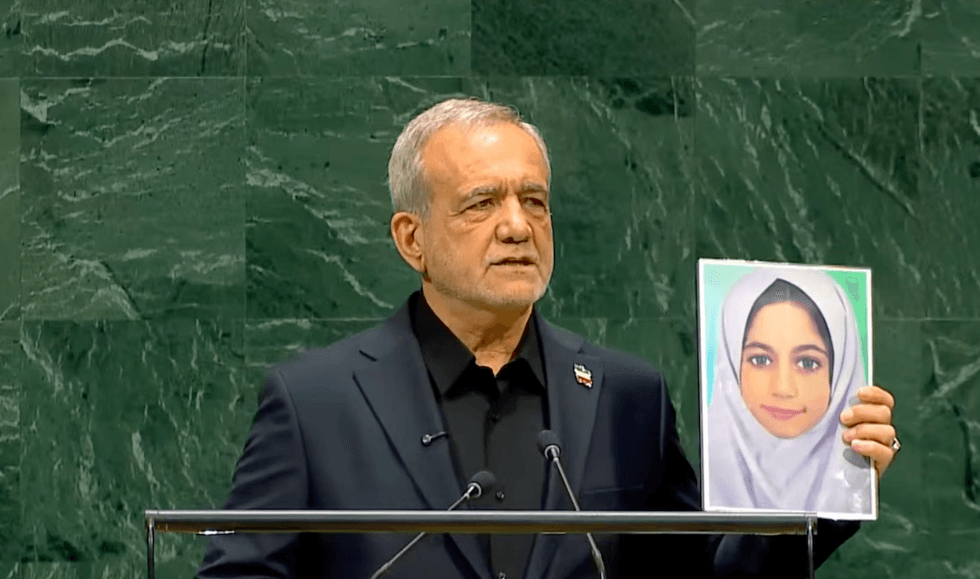 Common DreamsThis piece reads left
“President Donald Trump's illegal war of choice”
Word choiceCharacterizes the conflict as "illegal" and "war of choice" in its own voice, whereas other outlets report Iran's accusations about US actions without inserting legal judgments into the news summary.
Read the original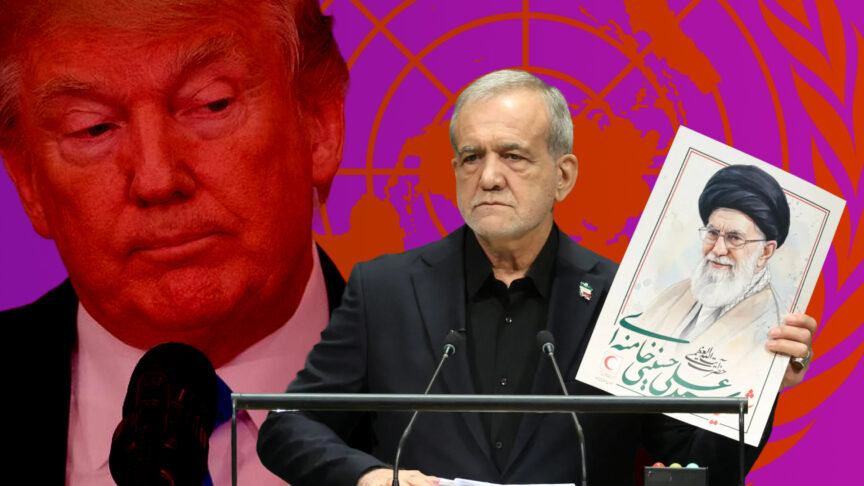 Novara MediaThis piece reads center-left
“US delegation storms out of the Iranian President's defiant speech”
Word choiceUses "storms out," which emphasizes the dramatic, confrontational nature of the walkout where other outlets describe it as a factual action.
Read the original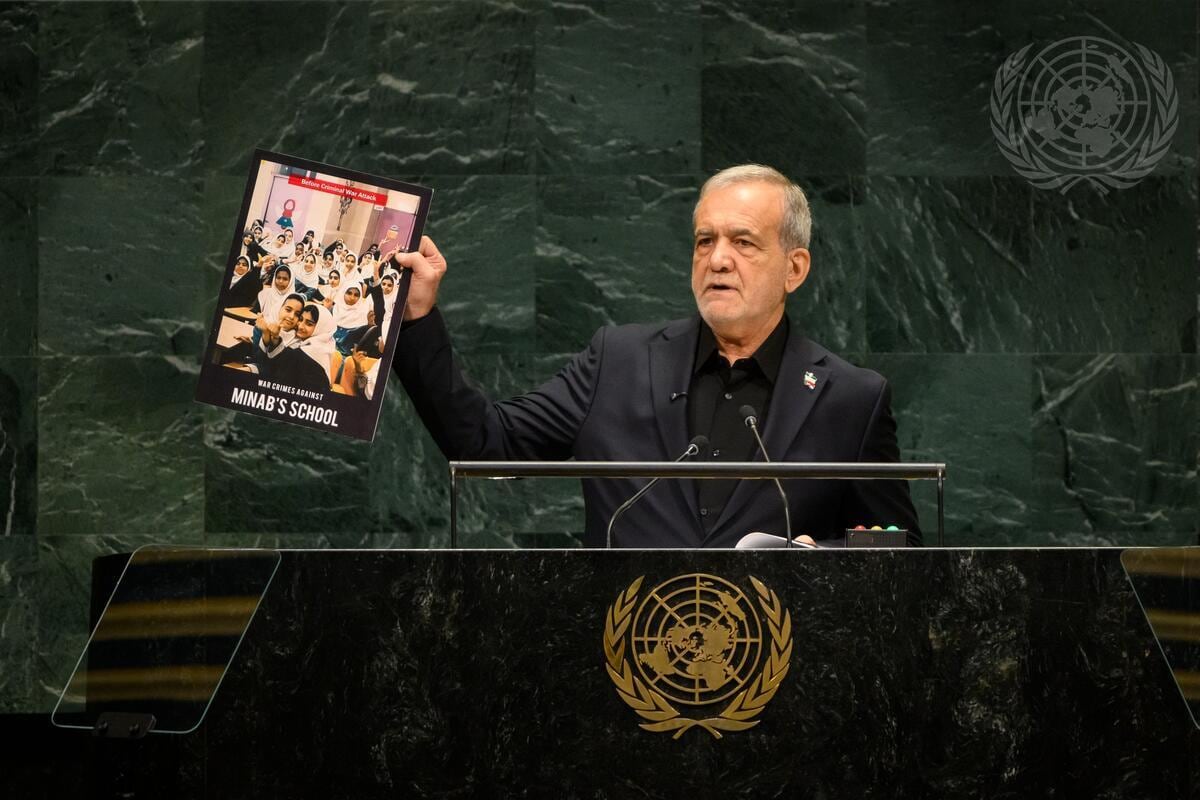 El Paísnot ratedRead the original
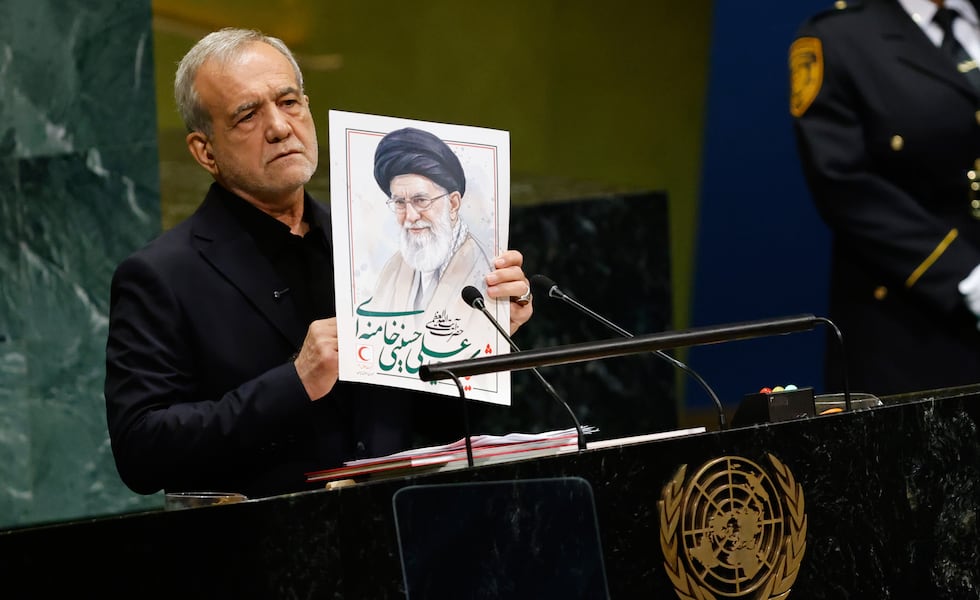 Deseret NewsThis piece reads center
“Iran's president responds to Trump at U.N. General Assembly”
Read the original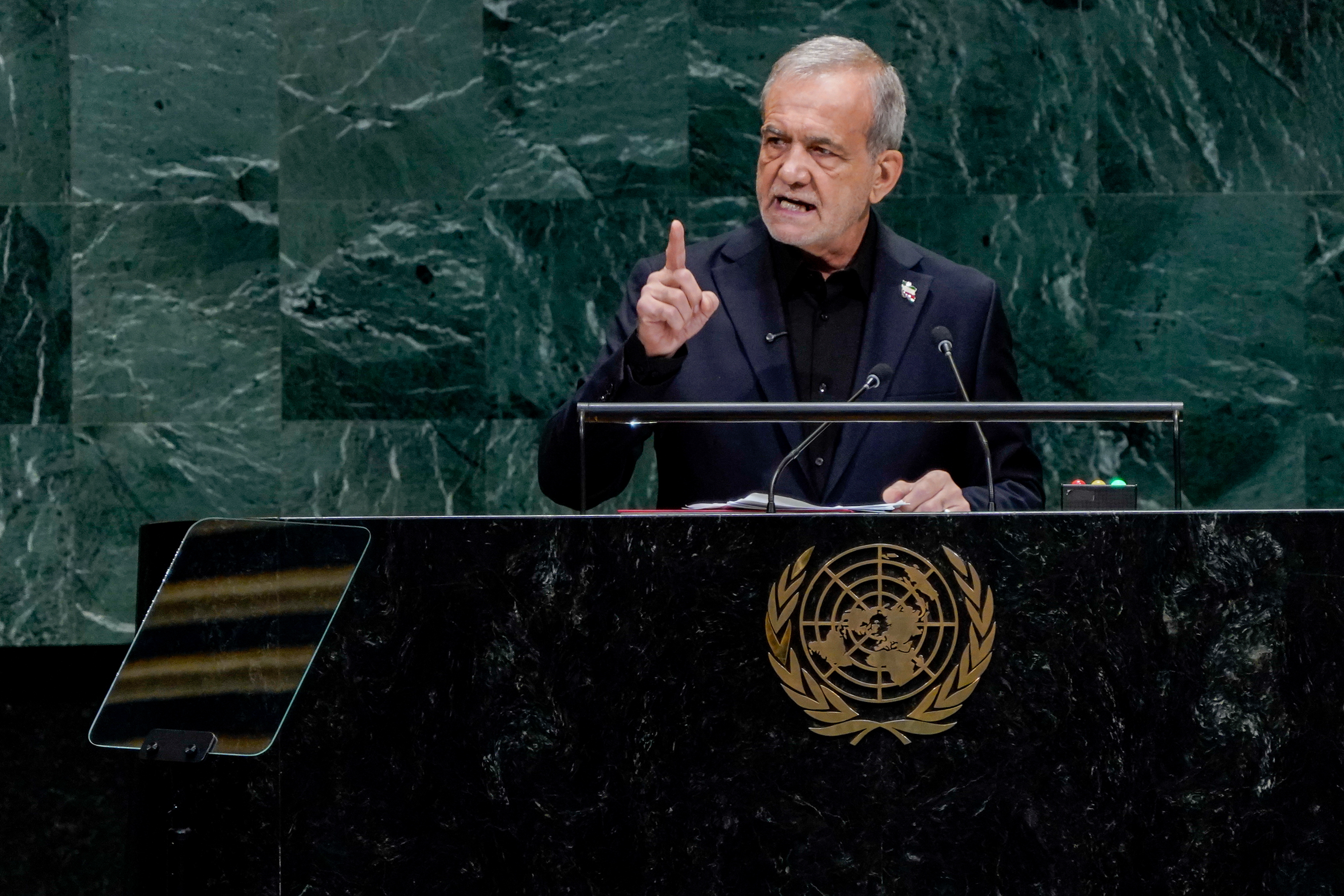 NPRThis piece reads center
“Iran's president gives a rare wartime speech at the U.N.”
Read the original- CNBCThis piece reads center
“Iran's president blames U.S., Israel for global instability in defiant UN speech”
Read the original  CNNThis piece reads center
“Iran's president says 'we will never bow our head' to Trump”
Read the original DawnThis piece reads center
“Pezeshkian says Iran will not surrender after Trump's annihilation threat”
Read the original
Placements are generated by an AI model from each article’s own headline and summary, and every quotation above is checked to be a real substring of that article before it is published. How this is done
Prism is free and carries no advertising. Support it if it was useful.