Houthis claim attacks on Saudi Arabia's Riyadh airport and military facilities
Reported by
A dot shows how that piece reads — Prism rates articles, not outlets, and shows the words behind each placement below. No dot means the piece isn’t rated. How the ratings work

What happened
The account the coverage agrees on, with contested figures attributed rather than asserted. This is not one of the five framings below — it is the ground they all stand on.
Yemen's Houthi rebels attacked Saudi Arabia's capital Riyadh on Saturday with ballistic missiles and drones, according to both Houthi claims and Saudi confirmation. Flames and smoke were seen near Riyadh's main airport and at an Aramco fuel depot nearby. The Houthis said they targeted "sensitive" sites in Riyadh and oil facilities in the port city of Yanbu. Saudi Arabia had issued air raid alerts overnight warning of potential danger in the capital.
How the spectrum reads this story
The same event, summarised as five points on the political spectrum would each tend to frame it. These are generated by an AI model and are a starting point, not the last word.
Left
The Houthi strike on Riyadh is a response to Saudi Arabia's relentless air campaign in Yemen's civil war, which has devastated the country and killed tens of thousands. The attack exposes how US-backed Saudi military operations create cycles of retaliation and instability across the region. This escalation reflects the failure of a military-first approach to Middle Eastern conflicts and the need for genuine diplomacy and an end to the war that has caused a humanitarian catastrophe.
Center-left
The Houthi attack on Riyadh marks a significant escalation in an already destabilizing conflict. While the Houthis' Iranian backing is concerning, the underlying driver is Saudi Arabia's years of military intervention in Yemen's civil war. The international community should push for a negotiated settlement rather than continued military escalation, which only deepens regional tensions and harms civilians caught in the crossfire.
Center
This attack demonstrates how Yemen's civil war has become a wider regional flashpoint with global consequences. Both sides—Saudi Arabia and the Iran-backed Houthis—have legitimate security concerns, but the cycle of military strikes and retaliation serves neither. A sustainable solution requires pressure on all parties to return to ceasefire negotiations, international mediation, and agreements that address underlying grievances while protecting critical infrastructure and civilian populations.
Center-right
The Houthi strike on Saudi Arabia's capital and oil infrastructure is a serious escalation that threatens regional stability and global energy security. Iran's backing of the Houthis shows how outside powers destabilize the Middle East through proxy forces. Saudi Arabia has legitimate rights to defend itself, and the international community should support its security while encouraging diplomacy. The real issue is containing Iranian influence in the region.
Right
Iran's Houthi proxies have launched a direct attack on a key US ally and critical global energy infrastructure in Riyadh. This aggression cannot be tolerated and demonstrates the dangers of a weak posture toward hostile regimes. Saudi Arabia must have the full backing it needs to defend itself and retaliate decisively. The US should strengthen its commitment to regional partners and make clear that attacks on their sovereignty and critical infrastructure will have serious consequences.
Hear two viewpoints debate it
Pick two viewpoints and Prism writes a short, six-turn exchange about this story in each one’s own voice — steel-manned, no winner declared. Each pairing is written once and then saved for every reader. The voices are AI syntheses of a tradition, not real people.
New pairing — Prism will write it now.
How each outlet covered it
Where Prism places each piece — not the outlet in general — with the words from that piece that put it there, and the photograph the outlet chose. Picking a photo is a framing decision too.
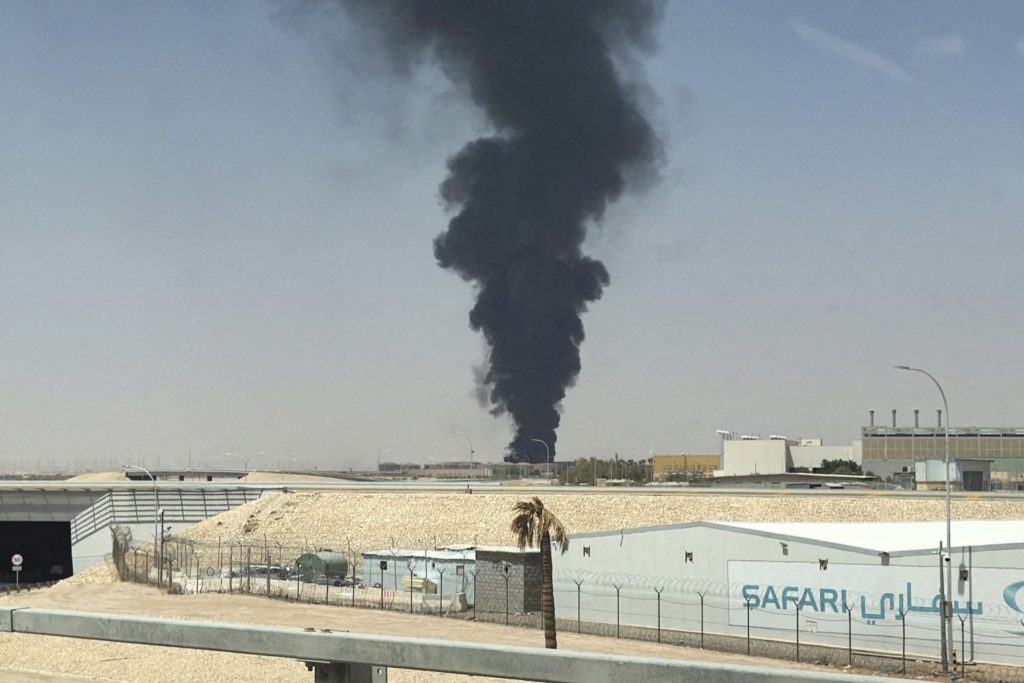 PBS NewsHourThis piece reads center-left
“latest front to erupt as a result of the Iran war”
FramingFrames the Yemen conflict explicitly as part of a broader Iran-US conflict, emphasizing regional escalation beyond the bilateral Saudi-Houthi dimension.
Read the original- Taipei TimesThis piece reads center
“Smoke rises near airport in Riyadh after air raid alert”
Read the original - The i PaperThis piece reads center
“Houthi rebels tried to attack the Saudi capital with a ballistic missile”
FramingOpens with the visible, dramatic consequence (smoke) rather than the action or claim, creating a scene-setting lead that other outlets reserve for later.
Read the original 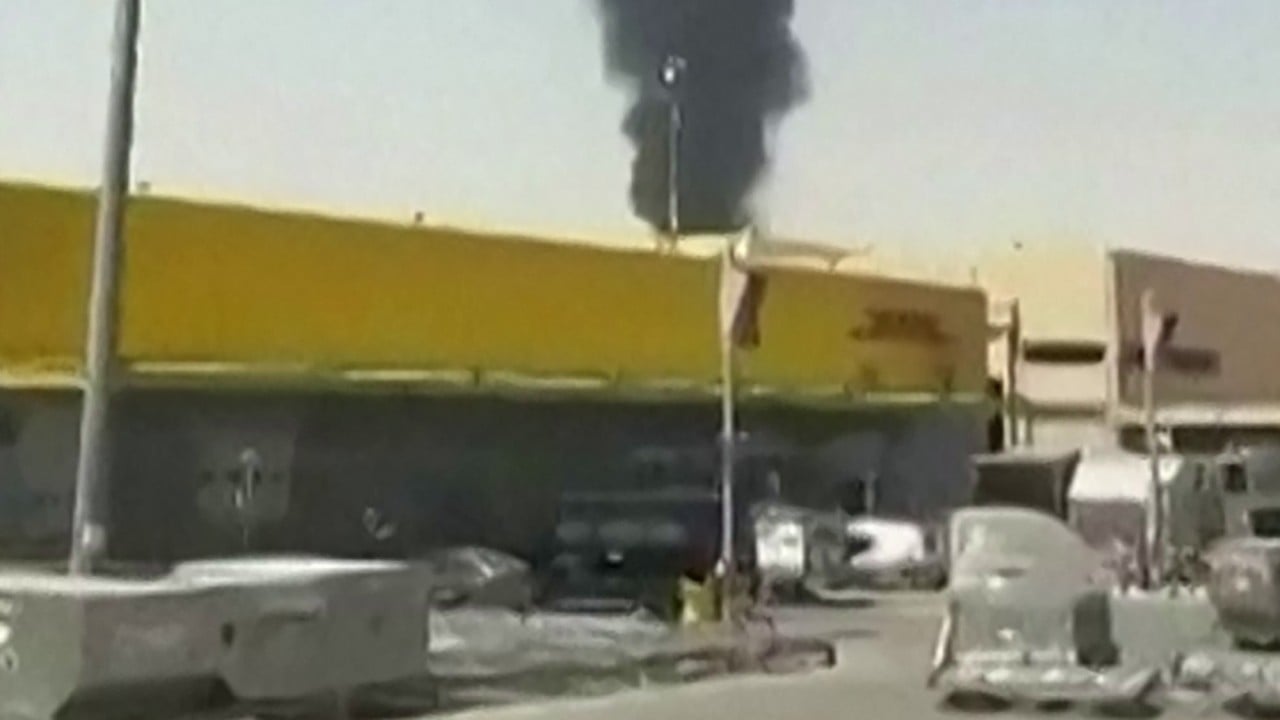 South China Morning PostThis piece reads center
“Houthis claim attacks on Saudi capital”
Read the original
 UPIThis piece reads center
“Iran-backed Houthis in Yemen said they carried out drone and missile attacks”
Read the original- Al-Monitornot ratedRead the original
- Al Jazeeranot ratedRead the original
- The Straits TimesThis piece reads center
“Saudi-led coalition says Houthis fired ballistic missile at Riyadh”
Read the original - StuffThis piece reads center-right
“Iranian-backed rebels vowed revenge over intensified air strikes”
FramingEmphasizes the revenge motive and Iranian backing in the opening context, where other outlets lead with the attack itself or Houthi claims of targeting specific sites.
Read the original

Placements are generated by an AI model from each article’s own headline and summary, and every quotation above is checked to be a real substring of that article before it is published. How this is done
Prism is free and carries no advertising. Support it if it was useful.