Abdul El-Sayed wins Michigan Senate race, becomes first Muslim elected to Senate
Reported by
A dot shows how that piece reads — Prism rates articles, not outlets, and shows the words behind each placement below. No dot means the piece isn’t rated. How the ratings work
What happened
The account the coverage agrees on, with contested figures attributed rather than asserted. This is not one of the five framings below — it is the ground they all stand on.
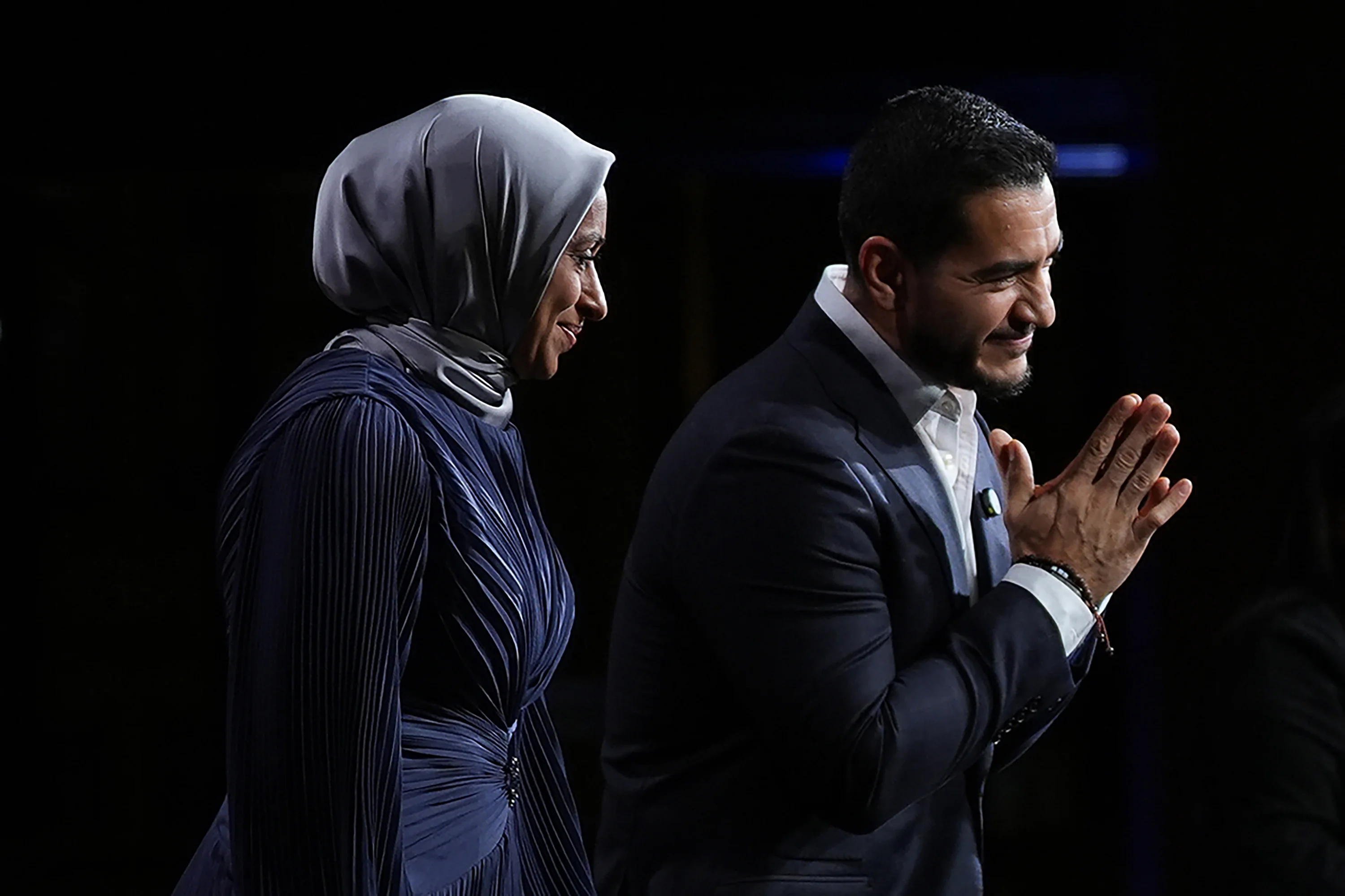
Abdul El-Sayed, a 41-year-old Michigan physician and Democrat, won the state's open US Senate seat on November 4, 2026, defeating Republican Mike Rogers. El-Sayed becomes the first Muslim elected to the US Senate. In his victory, El-Sayed expressed agreement with Trump's stated plan to cut military aid to Israel and called for redirecting such funding to domestic priorities like schools and healthcare. He also criticized AIPAC and characterized US military support for Israel as funding genocide and apartheid.
Developing story · 7 chapters
- Americans vote in 2026 midterm elections
- Speaker Mike Johnson announces he will not seek Republican leadership after midterm defeat
- JD Vance blames Iran war for Republican midterm losses
- Abdul El-Sayed wins Michigan Senate race, becomes first Muslim elected to Senateyou are here
- Senator Chuck Schumer speaks after Democrats win Senate control in midterms
- Annie Andrews wins South Carolina Senate seat, first openly gay senator elected
- Trump and Republicans blame Iran war for GOP midterm defeats
How each side framed the previous chapter
Compare these with the five framings below to see what moved as the story developed — and what each side kept saying regardless.
Left
The American public decisively rejected Republican governance and Trump's aggressive foreign policy, particularly the costly and unpopular Iran war that drained resources and national focus. Vance's willingness to break with Trump and name the war as the cause shows the depth of voter backlash. This result demonstrates that militarism and endless conflict abroad are not compatible with holding power at home, and offers an opportunity for Democrats to pursue a more restrained foreign policy.
Center-left
Voters turned decisively against the Republican party and Trump's Iran war policy in the midterms, handing Democrats control of Congress. Vance's public criticism of the war, even as vice president, signals growing recognition within GOP ranks that the conflict became a political liability. The result suggests Americans want a course correction on foreign policy and offers Democrats a mandate to pursue diplomatic alternatives to military intervention.
Center
The 2026 midterms produced a significant Democratic wave that flipped Congress. Both Vance and Trump acknowledged the Iran war's political impact, though they disagreed on whether the war itself or its economic consequences—rising oil prices—mattered more. Vance's somewhat independent assessment suggests internal Republican debate about whether the conflict was sound policy, a useful political lesson about the costs of sustained military commitments when public support erodes.
Center-right
Democrats won the 2026 midterms partly because of economic pressures, particularly oil price increases tied to the Iran conflict. While the war may have been strategically necessary, its domestic costs proved significant. Vance's candid assessment, though critical of Trump's judgment, reflects a legitimate debate within conservatism about balancing foreign commitments against domestic political viability and whether the administration adequately prepared the public for those costs.
Right
The 2026 midterms dealt Republicans a setback that Vance attributed to the Iran war, though Trump correctly noted that oil prices—the economic pain Americans felt—were the true culprit. The result shows that military commitments, however justified strategically, require public buy-in and cannot survive economic hardship at home. Republicans must learn that sustainable foreign policy requires either public support or economic insulation from its costs; neither was achieved here.
How the spectrum reads this story
The same event, summarised as five points on the political spectrum would each tend to frame it. These are generated by an AI model and are a starting point, not the last word.
Left
El-Sayed's victory represents a breakthrough for the progressive left: a Muslim candidate who openly opposes unconditional military aid to Israel and frames it as supporting genocide won a competitive swing-state Senate race despite a barrage of Islamophobic attacks and AIPAC spending against him. This signals that voters are ready to challenge the Democratic establishment's automatic support for Israeli military policies and demand that federal resources go to American schools and healthcare instead. It demonstrates that principled opposition to US Middle East militarism is now electorally viable even in purple states.
Drawn from 1 article placed here, below.
Center-left
El-Sayed's win is encouraging for Democrats seeking to build a diverse and inclusive party that reflects America's changing demographics. His victory in a swing state shows the party can compete effectively while accommodating different views on US foreign policy toward Israel—a shift from earlier eras when such dissent was riskier. His focus on domestic priorities like healthcare and education, paired with his willingness to engage with Trump's stated skepticism of foreign aid, suggests there may be room for bipartisan agreement on reorienting spending toward American needs.
Drawn from 2 articles placed here, below.
Center
El-Sayed's election reflects genuine complexity in American politics. Voters in Michigan backed a progressive Democrat while the national climate tilted rightward, and they did so partly by embracing his criticism of both his party's foreign policy consensus and AIPAC's political spending—concerns that cross traditional lines. Yet his agreement with Trump on reducing Israel aid should be read carefully: the two men likely mean very different things by it, and genuine foreign policy agreement between a Muslim progressive senator and this president remains to be tested. The result shows voters want real change and diversity, but also that electoral mandates are always mixed.
Drawn from 3 articles placed here, below.
Center-right
El-Sayed's victory is a reminder that Democrats remain competitive in key swing states and that cultural diversity is now a fact of American electoral politics. His criticism of AIPAC and military aid reflects a real debate within the Democratic coalition about the costs of foreign commitments. While his characterization of Israeli policy is sharply partisan, his focus on redirecting resources to domestic needs—healthcare, education, infrastructure—aligns with legitimate concerns many Americans hold about the proper balance between foreign and domestic spending, concerns that ought to be debated on their merits without dismissing them.
Drawn from 1 article placed here, below.
Right
Despite sustained public debate about foreign policy and America's overseas commitments, a progressive candidate who fundamentally opposes support for Israel's defense won election to the Senate in a swing state. This represents a significant shift in one major political party's orientation on a long-standing alliance and suggests that anti-Israel sentiment has gained mainstream traction within Democratic politics. The victory raises questions about whether American support for Israel will now be subject to greater political volatility, and whether voters understand the full implications of redirecting military aid away from a key Middle Eastern ally.
No article in this story reads this way. This is how the position tends to frame events like it — written by a model, not quoted from anyone.
Hear two viewpoints debate it
Pick two viewpoints and Prism writes a short, six-turn exchange about this story in each one’s own voice — steel-manned, no winner declared. Each pairing is written once and then saved for every reader. The voices are AI syntheses of a tradition, not real people.
New pairing — Prism will write it now.
How each outlet covered it
Where Prism places each piece — not the outlet in general — with the words from that piece that put it there, and the photograph the outlet chose. Picking a photo is a framing decision too.
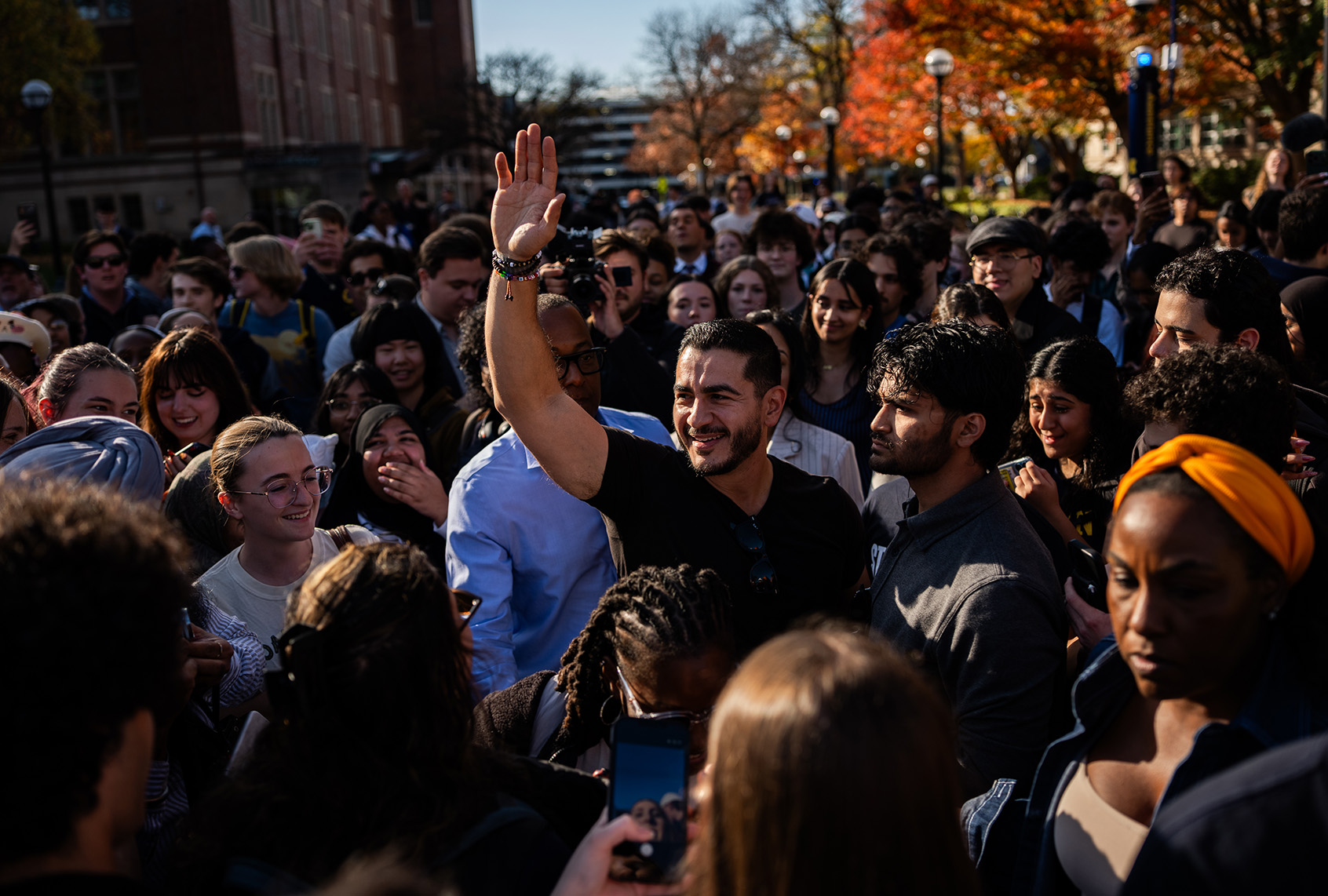 SalonThis piece reads left
“capped off a massive night for progressives”
Word choiceFrames the result primarily as a progressive victory in party terms, whereas other outlets emphasize El-Sayed's individual historic candidacy and Democratic performance more broadly.
Read the original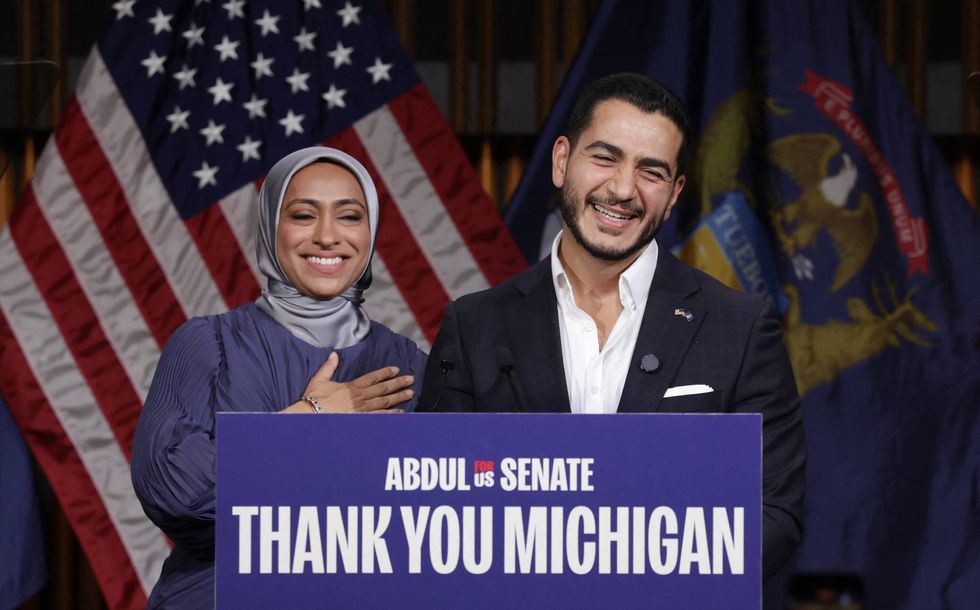 Common Dreamsnot rated
Word choiceUses intensifying language—'torrents' and 'bigoted'—where other outlets describe Islamophobic rhetoric more neutrally or factually.
Read the original The Tyeenot ratedRead the original
 VoxThis piece reads center-left
“first true swing-state test for the party's left faction”
FramingTreats El-Sayed's race as a test case for whether progressive politics can win outside urban bases, framing the result within internal party faction dynamics rather than as a straightforward electoral victory.
Read the original- Rolling StoneThis piece reads center-left
“overcame a barrage of Islamophobic hate”
Word choiceCharacterizes opposition to El-Sayed explicitly as Islamophobic, while other outlets mention Islamophobic rhetoric without labeling all opposition as such.
Read the original - NPRThis piece reads center
“discusses his historic victory, an unlikely agreement with Trump”
Read the original  Straight Arrow Newsnot ratedRead the original
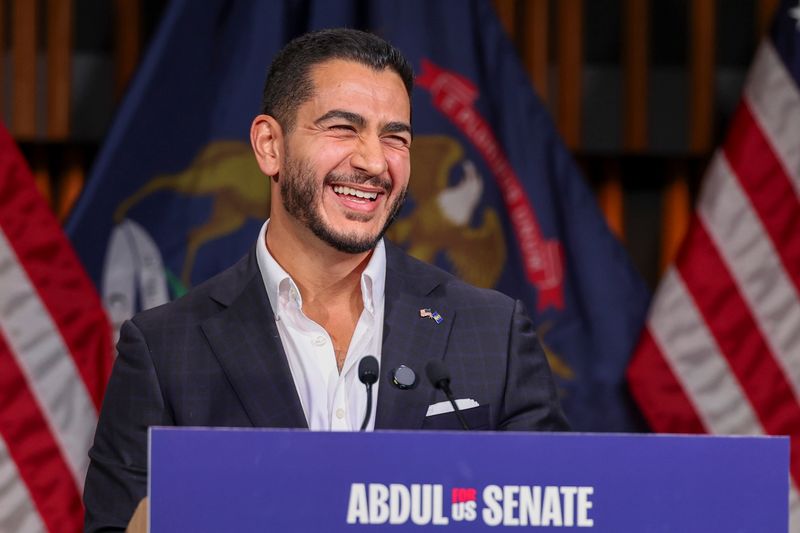 Daily MaverickThis piece reads center
“preserving a crucial Democratic seat in the party's fight for Senate control”
Read the original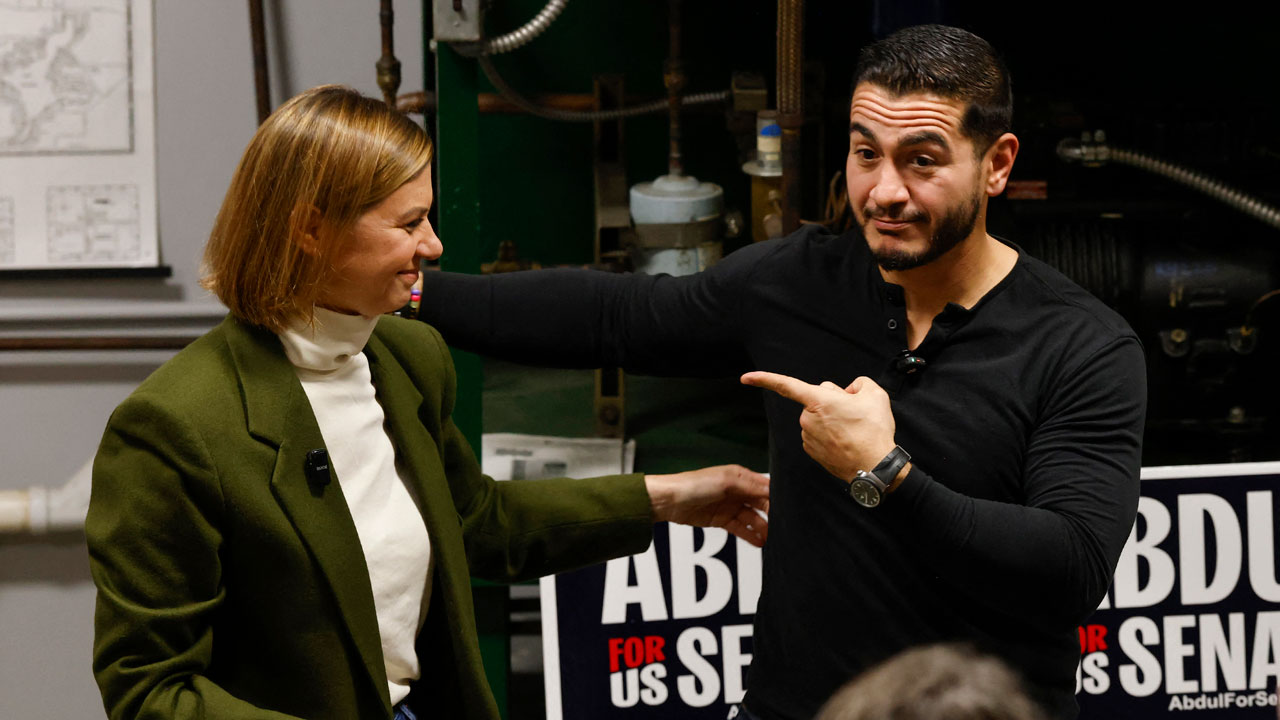 The Daily SignalThis piece reads center
“will defeat Republican Mike Rogers in Michigan's closely watched U.S. Senate”
Read the original YnetnewsThis piece reads center-right
“what he calls genocide and apartheid”
FramingAttributes El-Sayed's characterization to him rather than stating it as fact, emphasizing that this is his framing rather than established description.
Read the original- Breitbartnot ratedRead the original
Placements are generated by an AI model from each article’s own headline and summary, and every quotation above is checked to be a real substring of that article before it is published. How this is done
Prism is free and carries no advertising. Support it if it was useful.