Trump launches intensified Islamophobic attacks against Michigan Senate candidate Abdul El-Sayed
Reported by
A dot shows how that piece reads — Prism rates articles, not outlets, and shows the words behind each placement below. No dot means the piece isn’t rated. How the ratings work

What happened
The account the coverage agrees on, with contested figures attributed rather than asserted. This is not one of the five framings below — it is the ground they all stand on.
At a Sunday campaign rally in Michigan, President Trump made anti-Muslim remarks about Abdul El-Sayed, the Democratic nominee for U.S. Senate who would be the first Muslim senator if elected. Trump called El-Sayed a "jihadist," invoked 9/11, suggested he should pass through a metal detector before entering the Senate, and claimed an El-Sayed victory would mean canceling Christmas. El-Sayed, Senator Bernie Sanders, and a Trump 2024 supporter responded critically to the attacks.
How the spectrum reads this story
The same event, summarised as five points on the political spectrum would each tend to frame it. These are generated by an AI model and are a starting point, not the last word.
Left
Trump's resort to overtly Islamophobic rhetoric—calling El-Sayed a jihadist, invoking 9/11, suggesting he needs a metal detector in the Senate—exposes how the far right weaponizes religious bigotry to maintain power. These aren't isolated comments but a calculated strategy to stoke fear and exclude Muslims from political participation. The attacks reveal the racism baked into American institutions and why dismantling systemic discrimination is essential, not optional.
Drawn from 2 articles placed here, below.
Center-left
Trump's anti-Muslim attacks on El-Sayed represent a dangerous escalation of campaign rhetoric. Calling someone a jihadist without evidence, invoking 9/11 to attack a political opponent, and suggesting he shouldn't be allowed in the Senate cross basic lines of decency and democratic norms. These comments stigmatize an entire religious community and undermine the principle that all Americans can participate equally in politics regardless of faith.
Drawn from 3 articles placed here, below.
Center
Trump's comments about El-Sayed are inflammatory and inappropriate for a presidential candidate, using religious identity as a campaign weapon rather than addressing policy differences. That said, El-Sayed's record and positions deserve scrutiny on their merits. The incident highlights how both parties sometimes prioritize identity and symbolism over substance, and how campaigns increasingly resort to personal attacks rather than serious debate about governing.
No article in this story reads this way. This is how the position tends to frame events like it — written by a model, not quoted from anyone.
Center-right
While Trump's rhetoric was intemperate, concerns about El-Sayed's actual positions and associations merit serious discussion without being dismissed as bigotry. Voters have legitimate questions about any candidate's views, particularly on national security and religious values. The left's reflexive charge that any criticism of a Muslim politician is Islamophobic shuts down necessary debate and prevents voters from making informed choices based on policy.
Drawn from 2 articles placed here, below.
Right
Trump raised legitimate questions about El-Sayed that the media and Democratic establishment refuse to engage honestly. His concerns about El-Sayed's extremism and unsuitability for the Senate reflect real vulnerabilities the left exploits by immediately crying Islamophobia. Americans have the right to vet candidates thoroughly, and Trump's willingness to speak bluntly about these issues—unlike cautious Republicans—is why his supporters trust him.
No article in this story reads this way. This is how the position tends to frame events like it — written by a model, not quoted from anyone.
Hear two viewpoints debate it
Pick two viewpoints and Prism writes a short, six-turn exchange about this story in each one’s own voice — steel-manned, no winner declared. Each pairing is written once and then saved for every reader. The voices are AI syntheses of a tradition, not real people.
New pairing — Prism will write it now.
How each outlet covered it
Where Prism places each piece — not the outlet in general — with the words from that piece that put it there, and the photograph the outlet chose. Picking a photo is a framing decision too.
 TruthoutThis piece reads left
“Trump Calls for Metal Detector in Senate for El-Sayed in New Islamophobic Remark”
Read the original- VoxThis piece reads center-left
“Trump launched an anti-Muslim attack against El-Sayed”
Word choiceUses "vicious" in the headline, which is a judgment adjective; other outlets describe the remarks as anti-Muslim or Islamophobic without such loaded language.
Read the original  BBCThis piece reads center-left
“verbal assault on El-Sayed”
Word choice"Verbal assault" is more dramatic and judgmental than "attacks" or "remarks" used elsewhere; the phrasing emphasizes the severity and aggression of Trump's language.
Read the original The HillThis piece reads center-left
“Trump is intensifying his anti-Muslim attacks”
Read the original National ReviewThis piece reads center-right
“defend his faith as a way of distracting from his own extremism”
Read the original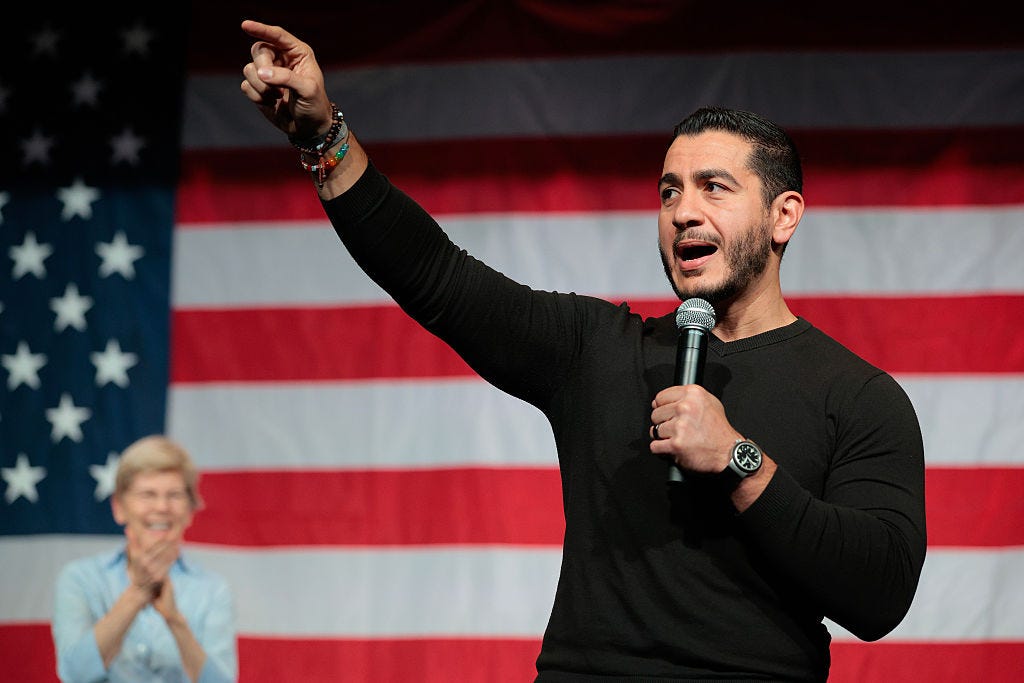 The Free PressThis piece reads center-right
“The Democratic Case Against Abdul El-Sayed”
What's left outOmits Trump's role entirely and frames the story as criticism from within the Democratic party, leaving readers unaware of Trump's specific anti-Muslim remarks.
Read the original
Placements are generated by an AI model from each article’s own headline and summary, and every quotation above is checked to be a real substring of that article before it is published. How this is done
Prism is free and carries no advertising. Support it if it was useful.