US Supreme Court allows Trump administration to resume rapid deportations to third countries
Reported by
A dot shows how that piece reads — Prism rates articles, not outlets, and shows the words behind each placement below. No dot means the piece isn’t rated. How the ratings work
What happened
The account the coverage agrees on, with contested figures attributed rather than asserted. This is not one of the five framings below — it is the ground they all stand on.
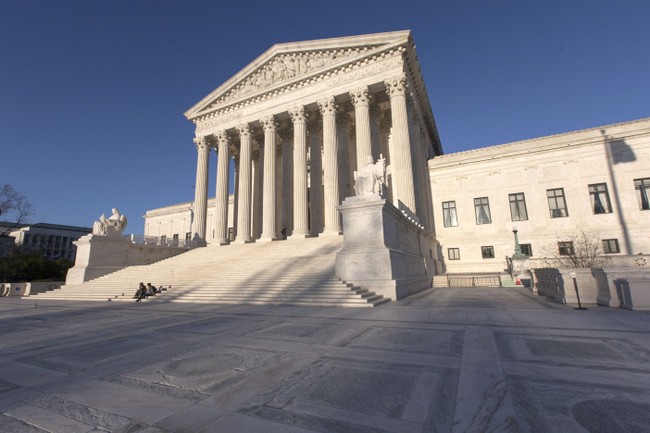
The U.S. Supreme Court issued a temporary order on Tuesday allowing the Trump administration to resume deporting immigrants to countries other than their homelands while the justices consider the policy's legality in full arguments scheduled for December. The six-justice conservative majority lifted a lower-court decision that had blocked the practice. According to NDTV, the administration has deported approximately 25,000 people under such agreements to over two dozen countries, with the majority sent to Mexico. Liberal justices dissented from the ruling.
How the spectrum reads this story
The same event, summarised as five points on the political spectrum would each tend to frame it. These are generated by an AI model and are a starting point, not the last word.
Left
The Supreme Court's conservative majority has again prioritized executive power over fundamental due process rights. The policy of deporting people to countries where they have no legal status or family ties—without allowing them to contest the decision—violates both humanitarian law and constitutional principles. This ruling exposes how the courts have become an instrument of immigration enforcement rather than a check on executive overreach, abandoning vulnerable people to countries unprepared to receive them.
Center-left
While the Supreme Court will eventually rule on the policy's legality, the conservative majority's decision to lift the lower-court block allows mass deportations to proceed without due process safeguards. Deporting people to third countries where they have no connections raises serious humanitarian and legal questions about whether such deportations meet constitutional and international standards. The court should have preserved the status quo pending full briefing rather than giving the administration immediate license to continue.
Center
The Supreme Court's temporary ruling reflects a genuine constitutional tension: between the executive's broad authority over immigration enforcement and the judiciary's duty to ensure due process. The conservative majority's approach prioritizes administrative efficiency and prompt enforcement, while the dissenting liberals worry about protecting individuals from arbitrary removal. The court's decision to hear full arguments in December suggests the justices recognize the issue's complexity, and the temporary order allows both enforcement and legal development to proceed in parallel.
Center-right
The Supreme Court correctly recognized that the executive has substantial latitude to manage immigration enforcement, including directing deportations to third countries where feasible. Allowing the policy to continue while the court considers the legal question respects both effective border management and the separation of powers. The administration's existing agreements with other nations reflect diplomatic solutions to the immigration challenge, and courts should defer to such arrangements unless they clearly violate statutory law.
Right
The Supreme Court's decision is a proper recognition that immigration enforcement is an executive function, and the president has broad constitutional authority to remove aliens from the country. Third-country deportations are a practical solution that addresses the scale of illegal immigration while respecting the sovereignty of nations willing to participate. Lifting the lower-court obstruction allows the administration to execute lawful removal orders without endless litigation delays that benefit those challenging enforcement.
Hear two viewpoints debate it
Pick two viewpoints and Prism writes a short, six-turn exchange about this story in each one’s own voice — steel-manned, no winner declared. Each pairing is written once and then saved for every reader. The voices are AI syntheses of a tradition, not real people.
New pairing — Prism will write it now.
How each outlet covered it
Where Prism places each piece — not the outlet in general — with the words from that piece that put it there, and the photograph the outlet chose. Picking a photo is a framing decision too.
 The Guardiannot rated
FramingLeads with 'Conservative majority' as the active agent, highlighting the ideological composition of the court in a way other outlets do not emphasize in their openings.
Read the original NDTVnot rated
What's left outProvides the only concrete figures on the scale of deportations already executed under the policy, giving readers a sense of the practice's extent that most outlets omit.
Read the original SCOTUSblogThis piece reads center
“Supreme Court to hear argument on Trump administration's deportation”
Read the original NPRThis piece reads center
“U.S. Supreme Court sides with Trump administration in third-country deportations”
Read the original ABC NewsThis piece reads center
Headline changedwas “Supreme Court rules Trump admin can continue rapid deportations to 3rd countries”
“Supreme Court rules Trump admin can continue rapid deportations to 3rd countries”
Read the original AxiosThis piece reads center
“Supreme Court green-lights Trump's third-country deportations”
Read the original- Washington PostThis piece reads center
Headline changedwas “Supreme Court allows 'third country' deportations to resume for now”
“Supreme Court allows third-country deportations to resume for now”
Read the original  NYTThis piece reads center
Headline changedwas “Supreme Court Allows Rapid Third-Country Deportations, for Now”
“Supreme Court Allows Rapid Third-Country Deportations, for Now”
Read the original Financial Timesnot ratedRead the original
- CNBCThis piece reads center
“Supreme Court lets Trump resume third-country deportations”
Read the original - RedStateThis piece reads right
“SCOTUS Hands Trump Admin Major Win”
Word choiceFrames the ruling as a clear victory for the administration using sports-style language ('hands... win'), which emphasizes Trump's side prevailing over opposition.
Read the original
Placements are generated by an AI model from each article’s own headline and summary, and every quotation above is checked to be a real substring of that article before it is published. How this is done
Prism is free and carries no advertising. Support it if it was useful.