Supreme Court rejects Missouri's GOP-backed congressional map for third time
Reported by
A dot shows how that piece reads — Prism rates articles, not outlets, and shows the words behind each placement below. No dot means the piece isn’t rated. How the ratings work
What happened
The account the coverage agrees on, with contested figures attributed rather than asserted. This is not one of the five framings below — it is the ground they all stand on.
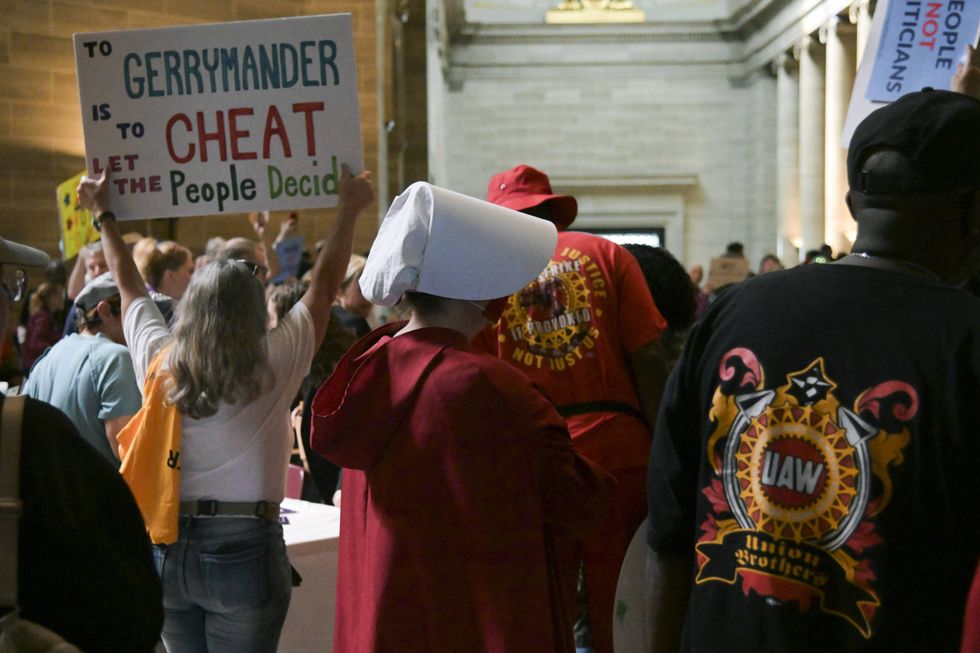
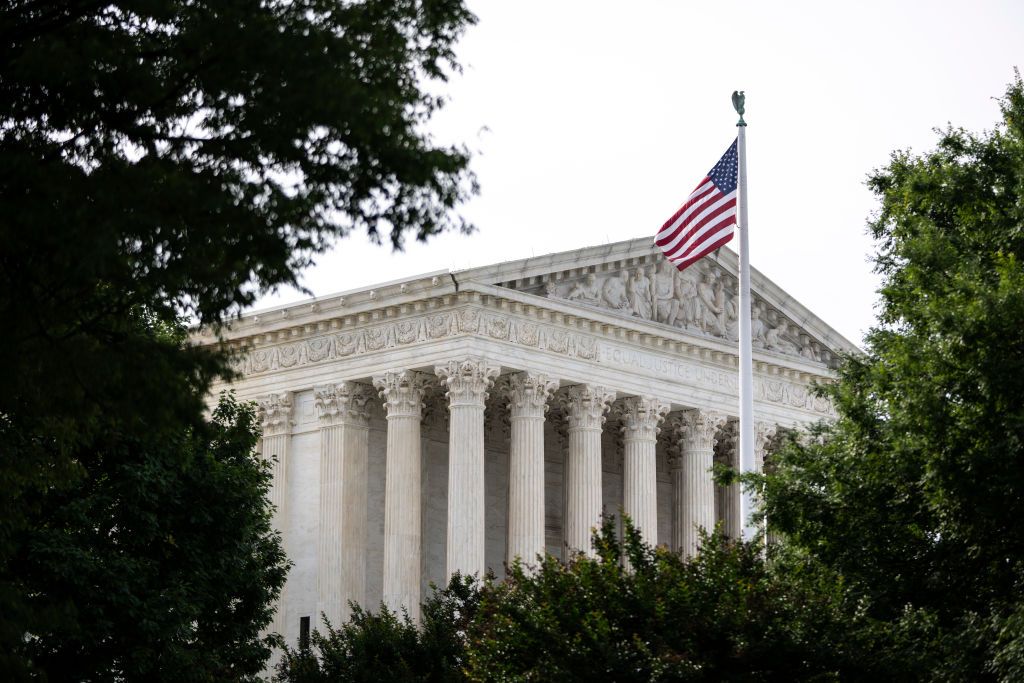
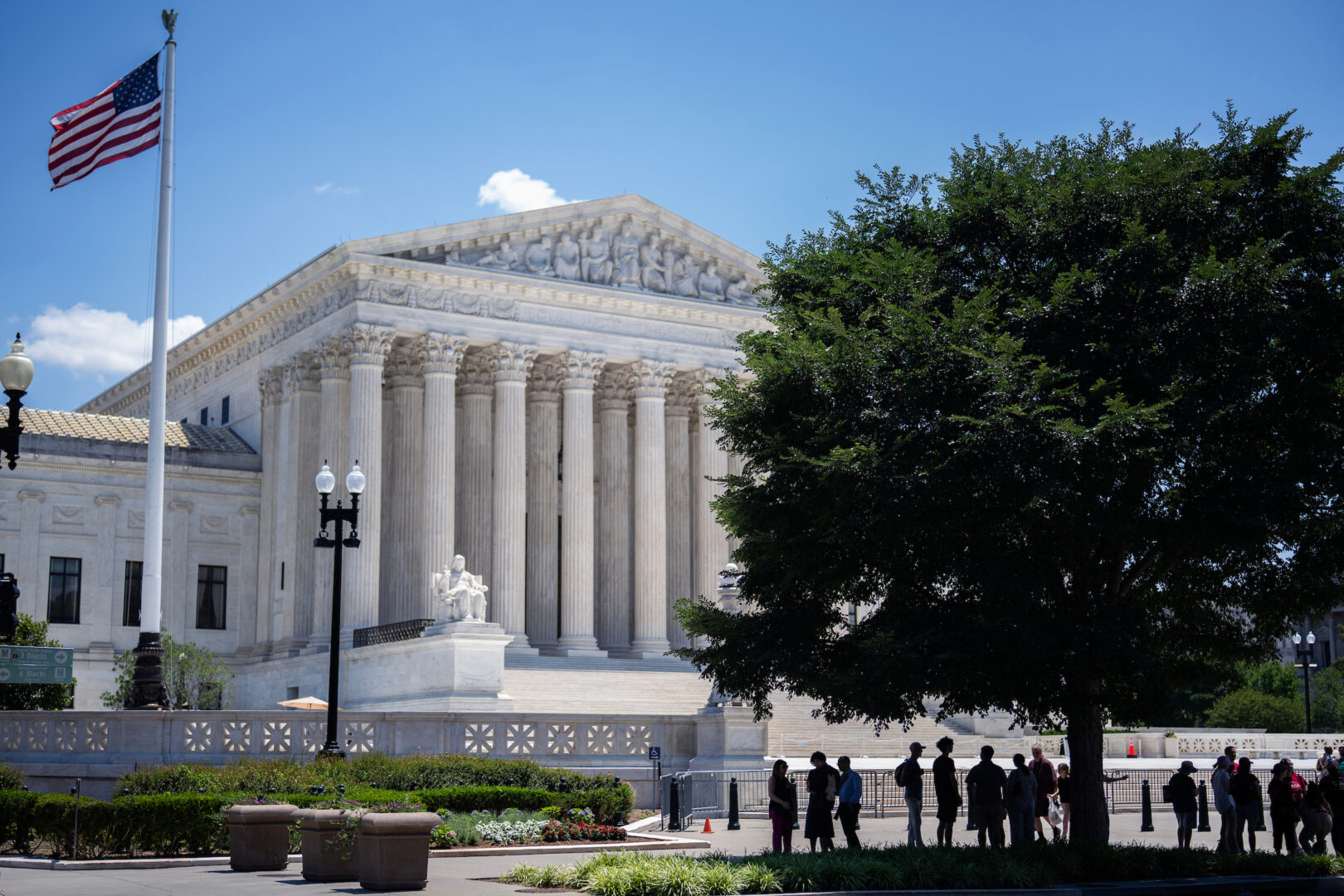
The U.S. Supreme Court on Friday blocked a Missouri congressional map for the third time, reinstating the 2022 boundaries. The GOP-controlled state legislature had enacted a new map in 2025 designed to flip a Kansas City district from a Black Democratic representative to Republican. Justice Brett Kavanaugh wrote that ordering reversion to the 2025 map mid-election would cause "electoral chaos." The ruling set aside a Monday decision by a three-judge federal appeals panel that had allowed the new map.
How the spectrum reads this story
The same event, summarised as five points on the political spectrum would each tend to frame it. These are generated by an AI model and are a starting point, not the last word.
Left
This is a significant victory against Republican gerrymandering, which exploits judicial deference to allow partisan map-drawing to go unchecked. The Supreme Court's willingness to block the map three times shows that even a conservative majority recognizes some constitutional limits on extreme partisan line-drawing. However, the broader problem persists: Republicans continue attempting to entrench power through redistricting, and courts intervene only when challenged repeatedly. Real democracy requires stripping partisan actors of redistricting power entirely and placing it in independent hands.
Center-left
The Court's repeated rejection of Missouri's map is encouraging and shows the judiciary can constrain the most egregious partisan gerrymandering. The map was explicitly designed to unseat a Black Democrat, which crosses a clear line. However, the fact that Republicans keep trying—three times—demonstrates how the current system incentivizes such behavior. States need stronger protections through independent commissions or clearer legal standards so courts don't have to intervene case by case.
Center
The Supreme Court's third intervention in this single map dispute reveals a messy institutional problem: the judiciary is being forced to manage election details that should ideally be resolved before they reach the courts. Both the lower federal panel's initial approval and the legislature's repeated attempts suggest confusion about what the law permits. The Court avoided immediate chaos by halting the map mid-election, but this constant litigation points to a need for clearer rules—whether through legislation, commission-based redistricting, or sharper judicial precedent—so states and courts don't repeat this cycle.
Center-right
While the Court's decision is legitimate, the repeated intervention reflects judicial overreach into matters traditionally left to elected representatives. States have constitutional authority to draw districts, and courts should set only narrow limits on that power. Three separate rulings on the same map suggests the judiciary is micromanaging redistricting rather than establishing clear boundaries. If the 2022 map was constitutionally acceptable, the reasons why it remains so after a legislature votes to change it deserve clearer explanation.
Right
This decision exemplifies judicial activism that constrains the elected branches' power to govern. Missouri's Republican legislature twice enacted new maps within its legitimate authority, yet judges blocked them based on subjective standards about what constitutes acceptable partisan consideration. The relentless third intervention to "prevent chaos" is pretextual—elections can accommodate map changes. The real chaos is that unelected judges repeatedly nullify the democratic choices of elected state officials, and the pattern shows courts are becoming tools to block Republican map-drawing while permitting Democratic gerrymandering elsewhere.
Hear two viewpoints debate it
Pick two viewpoints and Prism writes a short, six-turn exchange about this story in each one’s own voice — steel-manned, no winner declared. Each pairing is written once and then saved for every reader. The voices are AI syntheses of a tradition, not real people.
New pairing — Prism will write it now.
How each outlet covered it
Where Prism places each piece — not the outlet in general — with the words from that piece that put it there, and the photograph the outlet chose. Picking a photo is a framing decision too.
- Common DreamsThis piece reads left
“In Win for Missouri Voters, Supreme Court Smacks Down GOP's Rigged Map”
Word choiceDescribes the map as 'rigged' and frames the outcome as a direct win for voters, emphasizing legitimacy of the claim without attribution. Other outlets use more neutral terms like 'GOP-friendly' or 'GOP-backed.'
Read the original - LA Timesnot rated
FramingNames the specific district and its current representative's race, making the partisan intent more concrete and visible. Most other outlets refer generically to 'another GOP-leaning district' or omit the racial detail entirely.
Read the original - Courthouse NewsThis piece reads center-left
“Supreme Court shuts down Missouri GOP-gerrymandered map for third time”
Read the original  Straight Arrow Newsnot ratedRead the original
 SCOTUSblognot ratedRead the original
 Roll CallThis piece reads center
“Supreme Court again rejects Missouri effort to use GOP-friendly map”
Read the original UPIThis piece reads center
“Supreme Court rejects Missouri GOP's redistricting try for third time”
Read the original The Center SquareThis piece reads center
“The U.S Supreme Court blocked a Missouri congressional map favoring Republicans”
Read the original- CNBCnot rated
FramingExplicitly frames the ruling as a setback to Trump and Republican efforts to control Congress. Other outlets focus on the Supreme Court's action or Missouri's legislature; this ties the event directly to national political impact and leadership.
Read the original  The FederalistThis piece reads center-right
“SCOTUS Issues Final Order Blocking Missouri's GOP-Backed Map”
Read the original
Placements are generated by an AI model from each article’s own headline and summary, and every quotation above is checked to be a real substring of that article before it is published. How this is done
Prism is free and carries no advertising. Support it if it was useful.