Trump threatens to 'annihilate' Iran in UN General Assembly address
Reported by
A dot shows how that piece reads — Prism rates articles, not outlets, and shows the words behind each placement below. No dot means the piece isn’t rated. How the ratings work
What happened
The account the coverage agrees on, with contested figures attributed rather than asserted. This is not one of the five framings below — it is the ground they all stand on.
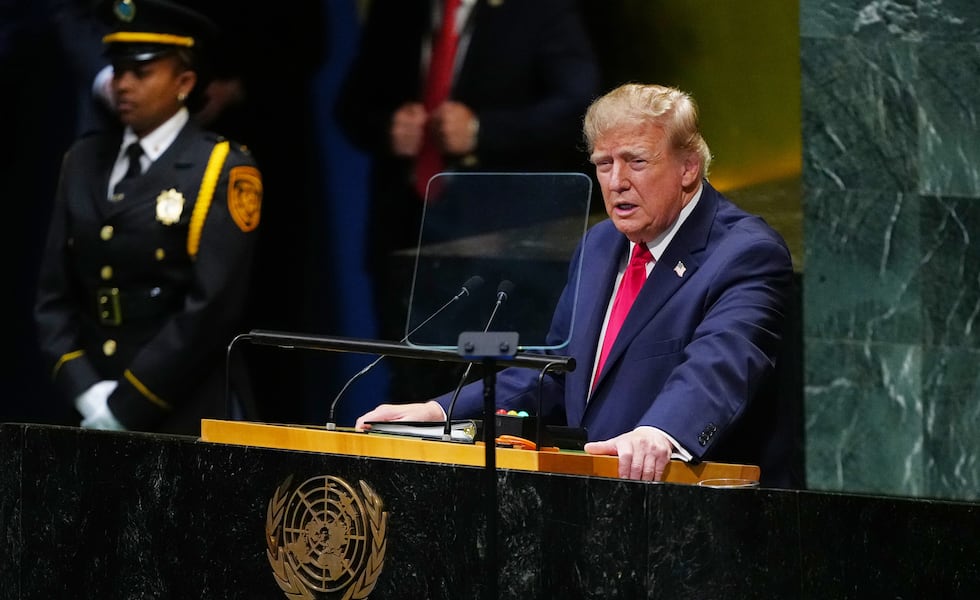
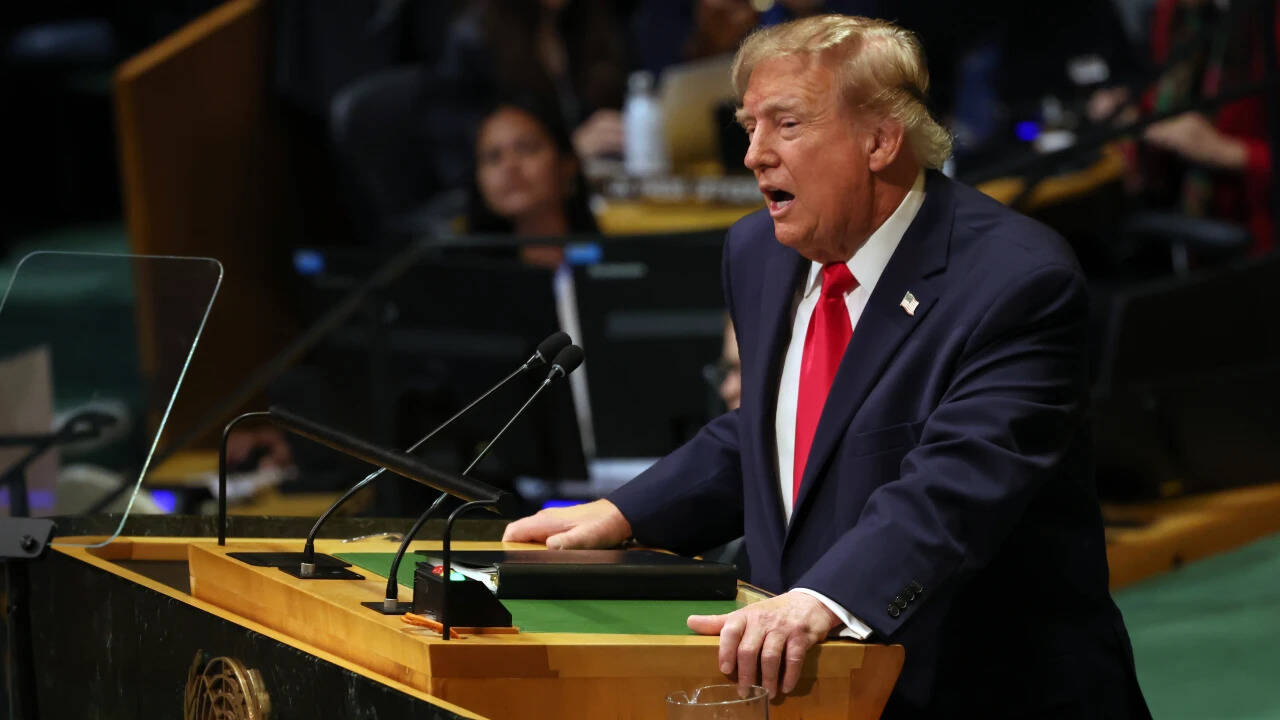
President Trump addressed the UN General Assembly on Tuesday, saying he faced a "big decision" on the ongoing Iran war and threatened to "annihilate" Iran or "drive them into hell with no chance of survival" if the country refused to make a deal. He also said he believed the conflict was coming to a resolution "one way or the other" and indicated that talks with Iran had been "good." The remarks came more than six months into a war that Trump launched alongside Israel in February.
Developing story · 2 chapters
- Trump weighs military response to Iran as tensions escalate
- Trump threatens to 'annihilate' Iran in UN General Assembly addressyou are here
How each side framed the previous chapter
Compare these with the five framings below to see what moved as the story developed — and what each side kept saying regardless.
Left
The Trump administration's escalating threats against Iran risk catastrophic war against a nation of 90 million people. Rather than pursue diplomacy, Trump is rattling sabers while his own advisers warn of political disaster. Iran's defensive posture—capturing surveillance equipment and warning of retaliation—is a rational response to U.S. aggression. The U.S. should heed Iran's conditions for negotiations: cease hostilities, restore frozen assets, and lift blockades that amount to economic warfare.
Center-left
Trump's bellicose rhetoric toward Iran raises serious concerns about another destructive Middle East conflict. While Iran's military actions are provocative, the administration should exhaust diplomatic channels before considering major military strikes. Trump's own team reportedly fears escalation could backfire politically and destabilize the region further. De-escalation through negotiation—addressing Iran's legitimate grievances about sanctions and asset freezes—would serve American interests better than military brinkmanship.
Center
The situation reflects genuine tension between two sides taking hardening positions. Iran's weapons threat and drone capture are confrontational, but Trump's public deliberation about "annihilating" an entire nation is extraordinarily risky rhetoric that could trigger unintended escalation. Both sides have leverage and stated conditions; quiet diplomatic back-channels might achieve more than public threats or military action. The uncertainty itself—Trump genuinely undecided—creates dangerous miscalculation risk that responsible statecraft should reduce.
Center-right
Iran continues to provoke the U.S. with military captures and weapons threats, demonstrating the failures of past diplomatic approaches. Trump is right to keep military options on the table as leverage for better terms. However, military action should be measured, targeted, and coordinated with allies rather than a sweeping campaign. The administration should clarify its precise demands and preferred resolution to focus international pressure on Iran and avoid unnecessary escalation that might unite regional actors against U.S. interests.
Right
Iran is testing American resolve by seizing U.S. military assets and threatening new weapons. The regime uses negotiation demands—unfreezing assets, lifting blockades—as cover for continued hostility. Trump is correct to maintain a credible military threat; weakness invites further Iranian aggression. However, any military response should be decisive and overwhelming to prevent prolonged conflict. America must not be constrained by international opinion or internal hand-wringing when national security is at stake.
How the spectrum reads this story
The same event, summarised as five points on the political spectrum would each tend to frame it. These are generated by an AI model and are a starting point, not the last word.
Left
Trump's threats of annihilation and genocide at the UN reveal the catastrophic human cost of a war he initiated without proper deliberation or domestic support. His casual language about destroying a nation and its people shows the moral bankruptcy of using military force as a negotiating tactic. The international community should condemn these threats and demand a diplomatic resolution that respects Iranian sovereignty and human life.
Center-left
Trump's inflammatory rhetoric at the UN—threatening to annihilate Iran—undermines diplomatic efforts and destabilizes an already volatile situation. While the administration frames this as negotiating leverage, such extreme threats make compromise harder and alarm allies. The war remains deeply unpopular domestically, and the president should pursue genuine negotiation rather than escalatory language that forecloses peaceful options.
Center
Trump's UN speech presents a difficult puzzle: he claims to want a deal while making annihilation threats, suggesting both negotiating positions coexist in his approach. The war's unpopularity at home is real and complicates his hand. Whether such brinkmanship actually advances negotiations or merely polarizes them depends on whether Iranian leadership reads it as a credible ultimatum or propaganda—and history suggests extravagant threats often backfire in diplomacy.
Center-right
Trump is signaling to Iran that serious consequences await if negotiations fail, while leaving the door open for a deal—a standard negotiating posture. His willingness to threaten force if necessary distinguishes his approach from predecessors who were seen as weak. The administration's focus on a resolution, whether through agreement or military means, reflects the need to end a conflict and restore stability in the region.
Right
Trump is finally showing strength against Iran after years of weakness from previous administrations. His willingness to threaten decisive action demonstrates that America will not be pushed around. By making clear the costs of continued defiance, he's actually creating an incentive for Iran to negotiate seriously. A president who credibly threatens force is more likely to achieve peace than one who appears irresolute.
Hear two viewpoints debate it
Pick two viewpoints and Prism writes a short, six-turn exchange about this story in each one’s own voice — steel-manned, no winner declared. Each pairing is written once and then saved for every reader. The voices are AI syntheses of a tradition, not real people.
New pairing — Prism will write it now.
How each outlet covered it
Where Prism places each piece — not the outlet in general — with the words from that piece that put it there, and the photograph the outlet chose. Picking a photo is a framing decision too.
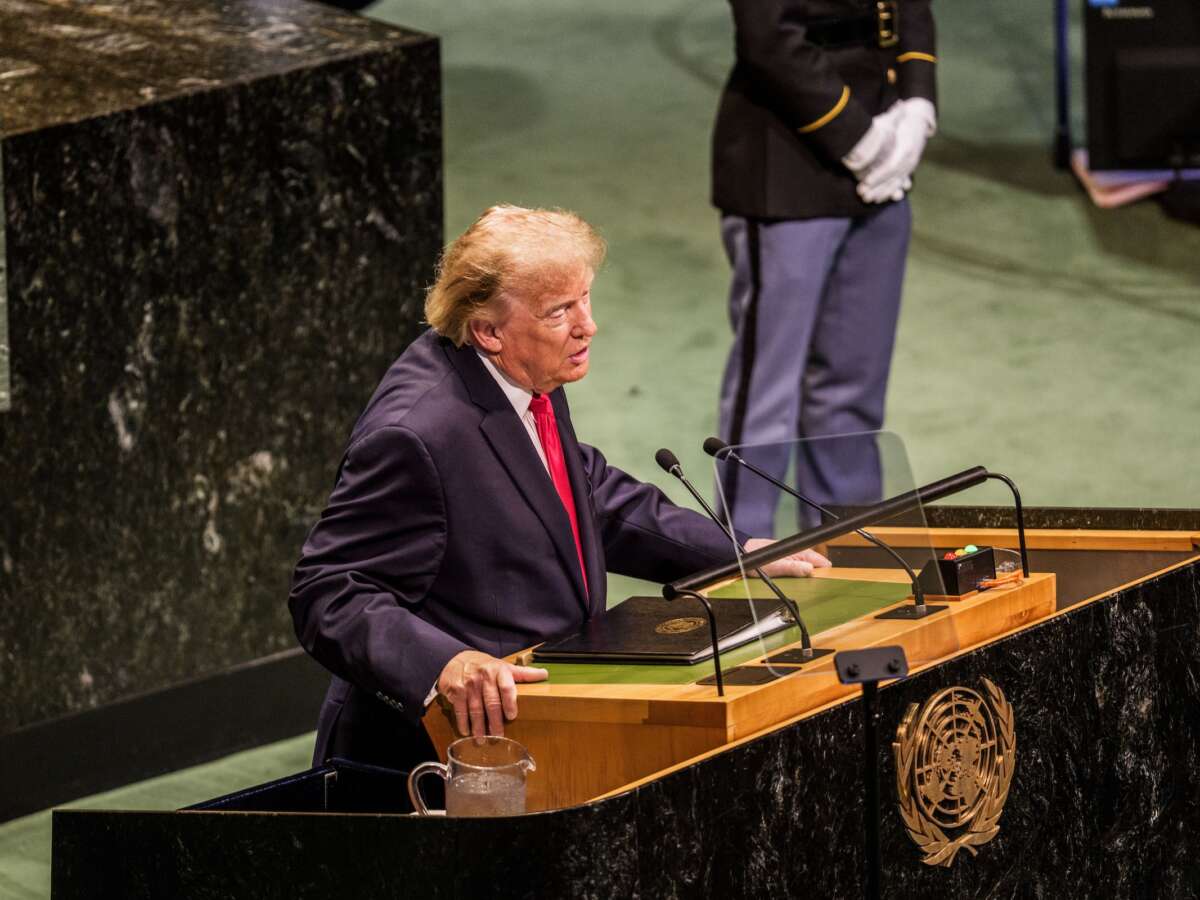 TruthoutThis piece reads left
“Trump Threatens Iran With Genocide in Address to UN General Assembly”
Word choiceLabels the threat as genocide in the headline itself, a legal and moral characterization not present in other outlets' framing.
Read the original- Mother JonesThis piece reads center-left
“completely destroying the country as a means to end the conflict he launched”
Word choiceFrames the threat as aimed at complete destruction of a country rather than military force in war, emphasizing the scope of the threatened action.
Read the original - LA Timesnot ratedRead the original
- Rolling StoneThis piece reads center-left
“while threatening war crimes against Iran”
Word choiceAdds a legal characterization (war crimes) not present in Trump's own statements or other outlets' descriptions of the threat.
Read the original - Washington PostThis piece reads center
“Trump warns U.N. he might 'annihilate' Iran”
Read the original - Deseret NewsThis piece reads center
“Trump talks Iran war, new 'super intelligence' in United Nations speech”
Read the original - Christian Science MonitorThis piece reads center
“Trump again threatens Iran, but suggests end of war is near”
What's left outEmphasizes Trump's framing of resolution and peace possibility over the annihilation threats, a different angle from outlets that lead with the threat.
Read the original - Politico EuropeThis piece reads center
“Trump talks peace, threatens annihilation of Iran in UNGA speech”
Read the original  BBCnot rated
Headline changedwas “Trump tells UN he has 'big decision' on whether to 'annihilate' Iran or make peace deal”
Read the original- CNBCThis piece reads center
“Trump slams Iran and Cuba, defends AI growth in boastful UN speech”
Read the original 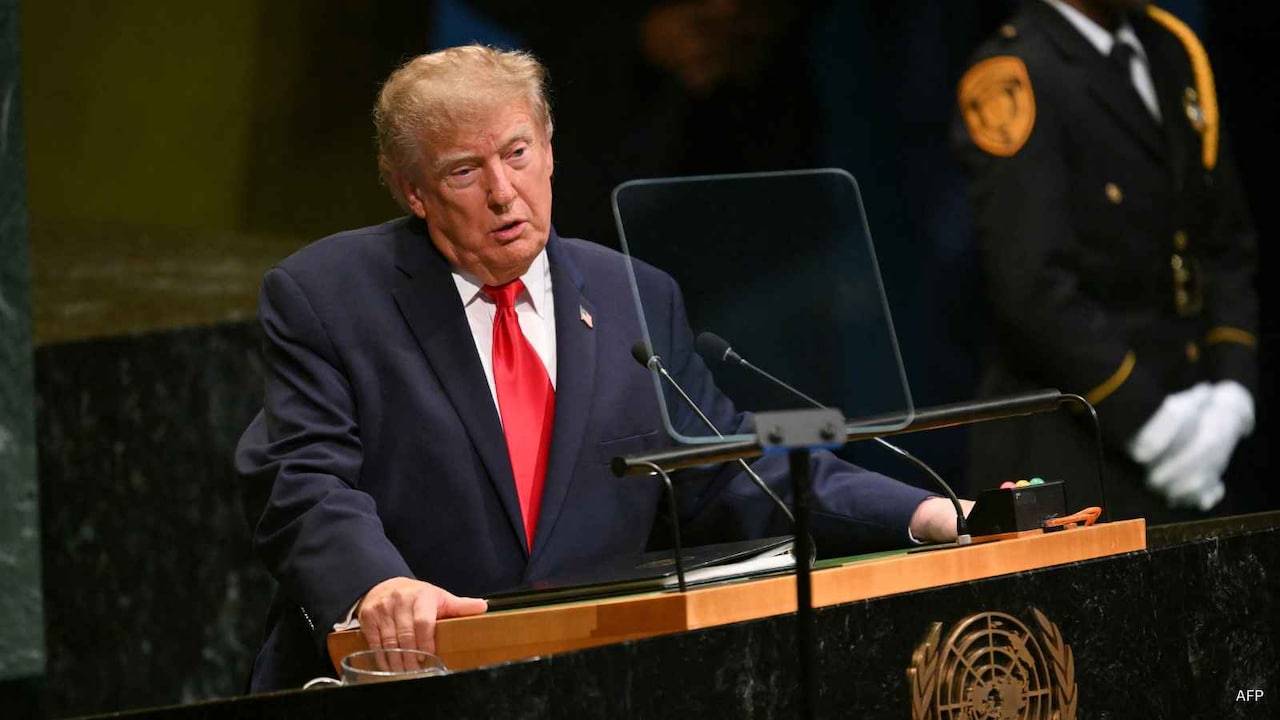 NDTVThis piece reads center
“After Threatening To "Annihilate" Iran, Trump Reveals "Good" Talks Happened”
Read the original- BloombergThis piece reads center
“Trump Threatens Iran Annihilation in Speech That Disregards UN”
Read the original - The Times of IndiaThis piece reads center
“From 'annihilate Iran' to 'super intelligence', Trump boasts of US power at UNGA”
Read the original - Washington Free BeaconThis piece reads center-right
“Big Decision' Coming on Iran, Threatens To 'Annihilate the Islamic Republic”
FramingQuotes Trump's most extreme phrasing directly in the headline without paraphrase, presenting his own words as the lead rather than summarizing the threat.
Read the original  PJ MediaThis piece reads center-right
“Iran's 'Vile Regime' a Stark Choice”
Word choiceUses 'vile regime' as an editorial descriptor, adopting language that marks the regime negatively rather than reporting Trump's threat neutrally.
Read the original
Placements are generated by an AI model from each article’s own headline and summary, and every quotation above is checked to be a real substring of that article before it is published. How this is done
Prism is free and carries no advertising. Support it if it was useful.