US orders embassy staff and families to depart Saudi Arabia due to Houthi threats
Reported by
A dot shows how that piece reads — Prism rates articles, not outlets, and shows the words behind each placement below. No dot means the piece isn’t rated. How the ratings work
What happened
The account the coverage agrees on, with contested figures attributed rather than asserted. This is not one of the five framings below — it is the ground they all stand on.
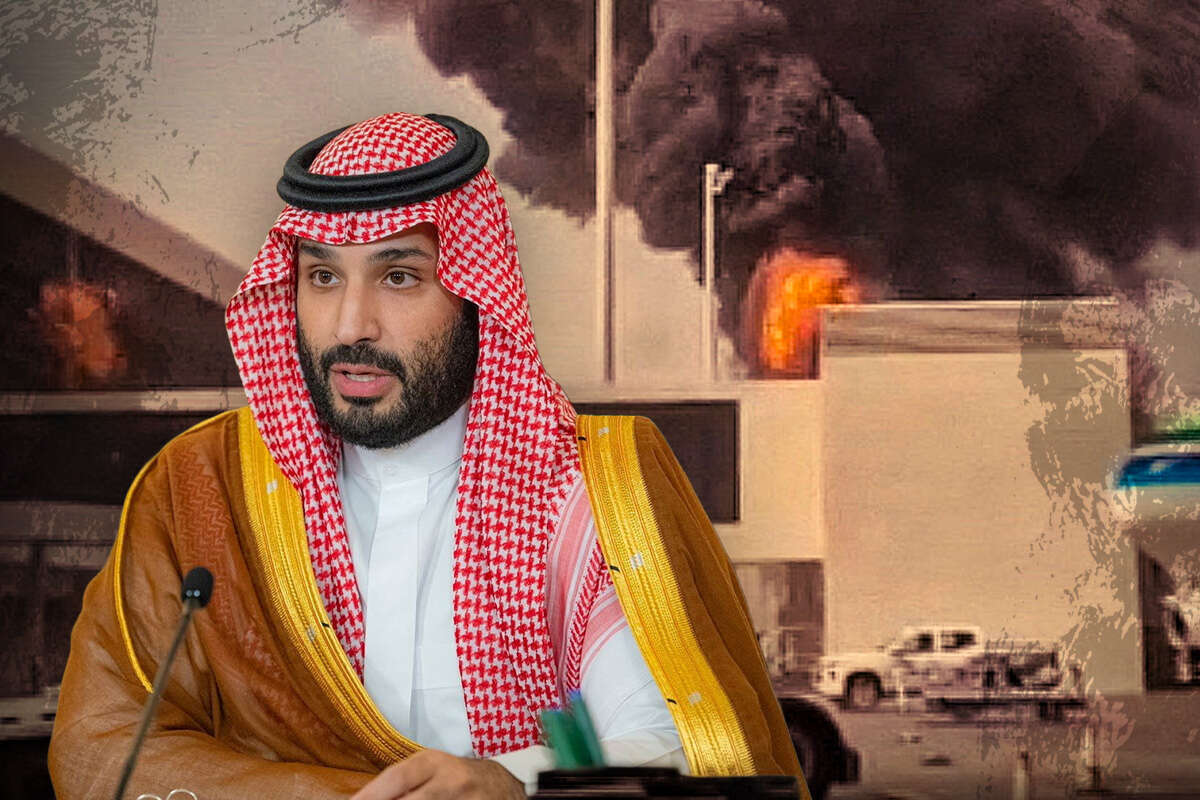
The U.S. State Department ordered the departure of non-essential embassy staff and their families from Saudi Arabia and other Gulf states (Jordan, UAE, Qatar, Bahrain) on Wednesday, citing sustained attacks by Yemen's Houthis. The order came after Houthi drone strikes killed at least one person, including an attack on Saudi Aramco's Shaybah oilfield, and damaged civilian airports and critical infrastructure. The U.S. military has also been quietly reducing its presence at Middle East posts due to threats from the Houthis and Iran.
How the spectrum reads this story
The same event, summarised as five points on the political spectrum would each tend to frame it. These are generated by an AI model and are a starting point, not the last word.
Left
The U.S. evacuation reflects the consequences of American military involvement in the region and support for Saudi Arabia's war in Yemen. The Houthis, responding to years of Saudi-led bombing campaigns that have devastated Yemen, now pose a direct threat to U.S. personnel. This escalation demonstrates how regional militarization and U.S. military positioning fuel cycles of retaliation rather than resolve underlying conflicts. A genuine regional de-escalation requires reckoning with America's role in fueling these tensions.
No article in this story reads this way. This is how the position tends to frame events like it — written by a model, not quoted from anyone.
Center-left
The evacuation is a necessary precaution given genuine security threats from Houthi attacks on infrastructure and civilians. However, it reflects a broader instability partly rooted in the Saudi-led war in Yemen, which the U.S. has supported. While protecting American personnel is essential, policymakers should also consider whether current regional strategies are sustainable or whether diplomatic efforts to address the underlying conflict deserve greater investment.
No article in this story reads this way. This is how the position tends to frame events like it — written by a model, not quoted from anyone.
Center
The State Department made a reasonable decision to protect embassy staff and families from documented Houthi attacks that have already caused casualties. Evacuations of non-essential personnel are standard practice when security deteriorates. The challenge is balancing necessary precautions with maintaining diplomatic presence and regional engagement. The order affects multiple Gulf states, suggesting U.S. officials assess this as a regional risk requiring a coordinated response rather than a crisis isolated to Saudi Arabia.
Drawn from 8 articles placed here, below.
Center-right
The U.S. is appropriately protecting its diplomats and military personnel from an increasingly aggressive threat. The Houthis, backed by Iran, have escalated attacks on civilian infrastructure and now pose direct danger to American staff. This evacuation underscores the need for stronger deterrence against Iranian-aligned militant groups and demonstrates why maintaining U.S. military capacity in the region remains vital to protect American lives and regional stability.
Drawn from 2 articles placed here, below.
Right
The evacuation reflects Iran's destabilizing influence through its Houthi proxies, which continue attacking civilians and infrastructure with impunity. The U.S. must protect its personnel, but this order also signals weakness if it's seen as retreating from the region. American strength, military presence, and clear consequences for attacks on U.S. interests are what actually deter aggression. Anything less invites further Iranian provocations and undermines regional partners' confidence in American commitment.
No article in this story reads this way. This is how the position tends to frame events like it — written by a model, not quoted from anyone.
Hear two viewpoints debate it
Pick two viewpoints and Prism writes a short, six-turn exchange about this story in each one’s own voice — steel-manned, no winner declared. Each pairing is written once and then saved for every reader. The voices are AI syntheses of a tradition, not real people.
New pairing — Prism will write it now.
How each outlet covered it
Where Prism places each piece — not the outlet in general — with the words from that piece that put it there, and the photograph the outlet chose. Picking a photo is a framing decision too.
- CBS NewsThis piece reads center
“The U.S. military has also been quietly reducing its footprint”
Read the original - Al JazeeraThis piece reads center
“Iran-aligned Houthis have 'increasingly engaged in hostilities”
Read the original - Al-MonitorThis piece reads center
“The order came as attacks in Saudi Arabia killed at least one person”
Read the original - Israel HayomThis piece reads center
“amid concerns that renewed fighting against the Houthis in Yemen would resume”
Read the original  Just the NewsThis piece reads center
“The Houthis have launched attacks on civilian airports and other critical”
Read the original

- Die WeltThis piece reads center-right
“Eskalation mit den Huthis droht”
FramingFrames the situation as escalation that 'threatens' to happen, treating it as a future risk — while other outlets emphasize the attacks that have already occurred as the reason for the evacuation.
Read the original  The HillThis piece reads center-right
“Major hostilities brewing?”
FramingUses a speculative framing with a question mark in the headline, suggesting uncertainty about escalation — other outlets state the attacks as established fact rather than speculation about what may come.
Read the original

Placements are generated by an AI model from each article’s own headline and summary, and every quotation above is checked to be a real substring of that article before it is published. How this is done
Prism is free and carries no advertising. Support it if it was useful.