Trump administration appeals federal judge's order blocking taxpayer-funded advertisements
Reported by
A dot shows how that piece reads — Prism rates articles, not outlets, and shows the words behind each placement below. No dot means the piece isn’t rated. How the ratings work
What happened
The account the coverage agrees on, with contested figures attributed rather than asserted. This is not one of the five framings below — it is the ground they all stand on.
U.S. District Judge Timothy Kelly ruled that President Trump must restore White House press access to CNN, MS NOW, and Politico, which Trump had banned over their coverage of his administration. Trump announced he will appeal the decision. The judge noted his ruling does not dismiss Trump's concerns about media accuracy or the government's ability to protect classified information.
How the spectrum reads this story
The same event, summarised as five points on the political spectrum would each tend to frame it. These are generated by an AI model and are a starting point, not the last word.
Left
A federal judge correctly blocked Trump's authoritarian assault on press freedom by banning three news outlets from the White House. This decision protects fundamental democratic principles and the First Amendment right of the press to scrutinize power. Trump's appeal shows his contempt for judicial independence and the rule of law, and reveals how he uses control of information access to punish critical coverage—a hallmark of autocratic regimes.
No article in this story reads this way. This is how the position tends to frame events like it — written by a model, not quoted from anyone.
Center-left
A federal judge appropriately intervened to restore press access after Trump banned three outlets, recognizing that such actions undermine the democratic principle of a free press holding government accountable. While the president has legitimate interests in managing White House operations, blanket bans targeting specific news organizations based on coverage cross a constitutional line. The judge's decision upholds core protections while acknowledging the government's separate security interests.
Drawn from 1 article placed here, below.
Center
A federal judge blocked Trump's ban on three news outlets from White House access, finding it inconsistent with constitutional protections for the press. The decision navigates competing interests: presidents do have legitimate operational discretion over the White House, but cannot use that power to punish news organizations for their reporting. The judge's careful language—acknowledging both Trump's concerns about media accuracy and the need for access—reflects the genuine tension between executive authority and press freedom.
Drawn from 1 article placed here, below.
Center-right
A federal court intervened in a dispute between the president and news organizations over White House access, ruling that Trump's ban on CNN, MS NOW, and Politico must be lifted. While Trump has valid concerns about unfair or inaccurate coverage and retains authority over White House operations, the court found the blanket ban too broad. The judge's recognition that Trump can still address national security and classified information concerns suggests room for narrower, more justified restrictions.
Drawn from 1 article placed here, below.
Right
A federal judge blocked Trump's effort to deny White House press access to three outlets he viewed as biased against his administration. Though presidents should have authority to manage their premises and Trump raised legitimate concerns about hostile coverage, the court applied strict scrutiny to the ban. The ruling may complicate legitimate efforts to maintain favorable media access or prevent sensitive information from reaching adversarial outlets, while the judge did acknowledge Trump's right to protect classified information.
No article in this story reads this way. This is how the position tends to frame events like it — written by a model, not quoted from anyone.
Hear two viewpoints debate it
Pick two viewpoints and Prism writes a short, six-turn exchange about this story in each one’s own voice — steel-manned, no winner declared. Each pairing is written once and then saved for every reader. The voices are AI syntheses of a tradition, not real people.
New pairing — Prism will write it now.
How each outlet covered it
Where Prism places each piece — not the outlet in general — with the words from that piece that put it there, and the photograph the outlet chose. Picking a photo is a framing decision too.
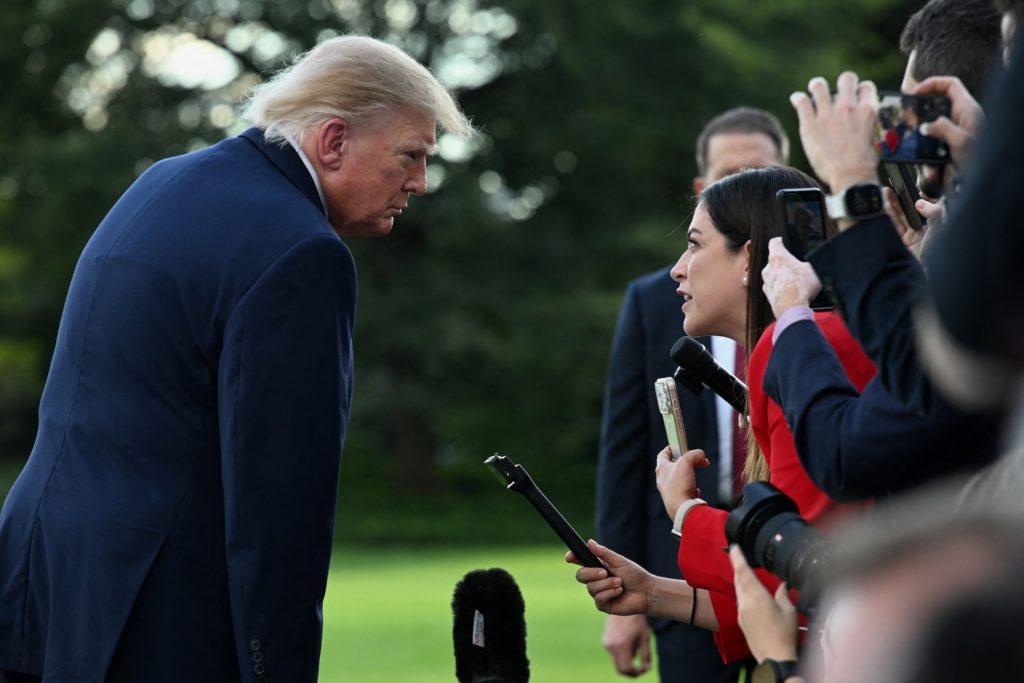 PBS NewsHourThis piece reads center-left
“federal judge has once again ordered the White House to restore access”
Read the original- CNBCnot rated
Word choiceUses "banning" to describe the action, which is more active and characterizes the measure as a negative step, whereas other outlets use neutral terms like "banned" or describe the judge's response to the ban.
Read the original - Roll CallThis piece reads center
“unsigned decision Wednesday sided with Republicans in a dispute”
Read the original 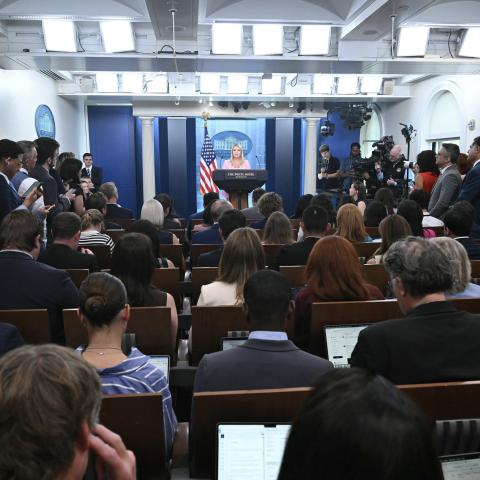 Just the NewsThis piece reads center-right
“shouldn't be seen as dismissing Trump's concerns about accuracy and fairness”
FramingEmphasizes the judge's explicit acknowledgment of Trump's stated concerns about media accuracy and fairness, softening the tone of the ruling by foregrounding this caveat.
Read the original
Placements are generated by an AI model from each article’s own headline and summary, and every quotation above is checked to be a real substring of that article before it is published. How this is done
Prism is free and carries no advertising. Support it if it was useful.