France holds nationwide strike and protests on November 5 over wages and government spending
Reported by
A dot shows how that piece reads — Prism rates articles, not outlets, and shows the words behind each placement below. No dot means the piece isn’t rated. How the ratings work
What happened
The account the coverage agrees on, with contested figures attributed rather than asserted. This is not one of the five framings below — it is the ground they all stand on.
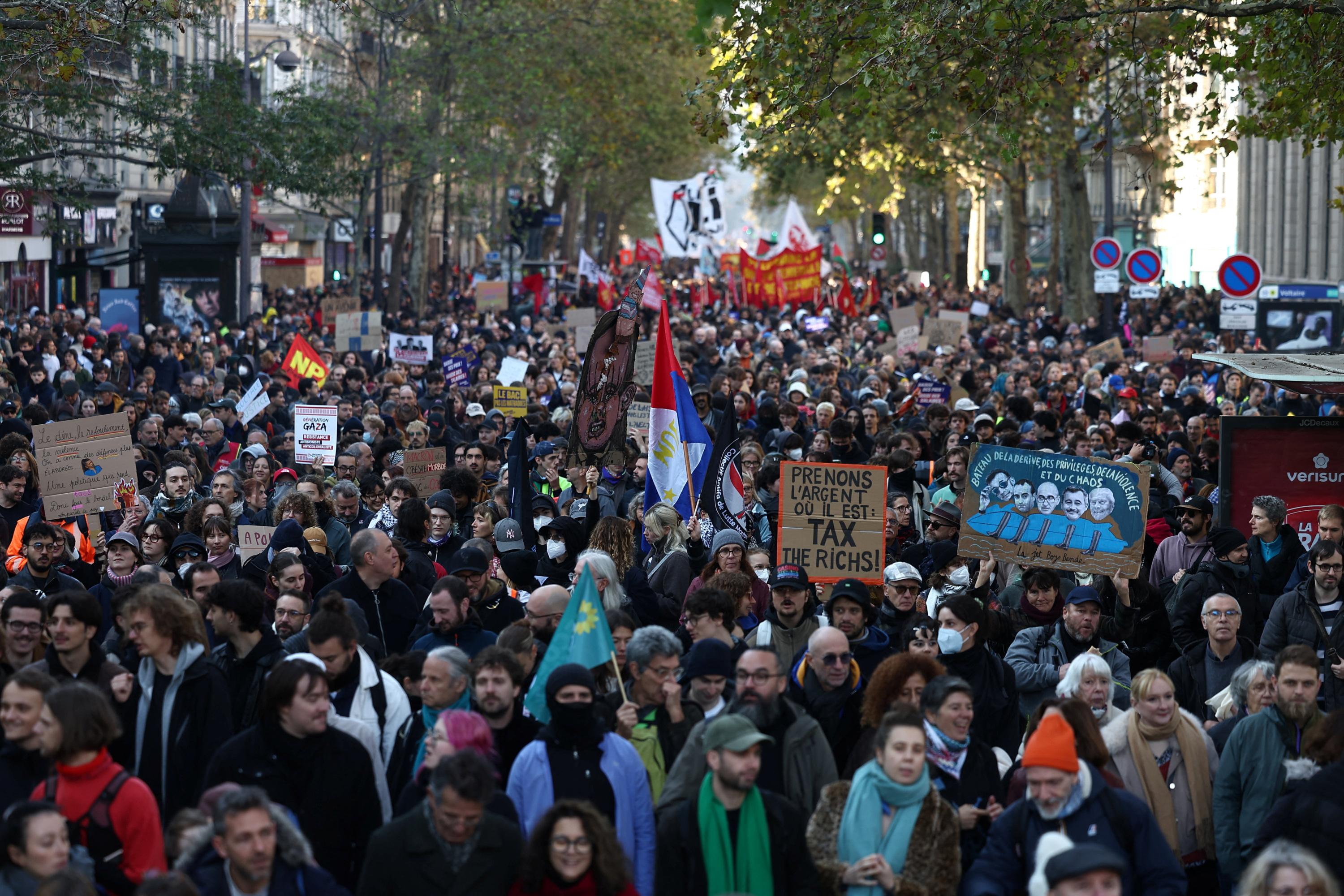
On November 5, 2026, hundreds of thousands of people demonstrated across France in a nationwide strike against the rising cost of living, low wages, and underfunding of public services including education. The Interior Ministry reported 600,000 demonstrators; labor unions claimed 1.6 million. Clashes occurred in Lyon and Paris, with riot police using tear gas against protesters. The timing coincided with the National Assembly's unanimous rejection of the government's proposed 2027 budget.
How the spectrum reads this story
The same event, summarised as five points on the political spectrum would each tend to frame it. These are generated by an AI model and are a starting point, not the last word.
Left
This mobilization reflects the failure of the market system to provide dignified living standards and public services. Workers and students are right to demand higher wages and better-funded schools — these aren't luxuries but necessities. The strike shows structural inequality at work: those who create wealth are denied its fruits while governments protect corporate interests and reject budgets that could fund services. Police violence against protesters defending their rights is the system's response to demands for justice. Real change requires confronting the economic model itself, not just asking politicians for reform.
No article in this story reads this way. This is how the position tends to frame events like it — written by a model, not quoted from anyone.
Center-left
France is experiencing a genuine crisis of declining purchasing power and neglected public services that demands immediate action. Workers' and students' demands for better wages and school funding are legitimate and reasonable. The unanimous budget rejection shows even lawmakers recognize the government's approach is unworkable. While protests are necessary to pressure change, the path forward is through reformed policies—stronger wage protections, progressive taxation, and sustained investment in education and services. Police should exercise restraint, but constructive dialogue between government, unions, and employers is essential to resolve this.
Drawn from 2 articles placed here, below.
Center
France faces real economic pressures: rising costs, wage stagnation, and public sector strain. Large protests reflect genuine grievances that can't be ignored, though the vast disagreement between official protest estimates (600,000) and union claims (1.6 million) makes assessing the movement's true scale difficult. The government's budget rejection by even its own parliament signals a political failure to build consensus. Both sides need to move toward negotiation: unions should specify concrete demands, the government should acknowledge legitimate concerns and propose credible solutions, and police response should remain proportionate to actual disorder rather than escalating tensions.
Drawn from 3 articles placed here, below.
Center-right
France's economic challenges are serious but require realistic solutions, not confrontation. Strike demands for higher wages and more spending ignore the fiscal constraints that make the 2027 budget untenable—the government's budget was rejected precisely because spending cannot keep rising. Wage increases without productivity gains fuel inflation, harming the purchasing power workers seek to protect. Unions' inflated protest numbers (claiming 1.6 million vs. official 600,000) undermine credibility. The path forward requires structural reforms to make public services efficient and competitive, not simply more spending. Public sector workers have strong job security others lack; sustainable solutions must balance fairness across the whole economy.
Drawn from 1 article placed here, below.
Right
France's malaise reflects decades of governments that have lost control of the nation's finances and borders, making ordinary citizens pay the price. Rising costs and wage decline are real—citizens are right to be angry. But channeling that anger into larger government and more spending, as unions demand, worsens the problem that created it. Bloated public sectors, excessive immigration driving up housing and service costs, and uncontrolled spending have hollowed out the nation's wealth. Real solutions require reducing wasteful state spending, controlling borders to ease pressure on services, and letting productive sectors drive prosperity rather than expanding dependency on government transfers.
No article in this story reads this way. This is how the position tends to frame events like it — written by a model, not quoted from anyone.
Hear two viewpoints debate it
Pick two viewpoints and Prism writes a short, six-turn exchange about this story in each one’s own voice — steel-manned, no winner declared. Each pairing is written once and then saved for every reader. The voices are AI syntheses of a tradition, not real people.
New pairing — Prism will write it now.
How each outlet covered it
Where Prism places each piece — not the outlet in general — with the words from that piece that put it there, and the photograph the outlet chose. Picking a photo is a framing decision too.
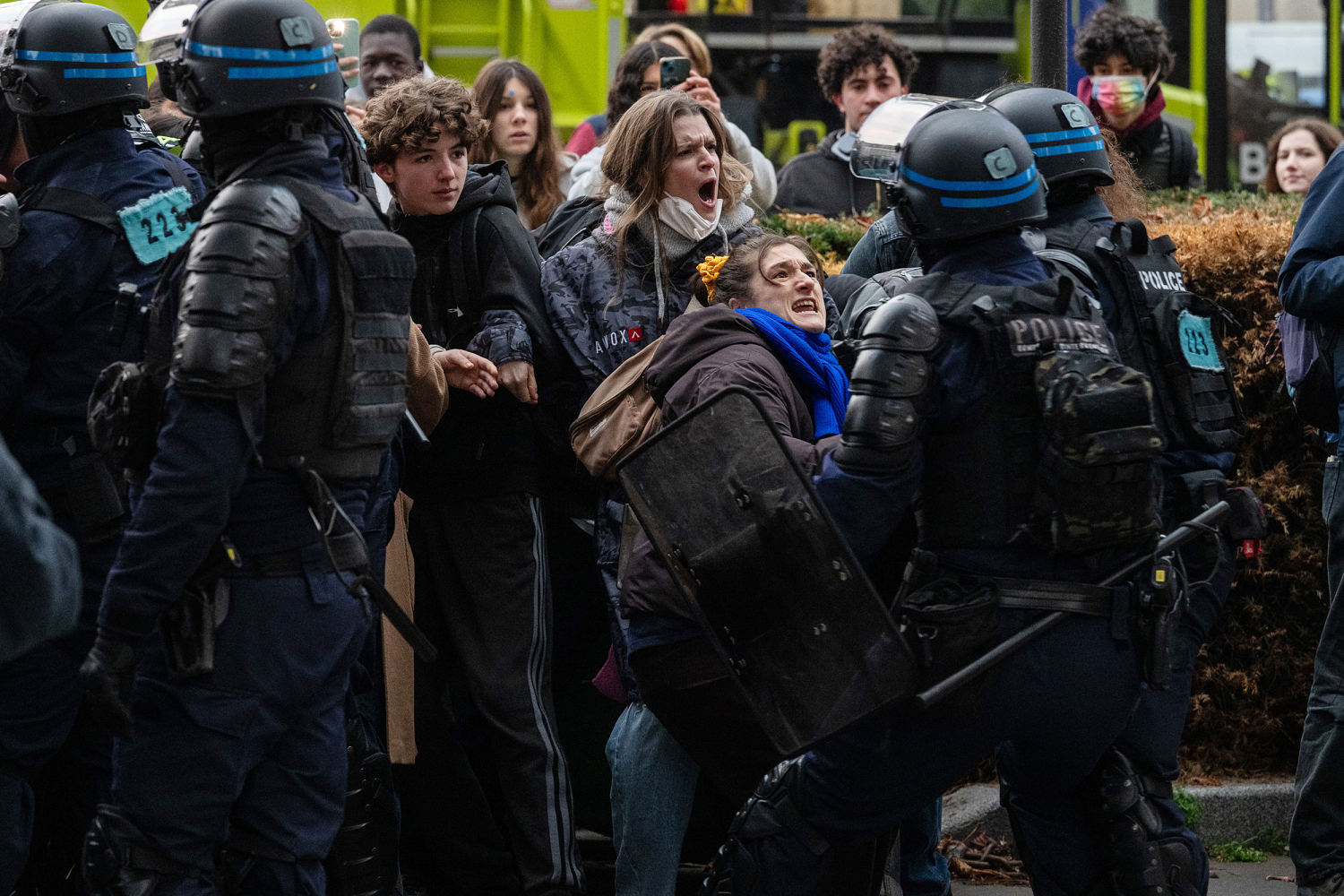 NBC NewsThis piece reads center-left
“Clashes erupt in France as 'Black Thursday' protests sweep the nation”
FramingOpens with confrontation and police action rather than the substantive grievances; the nickname 'Black Thursday' carries dramatic weight that other outlets avoid.
Read the original- Al JazeeraThis piece reads center-left
“Trade unions led more than 260 planned protests nationwide, urging government”
Read the original - Le FigaroThis piece reads center
“près de 600.000 manifestants en France à 17 heures selon Beauvau”
Read the original 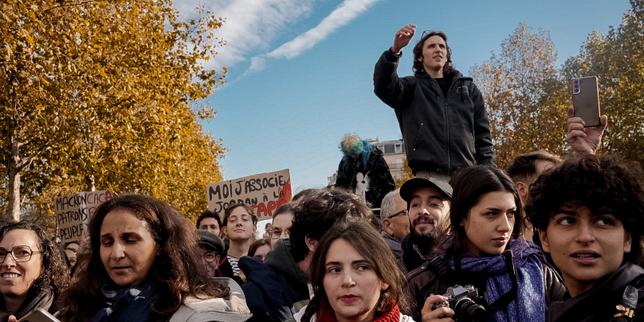 Le MondeThis piece reads center
“Interior Ministry estimated that 600,000 people demonstrated, while labor”
Word choiceUses 'claimed' for union numbers while simply stating the Interior Ministry's figure; the verb choice suggests the union count is less reliable.
Read the original- EuronewsThis piece reads center
“Tens of thousands marched through Lyon area during a nationwide strike over”
Read the original - CNBCThis piece reads center-right
“Nationwide strikes loom as French budget is unanimously rejected by lawmakers”
FramingLeads with the budget rejection rather than the strike itself, treating the protest as secondary consequence of fiscal policy failure.
Read the original
Placements are generated by an AI model from each article’s own headline and summary, and every quotation above is checked to be a real substring of that article before it is published. How this is done
Prism is free and carries no advertising. Support it if it was useful.