Trump eases tariffs on Canadian products ahead of midterm elections after Republican pressure
Reported by
A dot shows how that piece reads — Prism rates articles, not outlets, and shows the words behind each placement below. No dot means the piece isn’t rated. How the ratings work

What happened
The account the coverage agrees on, with contested figures attributed rather than asserted. This is not one of the five framings below — it is the ground they all stand on.
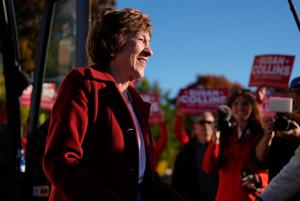
The White House removed 50% tariffs on 22 Canadian products effective October 30, including plywood sheets, paper products, machinery, and refrigeration equipment, while simultaneously imposing new tariffs on 100 additional products including carpets, certain valves, and waste products. Senator Susan Collins announced the removal and said she had lobbied for the change to help Maine's agricultural and seaweed industries. The adjustment came ahead of U.S. midterm elections in which Collins, a vulnerable Republican, faces a competitive Senate race.
How the spectrum reads this story
The same event, summarised as five points on the political spectrum would each tend to frame it. These are generated by an AI model and are a starting point, not the last word.
Left
This is naked political favoritism: Trump is reshuffling tariffs not based on sound trade policy but to save a Republican senator's seat weeks before an election. Removing protections on some goods while adding them to others shows the tariff regime isn't about American workers—it's about electoral calculation. Collins broke with Trump on tariffs before, so now she gets a special deal. This confirms that Trump uses executive power for partisan advantage rather than principled policy.
No article in this story reads this way. This is how the position tends to frame events like it — written by a model, not quoted from anyone.
Center-left
Trump's tariff adjustment exposes the weakness of his trade approach. Rather than pursue a coherent strategy, he's using tariff policy as a political tool to shore up vulnerable Republicans before midterms. Collins needed relief for Maine industries hurt by his tariffs, so he gave it to her—but only selectively, and while adding tariffs elsewhere. It's a reminder that Trump's tariffs are unpredictable, driven by politics, and ultimately harmful to American businesses that need certainty.
Drawn from 3 articles placed here, below.
Center
The White House has made a tactical adjustment to tariff policy before the midterms, removing duties on products important to Maine while adding them to others. Collins successfully lobbied for relief for her state's economy, which depends on Canadian trade. Whether this represents good policy or political calculation depends on one's view of Trump's broader tariff strategy, but the move is clearly timed to help vulnerable Republicans in competitive races. Both the removal and addition of tariffs merit scrutiny on their merits.
Drawn from 2 articles placed here, below.
Center-right
Trump has made a pragmatic adjustment to his tariff policy, responding to legitimate concerns from a Republican senator about the economic impact on her state. Maine's agricultural and seaweed industries have been hurt by tariffs on Canadian goods, and Collins was right to push back. While the administration is simultaneously adding tariffs on other products, this shows flexibility and willingness to listen to members of Congress. The timing before midterms is natural—politicians address constituent concerns when elections matter.
Drawn from 1 article placed here, below.
Right
Trump is demonstrating leadership by listening to concerns from his own party about tariffs that have hurt specific industries. Collins successfully advocated for Maine's workers and businesses, and Trump responded. The fact that new tariffs are being imposed elsewhere shows this isn't a retreat from protecting American interests—it's a reallocation based on economic priorities and political input. This is how a president should govern: pragmatically, listening to Congress, and adjusting policy when warranted.
No article in this story reads this way. This is how the position tends to frame events like it — written by a model, not quoted from anyone.
Hear two viewpoints debate it
Pick two viewpoints and Prism writes a short, six-turn exchange about this story in each one’s own voice — steel-manned, no winner declared. Each pairing is written once and then saved for every reader. The voices are AI syntheses of a tradition, not real people.
New pairing — Prism will write it now.
How each outlet covered it
Where Prism places each piece — not the outlet in general — with the words from that piece that put it there, and the photograph the outlet chose. Picking a photo is a framing decision too.
 Financial TimesThis piece reads center-left
“after pressure from Republicans”
FramingAttributes the tariff change to Republican pressure rather than stating it as Trump's initiative, emphasizing that the move was forced rather than chosen.
Read the original Le Mondenot ratedRead the original
 Toronto Starnot ratedRead the original
- BBCnot ratedRead the original
- CNBCnot rated
FramingPuts 'replacing' in quotation marks when describing the addition of new tariffs—the punctuation creates distance from the White House's characterization and invites skepticism about whether a swap of tariffs represents genuine relief.
Read the original  Global Newsnot ratedRead the original

 Just the NewsThis piece reads center-right
“to help Maine Sen. Collins”
FramingDirectly names the electoral motive in the headline itself, whereas most outlets mention the midterm context but frame it as backdrop rather than primary purpose.
Read the original The Dispatchnot ratedRead the original
Placements are generated by an AI model from each article’s own headline and summary, and every quotation above is checked to be a real substring of that article before it is published. How this is done
Prism is free and carries no advertising. Support it if it was useful.