US economy adds 165,000 jobs in October, unemployment falls to 4.1%
Reported by
A dot shows how that piece reads — Prism rates articles, not outlets, and shows the words behind each placement below. No dot means the piece isn’t rated. How the ratings work

What happened
The account the coverage agrees on, with contested figures attributed rather than asserted. This is not one of the five framings below — it is the ground they all stand on.
The U.S. added 165,000 jobs in October 2026, according to the Labor Department report released Friday. The unemployment rate fell to 4.1%. Job gains more than doubled September's revised figure of 60,000, with hiring led by professional services. The figure exceeded forecaster expectations by roughly double.
How the spectrum reads this story
The same event, summarised as five points on the political spectrum would each tend to frame it. These are generated by an AI model and are a starting point, not the last word.
Left
A single month of job growth, while welcome, masks deeper structural problems: wage stagnation, precarious work, and inequality persist. This report shouldn't distract from the fact that workers still struggle with inflation eroding real wages, healthcare tied to employment, and the lack of secure, well-paying jobs in many communities. Sustainable economic health requires addressing systemic inequality, not celebrating headline numbers.
No article in this story reads this way. This is how the position tends to frame events like it — written by a model, not quoted from anyone.
Center-left
October's job growth is genuinely encouraging and shows the economy retains resilience, but we should be cautious about reading too much into one month. The rebound after September's weakness suggests the labor market is stabilizing rather than in free fall. Policymakers should monitor whether this strength is broad-based or concentrated in specific sectors, and remain focused on wage growth and worker protections alongside job creation.
Drawn from 1 article placed here, below.
Center
The economy is sending mixed signals: strong job creation suggests underlying vitality, yet one month's data doesn't establish a clear trend after September's slowdown. The unemployment rate at 4.1% is historically solid, but real wages matter as much as job counts. The practical challenge for the Fed is whether this one report warrants rate action, or whether they should wait for a fuller picture before December decisions.
Drawn from 6 articles placed here, below.
Center-right
This robust jobs report demonstrates the underlying strength of the American economy and validates a flexible, market-driven approach to growth. Adding 165,000 jobs while maintaining a low unemployment rate shows businesses are confident and hiring despite regulatory burdens. The Fed should be cautious about rate hikes that could choke off this momentum; excessive tightening risks undermining the very growth this report reflects.
Drawn from 1 article placed here, below.
Right
Strong job creation proves that reducing government overreach and letting markets work produces results. This report vindicates skepticism toward Fed interventionism and excessive regulation. The economy thrives when businesses aren't suffocated by red tape and uncertainty. Washington should step back and let American enterprise continue driving growth, rather than implementing policies that discourage hiring and investment.
Drawn from 1 article placed here, below.
Hear two viewpoints debate it
Pick two viewpoints and Prism writes a short, six-turn exchange about this story in each one’s own voice — steel-manned, no winner declared. Each pairing is written once and then saved for every reader. The voices are AI syntheses of a tradition, not real people.
New pairing — Prism will write it now.
How each outlet covered it
Where Prism places each piece — not the outlet in general — with the words from that piece that put it there, and the photograph the outlet chose. Picking a photo is a framing decision too.
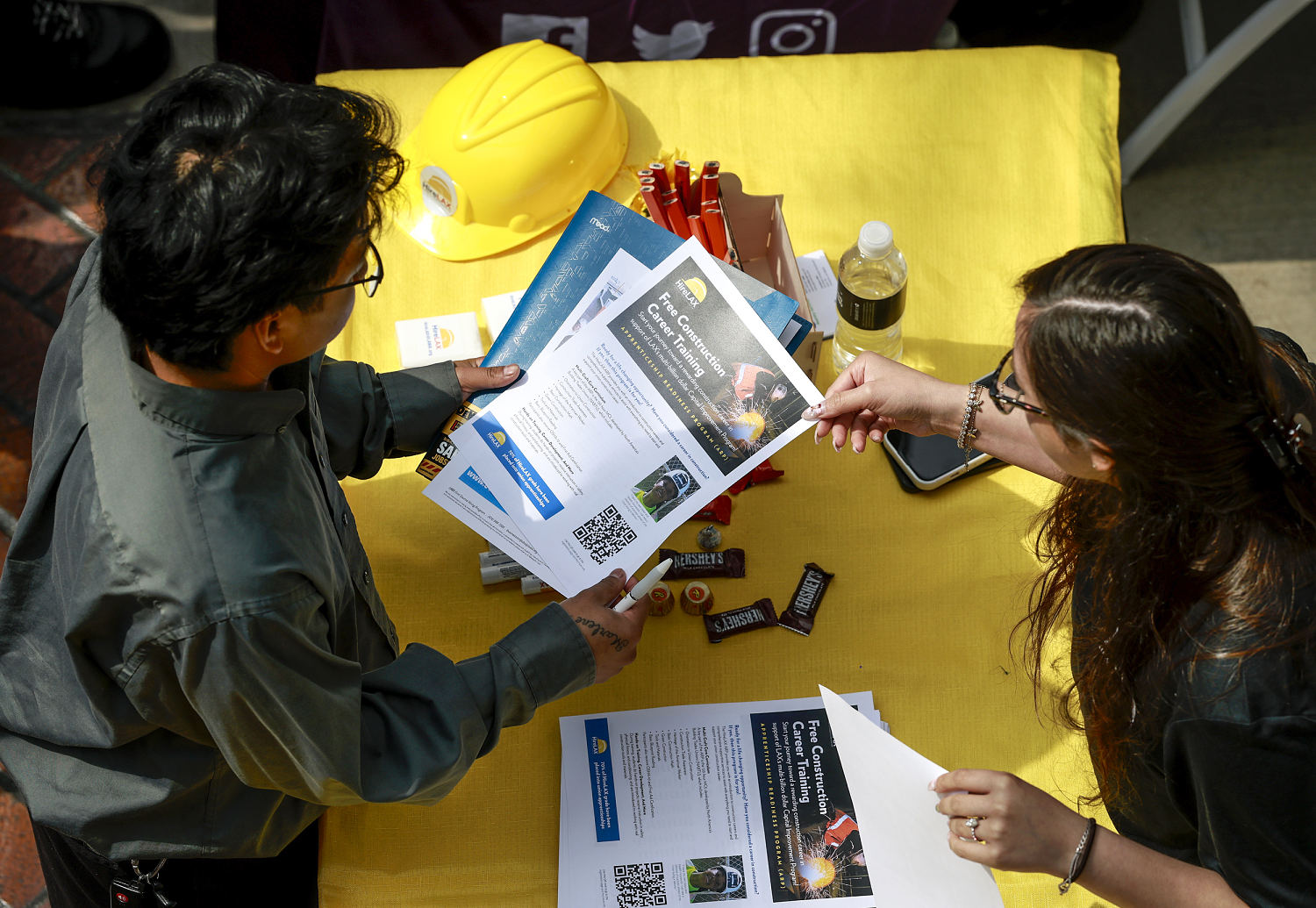 NBC NewsThis piece reads center-left
“a bright spot for the economy”
FramingFrames the jobs number as positive relief from economic concern, whereas other outlets present it mainly as a factual figure relative to forecasts.
Read the original- SemaforThis piece reads center
“resilience adds to evidence that the US Federal Reserve will hike”
Read the original 

 Straight Arrow NewsThis piece reads center
“more than twice September's revised increase”
Read the original
 NewsNationThis piece reads center
“surprising 165K jobs”
What's left outConnects the jobs report to recent political events, adding context other outlets omit entirely—the only outlet to link the economic data to electoral outcomes.
Read the original
- BreitbartThis piece reads right
“Massive Jobs Blowout”
Word choiceUses emphatic language—'blowout'—that conveys enthusiasm about the figure, whereas most outlets use neutral descriptors like 'outstrips forecasts' or 'exceeding expectations'.
Read the original
Placements are generated by an AI model from each article’s own headline and summary, and every quotation above is checked to be a real substring of that article before it is published. How this is done
Prism is free and carries no advertising. Support it if it was useful.