Dockworkers in multiple countries conduct coordinated strikes against arms shipments and Gaza war
Reported by
A dot shows how that piece reads — Prism rates articles, not outlets, and shows the words behind each placement below. No dot means the piece isn’t rated. How the ratings work
What happened
The account the coverage agrees on, with contested figures attributed rather than asserted. This is not one of the five framings below — it is the ground they all stand on.
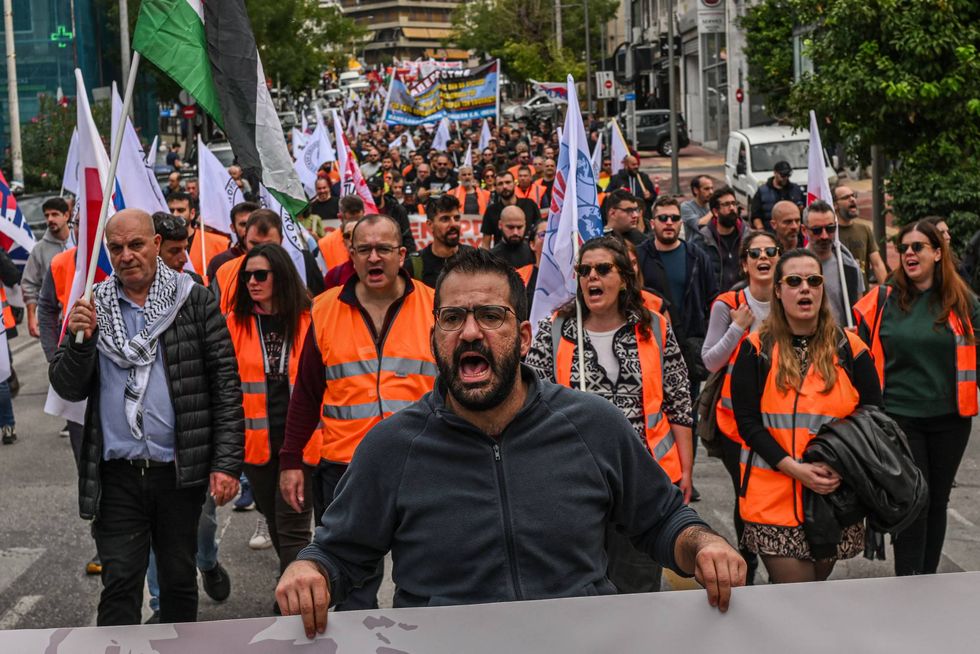
Dockworkers at 113 ports across 22 countries participated in coordinated work stoppages on Friday. Organizers described it as the largest coordinated port action ever. Participants withheld labor to demand an end to Israel's military operations in Gaza and to protest arms shipments, according to the accounts.
How the spectrum reads this story
The same event, summarised as five points on the political spectrum would each tend to frame it. These are generated by an AI model and are a starting point, not the last word.
Left
Global workers are using their collective power to challenge militarism and imperialism. Dockworkers across 22 countries coordinated the largest international port strike ever, refusing to move weapons destined for Israel's assault on Gaza. This action shows how labor solidarity can interrupt supply chains that fuel wars and genocide, proving that working people can hold states and arms manufacturers accountable when elected officials won't.
Drawn from 2 articles placed here, below.
Center-left
An unprecedented international labor action took place as dockworkers in over 100 ports coordinated a strike against arms shipments to Israel and Israeli military operations in Gaza. The scale of the protest—spanning 22 countries—reflects growing public concern about civilian casualties in Gaza and the role of commercial supply chains in sustaining conflict. Such demonstrations highlight worker activism on global justice issues, though their practical impact on policy remains unclear.
No article in this story reads this way. This is how the position tends to frame events like it — written by a model, not quoted from anyone.
Center
Dockworkers worldwide organized simultaneous port stoppages, framed by organizers as the largest coordinated action of its kind. Participants cited two distinct concerns: opposition to Israeli military operations in Gaza and objection to weapons shipments through commercial ports. The scale suggests significant worker mobilization, though the action's actual effects on shipping and its influence on policy outcomes will depend on duration, compliance rates, and whether governments or companies respond to the demands.
Drawn from 1 article placed here, below.
Center-right
Over 100 ports in 22 countries saw work stoppages as dockworkers participated in a coordinated strike. Organizers opposed Israeli military actions in Gaza and sought to block arms shipments. While labor has the right to protest, the action raises questions about the economic impact on neutral third parties and whether port workers should make foreign policy decisions through industrial action rather than through democratic processes.
No article in this story reads this way. This is how the position tends to frame events like it — written by a model, not quoted from anyone.
Right
A coordinated labor action shut down ports across 22 countries, with participants using their position to make political demands about the Israeli-Palestinian conflict. Dockworkers blocked commercial operations and weapons shipments based on their own policy views rather than workplace conditions. The action demonstrates how unions can exercise power beyond their membership's direct interests, raising concerns about the reach of labor activism into matters of national sovereignty and international relations.
No article in this story reads this way. This is how the position tends to frame events like it — written by a model, not quoted from anyone.
Hear two viewpoints debate it
Pick two viewpoints and Prism writes a short, six-turn exchange about this story in each one’s own voice — steel-manned, no winner declared. Each pairing is written once and then saved for every reader. The voices are AI syntheses of a tradition, not real people.
New pairing — Prism will write it now.
How each outlet covered it
Where Prism places each piece — not the outlet in general — with the words from that piece that put it there, and the photograph the outlet chose. Picking a photo is a framing decision too.
- Common DreamsThis piece reads left
“genocidal assault on Gaza and highlight the role that commercial ports play in”
Word choiceUses the term 'genocide' to characterize Israeli military operations, where other outlets describe the action in terms of opposition to 'military operations' or 'warfare' without that specific legal characterization.
Read the original 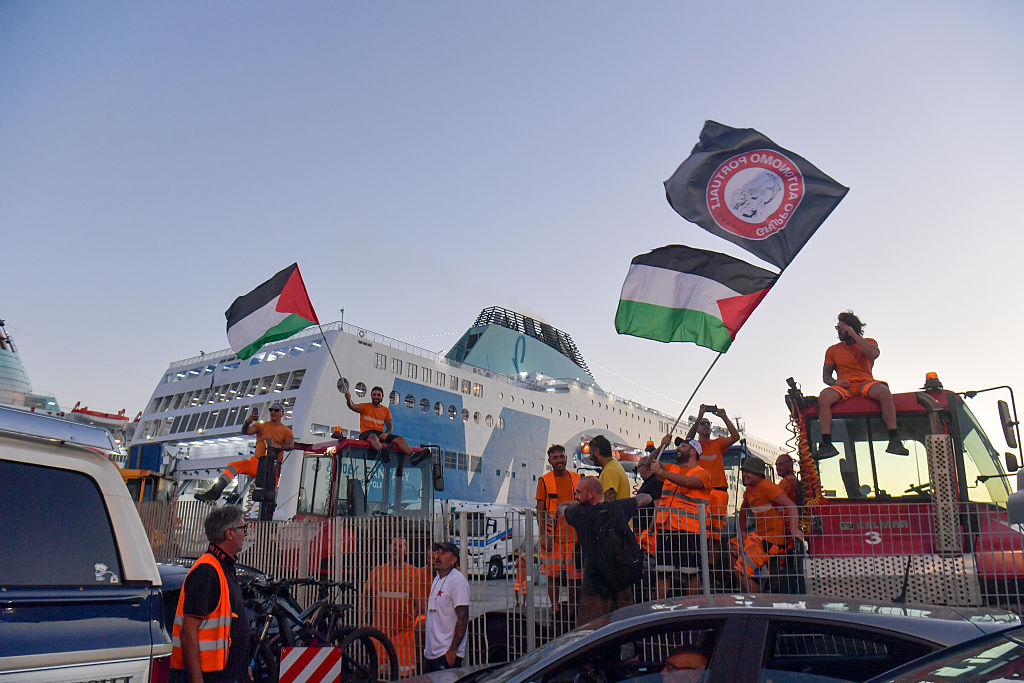 JacobinThis piece reads left
“genocide of the Palestinian people”
FramingIncludes a direct quote from an activist using 'genocide,' emphasizing that framing through an activist's own words rather than editorial description.
Read the original Just the NewsThis piece reads center
“dockworkers initiate international strikes denouncing arms shipments and”
What's left outGroups 'arms shipments and conditions' together as dual grievances, whereas other outlets focus primarily on arms shipments and Gaza operations, not worker conditions.
Read the original
Placements are generated by an AI model from each article’s own headline and summary, and every quotation above is checked to be a real substring of that article before it is published. How this is done
Prism is free and carries no advertising. Support it if it was useful.