Trump gave $45,000 in cash gifts to Natalie Harp and other White House aides
Reported by
A dot shows how that piece reads — Prism rates articles, not outlets, and shows the words behind each placement below. No dot means the piece isn’t rated. How the ratings work
What happened
The account the coverage agrees on, with contested figures attributed rather than asserted. This is not one of the five framings below — it is the ground they all stand on.
Trump gave $45,000 cash gifts to three White House aides—executive assistant Natalie Harp, 35; communications adviser Margo Martin, 31; and deputy director of the Oval Office Chamberlain Harris, 26—listed in financial disclosures released by the administration as "Cash Gift for Holidays." Each amount represented roughly one-third of their $150,000 salaries. The Washington Post reports experts say the gifts are without precedent and may violate the law. The White House told Newsweek the gifts were "entirely permissible."
How the spectrum reads this story
The same event, summarised as five points on the political spectrum would each tend to frame it. These are generated by an AI model and are a starting point, not the last word.
Left
This gift pattern exposes how presidential power operates without accountability. Three young female staffers receive gifts equivalent to a third of their annual salary from their boss—a scale that raises serious questions about workplace dynamics, financial impropriety, and whether such transactions violate ethics laws designed to prevent exactly this. The fact that it required financial disclosure to make public, and that experts question legality, shows how easily the executive branch can act beyond scrutiny when it controls what gets disclosed and when.
Center-left
Trump's $45,000 gifts to three aides warrant serious examination under ethics and labor law. The sheer size—nearly a third of each recipient's salary—and the pattern (all young women in close-proximity roles) depart from typical presidential practice and create potential conflicts. While financial disclosures revealed the gifts, experts question their legality. This needs investigation by appropriate oversight bodies to determine whether the president exceeded his authority or violated regulations meant to protect both employees and the integrity of government service.
Center
The gifts raise genuine procedural questions that deserve answers. Financial disclosures show Trump gave three staffers $45,000 each as holiday bonuses—amounts experts describe as unprecedented at that scale. The White House claims they're legal; other analysts say they may violate law. This isn't straightforwardly corrupt or obviously fine; it's exactly the kind of gray-zone executive action that requires institutional review. The disclosures did their job by making it public, but the proper channels—ethics officers, inspectors general, possibly Congress—need to evaluate whether this fits within existing rules.
Center-right
The administration released these gifts transparently through financial disclosures, and the White House has stated they are permissible. Presidents have discretion in how they manage their offices and staff relations. While the scale may be unusual, calling it a scandal requires proving it violates specific law—something critics assert but haven't demonstrated. Scrutiny focused on the gender and appearance of recipients rather than the substance of legality suggests the real concern is political opposition to Trump, not genuine ethics violation.
Right
The left-leaning media is manufacturing outrage over presidential discretion. Trump's financial gifts to his staff were disclosed in public documents—the opposite of a cover-up. The White House correctly states they are permissible. Focusing breathlessly on the recipients being young women is a transparent attempt to insinuate impropriety where none exists. This is how the ruling class attacks a president who doesn't play by their unwritten rules: weaponize process and media sensationalism to criminalize normal executive decisions.
Hear two viewpoints debate it
Pick two viewpoints and Prism writes a short, six-turn exchange about this story in each one’s own voice — steel-manned, no winner declared. Each pairing is written once and then saved for every reader. The voices are AI syntheses of a tradition, not real people.
New pairing — Prism will write it now.
How each outlet covered it
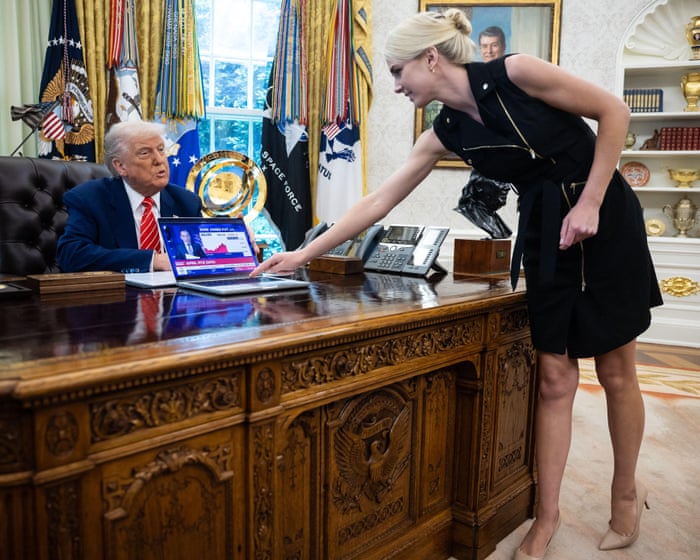
Where Prism places each piece — not the outlet in general — with the words from that piece that put it there, and the photograph the outlet chose. Picking a photo is a framing decision too.
 The Daily BeastThis piece reads left
“Trump's Jaw-Dropping Secret Gift to Blonde Aide, 35, Exposed”
Word choiceDescribes the gift as "jaw-dropping" and "secret," and emphasizes the recipient's appearance and age ("Blonde Aide, 35") in the headline itself—language that frames the story as scandalous and personal rather than focusing on legal or ethical substance.
Read the original- The GuardianThis piece reads center-left
“substantial holiday gifts to four White House aides”
Read the original - Washington PostThis piece reads center-left
“may violate the law”
What's left outIncludes expert analysis that the gifts may be illegal in the headline, which other outlets either omit or relegate to the White House's counter-claim that they are permissible.
Read the original - Newsweeknot rated
FramingLeads with the White House's legal defense in quotation marks, giving the administration's characterization of permissibility top billing rather than the factual description of the gifts themselves.
Read the original
Placements are generated by an AI model from each article’s own headline and summary, and every quotation above is checked to be a real substring of that article before it is published. How this is done
Prism is free and carries no advertising. Support it if it was useful.