Alberta voters overwhelmingly reject separation from Canada in referendum
Reported by
A dot shows how that piece reads — Prism rates articles, not outlets, and shows the words behind each placement below. No dot means the piece isn’t rated. How the ratings work

What happened
The account the coverage agrees on, with contested figures attributed rather than asserted. This is not one of the five framings below — it is the ground they all stand on.
Alberta held its first-ever referendum on separation on Monday, October 19, 2026. With more than 1.5 million votes counted, 76% voted to remain in Canada while 24% backed beginning a process toward independence, according to Elections Alberta. Prime Minister Mark Carney hailed the result as a choice for national unity. Leaders of Alberta's separatist movement vowed to continue despite the decisive margin of defeat.
Developing story · 2 chapters
- Alberta voters hold referendum on separation from Canada with record turnout and extended polling hours
- Alberta voters overwhelmingly reject separation from Canada in referendumyou are here
How each side framed the previous chapter
Compare these with the five framings below to see what moved as the story developed — and what each side kept saying regardless.
Left
Alberta's referendum reflects the damage caused by decades of resource extraction capitalism and regional inequality within Canada's federal structure. The vote exposes how the oil industry and conservative provincial leadership have cultivated separatism by pitting Alberta against the rest of the country. Rather than addressing the root causes—unequal wealth distribution and corporate dominance of politics—a split would only entrench these problems and weaken working people's ability to secure social programs and environmental protection across a fragmented territory.
Center-left
While Albertans have legitimate grievances about resource revenues and federal climate policy, a referendum on separation is a destabilizing response that would harm both the province and Canada. The vote reflects frustration with how Ottawa handles energy policy, but independence would create economic uncertainty, lose economies of scale in public services, and damage trade relationships. Democratic reforms and better federal-provincial negotiation on resource management and investment would address real concerns without the chaos of partition.
Center
Alberta's referendum tests Canadian federalism at a moment of internal stress—over resource policy, regional resentment, and now external pressure from Trump's trade threats. The vote itself is legitimate democratic expression, but the result matters less than what happens next. Whether it passes or fails, federal and provincial leaders need to demonstrate that the system can accommodate regional interests and that separatism isn't the only outlet for discontent. The timing, amid external threats to North American unity, makes dialogue especially urgent.
Center-right
Albertans are entitled to ask hard questions about their place in Canada, and this referendum is a legitimate expression of that right. However, the province benefits substantially from federal programs, interprovincial trade, and currency union; independence would impose real costs. The better path is to elect leaders—in Edmonton and Ottawa—who respect provincial jurisdiction over resources and respect the principle that decisions affecting the economy should be made by those whose livelihoods depend on them, without requiring separation to achieve that.
Right
This referendum is Albertans exercising their democratic right to determine their own future. Ottawa's centralized control over resource policy and climate regulations that disadvantage the province have made many Albertans feel their interests are ignored by distant federal bureaucrats. Whether or not independence is the answer, the referendum reflects real grievances about autonomy and self-determination. Canadians should respect that provincial populations have the right to chart their own course when they feel the federation no longer serves them.
How the spectrum reads this story
The same event, summarised as five points on the political spectrum would each tend to frame it. These are generated by an AI model and are a starting point, not the last word.
Left
Alberta's decisive rejection of separation reflects the limits of regional grievance politics when faced with the ballot. While resentment toward Ottawa and frustration over energy policy created real discontent, the vote shows that structural inequality between regions, though genuine, doesn't automatically translate into majority support for secession. The separatist movement's defeat suggests that deeper economic and political reforms addressing provincial concerns within Canada may be what voters actually want, rather than dismantling the federation itself.
No article in this story reads this way. This is how the position tends to frame events like it — written by a model, not quoted from anyone.
Center-left
Albertans have voted clearly to preserve national unity, a reassuring outcome for Canadian federalism. The 76% margin demonstrates that despite real differences between the resource-rich west and Ottawa, most voters believe their interests are better served by staying in Canada and working through existing institutions. This outcome validates Mark Carney's approach to national reconciliation and suggests that addressing specific provincial grievances through negotiation is more effective than pursuing separation.
Drawn from 5 articles placed here, below.
Center
The referendum outcome is unambiguous: Albertans prefer to remain in Canada. However, the 24% support for separation signals genuine discontent that shouldn't be dismissed. The result suggests a pragmatic electorate weighing the security and economic benefits of federation against the desire for greater control over their affairs. Going forward, federal-provincial relations require attention to Alberta's specific concerns—energy policy, fiscal arrangements, and regional voice in national decisions—without treating the separatist impulse as illegitimate.
Drawn from 9 articles placed here, below.
Center-right
Alberta's voters have sensibly rejected a radical break with Canada, confirming that most citizens value the stability and economic benefits of the federation. The large majority for staying provides a clear mandate to strengthen, not weaken, the Canadian union. However, the nearly one-quarter who backed separation deserves serious attention: their concerns about federal overreach and provincial autonomy are legitimate grievances that should prompt Ottawa to respect provincial jurisdiction and reduce intrusive regulations on energy and economic development.
Drawn from 2 articles placed here, below.
Right
Albertans have decisively rejected the separatist path, but the 24% who backed it represent a significant base of voters who rightly distrust Ottawa's priorities. The separatist movement's appeal reflects real frustration with federal policies that ignore provincial sovereignty and economic self-determination, particularly over energy. While voters chose to stay, Canada's federal system needs urgent reform to restore genuine provincial authority and limit Ottawa's power—otherwise, discontent will persist and future separation movements may gain traction.
No article in this story reads this way. This is how the position tends to frame events like it — written by a model, not quoted from anyone.
Hear two viewpoints debate it
Pick two viewpoints and Prism writes a short, six-turn exchange about this story in each one’s own voice — steel-manned, no winner declared. Each pairing is written once and then saved for every reader. The voices are AI syntheses of a tradition, not real people.
New pairing — Prism will write it now.
How each outlet covered it
Where Prism places each piece — not the outlet in general — with the words from that piece that put it there, and the photograph the outlet chose. Picking a photo is a framing decision too.
 Le MondeThis piece reads center-left
“independence debate has recently resurfaced”
What's left outPlaces Alberta's independence movement in comparative context with Quebec's recent resurgence, a framing other outlets omit—signals Alberta separatism as one part of a broader pattern.
Read the original France 24This piece reads center-left
“a win for unity as the country faces worsening ties”
FramingExplicitly links the domestic referendum result to Canada's U.S. relations, framing the vote as geopolitically significant—other outlets either omit this context or note it more neutrally.
Read the original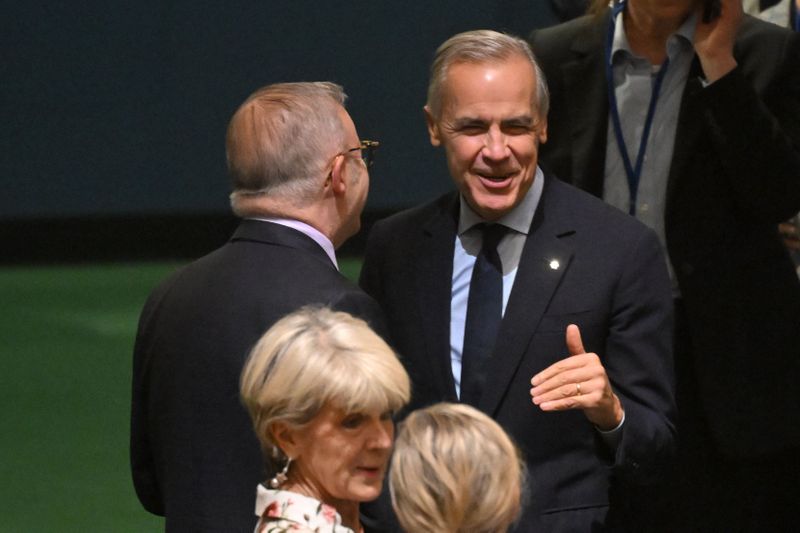 Daily MaverickThis piece reads center-left
“much-needed win for Prime Minister Mark Carney”
Word choiceCharacterizes the outcome as Carney's personal political victory and frames it as solving national problems—more evaluative of political benefit than outlets presenting it as voters' choice.
Read the original Financial TimesThis piece reads center-left
“threatened new turmoil for Mark Carney”
Word choiceCasts the referendum as a threat to the Prime Minister's stability, emphasizing political risk rather than civic choice—other outlets report Carney welcomed the result.
Read the original BBCThis piece reads center
“overwhelmingly to remain part of Canada”
Word choiceDescribes the result as a 'setback' rather than a victory or decision—the word emphasizes impact on the movement rather than voter choice.
Read the original
- Morning StarThis piece reads center
“VOTERS in Alberta overwhelmingly backed remaining in Canada”
Read the original 
 Washington ExaminerThis piece reads center
“overwhelmingly to remain part of Canada in referendum”
Read the original UPIThis piece reads center
“PM Carney hails early results showing Alberta voting to stay”
Read the original Straight Arrow NewsThis piece reads center
“reject proposal that could lead to separation”
Read the original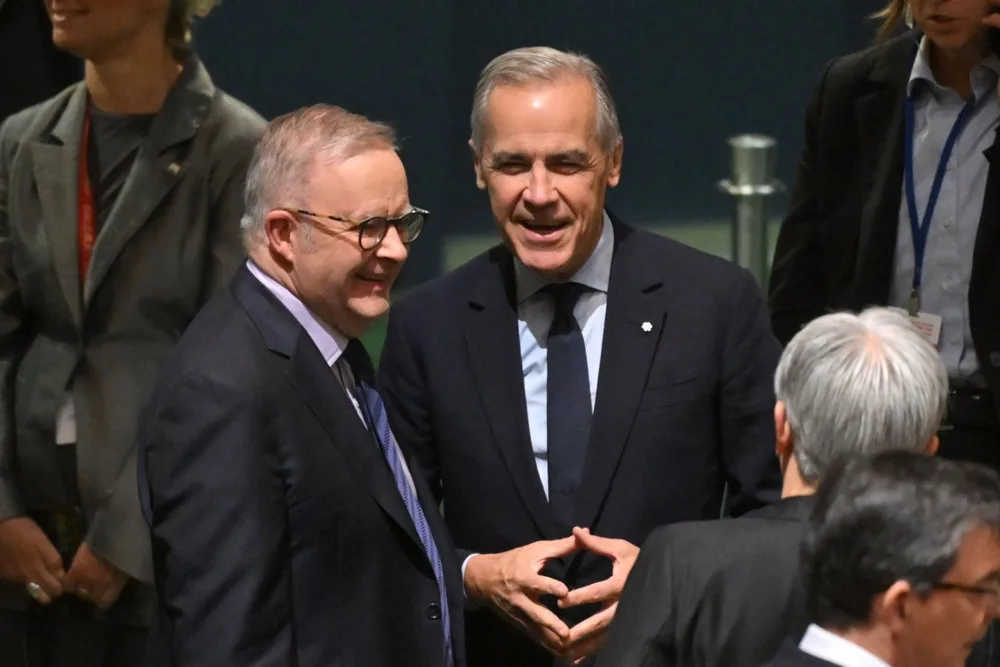
- CNBCThis piece reads center-right
“large majority to remain part of Canada in boost for Carney”
Read the original - The Express TribuneThis piece reads center-right
“large majority to remain part of Canada in boost for Carney”
Read the original
Placements are generated by an AI model from each article’s own headline and summary, and every quotation above is checked to be a real substring of that article before it is published. How this is done
Prism is free and carries no advertising. Support it if it was useful.