US and Iran escalate tensions with attacks on oil tankers in Strait of Hormuz
Reported by
A dot shows how that piece reads — Prism rates articles, not outlets, and shows the words behind each placement below. No dot means the piece isn’t rated. How the ratings work
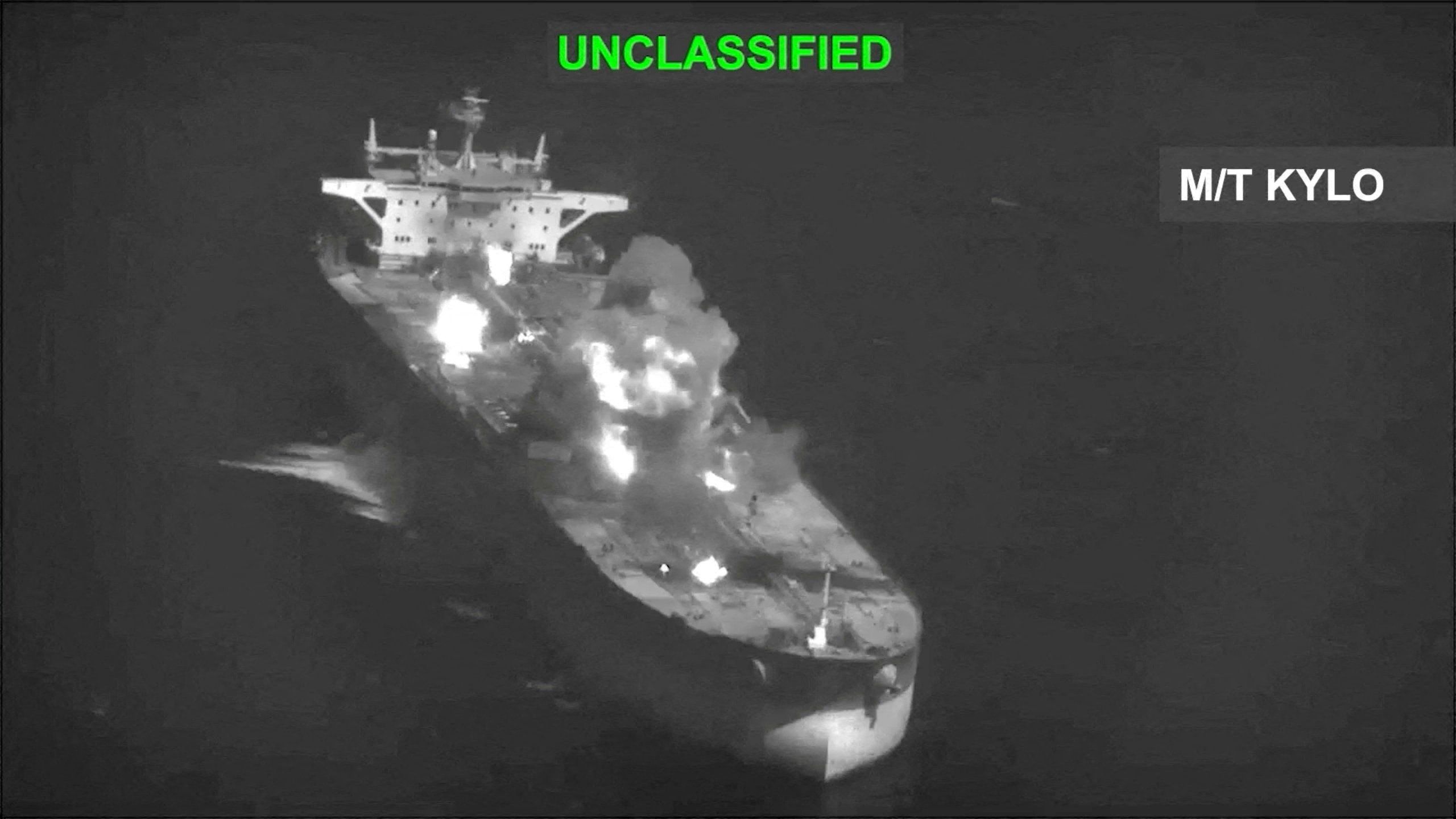
What happened
The account the coverage agrees on, with contested figures attributed rather than asserted. This is not one of the five framings below — it is the ground they all stand on.
Treasury Secretary Scott Bessent described U.S. policy toward Iran—combining a blockade and sanctions—as "one of the most powerful one-two punches" in the history of economic isolation, speaking on Fox News Channel on Saturday. Iran threatened "more intense and more painful" retaliation following U.S. strikes. Israeli attacks in Lebanon and Gaza killed nine people, and the U.S. energy secretary stated "there may not be a nuclear agreement" with Iran.
How the spectrum reads this story
The same event, summarised as five points on the political spectrum would each tend to frame it. These are generated by an AI model and are a starting point, not the last word.
Left
The US and Iran are locked in an escalating military conflict that's destabilizing global energy markets. US strikes on Iranian oil tankers prompted Iran to threaten intensified retaliation, risking a wider war. The Biden administration's blockade and sanctions strategy—touted by Treasury Secretary Bessent as economically devastating—may be provoking rather than deterring Iranian aggression, putting crucial Strait of Hormuz shipping routes and oil supplies at risk. Diplomacy and de-escalation should take priority over military tit-for-tat.
Center-left
The US and Iran have traded military strikes over the weekend, with the US hitting Iranian oil tankers after Iran attacked US warships. Iran has threatened more intense retaliation. Treasury Secretary Bessent praised the combined effect of US blockade and sanctions as powerful economic pressure. An energy official noted that over 9 million barrels daily transit the Strait of Hormuz, underscoring the stakes. The cycle of attack and counter-attack raises concerns about accidental escalation and energy market stability.
Center
Over the weekend, the US struck Iranian oil tankers in response to Iranian attacks on US warships in the Strait of Hormuz region. Iran threatened further retaliation. Treasury Secretary Bessent cited the blockade and sanctions as significant economic pressure on Iran. US officials noted that 9 million barrels of oil transit the strait daily. The back-and-forth exchanges and mutual threats create risk for energy market disruption.
Center-right
The US took out three Iranian oil tankers after Iran attacked US warships, demonstrating resolve in protecting critical shipping lanes. Treasury Secretary Bessent highlighted the effectiveness of the combined blockade and sanctions strategy, calling it 'one of the most powerful one-two punches' in economic isolation history. Despite Iran's threats of retaliation, US military operations are protecting vital energy flows—over 9 million barrels daily pass through the Strait of Hormuz, essential to global markets.
Right
The US military successfully eliminated three Iranian oil tankers in response to Iranian aggression against US warships in the Strait of Hormuz. Treasury Secretary Bessent validated the Trump administration's tough approach, praising the blockade and sanctions as historically devastating to Iran's economy. Iran's threats of 'more painful' responses show weakness and desperation. The US is right to project strength and protect global energy security; Iranian oil tankers should remain in US crosshairs.
Hear two viewpoints debate it
Pick two viewpoints and Prism writes a short, six-turn exchange about this story in each one’s own voice — steel-manned, no winner declared. Each pairing is written once and then saved for every reader. The voices are AI syntheses of a tradition, not real people.
New pairing — Prism will write it now.
How each outlet covered it
Where Prism places each piece — not the outlet in general — with the words from that piece that put it there, and the photograph the outlet chose. Picking a photo is a framing decision too.
- The American ConservativeThis piece reads center-left
“Iran War Day 191”
FramingFrames this as an ongoing war with a numbered day count, emphasizing duration and conflict status—other outlets describe discrete incidents without this war-chronology framing.
Read the original - BreitbartThis piece reads right
“praised the impact of U.S. policy regarding Iran”
Word choiceUses a Treasury official's celebratory language directly in the headline, amplifying the 'success' framing of US policy rather than reporting it neutrally.
Read the original
Placements are generated by an AI model from each article’s own headline and summary, and every quotation above is checked to be a real substring of that article before it is published. How this is done
Prism is free and carries no advertising. Support it if it was useful.